
抵押贷款利率

Search documents
Home prices rose in January, before the Iran War pushed mortgage rates higher
Yahoo Finance· 2026-03-31 13:43
Core Insights - Home prices have shown a slight increase at the beginning of the year, with the S&P CoreLogic Case-Shiller 20-City Home Price Index rising by 1.18% year-over-year and 0.16% month-over-month in January [1] - The modest gains in home prices are attributed to low supply and demand dynamics in the housing market, affecting first-time homebuyers' affordability and causing potential sellers to retain their low mortgage rates [2] - Recent data indicates that home sales were finalized during a period of low mortgage rates, but rates have since increased significantly, averaging around 6.55%, which raises concerns for future housing activity [3]
How the Iran War Is Driving a Spike in Mortgage Rates Above 6.22% — And What Comes Next
Yahoo Finance· 2026-03-20 18:46
Group 1 - The current borrowing environment is challenging due to high inflation risks and tight monetary policy, making good deals scarce, further exacerbated by the ongoing war in Iran [1] - U.S. mortgage rates have surged above 6.22% since the conflict began, highlighting the significant impact of geopolitical stress on the economy [2] - The relationship between mortgage rates and Treasury yields is crucial, as mortgage rates are more closely aligned with government debt than with the Federal Reserve's monetary policy [5][6] Group 2 - Lenders increase mortgage rates in response to rising Treasury yields to manage duration risk and protect their profit margins [6] - The war in the Middle East has led to increased demand for Treasury bonds as a safe-haven asset, pushing yields up due to a heightened global risk premium [6] - Rising oil prices from the conflict are contributing to inflation concerns, which in turn drives Treasury yields higher as investors seek compensation for diminished purchasing power [7]
Inflation drives mortgage rates to 2026 high point
American Banker· 2026-03-19 16:42
Group 1: Mortgage Rates and Trends - The 30-year fixed mortgage rate increased to 6.22% as of March 16, up from 6.11% the previous week and 6% on March 5, marking the highest level since early December [2][4] - The 15-year fixed-rate mortgage rose by 4 basis points to 5.54%, compared to 5.83% a year ago [4] - The current 30-year mortgage rate is approximately half a percentage point lower than the same time last year, indicating a potentially more affordable spring homebuying season [5] Group 2: Market Reactions and Economic Factors - The Federal Open Market Committee's decision to maintain short-term rates was anticipated, influencing the 10-year Treasury yield, which returned to the upper 4.2% range due to inflation concerns stemming from the Iran conflict [6][8] - Investors are hesitant to use bonds as a safe haven due to fears that inflation will diminish their value [7] - If the Iran conflict is short-lived, mortgage rates may decrease; however, prolonged conflict could lead to higher inflation and mortgage rates, potentially derailing the expected rebound in the housing market [9][10] Group 3: Buyer Behavior and Market Dynamics - Despite rising mortgage rates, buyers remain active, leveraging their position to negotiate better terms, such as lower offers or seller concessions [12][13] - Rising costs associated with homeowners insurance and property taxes are impacting some potential buyers, although overall purchase activity is still holding up due to improving housing inventory [12][13] - The Mortgage Bankers Association reported a decrease in application volume by 18.5%, indicating a cooling in mortgage volume enthusiasm [11]


AI焦虑情绪挥之不去 长期美债受投资者追捧 收益率跌至数月低位
智通财经网· 2026-02-26 22:20
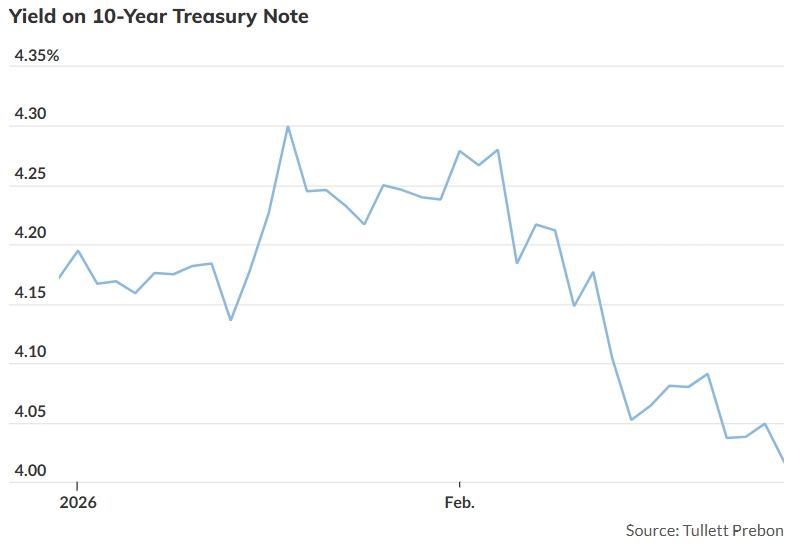
Group 1 - The U.S. bond market has seen significant inflows, with a focus on the $30 trillion U.S. Treasury market, driven partly by concerns over AI's potential impact on the job market [1] - Long-term Treasury yields have declined, reflecting investor anxiety regarding the disruptive potential of AI, with the 10-year Treasury yield falling to 4.015%, the lowest since November 26 of the previous year [1] - The 30-year Treasury yield also dropped below 4.7%, marking a three-month low, indicating a unique market environment despite the absence of major economic data releases [1] Group 2 - The decline in long-term yields has affected the housing finance sector, with new 30-year fixed mortgage rates falling below 6% for the first time in three and a half years [4] - The U.S. economy remains resilient, yet expectations for the Federal Reserve's next rate cut have been pushed to July, amidst ongoing negotiations between the U.S. and Iran regarding nuclear issues [4] - Despite mixed economic data, the job market remains stable, with low hiring and layoffs, which could alleviate housing affordability pressures, although concerns about AI-related job displacement persist [4] Group 3 - In contrast to the bond market, the stock market showed mixed performance, with the Dow Jones Industrial Average slightly up by 0.03%, while the S&P 500 and Nasdaq Composite indices fell by 0.54% and nearly 1.2%, respectively [5] - The market's risk appetite has decreased, reinforcing the trend of capital flowing into relatively safer assets [5]
Mortgage and refinance interest rates today, January 21, 2026: Rates spike as Trump pushes Greenland agenda
Yahoo Finance· 2026-01-21 11:00
Core Insights - Mortgage rates have increased significantly due to President Trump's actions regarding Greenland, which have influenced 10-year Treasury yields to reach their highest levels in five months [1] - The average 30-year fixed mortgage rate has risen by 15 basis points to 6.05%, while the 15-year fixed rate has increased by 14 basis points to 5.50% [1] Current Mortgage Rates - The current national average mortgage rates are as follows: - 30-year fixed: 6.05% - 20-year fixed: 6.12% - 15-year fixed: 5.50% - 5/1 ARM: 6.34% - 7/1 ARM: 6.42% - 30-year VA: 5.54% - 15-year VA: 5.24% - 5/1 VA: 5.18% [5] Refinance Rates - Today's mortgage refinance rates are generally higher than purchase rates, although this is not always the case [3] Market Trends - Recent fluctuations in mortgage rates have been influenced by political events, with rates dropping following proposals aimed at enhancing home affordability and then rising again due to international tensions [17] - Despite recent increases, 30-year mortgage rates remain approximately half a point lower than they were a year ago, according to Freddie Mac data [17]
希腊成为欧元区抵押贷款利率最低的五个国家之一
Shang Wu Bu Wang Zhan· 2026-01-19 09:42
Core Insights - Greece has become one of the five countries in the Eurozone with the lowest mortgage rates as of November last year, indicating a continuous decline in borrowing costs [1] - For the first time since October 2010, Greece's mortgage credit growth has turned positive, registering at 0.4% [1] - According to the latest data from the European Central Bank (ECB), Greece ranks fifth in the Eurozone for average mortgage rates (fixed term up to 5 years) at 3.04%, compared to the Eurozone average of 3.35% [1]
特朗普发文短暂压低利率,抵押贷款再融资需求激增40%
Xin Lang Cai Jing· 2026-01-14 12:48
Core Insights - The article discusses the recent fluctuations in mortgage rates in the U.S., highlighting a significant increase in mortgage demand following a drop in rates and a government announcement aimed at further reducing these rates [3][8]. Mortgage Rate Trends - Mortgage rates for 30-year fixed loans decreased from 6.25% to 6.18% last week, with a brief dip below 6% following a government announcement [5][9]. - The average points for loans with a 20% down payment decreased from 0.57 to 0.56 [5][9]. Mortgage Demand - The total volume of mortgage applications surged by 28.5% on a seasonally adjusted basis last week [3][8]. - Refinance applications increased by 40% week-over-week and were up 128% compared to the same week last year [10]. - Home purchase mortgage applications rose by 16% week-over-week and 13% year-over-year, driven by returning buyers and stabilizing home prices [10]. Economic Context - The increase in mortgage rates at the beginning of the week was influenced by rising oil prices, with rates rebounding slightly on Monday and Tuesday [6][10]. - The December Consumer Price Index (CPI) report indicated controlled inflation, which may have mitigated further rate increases [6][10].
Here’s what’s happening now with mortgage rates after Trump's latest push on housing affordability
CNBC· 2026-01-09 16:03
Core Viewpoint - President Trump is directing Fannie Mae and Freddie Mac to purchase $200 billion in mortgage bonds to improve housing affordability, which is expected to lower mortgage rates and monthly payments for homebuyers [1]. Group 1: Impact on Mortgage Rates - The purchase of mortgage-backed securities (MBS) by Fannie Mae and Freddie Mac is anticipated to lower mortgage rates, with analysts predicting a reduction of 25 to 50 basis points [6]. - UBS analysts estimate that the $200 billion in MBS purchases could lead to a reduction of approximately 10 to 25 basis points, potentially bringing the current 30-year mortgage rate down to around 6.0% from 6.21% [7]. - Historical context shows that significant MBS purchases by the Federal Reserve during the COVID-19 pandemic led to a substantial decrease in mortgage rates, highlighting the effectiveness of such actions [3][4]. Group 2: Financial Implications for Homebuyers - A decrease in mortgage rates to around 5.9% could result in a monthly payment reduction of $118 for buyers of a median-priced home valued at approximately $425,000, which could significantly impact first-time buyers [8]. - Despite potential rate reductions, affordability remains a critical issue, as home prices have increased nearly 50% since pre-pandemic levels, making it challenging for buyers to qualify for loans even at lower rates [10][11]. Group 3: Market Reactions - Homebuilder stocks experienced a rally following the announcement, although builders were already implementing strategies to lower mortgage rates prior to this news [9]. - The psychological impact of the announcement may encourage potential buyers to re-enter the market, although overall affordability issues persist [10].

招商宏观 | 静极思动
Sou Hu Cai Jing· 2025-12-29 00:35
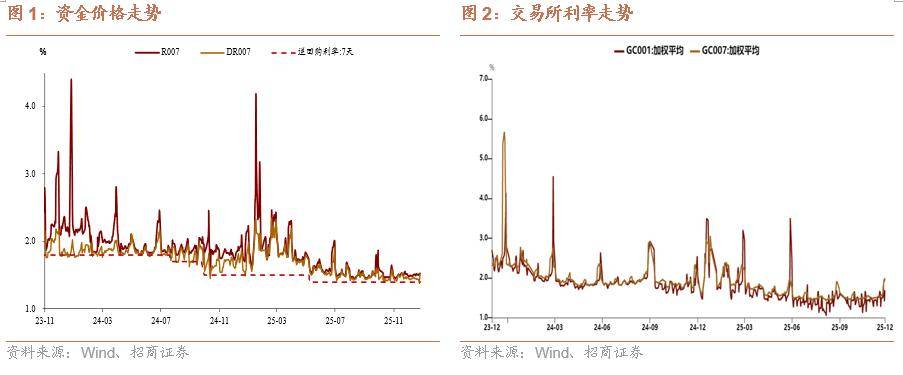
Domestic Insights - High-frequency data indicates that effective demand has been insufficient since Q4 2025, continuously squeezing corporate profit margins, leading to a significant reduction in the marginal effect of "price for volume" [2][12] - In November, the profit growth rate of industrial enterprises remained in negative territory, with a decline of 7.6 percentage points compared to the previous month [2][14] - The appreciation of the RMB may be nearing its peak, driven by concentrated settlement demand near year-end, but the central bank may begin to intentionally control the extent of appreciation [2][12] - A break of the 7 mark in the central parity requires an increase in corporate hedging rates and the proportion of cross-border RMB settlements, with expectations for a favorable timing in mid to late 2026 [2][12] Overseas Insights - Following the Bank of Japan's monetary policy meeting, Governor Ueda stated that they are steadily approaching the 2% inflation target and will continue to raise interest rates, maintaining a gradual tightening pace [2][13] - The U.S. Q3 GDP growth rate exceeded expectations at 4.3%, with over half of this growth attributed to personal consumption expenditures, while government investment has rebounded [2][13] - The high mortgage rates have a delayed transmission effect on the real estate market but are expected to significantly impact current consumption [2][13] Asset Market Insights - The A-share equity market continues its allocation trend, but short-term volatility may increase, especially with external disturbances expected after the New Year [3][12] - The USD/JPY exchange rate remains above 155, and any intervention by the Bank of Japan or a cooling of Fed rate cut expectations could cause temporary disturbances to domestic equity assets [3][12] Monetary Liquidity Tracking - The central bank's flexible operations have resulted in a tight balance in the funding environment, with a net injection of 652 billion yuan from various operations [4][12] - The average weekly rate for DR001 decreased by 0.950 basis points to 1.2633%, while DR007 increased by 0.330 basis points to 1.4464% [5][16] Government Bonds - The supply pressure of government bonds has significantly decreased, with a maturity repayment scale of 2,948.57 billion yuan, and the planned issuance for the upcoming week is 26 billion yuan, a substantial drop from the previous week [6][17] Interbank Certificates of Deposit - The weighted issuance rate for interbank certificates of deposit was 1.6394%, down 1.46 basis points from the previous week, while the secondary market saw slight increases in rates for various maturities [7][18] Major Asset Performance - Domestic long-term and short-term government bond yields showed a divergence, with short-term yields declining significantly [8][34] - Gold prices surged, while oil prices experienced fluctuations [11][34]
隔夜美股 | “圣诞老人行情”如期而至 标普500指数创历史新高
Zhi Tong Cai Jing· 2025-12-24 22:31
Market Performance - The three major U.S. indices closed higher, with the S&P 500 reaching an intraday all-time high of 6937.32 points [1] - The Dow Jones Industrial Average rose by 288.75 points, or 0.60%, closing at 48731.16 points; the Nasdaq increased by 51.46 points, or 0.22%, to 23613.31 points; and the S&P 500 gained 22.26 points, or 0.32%, finishing at 6932.05 points [1] European and Asian Markets - The UK FTSE 100 index fell by 0.19%, while the French CAC40 and Euro Stoxx 50 indices were nearly flat [2] - In Asia, the Nikkei 225 index decreased by 0.14%, the KOSPI index fell by 0.21%, the BSE SENSEX dropped by 0.14%, and the Indonesian Composite index declined by 0.55% [2] Currency Exchange Rates - The U.S. Dollar Index fell slightly, closing at 97.941 [2] - The Euro traded at 1.1775 USD, the British Pound at 1.3496 USD, and the Japanese Yen at 156.02 JPY against the dollar, all showing slight declines from the previous trading day [2] Commodity Prices - Spot gold decreased by 0.1%, settling at 4480.77 USD, with an intraday low of 4448.53 USD [4] - Crude oil prices saw minor declines, with light crude oil futures for February delivery at 58.35 USD per barrel, down 0.05%, and Brent crude oil futures at 62.24 USD per barrel, down 0.22% [4] Economic Indicators - Initial jobless claims unexpectedly fell by 10,000 to 214,000, while the unemployment rate for December is expected to remain high at 4.6% [5] - Barclays raised its forecast for Q4 GDP growth to 2.0%, citing strong consumer spending and demand momentum [6] Mortgage Rates - U.S. mortgage rates for 30-year fixed loans decreased to 6.18%, down from 6.21% the previous week [7] - The number of active homebuyers in the market was reported at approximately 1.43 million, the lowest since April 2020 [7] Federal Reserve Outlook - BlackRock analysts predict limited rate cuts by the Federal Reserve in 2026, with expectations for only two rate cuts [8] Cryptocurrency Regulations - The EU's new digital asset tax transparency regulations will take effect on January 1, 2026, requiring crypto service providers to report user transaction details [9] Company-Specific News - Tesla is under investigation by U.S. regulators regarding emergency door handles on Model 3 vehicles, affecting approximately 179,000 units [10] - Goldman Sachs warned clients about potential data breaches due to a security incident involving an external law firm [11]


