Huawei

Search documents
Apple is staging a 'phenomenal turnaround' in China thanks to the iPhone 17
Business Insider· 2025-12-03 17:49
Core Insights - Apple is expected to lead smartphone shipments in China by 2025, driven by strong demand for the iPhone 17, with a forecast of 247 million iPhones shipped globally this year [1] - A significant turnaround in market performance is noted, with a projected 3% growth in China for 2025, reversing an earlier forecasted decline [2] - Apple was reported to have a market share exceeding 20% in China during October and November, indicating a strong competitive position [2] Market Performance - The iPhone shipments in China are rebounding from a previously reported 9% decline, showcasing a recovery following the iPhone 17 announcement [3] - Globally, smartphone shipments are expected to grow by 1.5% year-over-year, largely attributed to Apple's performance during the holiday quarter [4] - Apple anticipates record revenue for the December quarter, marking it as the best ever for both the company and the iPhone [4] Competitive Landscape - Despite the positive outlook, Apple faces competition from local brands like Huawei and Xiaomi, which are releasing new smartphone models [6] - The iPhone Air encountered initial challenges in China due to availability issues, but the iPhone 17 has been well-received in its first month [6] - Overall global smartphone shipments are projected to grow by 6.1% year-over-year in 2025, with Apple's value forecast to exceed $261 billion [7]



Nokia (NYSE:NOK) 2025 Conference Transcript
2025-12-03 17:37
Summary of Nokia's Conference Call Company Overview - **Company**: Nokia - **Industry**: Telecommunications and Network Infrastructure Key Points and Arguments Network Infrastructure Focus - Nokia is focusing on capitalizing on opportunities in network infrastructure, particularly in IP switching and optical networking, with a growth guidance of 10%-12% in these areas [6][8][12] - The integration of Infinera is aimed at enhancing competitiveness in AI and cloud sectors, shifting focus from traditional telco reliance [6][7] Growth Guidance and Market Position - The guidance for Network Infrastructure (NI) growth is set at 6%-8%, with optical and AI components expected to grow more than 10% [8][12] - Nokia's market exposure is currently more aligned with telcos than with cloud service providers (CSPs), which may limit growth potential in certain segments [12][13] Capital Allocation Strategy - Nokia plans to maintain investments in telcos while also focusing on AI and cloud opportunities driven by hyperscalers [17][18] - The company aims to balance investments between traditional telco services and emerging AI-driven technologies [17][19] Backlog and Customer Engagement - The backlog consists of multiple customers with longer order durations, indicating a growing demand for optical solutions [21] - Nokia emphasizes the importance of executing orders and maintaining customer commitments over mere customer announcements [22] Competitive Landscape in IP and Optical Markets - Nokia acknowledges the challenges in gaining market share in IP switching and routing due to established competitors but sees opportunities through co-development with customers [24][25] - The company is focused on enhancing its software stack and tooling to differentiate itself in the market [24][26] Profitability and Cost Management - Nokia is committed to improving profitability in the optical segment by focusing on cost targets and pricing discipline [28][29] - The integration of Infinera is expected to enhance scale and reduce costs, making Nokia more competitive against peers like Ciena and Huawei [29] U.S. Manufacturing and Supply Chain Strategy - The establishment of U.S. manufacturing is seen as strategic for winning business and enhancing supply chain resilience [30][31] - Nokia is investing in regionalization of manufacturing to align with demand and improve agility in supply [31][32] Mobile Infrastructure Importance - Nokia views mobile infrastructure as critical for future connectivity needs, especially with the rise of AI, autonomous vehicles, and other technologies requiring reliable networks [36][37] - The company is transitioning to a more software-driven business model in mobile networks to enhance profitability and adaptability [40][41] Partnership with NVIDIA - The partnership with NVIDIA is expected to yield benefits starting in 2026, with initial commercial deployments anticipated in 2027 [42][43] - Nokia aims to capture value in the AI space by focusing on software enhancements rather than solely on hardware [46][47] Market Perception and Communication - There is a need for better communication regarding Nokia's role as a critical infrastructure provider, moving beyond its historical association with mobile phones [63][64] - The company is focused on reshaping its narrative to highlight innovations and investments in core infrastructure and services [64] Additional Important Insights - Nokia's historical performance has led to a cautious approach in setting growth targets to ensure realistic and achievable expectations [15][39] - The company recognizes the need for telcos to innovate to improve returns and is positioning itself as a partner in this transformation [39][40]

China Unicom, HKT, Huawei, and EngageLab Unveil Joint Cross-Operator Authentication Solution to Power Secure Global Business Expansion
Globenewswire· 2025-12-03 10:00
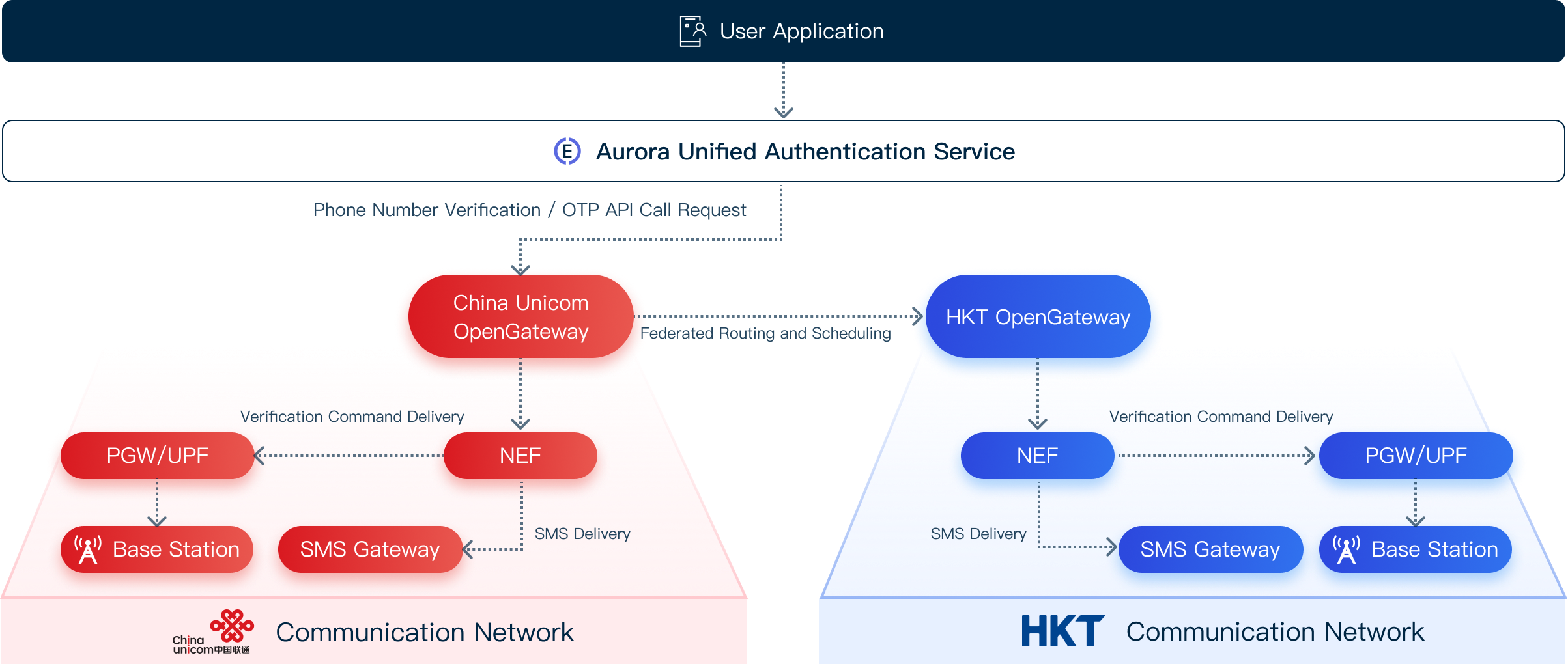
Core Insights - EngageLab, in collaboration with China Unicom Global, HKT, and Huawei, has launched the OpenGateway Cross-Operator Converged Authentication Solution, setting a new standard for secure and scalable user authentication across borders [1] Industry Challenges - The expansion of enterprises into international markets necessitates robust identity authentication, yet fragmented operator capabilities and inconsistent standards hinder seamless user verification [2] - Traditional SMS-based authentication methods are prone to fraud and inefficiencies, negatively impacting user experience and business security [2] Solution Overview - OpenGateway combines the strengths of its partners by integrating their number verification and OTP-SMS capabilities into a single API, allowing enterprises to access secure authentication services globally without region-specific adaptations [3] - The solution reduces integration cycles from months to weeks and lowers operational overhead, facilitating rapid deployment in new markets [4] Security and User Experience - OpenGateway employs a dual-layered authentication architecture, utilizing carrier-grade number verification primarily, with SMS verification as a fallback, ensuring high availability and stability [6] - This design effectively prevents fraudulent activities while providing a seamless experience for legitimate users, enhancing conversion and retention rates [6] Developer Benefits - The standardized encapsulation based on the CAMARA framework allows for quick and low-barrier integration, accommodating differences among operators [7] Proven Impact - OpenGateway is already operational in Mainland China and Hong Kong, processing over 20 million authentication requests daily and supporting hundreds of millions of users across various sectors [8] - In finance, fraudulent loan applications have decreased by 60%, while e-commerce has seen a 75% reduction in fake registrations and a 65% cut in marketing resource waste [8] - Social and gaming sectors report a 28% increase in new user retention and a significant drop in complaints, improving the overall digital experience [8] Cost Efficiency - Enterprises utilizing OpenGateway have reported over 50% reduction in long-term maintenance costs and a 40% decrease in anti-fraud expenses, allowing for resource reallocation towards core business innovation [9] Global Expansion - OpenGateway is expanding into Southeast Asia, including Singapore and Indonesia, and is positioned to become the global benchmark for cross-operator authentication, with a modular design that supports rapid rollout [10]


iPhone 17 will drive record Apple shipments in 2025, IDC says
CNBC· 2025-12-03 08:28
Apple's latest iPhone models are shown on display at its Regent Street, London store on the launch day of the iPhone 17.Apple will hit a record level of iPhone shipments this year driven by its latest models and a resurgence in its key market of China, research firm IDC has forecast.The company will ship 247.4 million iPhones in 2025, up just over 6% year-on-year, IDC forecast in a report on Tuesday. That's more than the 236 million it sold in 2021, when the iPhone 13 was released.Apple's predicted surge is ...

追踪中国半导体国产化:AI GPU 与中国 AI 智能手机-Tracking China’s Semi Localization-AI GPU and AI smartphones in China
2025-12-03 02:16
Summary of Key Points from the Conference Call Industry Overview - The focus is on the **AI GPU and AI smartphone** sectors in **China**, particularly the developments surrounding **Bytedance** and its **Doubao AI smartphones** [1][4][7]. Core Insights and Arguments - **Bytedance's Winter Force Conference**: Scheduled for December 18-19, 2025, in Shanghai, it will showcase advancements in agentic AI and updates on Doubao's LLM and AI applications. Monthly token usage for Bytedance's services increased to **900 trillion**, a **77%** rise from **508 trillion** in May [7][10]. - **Local AI GPU Vendors**: Two companies, **Moore Thread** and **MetaX**, are set to be listed on China's A-share STAR board. Moore Thread anticipates **2025 revenue** between **Rmb1.2 billion** and **Rmb1.5 billion**, indicating a **210%** growth from 2024. MetaX expects **2025 revenue** between **Rmb1.5 billion** and **Rmb2.0 billion**, reflecting a **134%** growth [4][7]. - **AI Inference Computing**: The ability of local AI GPU chips to support strong AI inference computing is still uncertain. Current reliance on Nvidia's **5090 gaming graphics chips** and other local chips persists [7][10]. - **Huawei's Kirin 9030 Processor**: The new processor powers the **Mate 80** series smartphones, boasting a **35%** performance improvement over the previous model, despite limitations in foundry processes [10]. Additional Important Insights - **China's Semiconductor Self-Sufficiency**: The self-sufficiency ratio in semiconductors rose to **24%** in 2024 from **20%** in 2023, with expectations to reach **30%** by 2027. This growth is driven by advancements in CPU and GPU production, particularly with Huawei's **Ascend 910B** chips [31][34]. - **Market Trends**: China's semiconductor equipment imports increased by **20%** year-over-year in October 2025, indicating strong demand and spending in the second half of the year [11][12]. - **Stock Performance**: Notable performers include **SICC** (+21.1%) and **Naura** (+0.4%), while underperformers include **GigaDevice** (-17.8%) and **Empyrean** (-17.6%) [18][19]. Conclusion - The developments in AI GPU and smartphone sectors, particularly with local vendors and Bytedance's initiatives, indicate a robust growth trajectory in China's tech landscape. The ongoing improvements in semiconductor self-sufficiency and equipment imports further support this positive outlook.
Qualcomm (NasdaqGS:QCOM) 2025 Conference Transcript
2025-12-02 22:55
Qualcomm Conference Call Summary Company Overview - **Company**: Qualcomm (NasdaqGS:QCOM) - **Date**: December 02, 2025 - **Speaker**: Cristiano Amon, President and CEO Key Points Data Center Business - Qualcomm is focusing on the low-power inference market with the introduction of AI 200 and AI 250 products, aiming to build large inference-focused clusters [5][9] - The company anticipates competition in the AI space, emphasizing the importance of efficiency metrics such as tokens per dollar and tokens per watt [6][12] - Qualcomm is leveraging its CPU and NPU architecture to create efficient inference solutions, believing it can capture a significant share of the market [7][8] - The first customer for the AI 200 is a 200-megawatt data center with Saudi National AI Company, indicating strong initial traction [10] Financial Projections - Qualcomm's non-handset revenue is projected to reach $22 billion by fiscal 2029, with the data center business expected to be a significant incremental contributor [16][17] - The company has been conservative in its financial modeling but is confident in pulling projections forward by one year based on current performance [17] Adjacent Markets - The automotive sector is highlighted as a strong growth area, with Qualcomm's Snapdragon Digital Chassis becoming an industry platform [20][21] - Personal AI devices, particularly smart glasses, are seen as a promising market, with expectations of significant growth and integration with mobile technology [22][23] - The acquisition of Arduino is aimed at enhancing Qualcomm's capabilities in industrial applications, further diversifying its revenue streams [26] Handset Business - Qualcomm's handset revenue, particularly in the Android segment, has grown nearly 10% in a flat market, driven by a shift towards premium devices [39][40] - The company is seeing a contraction in the mid-tier market while the premium segment expands, especially in markets like India [41][42] - Qualcomm maintains a strong position with major Android OEMs, despite their internal modem development efforts, due to the need for rapid technology transitions [44][45] Licensing and Competitive Landscape - Qualcomm is planning its business under the assumption that Apple will transition away from using its modems by 2027, while still being open to continued collaboration [49][50] - The company has a robust patent portfolio and believes its licensing model is fair and stable, with successful renewals from major players [52][53] Additional Insights - Qualcomm emphasizes the importance of context in computing, particularly for agentic experiences in personal devices [31][32] - The company is focused on maintaining leadership in IP and technology, which is crucial for its competitive edge in the rapidly evolving mobile market [46][47] This summary encapsulates the key insights from Qualcomm's conference call, highlighting the company's strategic focus areas, financial outlook, and competitive positioning in the semiconductor industry.

Cisco Systems, Inc. (CSCO) Presents at UBS Global Technology and AI Conference 2025 Transcript
Seeking Alpha· 2025-12-02 20:03
Group 1 - The company is responsible for Optical Systems and Optics, which includes traditional DWDM systems primarily sold to service providers and hyperscalers [1] - The Optical Systems business focuses on dense wavelength division multiplexing (DWDM) technology used for transmitting signals over fiber optic infrastructure [1] - Competitors in the Optical Systems domain include Ciena, Fujitsu, ADVA, Infinera, Huawei, and ZTE, indicating a fragmented market [1]


Cisco Systems (NasdaqGS:CSCO) 2025 Conference Transcript
2025-12-02 18:57
Summary of Cisco Systems Conference Call Company Overview - **Company**: Cisco Systems (NasdaqGS:CSCO) - **Date**: December 02, 2025 - **Key Speakers**: Bill Gartner (SVP and GM of Optical Systems and Optics Group), Sami Badri (Head of Investor Relations and Market Insights) Industry Insights - **Industry**: Optical Systems and Networking - **Key Competitors**: Ciena, Fujitsu, Adva, Infinera, Huawei, ZTE [2][8] Core Business Segments 1. **Optical Systems**: - Focus on DWDM systems for service providers and hyperscalers [2] - Includes chassis-based solutions with line cards and software [2] 2. **Optics Business**: - Short-distance transceivers for switches and routers [2] 3. **Acacia Technologies**: - Provides coherent technology for optical systems and DCO pluggables [3] Demand and Growth - **Hyperscaler Demand**: - Significant increase in demand for DCI optics from hyperscalers, leading to a revised forecast for FY26 [8][9] - FY25 saw $1 billion in AI infrastructure revenues, with expectations of $3 billion in FY26 [64][68] - **Scale Across vs. Traditional WAN**: - Scale across networks allow for direct connections between scale-out networks, bypassing WAN constraints [14][18] - This model is crucial for cost-effective scaling of AI infrastructure [14] Market Dynamics - **Optics vs. Switching**: - Current mix is approximately one-third optics and two-thirds switching, but this can fluctuate based on customer deployment cycles [21][24] - Transition from 400-Gig to 800-Gig optics is underway, with some customers skipping directly to 1.6T [29][30] - **Long Tail of Technology**: - Legacy technologies like 10-Gig still represent a significant portion of the optics business, indicating a slow adoption curve for new technologies [28] Competitive Positioning - **Pluggable Technology**: - Cisco is leading in the pluggable optics market, with a significant share among hyperscalers [75] - Competitors are beginning to adopt pluggable models, which Cisco views as a long-term trend [75] Financial Outlook - **Fiscal 2026 Drivers**: - AI infrastructure is the primary growth driver, alongside a campus refresh cycle [78][80] - The campus cycle is expected to provide steady growth over several years rather than a sharp spike [82] - **Supply Chain Management**: - Cisco is actively managing supply chain challenges, particularly with DRAM and other components, but does not foresee significant disruptions [55][58] Key Takeaways - Cisco is well-positioned to capitalize on the growing demand for AI infrastructure and optical networking solutions, with a strong focus on adapting to customer needs through a component business model [48][86] - The company emphasizes the importance of providing an open solution for AI infrastructure, contrasting with competitors that may offer more proprietary systems [86]
Samsung unveils first triple-folding phone ahead of expected Apple launch — but it will cost you
New York Post· 2025-12-02 16:04
Core Viewpoint - Samsung Electronics has launched its first multi-folding smartphone, the Galaxy Z TriFold, to strengthen its position in the competitive foldable smartphone market, which is expected to see intensified competition from Chinese rivals [1][9]. Product Details - The Galaxy Z TriFold is priced at approximately 3.59 million won ($2,440.17) and features a 253.1 millimeter (10-inch) display, which is nearly 25% larger than the Galaxy Z Fold 7 model [2][5]. - The device will be available for sale in South Korea starting December 12, with plans for rollout in China, Singapore, Taiwan, and the UAE within the year, and a potential US launch in the first quarter of next year [4][9]. Market Outlook - Samsung's Executive Vice President, Alex Lim, believes that the foldable market will continue to grow, with the TriFold potentially acting as a catalyst for growth in key segments [3]. - Analysts suggest that the TriFold may serve more as a showcase of new technology rather than a volume-driving flagship, given its status as a first-generation product [7][10]. - The foldable smartphone market is projected to account for less than 2% of the total smartphone market this year, with expectations to rise to under 3% by 2027 [10]. Competitive Landscape - Competition in the foldable smartphone market is increasing, with Huawei having launched the first three-way folding phone and Apple expected to release its first foldable next year [9]. - Samsung's shipment share of the foldable market surged to 64% in the third quarter, up from 9% in the previous quarter, indicating the volatility of market share based on product launch timing [11].


Samsung launches its first multi-folding phone as competition from Chinese brands intensifies
CNBC· 2025-12-02 05:26
Core Viewpoint - Samsung Electronics has launched its first multi-folding smartphone, the Galaxy Z TriFold, to maintain its competitive edge against fast-moving rivals, particularly with Apple's anticipated entry into the foldable market [1][5]. Product Launch Details - The Galaxy Z TriFold will be available for sale in South Korea starting December 12, 2025, with subsequent launches planned for China, Taiwan, Singapore, and the UAE [2]. - The device will reach the U.S. market in the first quarter of 2026, with further details to be announced later [3]. Product Specifications - The Galaxy Z TriFold features a single model in black, equipped with 16GB of memory and 512GB of storage, priced at 3,594,000 South Korean won (approximately $2,449) [3]. - It utilizes two inward-folding hinges to create a 10-inch display with a resolution of 2160 x 1584, slightly smaller than the 11-inch display of the 11th-generation iPad [3]. - When folded, the device measures 12.9 millimeters thick, which is thicker than the Galaxy Z Fold6 and Galaxy Z Fold7 [4]. Strategic Positioning - Samsung aims to use the Galaxy Z TriFold as a pilot to test durability, hinge design, and software performance while gathering user insights before broader commercialization [5]. - The device is designed to run three apps vertically side by side and offers a desktop-like mode without needing a separate display [6]. Leadership and Innovation - TM Roh, co-CEO of Samsung Electronics, stated that the Galaxy Z TriFold represents years of development in foldable designs, focusing on balancing portability, performance, and productivity [7]. - Samsung has been a pioneer in the foldable smartphone market since unveiling its first device in 2019, although the market remains relatively small with increasing competition from Chinese brands [8]. Competitive Landscape - Competitors like Huawei and Honor have also introduced foldable smartphones, with Huawei launching its second-generation trifold phone in September 2025 [9]. - The Galaxy Z TriFold is rated IP48 for water resistance, allowing it to withstand immersion in water up to 1.5 meters for 30 minutes, though it has limited dust protection [10].