
Chery

Search documents
Angola opens car assembly plant
Yahoo Finance· 2026-01-26 12:34
Group 1: Company Overview - Opaia has launched Opaia Motors, the only domestic producer of quality, affordable commercial and private vehicles in Angola, marking a significant milestone for the country's transport sector [1][4] - The assembly facility has an installed capacity to produce 22,000 light vehicles and 1,000 buses annually, located in the Zona Economica Especial (ZEE) in Luanda [2] - Opaia Motors currently employs over 1,500 workers, with plans to expand to 3,500 direct jobs, focusing on technical and vocational training for its workforce [3] Group 2: Strategic Importance - The launch of Opaia Motors is seen as a major step in establishing Angola's automotive manufacturing industry, contributing to national mobility and job creation [3][4] - The company aims to provide locally produced vehicles to meet the demand for affordable transport solutions, thereby supporting Angolan enterprises and families [5] - Opaia Motors represents the group's strategic investment capabilities in complex industrial sectors, complementing its existing businesses in construction, fertilizer production, mining, and finance [6]
中国汽车_海外电动汽车机遇及潜在风险-China Automobiles_ The overseas EV opportunities & the risks that may ensue
2026-01-21 02:58
Summary of Key Points from the Conference Call Industry Overview - **Industry**: China Electric Vehicles (EV) and New Energy Vehicles (NEV) - **Market Growth**: The overseas market is expected to be a significant growth area for China EV sales in 2026, with a projected **35% year-over-year (yoy) volume growth** [1][15]. Core Insights - **Price Competition Framework**: A framework was developed to assess potential price cuts in overseas markets based on three parameters: 1. Is the auto market in contraction? 2. Do Chinese OEMs have high penetration? 3. Is there excess production capacity? - Thailand is currently the only market exhibiting all three parameters, making it an exception rather than the norm for price competition [1][16][24]. - **Profitability in Overseas Markets**: Chinese OEMs, particularly BYD, are achieving significantly higher Average Selling Prices (ASP), gross margins, and unit profits in overseas markets compared to domestic sales. For instance, BYD's ASP is **50%-120% higher**, with gross margins **5-10% higher**, and unit profits **43%-420% higher** for the same models sold outside China [3][49]. - **NEV Market Penetration**: As China's NEV penetration reaches **60%** with a slowdown to **11% yoy growth** by 2026, overseas markets are entering a mass-adoption phase. The overseas NEV sales are expected to reach **7.4 million units** in 2026, with Chinese brands fulfilling **55%** of this volume [4][62][65]. Market Dynamics - **Thailand as a Case Study**: Thailand is highlighted as a key market for Chinese OEMs due to favorable local policies and cultural proximity. The market is projected to see **141,000 NEV sales** in 2025, with a **26% market share** for Chinese brands [17][18]. - **Price Cuts and Market Concerns**: Two rounds of price cuts in Thailand have raised concerns about a potential price war similar to that in China. The price cuts were driven by market contraction, high penetration of Chinese OEMs, and excess production capacity [31][39]. - **Future Risks**: If other overseas markets begin to exhibit similar conditions as Thailand, there could be a **16%-19% downside** to cash margins at 0% [2][12][44]. Investment Recommendations - **Recommended Stocks**: BYD and XPeng are identified as well-positioned for overseas growth due to their higher exposure to international markets and expanding sales networks [4][62]. Additional Insights - **Cyclical Nature of the Auto Industry**: The cyclical nature of the auto industry and potential changes in local production requirements could impact future pricing strategies and market dynamics [2][44][46]. - **Local Production Capacity**: Chinese OEMs are building localized production capacity to meet overseas demand, with expectations of **0.9 million** and **1.7 million** NEV production capacity overseas by the end of 2025 and 2026, respectively [4][62]. - **Competitive Landscape**: Chinese brands are gaining market share in various overseas markets, with significant growth in developed markets such as the UK, Spain, and Australia, where they achieved double-digit market share gains [75][76]. This summary encapsulates the key points discussed in the conference call, focusing on the dynamics of the Chinese EV market, particularly in relation to overseas expansion and competitive strategies.


德赛西威:管理层调研:传统车企智能驾驶业务驱动未来增长;灵活响应各类需求
2026-01-20 03:19
Summary of Desay SV Conference Call Company Overview - **Company**: Desay SV (002920.SZ) - **Industry**: Automotive technology, focusing on smart driving and automotive software Key Points Business Growth and Market Trends - Management remains optimistic about business growth despite challenges in the end market due to rising memory costs [1] - Catalysts for growth include: - Increasing adoption of smart driving technologies - Rising penetration rates of Level 3 (L3) autonomous driving in China - Traditional car OEMs in China adopting smart driving solutions - Expansion of customer base towards joint venture (JV) car OEMs and global-tier car OEMs [1][2] - Development of next-generation domain controllers that integrate smart cockpit and smart driving functionalities [1] Customer Insights - Li Auto is projected to remain the largest customer in 2025, with Chery showing strong growth [2] - Xiaomi and Xpeng are identified as significant revenue contributors [2] - In 2026, management anticipates more opportunities with traditional car OEMs like Great Wall and Changan Automobile, focusing on smart driving adoption [2] Competitive Landscape - Desay SV is positioned as a leading supplier in smart driving and smart cockpit technologies, competing against in-house solutions from companies like BYD, Tesla, and Huawei [2] - The company offers flexible solutions tailored to various customer needs, including manufacturing, design, and algorithm development [2] Financial Outlook - Despite rising memory costs, management believes their inventory can mitigate impacts, although effects may start to be seen in the second quarter of the year [2] - The company is rated Neutral with a 12-month target price of Rmb137, based on a 20.8x target P/E multiple applied to 2026E EPS [3] - Revenue projections for the next few years are as follows: - 2025: Rmb32.23 billion - 2026: Rmb43.15 billion - 2027: Rmb55.55 billion [7] Risks and Considerations - Potential risks include: - Variability in competition intensity among Chinese car OEMs affecting supply chain pricing and gross margins [3] - Uncertainty regarding the pace of product line expansion, particularly in domain controllers and automotive software [3][6] Long-term Drivers - Expansion into global-tier car OEMs and overseas markets, as well as ventures into robotics, are seen as long-term growth drivers for Desay SV [2] Additional Insights - The company’s valuation is considered fairly priced despite ongoing competition and pricing pressures in the supply chain [1] - Management's focus on product expansion from smart cockpit to smart driving and automotive software aligns with the growing trend of smart driving in China [1]
2026 中国新能源汽车与动力电池手册_从自动驾驶到人工智能-2026 China EV & EV Battery Handbook_ From Autonomous Driving to AI
2026-01-20 01:50
Summary of Key Points from the Conference Call Industry Overview: Greater China Auto, EV, and EV Battery Industry Forecasts - **China's Auto Industry**: Expected to face challenges in 2026 with a forecasted decline in auto wholesales by **1.6% YoY** compared to a **10% YoY** increase in 2025. This decline is attributed to front-loaded demand in 2025 [1] - **Domestic EV Sales**: Anticipated to grow only **7% YoY** in 2026 due to a **5% increase in purchase tax** and reduced trade-in subsidies [1] - **Export Sales**: Projected to increase by **12% YoY**, reaching **7.9 million units** in 2026, with EV exports expected to surge by **40% YoY** [1] - **Competition Dynamics**: Shift from price competition to configuration-based competition, necessitating more investment in autonomous driving (AD) and smart cabin technologies [1] Key Automotive/EV Themes for 2026 Theme 1: Export Growth - **Export Growth**: Companies like Chery and BYD are expected to benefit significantly from exports, especially with the EU's minimum EV price replacing tariffs [2] Theme 2: Autonomous Driving Development - **ADAS to AD Transition**: L3 permits issued to Changan and BAIC, with highway/city NOA penetration expected to exceed **40%** in 2026 and **85%** by 2030. L4/L5 penetration is projected to reach **8%** by 2030 [3] Theme 3: Cost Concerns - **Battery and Memory Costs**: Rising costs and supply stability of memory are key concerns for auto OEMs [3] Key Battery Themes for 2026 Theme 1: Energy Storage Systems (ESS) - **ESS Demand**: Global battery ESS installations expected to grow by **33% YoY** in 2026, with shipments increasing by **41% YoY** [4] Theme 2: Global Expansion - **Overseas Capacity Expansion**: Chinese battery manufacturers are accelerating their overseas capacity expansion, particularly in Europe and Southeast Asia, in response to rising tariffs and trade tensions [4] Theme 3: VAT Rebate Changes - **Export VAT Rebate Cut**: Anticipated to lead to a rush in battery production and shipment in Q1 2026, potentially increasing raw material prices and exerting cost pressure on battery makers and auto OEMs [5] Theme 4: Technological Innovation - **Sodium-Ion Battery**: Launch of Gen-2 sodium-ion battery expected, with ASSB (all-solid-state battery) small-batch production anticipated to start in 2027 and scale up significantly post-2029 [5] Investment Recommendations - **Top Picks**: - **XPeng**: Launch of Mona SUV and HR in 2H26, with a focus on AI-related businesses [6] - **CATL**: Growth driven by CEV, ESS, and overseas capacity despite short-term cost pressures [6] - **Tuopu**: Major supplier for humanoid robots with overseas expansion [6] - **Minth**: Resilient earnings growth supported by high overseas market exposure [6] - **Hesai**: Increased LiDAR adoption in China alongside L3 ADAS development [6] Additional Insights - **Market Dynamics**: The shift in competition and the focus on technological advancements highlight the evolving landscape of the automotive and EV sectors in China, emphasizing the need for companies to adapt to changing consumer preferences and regulatory environments [1][3][4][5]





Chassis Supply Chain's "iPhone Moment": China's Tier 1 Shift as LeeKr Emerges
Prnewswire· 2026-01-19 04:11
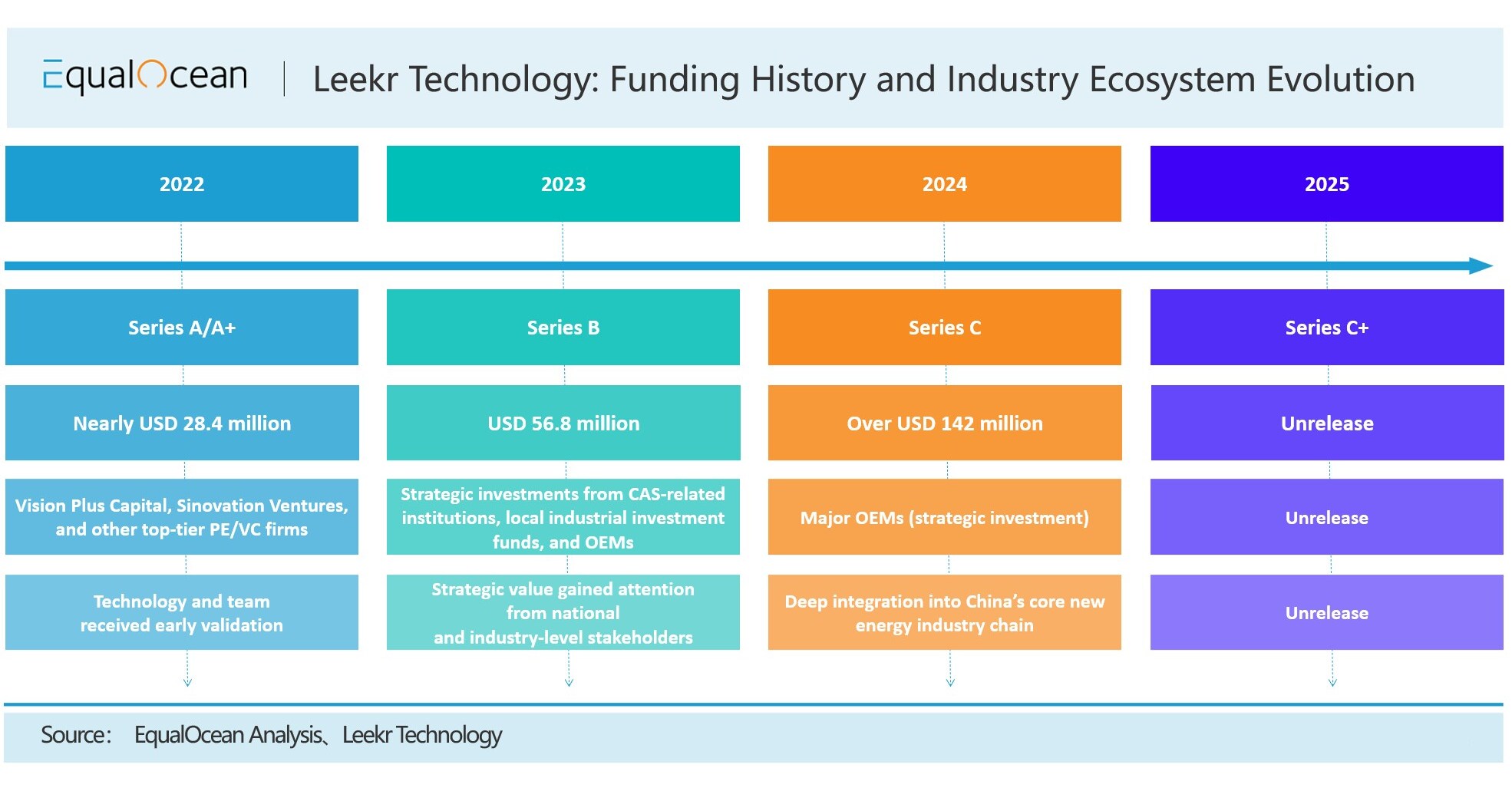
Industry Overview - China's electric vehicle (EV) industry has transformed into a leading force globally, with over 2 million EVs exported in the first ten months of 2025, nearly double the previous year [1] - Global vehicle sales reached approximately 70.53 million units from January to September 2025, with new energy vehicles (NEVs) accounting for over 22% of total sales, and nearly 70% of NEV sales growth originating from China [2] - China holds a 70%–85% global market share in critical components like batteries, driving the global shift towards electrification [2][3] Supply Chain Transformation - The automotive supply chain is undergoing a structural change, with China establishing systemic advantages in battery supply chains, electric drive platforms, and manufacturing efficiency [3] - Chassis-level system solutions are evolving from mechanical components to core enablers of intelligent driving, with technologies like brake-by-wire and steer-by-wire becoming essential [4] Company Spotlight: LeeKr Technology - LeeKr Technology, founded in 2021, has raised over USD 284 million in financing, indicating strong investor confidence in its technical direction and the broader industry trend [7][9] - The company has secured significant funding rounds, including USD 56.8 million in Series B financing in 2023, marking its transition from a promising startup to a strategic player in China's intelligent EV ecosystem [10][11] - By 2024, LeeKr closed a Series C funding round of over USD 142 million, with participation from government-guided funds and major OEMs, further integrating it into China's NEV supply chain [13][15] Strategic Partnerships and Market Position - LeeKr serves over ten automaker customers, with its products deployed across more than thirty vehicle models, showcasing its technical validation and industry trust [17] - The company is positioned to evolve from a supporting role to a key provider of foundational capabilities in the smart EV supply chain, addressing challenges of sustainable operation and scalability [24][26] Global Expansion Strategy - LeeKr's globalization strategy involves expanding alongside automotive customers into overseas markets, establishing localized manufacturing for critical components [21][22] - The cooperation with Geleximco Group exemplifies LeeKr's approach to translating China's engineering depth into globally applicable industrial capabilities [26]

China Auto Market Boomed in 2025: Why Growth May Be Softer in 2026
ZACKS· 2026-01-16 17:01
Core Insights - China's vehicle sales and production reached record highs in 2025, with production at 34.5 million units (up 10.4% year over year) and sales at 34.4 million units (up 9.4% year over year), driven by strong demand for new energy vehicles (NEVs) [2][4] Group 1: Market Performance - In 2025, China's passenger vehicle market also crossed the 30-million-unit mark, with production at 30.27 million units (up 10.2% year over year) and sales at 30.10 million units (up 9.2% year over year) [3] - The commercial vehicle segment saw production and sales rise to 4.26 million and 4.30 million units, both achieving double-digit growth [3] - China maintained its position as the world's largest auto market for the 17th consecutive year [4] Group 2: NEVs and Export Growth - China remained the largest NEV market globally for the 11th consecutive year in 2025, with NEV production and sales surpassing 16 million units [5] - NEV sales increased by 28% year over year to 16.5 million units, with battery electric vehicles (BEVs) leading the growth at 10.6 million units (up 37.6%) and plug-in hybrid vehicles (PHEVs) reaching 5.8 million units (up 14%) [6] - Vehicle exports reached a record 7.1 million units, up 21% year over year, driven by improved product quality and competitive pricing [7] Group 3: Key Players - BYD led in volume with approximately 4.6 million vehicles delivered in 2025, marking a 7.7% year-over-year increase [9] - NIO delivered 326,028 vehicles, up nearly 47% year over year, while XPeng recorded the fastest growth with deliveries jumping 126% to 429,445 units [10] - Li Auto delivered 406,343 vehicles, reflecting a 19% year-over-year decrease, despite expanding its international presence [11] Group 4: Future Outlook - Growth in China's auto market is expected to moderate in 2026, with total vehicle sales forecasted to increase by just 1% to 34.8 million units, compared to a 9% rise in 2025 [17] - Passenger vehicle sales are projected to rise 0.5% to 30.3 million units, while commercial vehicle sales are expected to increase by 5% to 4.5 million units [18] - NEVs are anticipated to remain the main growth driver, with sales forecasted to rise 15% to 19 million units, albeit at a slower pace than in recent years [18]
China's BYD overtakes Tesla as world's biggest electric car seller
The Guardian· 2026-01-02 15:09
Core Insights - BYD has overtaken Tesla as the world's largest electric carmaker in 2025, selling 2.26 million battery electric cars compared to Tesla's 1.63 million deliveries [1][11] - This shift signifies the rise of Chinese automotive companies in the global market, with BYD leading the charge alongside competitors like SAIC and Chery [2] Sales Performance - Tesla's sales declined by 9% in 2025 compared to 2024, with a total of 418,200 deliveries in the final quarter, falling short of analyst expectations [6][9] - BYD's overall car sales reached 4.55 million in 2025, although sales of plug-in hybrids decreased by 8% year-on-year to 2.29 million [12] Market Dynamics - The growth rate of electric car sales has slowed, prompting manufacturers to cut prices aggressively, while governments have rolled back targets for transitioning away from petrol vehicles [3] - Tesla's sales slump is attributed to the withdrawal of EV subsidies and emissions regulations under the Trump administration, as well as a backlash from consumers due to Musk's political stance [4][8] Competitive Landscape - Despite declining sales, Tesla remains the most valuable carmaker globally, with a market valuation of $1.4 trillion, surpassing the combined value of the next 30 car manufacturers [9] - BYD's sales of commercial vehicles, including electric buses and trucks, more than doubled to 57,000 units, indicating a diversification in its product offerings [12] - BYD has introduced advanced technology, such as the "God's Eye" feature, which is now available even on its lower-priced models, enhancing its competitive edge [10]
Forging Resonance Through Action, Upholding Original Aspiration Through Persistence - Chery's ESG Practices in Supporting the Asian Para Games
Prnewswire· 2025-12-17 04:02
Core Insights - Chery served as the official mobility partner for the 2025 Asian Youth Para Games, showcasing its commitment to inclusivity and technological innovation throughout the event [1][2] - The company emphasized its dedication to sustainable development and social responsibility, aligning with its ESG commitments and engaging in various ecological and educational initiatives [2][3] Group 1: Event Participation - Chery's involvement included the use of advanced technology, such as the AiMOGA robot for the opening announcement and robot-led award ceremonies, enhancing the overall experience of the Games [1] - The company provided essential services, including sun protection gear for athletes and continuous shuttle services using the TIGGO family fleet [1] Group 2: ESG and Social Responsibility - Chery has established multiple "green factories" to support sustainable manufacturing and collaborates with organizations like the IUCN for ecological initiatives [2] - The company has a long-term commitment to supporting children and individuals with disabilities, having partnered with UNICEF to aid nearly 40 million children globally [2] - Chery formed the ESG Global Alliance during the Chery Brand User Summit in October 2025, promoting sustainable practices across its dealer network [2]

地平线机器人_2026 年出货量预计达 5500 万台,同比增长超 30%
2025-12-16 03:30
Horizon Robotics Conference Call Summary Company Overview - **Company**: Horizon Robotics - **Ticker**: 9660.HK - **Industry**: Autonomous Driving Chips and Solutions Key Takeaways Shipment Projections - **2026 Estimated Shipment**: Expected to be around **5.5 million units**, representing over **30% year-over-year growth** [1][2] - **Breakdown of Shipments**: - Low-end ADAS chips: **<2 million units** - Mid-end ADAS chips: **3 million+ units** (with **BYD** and **Geely** each contributing **1 million units**) [1][2] - High-end HSD solutions: **300-400k units** [1][2] Product Launches - **HSD (High-end Solution)**: - Launching **single J6M** solution in **2026**, targeting car models priced at **Rmb100k** [1] - Expected shipment of **300-400k units** for HSD, with over half from the **J6P solution** [1][9] Financial Performance - **2025 Estimated Shipment Guidance**: Maintained at **4 million units** [3] - **Earnings Summary**: - 2023A: Net Profit: **-Rmb1,635 million**, Diluted EPS: **-0.606** - 2024A: Net Profit: **-Rmb1,681 million**, Diluted EPS: **-0.367** - 2025E: Net Profit: **-Rmb3,002 million**, Diluted EPS: **-0.227** - 2026E: Net Profit: **-Rmb482 million**, Diluted EPS: **-0.037** - 2027E: Net Profit: **Rmb2,231 million**, Diluted EPS: **0.169** [5] Pricing and Cost Structure - **HSD ASP Breakdown**: - HSD (J6P): Total ASP of **US$700** (chip: **US$500**, software: **US$200**) - HSD (dual J6M): Total ASP of **US$400** (chips: **US$200**, software: **US$200**) [5] - HSD (single J6M): Pricing under negotiation [5] Market Position and Strategy - **Investment Rating**: Rated as **Buy / High Risk** due to leading position in domestic ADAS chip supply and strong partnerships [19] - **Market Cap**: Approximately **HK$132,013 million** (US$16,960 million) [6] Risks and Challenges - **High Risk Factors**: - Limited operating history - Uncertain R&D outcomes - Competition and regulatory risks - Supply chain dependency - Customer concentration risks - Geopolitical and compliance risks - Market adoption uncertainty [21] Future Outlook - **R&D Outlook**: Expected YoY growth rate of R&D expenses to be lower than revenue growth in **2026E** [14] - **Robotaxi Development**: Requires at least **5 million units** of HSD ownership for data training, expected to take around **3 years** to achieve [12] Collaboration and Expansion - **Partnerships**: Collaboration with **KargoBot** for ADAS software, with limited expectations for truck business volume due to low sales in China [15] - **Robotics Business**: Leveraging automotive chip expertise to enter the robotics chip market, with cautious optimism for large-scale commercialization in the next **5 years** [16] Conclusion Horizon Robotics is positioned for significant growth in the autonomous driving sector, with ambitious shipment targets and product launches planned for 2026. However, the company faces substantial risks that could impact its performance and market adoption.

Chinese car sales double in Europe despite tariffs
Yahoo Finance· 2025-12-11 08:00
Core Insights - Chinese car sales in Europe have surged significantly, with a 91% increase in the first nine months of 2025 compared to 2024, totaling 509,700 units sold [1][2] - Major Chinese brands like BYD, Leapmotor, Dongfeng, and Chery have experienced substantial sales growth, indicating a strategic shift towards hybrids and plug-in hybrids to counteract the impact of tariffs [2][5] Sales Performance - BYD's sales increased by 305%, while other companies like Skyworth, BAIC, and Dongfeng saw increases of 582%, 532%, and 430% respectively [5] - Saic Motor, which owns MG, led the sales with 226,047 cars sold, marking a 21% increase from the previous year [4] Market Dynamics - The European Union has imposed tariffs of up to 45% on Chinese electric vehicles, alongside an additional 35% tariff on imports, yet Chinese brands have managed to grow by focusing on hybrids and plug-in hybrids [2][3] - The shift in strategy has allowed Chinese manufacturers to maintain competitive pricing and product quality, contributing to their sales growth [5] Future Outlook - Continued growth is anticipated as Chinese carmakers plan to introduce more models and explore new technologies, including extended-range vehicles and local production [6]