
Electrolux

Search documents
全球与中国全嵌冰箱市场现状及未来发展趋势
QYResearch· 2025-08-01 02:39
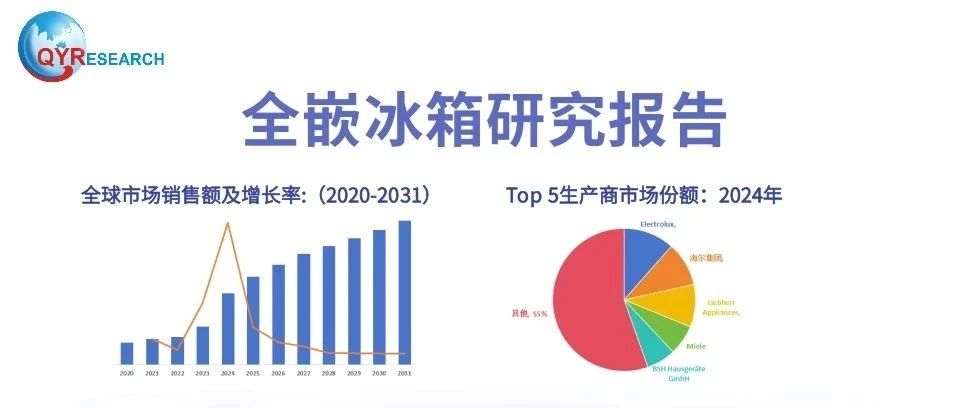
Core Viewpoint - The article discusses the development, current status, and future trends of fully integrated refrigerators, highlighting their seamless integration into home decor and the increasing consumer demand for high-quality, aesthetically pleasing appliances [3][4][14]. Industry Background, Development History, and Current Status - **Industry Background**: The rise in consumer living standards has led to increased demands for appliance quality, aesthetics, and functionality. Fully integrated refrigerators meet the needs for high-end, personalized home decor [3]. The trend towards home integration emphasizes overall coordination and space efficiency, which these refrigerators provide [3]. - **Development History**: Initially targeting high-end consumers in developed countries, fully integrated refrigerators have evolved from basic cooling functions to advanced features, including precise temperature control and energy efficiency. The latest models incorporate smart technology, enhancing user experience [4]. - **Current Status**: The market is competitive, with international brands like Electrolux and Siemens holding significant market shares. Domestic brands like Haier are also prominent, focusing on quality and innovation. Emerging brands are gaining traction through innovative designs and marketing strategies [5]. Development Trends - **Cooling Technology Improvements**: Bottom cooling technology is widely adopted to enhance integration and aesthetic appeal, allowing for better temperature uniformity and reduced space requirements [7]. - **Space Utilization Optimization**: Innovations like vacuum insulation panels and optimized internal structures increase storage capacity and flexibility, catering to diverse consumer needs [8]. - **Preservation Technology Upgrades**: New preservation methods, such as nitrogen preservation technology, significantly extend the freshness of food items [9]. - **Refrigeration System Innovations**: The adoption of dual-circuit refrigeration systems improves cooling efficiency and prevents cross-contamination of food odors [10]. - **Aesthetic and Material Innovations**: The design of fully integrated refrigerators is becoming more diverse, with options for customized colors and materials to match various home styles [11]. - **Intelligent Development**: Smart features, including remote control and food management systems, are becoming standard, enhancing user convenience [12]. - **Large Capacity Trends**: The demand for larger refrigerators is increasing, with models like the 750-liter integrated refrigerator catering to larger households [13]. Global Market Analysis - **Market Size and Growth**: The global market for fully integrated refrigerators is projected to reach $7.044 billion in 2024 and $14.216 billion by 2031, with a CAGR of 8.62% from 2025 to 2031 [16]. - **Regional Insights**: China is the largest market, expected to account for 55.15% of global sales in 2024, with significant growth anticipated [17][18]. - **Production Insights**: China and Europe are key production regions, with China projected to increase its market share to 65.55% by 2031 [19]. - **Market Segmentation**: The market is primarily segmented into single-door, double-door, and three-door refrigerators, with double-door models being the most popular [19]. Key Manufacturers - Major manufacturers include Electrolux, Liebherr, Miele, BSH Hausgeräte GmbH, Haier, Whirlpool, Smeg, Panasonic, and LG, with Electrolux leading the market in 2024 [23].

东南亚小厨电电商行业市场洞察报告(2025年6月版)
Sou Hu Cai Jing· 2025-06-20 02:07
Core Insights - The Southeast Asian small kitchen appliance e-commerce market is experiencing significant growth, driven by factors such as rising consumer spending and improved e-commerce infrastructure [25][18][3] - The market size for small kitchen appliances in Southeast Asia is projected to reach 113.4 billion RMB in 2023, with a demand of nearly 250 million units in 2022 [1][25] - Indonesia holds the largest market share in the small kitchen appliance sector, reflecting the diverse culinary preferences across Southeast Asian countries [1][25] Market Overview - The Southeast Asian home appliance market is only 31% the size of China's, but it has a population that is approximately 48% of China's, providing a substantial potential consumer base for kitchen appliances [1] - Online sales are on the rise, yet offline channels are expected to maintain over 80% market share by 2025 [1] Consumer Preferences - Southeast Asian consumers favor online shopping, with high cost-performance ratios and shopping convenience being the main drivers [2][3] - There is a growing acceptance of Japanese and Korean brands, while Chinese brands are gradually increasing their market share due to competitive pricing [2] Competitive Landscape - In the small kitchen appliance market, brands from Europe, Japan, South Korea, and China each have their strengths, with Philips leading in the cooking and heating segment [29][52] - Local brands are also performing well, particularly in specific categories like coffee-related products and rice cookers, which are in high demand in Thailand [37][45] Product Segmentation - The small kitchen appliance market is categorized into three main segments: cooking & heating, food processing, and beverage preparation [25] - Rice cookers are particularly popular in Thailand, where rice consumption is high, while multifunctional cookers are favored in Vietnam due to urbanization and space constraints [45][46]

Freightos Unveils Enterprise Suite, Creating First End-to-End Global Freight Procurement Platform
Prnewswire· 2025-04-23 11:00
Core Insights - Freightos has launched Freightos Enterprise, an integrated logistics procurement suite aimed at large importers and exporters, addressing the fragmented nature of global freight procurement and execution [1][4] - The platform combines annual, quarterly, and spot procurement of air, ocean, and ground freight, providing essential market intelligence to navigate industry volatility [1][4] Company Overview - Freightos (NASDAQ: CRGO) is a leading digital freight booking and payment platform that connects airlines, ocean carriers, freight forwarders, and over ten thousand importers and exporters [5] - The company digitizes the trillion-dollar international freight industry with a suite of software solutions for pricing, quoting, booking, shipment management, and payments [6] Product Features - Freightos Enterprise includes three modules: Procure, Rate, Book & Manage, and Terminal, which streamline the procurement process and enhance operational efficiency [2][8] - The Procure module automates RFQs and contract optimization, reducing procurement time by up to 90% [8][9] - The Rate, Book & Manage module offers direct digital connectivity to hundreds of carriers for rate comparison and shipment tracking [8] - The Terminal module provides real-time freight market intelligence and enhanced contract benchmarking capabilities [8] Market Context - The launch of Freightos Enterprise aligns with current industry challenges, including trade uncertainties and volatile rates, necessitating optimized spending and efficiency in complex supply chains [4] - Customers using Freightos Enterprise have reported significant benefits, including a 20% reduction in freight spend and an 80% decrease in email communication related to quoting and booking [9]
BARCLAYS-从库存会计角度看关税引发的通胀对盈利能力的初步影响
2025-04-23 10:46
Summary of Key Points from the Conference Call Industry Overview - The report focuses on the **European Capital Goods** sector, analyzing the impact of tariff-led inflation on profitability from an inventory accounting perspective [1][4][35]. Core Insights - **Inventory Accounting Methods**: - Three primary methodologies are discussed: - **FIFO (First In, First Out)**: Oldest inventory sold first, inflating margins during price increases. - **WAC (Weighted Average Cost)**: Average cost assigned, revealing cost inflation impact more rapidly. - **LIFO (Last In, First Out)**: Not permitted under IFRS for inventory valuation [2][3]. - **Impact of Tariffs**: - Companies using FIFO will report lower costs and higher income, thus inflating profitability compared to those using WAC [2][3]. - Companies identified as adopting FIFO include **ABB** and **Signify**, while those using WAC include **Andritz**, **KION**, **Electrolux**, and **Siemens** [1][3]. - **Inventory-to-Sales Ratio**: - The sector median inventory-to-sales ratio is **16.6%**. Companies with FIFO accounting and an inventory-to-sales ratio above this median may experience a delayed impact from tariffs [3]. Company-Specific Insights - **ABB** and **Signify**: - Both companies adopt FIFO accounting and have an inventory-to-sales ratio above the sector median, indicating a potential delay in the impact of tariffs on their margins [3]. - **Andritz**, **KION**, **Electrolux**, and **Siemens**: - These companies adopt WAC accounting and have an inventory-to-sales ratio below the sector median, suggesting they may see the tariff impact more quickly [3]. Additional Considerations - **Market Ratings**: - The report includes ratings for various companies within the sector, with ABB, Andritz, Electrolux, KION, Siemens, and Signify all rated as **Underweight/Neutral** [18]. - **Tariff Risk Assessment**: - Companies are assessed for tariff risk, categorized as material, manageable, or limited, which may influence investment decisions [9]. - **Analyst Contact Information**: - Analysts from Barclays are available for further inquiries, indicating a structured approach to investor relations [4][5]. Conclusion - The analysis highlights the significant impact of inventory accounting methods on profitability in the European Capital Goods sector, particularly in the context of tariff-led inflation. Companies adopting FIFO may benefit from inflated margins, while those using WAC may face quicker impacts from cost inflation. The report serves as a critical resource for investors assessing potential risks and opportunities within this sector.