
空气炸锅

Search documents
JS环球生活(01691):九阳稳健,SN亚太延续高增
GUOTAI HAITONG SECURITIES· 2026-03-31 15:34
Investment Rating - The investment rating for the company is "Accumulate" [6] Core Insights - The company reported a revenue of USD 1.66 billion for 2025, reflecting a year-on-year increase of 4.14%. However, the net profit was a loss of USD 0.19 billion, compared to a profit of USD 0.09 billion in the previous year. The adjusted net profit was USD 0.31 billion, showing a significant increase of 338.0% year-on-year [10] - The revenue growth is attributed to the stable performance of Joyoung and the continued high growth of SharkNinja in the Asia-Pacific region. The company expects net profits for 2026-2028 to be USD 0.63 billion, USD 0.86 billion, and USD 1.00 billion respectively, with EPS projected at USD 0.02, USD 0.02, and USD 0.03 [10] - The report highlights that the revenue from Joyoung and SharkNinja's third-party customers was USD 1.03 billion and USD 0.53 billion respectively, with year-on-year growth of 1.1% and 55.6%. The overall revenue contribution from these segments was 62.2% and 32.1% of total revenue [10] Financial Summary - The total revenue for 2024A was USD 1.43 billion, with projections for 2025A at USD 1.66 billion, 2026E at USD 1.84 billion, 2027E at USD 2.09 billion, and 2028E at USD 2.31 billion. The net profit for 2025A is projected at a loss of USD 0.24 billion, with a recovery expected in subsequent years [5] - The gross margin for 2025 was 32.17%, a slight increase of 0.15 percentage points year-on-year. However, the gross margin for third-party sales decreased to 33.5%, down 0.5 percentage points [10] - The sales expense ratio for 2025 was 21.4%, an increase of 0.6 percentage points, primarily due to increased advertising and marketing investments by SharkNinja [10]
比依股份20260329
2026-03-30 05:15
Summary of the Conference Call for Biyi Co., Ltd. Company Overview - **Company**: Biyi Co., Ltd. - **Industry**: Home Appliances, specifically focusing on kitchen appliances and technology manufacturing Key Points and Arguments Business Transformation and Growth Phases - **Phase 1 (2018-2021)**: High growth driven by air fryer sales and partnership with Philips, with over 90% of revenue from exports and ROE exceeding 30% [3][4] - **Phase 2 (2022-2024)**: Transition period marked by declining air fryer demand and global inflation, leading to revenue fluctuations. The company diversified its client base and began producing coffee machines and environmental appliances [3][4] - **Phase 3 (2024-2025)**: Entering a recovery phase with projected revenue of CNY 2.06 billion in 2024 (+32%) and CNY 1.756 billion in the first three quarters of 2025 (+18.66%) [2][3] Production Capacity and Strategic Investments - **Ningbo Zhongyi Industrial Park**: A key production hub with a planned capacity of 25 million units annually, with the first phase expected to produce 10 million units by mid-2025 [4][5] - **Thailand Factory**: Set to begin operations in April 2025, aimed at mitigating tariff risks and supporting North American orders [4][5] Client Diversification - **Client Base**: Significant diversification with Chenyuan Technology expected to account for 20% of revenue in H1 2025, and European market share rising to 59% [2][3] Coffee Machine Business - **Market Growth**: The global coffee machine market is projected to grow from USD 15.3 billion in 2019 to USD 30.6 billion by 2024, with a CAGR of 15% [6] - **Revenue Contribution**: Expected coffee machine revenue to increase from CNY 100 million to CNY 600-700 million by 2026, driven by orders from SharkNinja [6][7] New Product Development - **Environmental Appliances**: Focus on fans and heaters, with revenue of CNY 27.02 million in 2024 and plans for new product launches in 2025 [8] - **Robotic Vacuums**: Initial product deliveries expected in H2 2025, with plans to increase ownership in the subsidiary producing these products [8] Investment in High-Tech Manufacturing - **AI and AR Glasses**: Strategic investment in leading companies in the optical waveguide sector, with a 8.6% stake in Lipaiguangjing, enhancing the company's technological capabilities [9] - **Valuation Impact**: Transitioning from traditional appliance manufacturing to a tech-driven model, potentially increasing valuation flexibility and growth prospects [9] Financial Projections - **Revenue Forecast**: Expected revenues of CNY 3.2 billion in 2026 and CNY 3.8 billion in 2027, with net profits of CNY 180 million and CNY 250 million respectively [2][9] - **Valuation Metrics**: Projected PE ratios of 20x for 2026 and 15x for 2027, with a current PS ratio of 1.1, significantly lower than the industry average of 1.52 [2][9] Additional Important Insights - **Strategic Shift**: The company is moving from a pure financial investor to a collaborative industrial partner, enhancing its manufacturing capabilities and market positioning [9] - **Growth Potential**: The anticipated compound annual growth rate of 35%-40% for 2026-2027 indicates strong future performance and value discovery opportunities [9]

美丽小家电,被扯下遮羞布
投中网· 2026-03-20 08:10
Core Viewpoint - The small home appliance industry is facing significant challenges due to widespread quality issues and deceptive marketing practices, highlighted by the recent revelation of "fake temperature control knobs" in air fryers, which undermines consumer trust and threatens the industry's reputation [4][5][11]. Group 1: Industry Challenges - The discovery of "fake temperature control knobs" in multiple brands, including Rongshida, Zhigao, and Rongsong, has exposed a collective failure in the small appliance sector, further damaging an already struggling industry [4][11]. - Quality issues are rampant, with a reported 50% non-compliance rate in mini washing machines and an overall appliance non-compliance rate of 14.87%, primarily in low-priced products [14][15]. - The phenomenon of "fake functions" and "false parameters" is pervasive, making it difficult for consumers to identify subpar products, leading to safety concerns and potential hazards [12][13]. Group 2: Market Trends - The small appliance industry experienced explosive growth during the pandemic, but since 2022, it has seen a decline in retail sales and volume, with kitchen appliance retail sales dropping by 0.8% in 2024 [19][20]. - The average price of kitchen appliances is expected to rise by 10.6% in 2025, indicating a shift towards higher-end products, while low-end products continue to struggle [27]. - The market is becoming increasingly polarized, with mid-to-high-end products gaining traction due to technological advancements, while low-end brands face declining sales [28][29]. Group 3: Consumer Behavior - Consumers are becoming more discerning, prioritizing practicality and innovation over aesthetics, leading to a high idle rate of around 70% for small appliances [21][22]. - The demand for genuinely useful products is rising, as consumers are less willing to be swayed by marketing gimmicks and are willing to pay more for quality [24][34]. - The shift in consumer expectations necessitates that brands focus on solving real user pain points rather than relying on superficial features [30][34]. Group 4: Future Opportunities - The future of the small appliance market lies in innovation and targeted product development, with companies encouraged to focus on core products and eliminate inefficient offerings [31][32]. - Expanding into international markets is becoming a common strategy among small appliance companies, with some reporting double-digit growth in regions like Southeast Asia and Europe [32]. - Brands must adapt to the changing landscape by enhancing product differentiation and addressing consumer needs to avoid being left behind [35].


家电行业周报(26年第11周):1-2月家电出口额增长9%,内外销环比积极改善-20260316
Guoxin Securities· 2026-03-16 11:24
Investment Rating - The report maintains an "Outperform the Market" rating for the home appliance industry [5][6][70]. Core Views - The home appliance retail demand in China has shown signs of recovery in January and February, with a notable improvement in both domestic and export sales [2][18]. - The export value of home appliances in China increased by 9% year-on-year in the first two months, indicating a significant recovery in the export market [3][38]. - The U.S. home appliance retail sales continued to grow slightly in January, reflecting a steady recovery in consumer demand [4][44]. Summary by Sections 1. Investment Recommendations - Recommended companies include Midea Group, Haier Smart Home, TCL Smart Home, Gree Electric, and Hisense Home Appliances in the white goods sector; Hisense Visual and TCL Electronics in the black goods sector; and Roborock and Bear Electric in the small appliances sector [5][14][16]. 2. Market Performance and Trends - The home appliance sector achieved a relative return of +0.34% this week, outperforming the broader market [4][47]. - The retail sales of major home appliances showed a narrowing decline, with specific categories like air conditioners and refrigerators experiencing improved performance [2][19]. 3. Export Performance - In the first two months, the export volume of home appliances grew by 16%, with the export value reaching 119.2 billion yuan, reflecting a robust recovery [3][38]. - The average export price decreased by 4.4% to 21.1 USD per unit, indicating competitive pricing in the international market [3][38]. 4. U.S. Market Insights - U.S. retail sales for electronics and home appliances increased by 1.6% year-on-year in January, continuing a steady growth trend since the second half of 2025 [4][44]. - Inventory levels in U.S. home appliance stores have been recovering, which supports the demand for Chinese exports [4][44]. 5. Key Data Tracking - The report tracks raw material prices, noting increases in copper and aluminum prices, which may impact production costs [4][51][56]. - The shipping index for major routes has shown slight fluctuations, indicating ongoing adjustments in logistics costs [4][60].






5044家中国企业涌进乌兹别克斯坦,他们在算什么账?
吴晓波频道· 2026-03-13 00:29
Core Insights - Uzbekistan is becoming a significant market for Chinese enterprises, with 5,044 Chinese companies established by early 2026, leading all foreign investments [4][7] - The cost of producing cotton yarn in Uzbekistan is approximately 25% lower than in China, making it an attractive location for manufacturing [3] - The urbanization in Uzbekistan is accelerating, with urban population reaching 19.3 million by July 2025, creating a strong demand for construction materials and consumer goods [10][12] Group 1: Uzbekistan Market Dynamics - The number of foreign enterprises in Uzbekistan has increased by 1.9 times from 2020 to 2025, with a notable shift towards manufacturing over trade [9] - The local demand for construction materials is driven by rapid urbanization, with new residential areas emerging and a significant supply chain gap [10][12] - The energy and infrastructure sectors are in need of systemic updates, with a large portion of the electrical grid in urgent need of replacement [12][13] Group 2: Opportunities in Russia - The Russian market has undergone significant restructuring, with Chinese products becoming the new norm rather than mere substitutes [15][16] - The demand for automotive parts is growing, with Chinese brands capturing nearly 60% of the passenger car market in Russia, leading to increased aftermarket needs [17] - The Russian e-commerce market is expanding rapidly, with a market size of 11.5 trillion rubles (approximately 940 billion yuan) in 2025, marking a 28% year-on-year growth [20] Group 3: Strategic Insights for Enterprises - Chinese companies are transitioning from merely exporting products to establishing local production capabilities, enhancing their competitive edge [26][27] - The entry barriers for Chinese businesses in Russia are relatively low, with platforms like Ozon offering quick onboarding processes [22][24] - The upcoming trip to Uzbekistan and Russia aims to provide insights into local market dynamics, investment policies, and operational strategies for Chinese enterprises [25][28]
家电行业2026年3月投资策略:2026年以来大家电需求回暖,美关税降低有利家电出口
Guoxin Securities· 2026-03-02 14:42
Core Insights - The home appliance industry is expected to outperform the market due to a recovery in demand for major appliances since 2026, supported by reduced tariffs in the US which favor appliance exports [1][2] - The retail demand for major appliances in China has shown significant improvement, with a notable narrowing of the decline in retail sales [1][17] - The production of white goods in March 2026 has also seen a reduction in decline, indicating a positive trend in manufacturing [1][37] Market Performance - In February 2026, the home appliance sector achieved a relative return of +0.92%, outperforming the broader market [3][49] - The retail sales of major appliances in the US continued to grow, with a year-on-year increase of 2.6% in December 2025, indicating a steady recovery in consumer demand [2][43] Production and Sales Data - In March 2026, the total production of white goods in China reached 39.11 million units, with a year-on-year decline of 4%, showing improvement compared to previous quarters [1][37] - Specific categories such as refrigerators and washing machines have shown varied performance, with refrigerators experiencing a slight increase in production while washing machines faced some pressure due to high inventory levels [1][37] Recommendations for Key Companies - The report recommends several companies for investment, including Midea Group, Haier Smart Home, and TCL Smart Home in the white goods sector, and Stone Technology and Roborock in the small appliance sector, highlighting their strong growth potential and market positioning [3][12][66] - The report emphasizes the resilience of leading companies in the home appliance sector, suggesting that they are well-positioned to benefit from both domestic and international market improvements [11][12]



星徽股份涨0.42%,成交额7787.43万元,近5日主力净流入-1653.44万
Xin Lang Cai Jing· 2026-02-25 07:50
Core Viewpoint - The company, Guangdong Xinghui Precision Manufacturing Co., Ltd., is experiencing growth in its cross-border e-commerce and smart home appliance segments, benefiting from the depreciation of the RMB and increasing overseas sales [2][4]. Company Overview - Guangdong Xinghui Precision Manufacturing Co., Ltd. was established on November 11, 1994, and listed on June 10, 2015. The company specializes in the research, production, and sales of precision metal connectors, including slides and hinges, as well as smart home appliances and other consumer electronics [7]. - The main revenue composition includes slides (71.62%), smart home appliances (16.77%), power supplies (8.01%), and others (3.60%) [7]. Financial Performance - For the period from January to September 2025, the company achieved operating revenue of 1.112 billion yuan, a year-on-year decrease of 6.23%. However, the net profit attributable to the parent company was 2.6922 million yuan, reflecting a significant year-on-year increase of 106.21% [7]. - The company has distributed a total of 71.1607 million yuan in dividends since its A-share listing, with no dividends distributed in the past three years [8]. Market Activity - On February 25, the company's stock rose by 0.42%, with a trading volume of 77.8743 million yuan and a turnover rate of 3.10%, resulting in a total market capitalization of 3.246 billion yuan [1]. - The company's main net inflow of funds was -540,200 yuan, indicating a lack of clear trends in major capital movements [5]. Product and Market Segmentation - The company's cross-border e-commerce segment includes small household appliances such as aroma machines, coffee machines, air fryers, and milk frothers, primarily sold overseas [2]. - In the first half of 2022, the sales revenue from smart home appliances reached 240 million yuan, accounting for 37.14% of the company's e-commerce business revenue [3]. Technical Analysis - The average trading cost of the company's shares is 6.79 yuan, with the stock price currently near a support level of 6.86 yuan, indicating potential for a rebound if this support holds [6].

2022年天猫烘焙厨电行业趋势白皮书
Sou Hu Cai Jing· 2026-02-24 09:49
Core Insights - The Tmall baking kitchen appliance market is undergoing significant changes, driven by the rise of the "stay-at-home economy" and consumer upgrades, with a focus on user experience rather than just functionality [1][3]. Consumer Insights - The primary consumer group for baking kitchen appliances consists of young women aged 18 to 39 with mid-to-high spending power, who prioritize nutritional balance and prefer baking as a cooking method [1][11]. - This demographic seeks appliances that enhance quality of life and offer both fun and practicality, leading to a comprehensive iteration in market supply and marketing strategies [1][3]. Product Trends - The market exhibits a "polarized" landscape, with air fryers dominating sales due to the popularity of mid-range, visual products, while traditional electric ovens face declining demand [2][34]. - New growth engines for electric ovens include multifunctional devices like convection ovens and steam ovens, which integrate air frying and steaming technologies [2][34]. - The "micro-steam-bake" integrated machine is emerging as a high-potential product, with rapid growth despite low current market penetration, as consumers demand compact, smart, and self-cleaning features [2][46]. Marketing Strategies - Marketing strategies are shifting from a product-centric approach to a consumer-centric model, focusing on identifying and educating "seed users" in emerging categories like steam ovens and integrated machines [3][70]. - Scene-based marketing combined with social media is becoming crucial for consumer engagement, as baking evolves into a lifestyle and social topic [3][68]. - Brands need to leverage social media to showcase beautiful baking scenes and share successful cooking experiences to stimulate emotional resonance and purchasing desire [3][68]. Market Dynamics - The Tmall baking kitchen appliance market is entering a new phase driven by consumer demographics and experience innovation, with trends towards functional integration, smart operation, stylish design, and compact size becoming irreversible [3][60]. - Brands that can deeply understand and meet the new generation's comprehensive demands for health, convenience, aesthetics, and enjoyment will gain a competitive edge in this vibrant market [3][60].

相互转告:空气炸锅的这些使用雷区,千万别踩!
Xin Lang Cai Jing· 2026-02-20 09:21
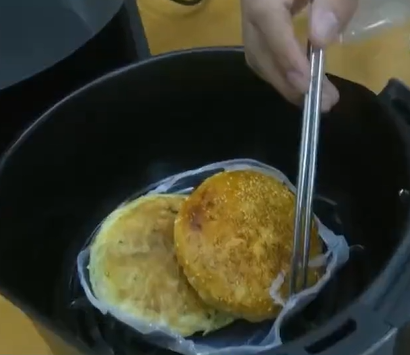
Core Viewpoint - The article emphasizes the popularity and convenience of air fryers as essential kitchen appliances during festive cooking, while also highlighting the potential safety hazards associated with their improper use. Group 1: Air Fryer Functionality - The air fryer operates by generating high-temperature hot air from a heater located at the top, which circulates through convection to cook food evenly [1] - Inside the air fryer, hot air circulates rapidly, leading to quick heating of the food [2] - Food is placed in a perforated basket, enhancing contact with hot air, which dries the surface moisture and achieves a crispy texture [3] Group 2: Safety Hazards - Improper use of parchment paper or oil-absorbing paper can lead to fire hazards, as these materials can be lifted by hot air and ignite upon contact with heating elements [4] - Certain foods, such as eggs and chestnuts, should not be placed in the air fryer due to the risk of explosion and burns [6] - Only heat-resistant glass and stainless steel containers are suitable for use in the air fryer; regular glass and plastic containers can melt [7] Group 3: Usage Guidelines - The air fryer should not be placed on an induction cooker, open flame, or microwave, as this can damage the appliance and pose fire risks [11] - As a high-power electrical appliance, the air fryer should be used with a dedicated outlet to prevent electrical overload [11] - It is important to place the air fryer on a stable surface and ensure that the air intake and exhaust vents are not obstructed during operation [11]
“广味”年货搭乘中欧班列奔赴欧洲
Xin Lang Cai Jing· 2026-02-13 10:07
Core Insights - The Guangzhou Railway Logistics Center has been actively facilitating the export of Chinese New Year goods to Europe, with a total of 57 freight trains dispatched since December, carrying over 5,000 containers valued at more than 1.3 billion yuan [1][2] Group 1: Logistics and Operations - The logistics center has implemented a "New Year Goods Supply" special mechanism to ensure efficient export, providing prioritized services for planning, space allocation, loading, and release of the New Year freight trains [1] - The logistics process for e-commerce goods at the logistics park is streamlined, allowing for completion of warehouse consolidation, security checks, customs clearance, and train dispatch within just four days [2] Group 2: Economic Impact - The logistics park is a key hub for the China-Europe freight trains in the Guangdong-Hong Kong-Macao Greater Bay Area, with plans to operate a total of 297 international trains by 2025, serving over 10,000 foreign trade enterprises and achieving a total cargo value exceeding 8 billion yuan [1]