WestRock Company

Search documents
Containerboard industry eyes ongoing price-fixing case
Yahoo Finance· 2025-09-29 09:24
Core Viewpoint - The class-action lawsuit against major containerboard manufacturers alleges price-fixing and market manipulation, claiming a coordinated effort to inflate prices by approximately 30% since late 2020 [2][3][4]. Group 1: Lawsuit Details - The lawsuit was initiated by Artuso Pastry Foods Corp. in July 2025, naming eight major containerboard manufacturers as defendants [1]. - Graphic Packaging International was voluntarily dismissed from the case on 25 September 2025, leaving seven defendants accused of conspiring to raise prices [2][5]. - The plaintiffs allege that the defendants engaged in coordinated price increases through seven hikes from November 2020 to the present, despite weak demand [3]. Group 2: Antitrust Allegations - The lawsuit claims that the actions of the defendants constitute a violation of U.S. antitrust laws, suggesting they operated as a "cartel" to manipulate market prices [4]. - Over 85% of the U.S. containerboard market is reportedly controlled by a small number of companies, which may facilitate collusive behavior [4]. Group 3: Industry Response and Legal Proceedings - Most defendants have not publicly commented on the litigation, but Georgia-Pacific has denied the claims, asserting they are without merit [5]. - The case is set to proceed against the remaining companies, with a status update required by 17 December 2025 [6]. - Plaintiffs are seeking treble damages, which could lead to settlements or increased scrutiny of pricing practices in the sector [6]. Group 4: Market Implications - The ongoing litigation has significant implications for the broader containerboard market, potentially affecting pricing and market stability [7].
United Kingdom Packaging Materials Market 2025 Industry Updates, Future Growth, Business Prospects, Forecast to 2032
Medium· 2025-09-25 09:14
Market Overview - The global Packaging Materials Market was valued at approximately USD 950 billion in 2024 and is projected to reach USD 1,450 billion by 2032, with a CAGR of 5.5% from 2025 to 2032, driven by evolving consumer preferences and regulatory frameworks [2][3]. - The market is characterized by a significant upward trend towards sustainable solutions and advancements in functional packaging, reflecting its critical role in the global supply chain [3][10]. Technological Advancements - Artificial intelligence (AI) is enhancing efficiency in the packaging materials market by optimizing design, improving supply chain management, and predicting demand more accurately [5][6]. - Innovations such as advanced barrier films, smart packaging solutions, and the development of biodegradable and compostable materials are key trends driving growth [10][18]. Sustainability Trends - There is a strong push towards eco-friendly alternatives, with innovations in biodegradable, recyclable, and compostable materials being paramount [8][10]. - The market is influenced by increasing consumer awareness and regulatory pressures regarding environmental impact, leading to a focus on sustainable practices and circular economy models [10][20]. Regional Insights - North America is expected to maintain steady growth with a regional CAGR of approximately 5.0%, driven by innovation and e-commerce [27]. - The Asia Pacific region is the largest and fastest-growing market, with a projected CAGR of approximately 6.2%, fueled by rapid urbanization and increasing disposable incomes [27]. Key Players - Major players in the packaging materials market include Amcor Plc, Berry Global, Mondi Plc, and Tetra Pak, among others [11]. Future Outlook - The packaging materials market is projected to see substantial investment in R&D aimed at creating more environmentally benign materials, including advanced bio-plastics and improved recycled content solutions [15][29]. - The long-term trajectory will be shaped by sustainability and environmental regulations, alongside the growth of e-commerce, which demands constant evolution in packaging design [29][32].


Corrugated comeback? Fiber’s yearslong slide could be easing
Yahoo Finance· 2025-09-16 11:08
Core Insights - The paper and packaging industry is currently facing significant demand challenges, with executives from various companies expressing a pessimistic outlook for the near future [2][3][4] - Analysts suggest that while a modest recovery in demand may be on the horizon, it is not expected to be dramatic, and the worst of the downturn may be over [7][18] Demand and Supply Dynamics - International Paper's CEO indicated that current demand is nearing a bottom, while GPI's CEO noted an unusual period of volume weakness [1] - Box shipments are projected to decline by 3% year over year in Q3 2025, with a full-year decline of approximately 2.5% to 3% expected [3] - BofA's box survey indicates a slight improvement in growth expectations, with a decrease of 0.2% anticipated for the next two quarters, compared to a 1% decline previously [4] - Containerboard producers have announced closures totaling about 3.9 million tons, or 9.5% of North American capacity, which is expected to help rebalance supply and demand [7][8] Capacity Adjustments - The industry has seen unprecedented capacity reductions, with 5.4 million tons cut since 2023, marking a significant correction in the market [9][10] - Analysts believe that these capacity cuts are necessary to address the years of oversupply that have affected both North American and global markets [5][10] Pricing Trends - Prices for old corrugated containers (OCC) surged by 245% year over year by mid-2024 but have since declined due to weak containerboard demand [12][13] - Analysts expect OCC prices to continue declining in the coming months, although a modest uptick in demand could lead to price increases by the end of the year [14] Tariff and Trade Impacts - Tariffs have not significantly impacted fiber demand but have affected the demand for goods shipped in boxes, with containerboard production for export dropping nearly 12% year over year [15][16] - Current tariffs are considered mild compared to previous levels, which may help stabilize the market as trade tensions ease [16] Future Outlook - Analysts predict that the downward trend in corrugated demand may ease in Q4, supported by potential interest rate cuts and progress on tariff resolutions [18] - A slow and mild recovery is anticipated, with RaboResearch expecting flat linerboard pricing through the first half of 2026 and a potential price increase later in the year [19] - Industry observers are closely monitoring a class action price-fixing lawsuit against top containerboard producers, which could influence future pricing strategies [20][21]

Workday(WDAY) - 2026 Q2 - Earnings Call Transcript
2025-08-21 21:30
Financial Data and Key Metrics Changes - Workday reported a 14% growth in subscription revenue, totaling $2,169 million for Q2 2026, with total revenue reaching $2,348 million, reflecting a 13% increase [28][29] - Non-GAAP operating margin stood at 29%, with non-GAAP operating income of $680 million [30][33] - Cash and marketable securities at the end of the quarter were $8,200 million, with operating cash flow of $616 million, an 8% growth [31][32] Business Line Data and Key Metrics Changes - Approximately 30% of net new deals were full suite offerings, with this number rising to over 50% in sectors like SLED and healthcare [10][12] - More than 70% of core customers are utilizing Workday Illuminate, with over 30% of customer-based deals including AI products [12][15] - The financial services sector saw significant expansions, including new relationships with Nationwide Insurance and others [12][13] Market Data and Key Metrics Changes - U.S. revenue increased by 13% to $1,760 million, while international revenue grew by 11% to $584 million [29] - The twelve-month subscription revenue backlog (CRPO) reached $7,910 million, up 16.4% year-over-year [29][30] - Strong performance was noted in EMEA, particularly in Germany and the UK, with notable wins in APAC, including a deal in Vietnam [24][122] Company Strategy and Development Direction - Workday is focusing on AI-driven solutions and expanding its platform capabilities, including the acquisition of Paradox to enhance its recruiting suite [16][78] - The company is investing in organic innovation and strategic acquisitions to strengthen its market position and deliver greater value to customers [16][21] - Workday Government was launched to cater specifically to the needs of the U.S. government, emphasizing a commitment to modernization and AI integration [14][70] Management's Comments on Operating Environment and Future Outlook - Management expressed confidence in the company's momentum, driven by AI innovation and a unified platform, while acknowledging macroeconomic challenges in certain sectors [25][56] - The company anticipates continued growth in subscription revenue, increasing its FY 2026 guidance to $8,815 million, reflecting a 14% growth [32][34] - Management highlighted the importance of customer trust in navigating AI transitions, positioning Workday as a key partner in this area [100][49] Other Important Information - Workday's headcount as of July 31 was approximately 19,500, with ongoing efforts to attract top talent [31][21] - The company is expanding its partner ecosystem, with over 20% of net new ACV sourced from partners in the last quarter [22] - Workday is actively pursuing growth opportunities in India, with plans to establish a local data center and expand its team [24][122] Q&A Session Summary Question: Market concerns regarding SaaS and AI startups - Management believes concerns about AI disruption to SaaS models are overblown, emphasizing Workday's strong market position and customer base [45][49] Question: Crosscurrents affecting growth - Management noted strong performance in Europe despite macroeconomic challenges, while observing some headwinds in the SLED market [56][58] Question: Workday Government subsidiary - The subsidiary was established to demonstrate commitment to the government sector and to provide a secure cloud environment [70][71] Question: Acquisition of Paradox - The acquisition is seen as a strategic move to enhance Workday's recruiting capabilities, with expected synergies and growth opportunities [78][84] Question: AI product engagement and win rates - Engagement with AI products is strong, with significant growth in adoption rates among customers [88][90] Question: International market performance - Management expressed satisfaction with growth in international markets, particularly in Europe and Japan, and highlighted plans for expansion in India [122][121]

全球烟草包装市场生产商排名及市场占有率
QYResearch· 2025-06-12 10:16
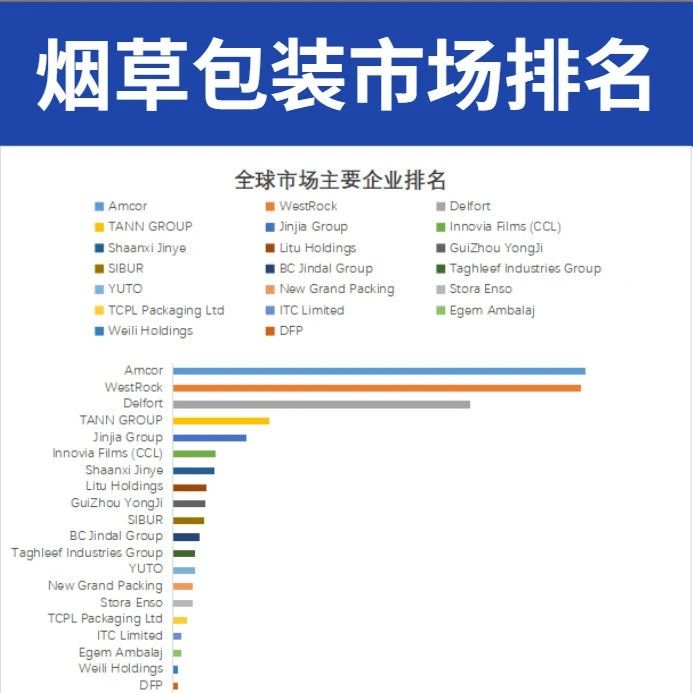
Core Viewpoint - Tobacco packaging plays a crucial role in brand promotion, product protection, and compliance with strict government regulations across various countries. The market is influenced by factors such as regulatory requirements, anti-counterfeiting needs, the shift towards low-risk products, sustainability pressures, emerging market growth, and trends in personalization and branding [1][2][3][4]. Regulatory Environment - Governments in countries like Australia, France, and the UK enforce plain packaging laws requiring graphic health warnings that cover 50-90% of the packaging area, prohibiting brand logos and colors [1]. - Increasing graphic and text warnings necessitate redesigning packaging and limit brand visibility [2]. - Regulations mandate child-safe packaging with tamper-evident seals or complex opening mechanisms [2]. Anti-Counterfeiting Demand - The rise of illegal tobacco trade has increased the demand for advanced security features such as holograms, QR codes, and invisible ink to verify product authenticity and comply with the WHO's Framework Convention on Tobacco Control [3]. Shift to Low-Risk Products - The growing popularity of e-cigarettes, heated tobacco products (e.g., IQOS), and nicotine pouches requires specialized packaging, including heat-resistant materials and moisture barriers [3]. Sustainability Pressures - There is a demand from governments and consumers for eco-friendly solutions, such as biodegradable films and recyclable cardboard, to reduce plastic waste and carbon footprints [3]. Emerging Market Growth - The increasing tobacco consumption in regions like Asia-Pacific (e.g., India, Indonesia) and Africa drives the demand for cost-effective, high-capacity packaging [4]. Personalization and Branding Trends - Despite regulatory constraints, there is a growing trend towards personalized and premium packaging designs, including limited edition packaging and unique opening mechanisms to attract consumers seeking exclusive experiences [4]. Market Size and Growth Projections - According to QYResearch, the global tobacco packaging market is projected to reach USD 10.15 billion by 2031, with a compound annual growth rate (CAGR) of 1.9% in the coming years [4]. Market Composition - Paper is the dominant material in the tobacco packaging market, accounting for approximately 75.8% of the market share [13]. - Traditional tobacco products represent the primary demand source, holding about 91.2% of the market share [15]. Key Manufacturers - Major players in the global tobacco packaging market include Amcor, WestRock, Delfort, TANN GROUP, and Jinjia Group, with the top five manufacturers holding around 36.0% of the market share in 2024 [10].
全球烟草包装市场生产商排名及市场占有率
QYResearch· 2025-06-12 10:16
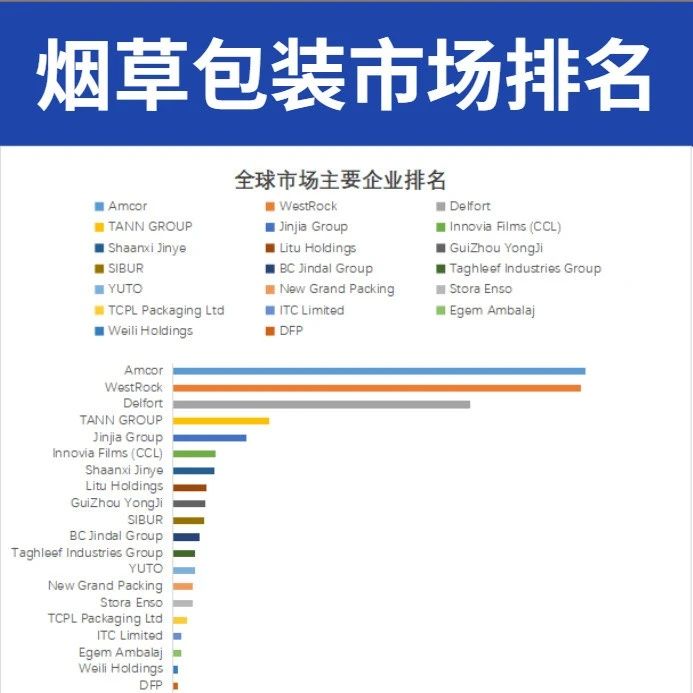
Core Viewpoint - Tobacco packaging plays a crucial role in brand promotion, product protection, and compliance with strict government regulations across various countries. The market is influenced by factors such as regulatory requirements, anti-counterfeiting needs, the shift towards low-risk products, sustainability pressures, emerging market growth, and trends in personalization and branding [1][3][4]. Regulatory Environment - Governments in countries like Australia, France, and the UK enforce plain packaging laws requiring graphic health warnings that cover 50-90% of the packaging area, prohibiting brand logos and colors [1]. - Increasing graphic and textual warnings necessitate redesigning packaging and limit branding space [2]. - Regulations also mandate child-safe packaging with tamper-evident seals or complex opening mechanisms [2]. Anti-Counterfeiting Demand - The rise of illegal tobacco trade has increased the demand for advanced security features such as holograms, QR codes, and invisible ink to verify product authenticity and comply with the WHO's Framework Convention on Tobacco Control [3]. Shift to Low-Risk Products - The growing popularity of e-cigarettes, heated tobacco products (e.g., IQOS), and nicotine pouches requires specialized packaging, including heat-resistant materials and moisture barriers [3]. Sustainability Pressures - There is a demand from governments and consumers for eco-friendly solutions, such as biodegradable films and recyclable cardboard, to reduce plastic waste and carbon footprints [3]. Emerging Market Growth - The increasing tobacco consumption in regions like Asia-Pacific (e.g., India, Indonesia) and Africa drives the demand for cost-effective, high-capacity packaging [4]. Personalization and Branding Trends - Despite regulatory constraints, there is a growing trend towards personalized and premium packaging designs, including limited edition packaging and unique opening mechanisms to attract consumers seeking exclusive experiences [4]. Market Size and Growth Forecast - According to QYResearch, the global tobacco packaging market is projected to reach USD 10.15 billion by 2031, with a compound annual growth rate (CAGR) of 1.9% in the coming years [4]. Market Composition - Paper is the dominant product type in the tobacco packaging market, accounting for approximately 75.8% of the market share [12]. - Traditional tobacco remains the primary application, representing about 91.2% of the demand [14]. Key Manufacturers - Major manufacturers in the global tobacco packaging market include Amcor, WestRock, Delfort, TANN GROUP, and Jinjia Group, with the top five companies holding around 36.0% of the market share in 2024 [10].
IES Holdings Appoints Kelly C. Janzen to its Board of Directors
Globenewswire· 2025-05-13 12:00
Core Insights - IES Holdings, Inc. has appointed Kelly C. Janzen to its Board of Directors, effective May 12, 2025, highlighting her extensive background in finance and public company leadership [1] Group 1: Appointment Details - Kelly C. Janzen brings over 30 years of experience in financial leadership roles [1] - She has served as Executive Vice President and Chief Financial Officer of Vestis Corporation since February 2025 [1] - Janzen's previous roles include Senior Vice President and Chief Financial Officer at BlueLinx Corporation and Chief Accounting Officer at WestRock Company [1] Group 2: Company Overview - IES designs and installs integrated electrical and technology systems, providing infrastructure products and services to various end markets [2] - The company employs over 9,000 individuals and serves clients across the United States [2]