
Home Depot

Search documents
Home Depot Gives Back $130 Billion
Forbes· 2025-11-03 16:36
Core Insights - Home Depot has established itself as a consistent wealth creator in the market, returning significant capital to shareholders through dividends and buybacks [2][3] Payout Capacity - Over the past decade, Home Depot has returned approximately $130 billion to shareholders, ranking 14th in total capital returned in history [3] - The company's ability to provide tangible returns through dividends and share repurchases reflects management's confidence in its financial stability and sustainable cash flows [4] Financial Metrics - Home Depot's revenue growth stands at 8.5% for the last twelve months (LTM) and an average of 2.2% over the last three years [11] - The company has a free cash flow margin of nearly 8.6% and an operating margin of 13.1% LTM [11] - The stock is currently valued at a price-to-earnings (P/E) ratio of 25.7 [11] Historical Performance - Home Depot has experienced significant sell-offs in the past, including declines of around 52% during the Dot-Com Bubble and 54% during the Global Financial Crisis [8] - Recent market shocks have also led to declines of 25% in 2018 and 38% during the COVID pandemic, with inflation concerns causing a decrease of approximately 35% [8]


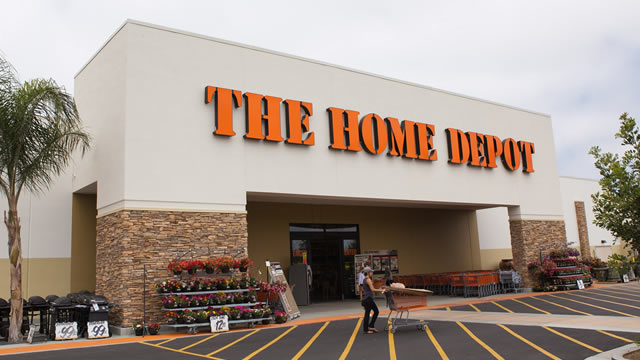
The Home Depot and The Home Depot Foundation commit $1 million to Hurricane Melissa relief efforts
Prnewswire· 2025-10-31 22:21
Core Points - The Home Depot and The Home Depot Foundation are committing $1 million in product donations and grants for relief and recovery efforts in Jamaica and other Caribbean communities affected by Hurricane Melissa [1][3] - Hurricane Melissa, a Category 5 hurricane, caused significant destruction in Jamaica, leading to loss of life, severe flooding, and over 25,000 residents in emergency shelters [2][4] - The Home Depot Foundation is collaborating with organizations like World Central Kitchen and Convoy of Hope to provide emergency meals and essential supplies [3][4] Company Initiatives - The Home Depot is donating disaster relief products such as generators, water, and cleanup supplies to support immediate relief efforts [4] - The company has set up Miami stores and 30 stores in the New York Metro region as hubs to expedite orders to impacted communities [4] - The Home Depot has a proactive approach to hurricane preparedness, stocking essential supplies in advance of hurricane season [5] Organizational Background - The Home Depot is the largest home improvement specialty retailer, operating over 2,353 retail stores and employing more than 470,000 associates [6] - The Home Depot Foundation focuses on improving the lives of U.S. veterans, supporting disaster-impacted communities, and training skilled tradespeople [7] - Since 2011, the Foundation has invested over $600 million in veteran causes and aims to invest $750 million by 2030 [7]

Home Depot's Tech Edge: Faster Fulfillment, Stronger Loyalty
ZACKS· 2025-10-30 17:36
Core Insights - Home Depot, Inc. is utilizing advanced technology to enhance operational efficiency and customer loyalty, with significant digital investments leading to improved fulfillment and engagement [1][2] Group 1: Operational Enhancements - The company has achieved its fastest delivery speeds in history for both same-day and next-day services, resulting in a double-digit increase in spending from customers using these options [2] - Digital tools such as enhanced hdPhones and new order fulfillment apps are improving efficiency and service within stores, allowing associates to prioritize online orders effectively [3] - A proprietary freight flow system is maintaining stock levels while enabling employees to focus on customer service, creating a connected ecosystem that integrates physical and digital capabilities [3] Group 2: Professional Customer Experience - For professional customers, technology upgrades are enhancing the buying experience, allowing for seamless ordering, modification, and payment across channels [4] - The integration of trade credit, order management, and a B2B website is part of Home Depot's strategy to build a robust digital-first ecosystem aimed at delivering faster and smarter service [4] Group 3: Competitive Landscape - Lowe's is also enhancing its competitive position through technology-driven fulfillment and personalized customer experiences, utilizing data analytics and AI for inventory optimization and demand forecasting [5] - Floor & Decor is leveraging technology to improve customer retention and fulfillment, with an integrated digital platform that connects e-commerce with in-store inventory visibility [6] Group 4: Financial Metrics - Home Depot shares have decreased by 4% over the past year, while the industry has seen a decline of 10.6% [7] - The company is trading at a forward price-to-sales ratio of 2.22X, which is higher than the industry average of 1.72X [9] - The Zacks Consensus Estimate indicates a projected year-over-year sales decline of 1.5% for the current financial year, while earnings per share are expected to grow by 8.3% [10]
Home Depot: I Understand Your Recent Doubts, But It's Solid
Seeking Alpha· 2025-10-29 16:57
Core Insights - The logistics sector has seen significant engagement from investors, particularly in the ASEAN and US markets, highlighting its growth potential and diversification opportunities [1] - The popularity of insurance companies in the Philippines since 2014 indicates a shift in investment strategies among local investors, moving towards a more diversified portfolio [1] - The entry into the US market has provided additional avenues for investment, particularly in sectors such as banking, hotels, and logistics, reflecting a broader trend of globalization in investment strategies [1] Investment Strategies - Initial investments were focused on blue-chip companies, showcasing a common strategy among investors to seek stability and reliability [1] - The diversification into various industries and market cap sizes demonstrates a strategic approach to risk management and potential for higher returns [1] - The use of trading accounts and platforms like Seeking Alpha has facilitated knowledge sharing and comparative analysis between different markets, enhancing investment decision-making [1]
5 Dividend ETFs Built for a Lifetime of Retirement Income
Yahoo Finance· 2025-10-29 16:05
Core Insights - The article emphasizes the importance of finding reliable passive income streams for a comfortable retirement, highlighting that Social Security and 401(k) plans may not suffice due to inflation and economic uncertainty [1]. Group 1: Dividend ETFs Overview - Many investors are turning to dividend ETFs as a solution for steady income and diversification [2]. - The article identifies five dividend ETFs that could enhance retirement portfolios by providing stability, growth, and lifetime income [2]. Group 2: Schwab U.S. Dividend Equity ETF (SCHD) - SCHD invests in quality companies from the Dow Jones U.S. Dividend 100 Index, focusing on strong financials and sustainable dividends [3]. - The ETF has an expense ratio of 0.06% and offers a yield of 3.85%, making it attractive for investors [4]. - SCHD is managed by Charles Schwab and includes notable holdings such as Cisco, PepsiCo, and Home Depot [4]. Group 3: Vanguard High Dividend Yield ETF (VYM) - VYM combines stability with high dividend payments, investing in over 500 companies with above-average yields [5]. - The fund has net assets exceeding $81 billion and maintains a low expense ratio of 0.06% [6]. - Key sectors for VYM include financials, consumer discretionary, and basic materials, with top holdings like Broadcom and JPMorgan Chase [6]. Group 4: Vanguard Dividend Appreciation ETF (VIG) - VIG focuses on companies with a history of increasing dividends, tracking the S&P U.S. Dividend Growers Index [7]. - The ETF has net assets over $115 billion and features a low expense ratio of 0.05%, making it cost-effective [8]. - Its main holdings are in financials, consumer discretionary, and information technology, including companies like Broadcom, JPMorgan Chase, and Microsoft [8].
Home Depot vs. Lowe's: Which Home Improvement Titan Holds the Edge?
ZACKS· 2025-10-28 17:40
Core Insights - The Home Depot and Lowe's dominate the U.S. home improvement market, valued at over $500 billion, with significant shares in DIY, DIFM, and professional contractor segments [1][2]. Home Depot (HD) - Home Depot holds a leading position in the U.S. home improvement retail market, estimated to control nearly 50% of the $1 trillion industry, with 2,353 stores and a 12% year-over-year increase in online sales for Q2 fiscal 2025 [4][8]. - The company's competitive edge stems from its scale, supply-chain efficiency, and a diverse customer base, which includes both DIY homeowners and professional contractors [5]. - Strategic expansion into the Pro ecosystem through acquisitions like SRS and the pending GMS deal enhances its market reach and ability to cross-sell [6][7]. - Home Depot reported Q2 fiscal 2025 sales of $45.3 billion, a 4.9% increase year-over-year, with an adjusted operating margin of 14.8% and a return on invested capital of 27.2% [8]. Lowe's (LOW) - Lowe's is the second-largest home improvement retailer in North America, holding about 25% of the U.S. market, with Q2 fiscal 2025 sales of $24 billion, up 1.1% year-over-year [9][10]. - The company focuses on expanding its Pro and digital ecosystem, with an adjusted EPS of $4.33, reflecting a 5.6% increase, and an operating margin of 14.7% [9]. - Lowe's recent acquisition of Foundation Building Materials opens access to a $250 billion Pro market, enhancing its capabilities in drywall and insulation distribution [11]. - The company reported a return on invested capital of 29.5% and generated $3.7 billion in free cash flow during the fiscal second quarter, indicating strong financial health [12]. Market Comparison - Home Depot's stock has decreased by 2.5% over the past year, while Lowe's has seen a decline of 7.3%, with Home Depot outperforming due to its scale and Pro segment growth [17]. - Home Depot trades at a forward price-to-sales (P/S) multiple of 2.26, while Lowe's is at 1.55, indicating that Home Depot is priced at a premium [18]. - The Zacks Consensus Estimate for Home Depot's fiscal 2025 sales suggests a 2.9% growth, while Lowe's estimates indicate a 1.8% growth [13][16]. Investment Outlook - Home Depot is viewed as the stronger investment option due to its superior stock performance, robust growth outlook, and strategic expansions [21][22]. - Lowe's remains a strong competitor with solid operational discipline, but Home Depot's execution and innovation provide a competitive edge [22].


Meet the Newest Artificial Intelligence (AI) Stock in the Dow Jones. It Has Soared 268% Since Early Last Year, and It's Still a Buy Right Now, According to Wall Street
Yahoo Finance· 2025-10-27 12:47
Key Points Nvidia is the newest member of the Dow Jones, providing the index with some much-needed exposure to the technology sector. While Nvidia stock has risen by almost 300% since early 2024, several powerful catalysts could fuel shares even higher. Wall Street is overwhelmingly optimistic on Nvidia stock. 10 stocks we like better than Nvidia › The Dow Jones Industrial Average is home to some of the most storied, iconic American brands. Companies such as Coca-Cola, Disney, Home Depot, IBM, an ...

BuildDirect.com (OTCPK:BDCT.F) 2025 Conference Transcript
2025-10-22 22:02
Summary of BuildDirect.com (OTCPK:BDCT.F) 2025 Conference Call Company Overview - BuildDirect.com is positioned as North America's consolidator in the flooring industry, which has a total addressable market (TAM) of approximately $90 billion [1] - The company currently operates at a size of around $65 million in revenue and aims to reach $500 million in revenue with 75 locations [8][18] Industry Insights - The flooring industry is characterized by a high degree of fragmentation, with more entities now than 20 years ago [2] - The market is primarily driven by renovation projects rather than new construction, making it resilient in various economic conditions [1] - The company also serves commercial sectors, including hospitality and medical [2] Growth Strategy - BuildDirect's growth strategy focuses on mergers and acquisitions (M&A), expanding Pro Centers, and enhancing its e-commerce platform [3][11] - The company has identified tile as a significant growth opportunity, representing about 35% of the overall flooring TAM [6] - Current organic growth is expected to come from scaling the e-commerce business, which has a run rate of $15 million and aims to reach $50 million [4] Financial Performance - The company reports a gross margin of 40%, which could increase to approximately 55% with direct procurement [8] - Pro Centers are expected to generate about $7.5 million in revenue per location, with an EBITDA margin of 12% to 15% [9] Market Positioning - BuildDirect differentiates itself from big box retailers like Home Depot and Lowe's by focusing on the pro customer segment, which requires bulk orders and specialized services [25] - The company aims to optimize marketing and supply chain efficiencies post-acquisition, as the flooring industry is currently under-marketed [13][14] Acquisition Strategy - The company is actively in "buy mode" for acquisitions, viewing the next few years as a prime opportunity for growth [12] - BuildDirect emphasizes that any acquisition must be financially better than building a new location from scratch [12] - The company is particularly interested in small businesses with strong local brands that can be integrated into its existing operations [10] Challenges and Considerations - The flooring industry faces challenges related to inventory management and the complexities of integrating acquired businesses [26] - Private equity firms are often hesitant to invest in this space due to concerns over inventory and accounts receivable [30] Future Outlook - BuildDirect is focused on responsible, steady growth and aims to leverage technology to enhance its market position [24] - The company is exploring additional categories beyond flooring for future expansion [24] Conclusion - BuildDirect.com is strategically positioned to capitalize on the fragmented flooring market through a combination of organic growth and targeted acquisitions, with a clear focus on serving the professional customer segment and enhancing operational efficiencies [23]
Capstone Highlights How Accretive M&A Drives Shareholder Value
Accessnewswire· 2025-10-21 11:30
Core Insights - Capstone Holding Corp. is successfully executing a disciplined, accretive M&A strategy that enhances shareholder value [1] - Recent acquisitions by Lowe's and Home Depot support the consolidation trend in the building materials sector, which Capstone is leveraging to expand its operations [1] - The company is on track to achieve a $100 million run-rate revenue target [1] Company Strategy - Capstone's acquisition strategy focuses on expanding its footprint and scaling operations to drive immediate revenue and EBITDA growth [1] - The validation of Capstone's strategy comes from the recent activities of major competitors in the industry, indicating a robust market environment for consolidation [1]

Manitou Investment Management Offloads $12 Million of Home Depot (NYSE: HD) Shares: What Should Investors Do?
The Motley Fool· 2025-10-20 23:30
Core Viewpoint - Manitou Investment Management Ltd. has reduced its stake in The Home Depot by selling 30,004 shares, valued at approximately $11.80 million, during Q3 2025, resulting in a remaining holding of 37,869 shares [1][2]. Company Overview - The Home Depot, Inc. is a leading home improvement retailer with a diverse product portfolio and a significant presence across the United States [5]. - The company reported a revenue of $165.05 billion and a net income of $14.63 billion for the trailing twelve months (TTM) [4]. - The dividend yield stands at 2.33%, with the stock price at $387.39 as of October 16, 2025 [4]. Investment Insights - Following the sale, The Home Depot now constitutes 2.68% of Manitou's assets under management (AUM) [3]. - The stock has experienced a 7.46% decline over the past year, underperforming the S&P 500 by 19 percentage points [3]. - The stock was trading at 29 times earnings during the last quarter, marking its highest valuation in the past decade [9]. Recent Developments - Home Depot has recently invested approximately $22 billion in acquiring distributors related to its core operations, indicating a strategy for growth [10]. - The company continues to offer mid-single digit sales growth rates, a growing dividend, and stock buybacks, positioning itself as a solid dividend growth stock [10].