
Reliance Industries

Search documents
Sensex ends down 119 points on profit-taking in IT, auto shares
Rediff· 2025-09-15 11:48
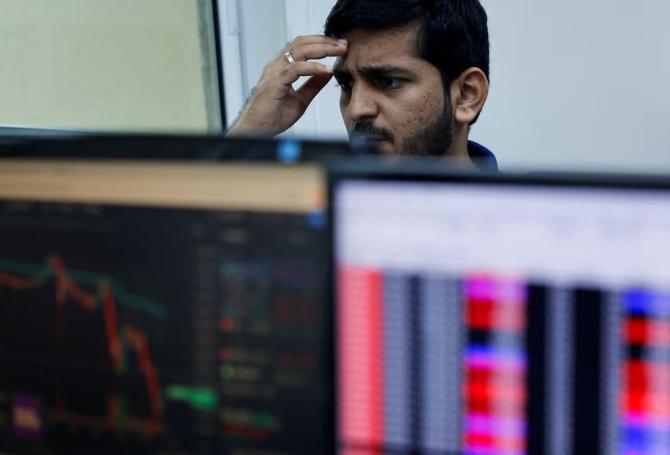
Market Overview - The benchmark indices, BSE Sensex and NSE Nifty, experienced declines, with Sensex dropping by 118.96 points (0.15%) to 81,785.74 and Nifty falling by 44.80 points (0.18%) to 25,069.20, ending their respective rallies [3][10] - The trading session was characterized by volatility and profit-taking, particularly in IT and auto sectors, as investors remained cautious ahead of the US Federal Reserve policy meeting [1][4][5] Sector Performance - Major laggards among Sensex firms included Mahindra & Mahindra, Asian Paints, Infosys, Titan, Sun Pharma, Tata Consultancy Services, Tech Mahindra, and Power Grid [4] - Conversely, gainers included Bajaj Finance, Eternal, UltraTech Cement, and Reliance Industries [4] - The BSE Focused IT index saw the largest drop of 0.63%, followed by IT (0.60%), consumer durables (0.50%), teck (0.45%), and auto (0.32%) [9] Investor Sentiment - Investors are adopting a cautious stance, awaiting guidance on future interest rate trajectories from the Fed, despite a 25-bps rate cut being largely anticipated [7][10] - Strong domestic consumption is supporting market sentiment, alongside optimism regarding trade deals and expected earnings recovery in H2FY26 [7] Broader Market Trends - Broader markets showed positive movement, with the Smallcap index climbing 0.66% and the Midcap index gaining 0.40% [8] - Realty sector surged by 2.47%, while capital goods, industrials, telecommunication, and power sectors also advanced [9] Global Market Context - In Asian markets, South Korea's Kospi and Hong Kong's Hang Seng closed positively, while Shanghai's SSE Composite index declined [11] - Global oil benchmark Brent crude increased by 0.48% to $67.31 per barrel [11]

X @BBC News (World)
BBC News (World)· 2025-09-15 11:18
Top court grants relief to private zoo run by billionaire Ambani family https://t.co/U1j2wdeTlO ...
Vedanta is making a contrarian bet on renewable energy. Will it pay off?
MINT· 2025-09-15 10:57
Core Viewpoint - Vedanta Group is establishing a private energy business focused on providing round-the-clock green power, betting that this approach will yield higher margins compared to traditional backward integration strategies adopted by other Indian conglomerates [1][4]. Group Structure - The private energy business of Vedanta Group includes Sterlite Electric, Serentica Renewables, and Resonia Limited, which are involved in manufacturing power conductors and cables, operating power transmission lines, and generating renewable energy from solar and wind sources [2]. Strategic Choices - Vedanta Group will not invest in manufacturing solar panels, wind turbines, or battery cells, as it believes these areas do not offer high margins unless a company is highly innovative [3][6]. - The company is focusing on providing round-the-clock green power, which is not yet commoditized due to the complexities involved in combining multi-located wind and solar power with storage solutions [7][8]. Market Dynamics - Current market conditions show an oversupply of battery cells and solar panels, making manufacturing less lucrative [7]. - RTC clean energy contracts are being signed at ₹4.3-5.5 per unit, compared to ₹2.6-3.2 per unit for plain renewable energy, indicating a potential for higher returns in RTC power [9]. Growth Plans - Serentica aims to scale up to 4 gigawatts of RTC solar and wind power within the next 12 months, with plans for 1 gigawatt of battery storage and 3 gigawatts of pumped hydro storage [12]. - The company has signed power purchase agreements for 8 gigawatts, with a long-term goal of reaching 17 gigawatts by FY30 [12]. Technological Advancements - Vedanta is also investing in technological advancements in its cable manufacturing business, developing intelligent cables that can identify failures in distribution lines, which allows for premium pricing [14]. Governance and Concerns - There are concerns raised by American short-seller Viceroy Research regarding the dealings between Serentica and Vedanta's listed companies, suggesting potential conflicts of interest [16]. - Pratik Agarwal defended the governance standards and the fixed-price contracts established with clients, asserting that they are transparent and subject to scrutiny [17].
Markets upbeat as SEBI eases IPO, foreign investor rules
BusinessLine· 2025-09-15 04:36
Group 1: Market Overview - Nifty futures indicate a calm start to the week after Indian benchmarks recorded two consecutive weeks of gains [1] - The US Federal Reserve's upcoming policy meeting is a focal point, with speculation about potential rate cuts [1] - Indian markets are anticipating WPI data to be released later in the day [1] Group 2: Inflation and Interest Rates - Despite a rise in inflation in India for the first time in 10 months, traders are still pricing in further interest rate cuts [2] - Expectations of reduced consumption taxes are believed to contribute to easing inflation, allowing the Reserve Bank of India to lower rates [2] - Capital Economics predicts an additional 50 basis points of cuts by year-end, which is more dovish than the market consensus [2] Group 3: Data Center Industry - The data center market in India is projected to expand fivefold within five years, with major players like Bharti Airtel, Reliance Industries, and Adani Enterprises expected to control 35%-40% of capacity by 2030 [3] - This growth in data infrastructure is seen as a significant opportunity for long-term investors, not only in technology but also in construction, electrical equipment, and cooling systems [3] Group 4: Regulatory Changes - The Securities and Exchange Board of India (SEBI) has relaxed IPO and foreign investor regulations to enhance capital flows [4] - Major companies like Reliance Jio and the National Stock Exchange can now list with smaller public stakes and have up to 10 years to comply with minimum public shareholding rules [4] - SEBI's changes also include widening anchor investor limits and lowering barriers for large-value alternative investment funds, aimed at deepening capital markets [4] Group 5: Market Sentiment - The Nifty 50 index has been affected by tariff headlines and consumption-boosting measures, leading to low volatility in the derivatives market [5] - Traders are divided on the implications of low volatility, which may indicate either fatigue with tariff discussions or a lack of strong conviction for significant market movements [5] - The potential for future market jolts remains uncertain, influenced by new tariff developments or unexpected events [5]


GST reforms set to reignite consumption growth, spur corporate profitability
The Economic Times· 2025-09-15 01:00
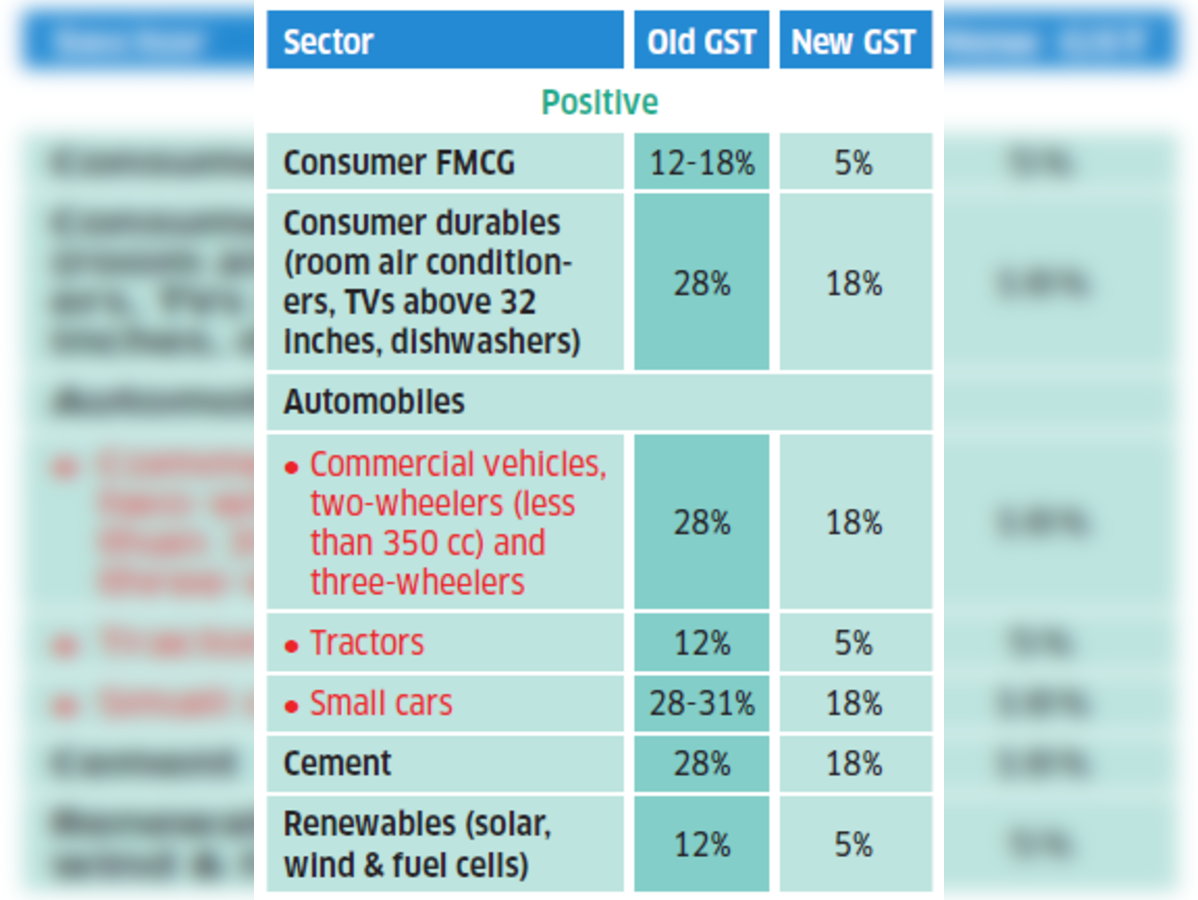
Consumption Sector - The recent GST reforms are expected to boost affordability and consumption across rural and urban markets, with around 90% of items moved from higher to lower tax slabs [1][38] - Experts anticipate a premiumisation effect among low- and middle-income households, as savings on essential goods will redirect purchasing power towards high-value consumption [2][38] - The consumption sector is projected to recover over the next 12-15 months, with private consumption growth expected to rise by 40-50 basis points in the second half of the current financial year [4][41] Corporate Profitability - Lower prices from GST reforms will create volume acceleration for producers, supporting profit margins and leading to an anticipated overall profitability increase of 1-1.5% relative to 2024-25 earnings [5][41] - The reforms are expected to stimulate demand for first-time buyers and replacement purchases, particularly during the festive season, with an industry expectation of a 10-15% improvement in demand for room air conditioners [22][41] Sector-Specific Impacts - Key beneficiaries in the consumer FMCG sector include Britannia Industries, Colgate Palmolive (India), Nestle India, and Emami due to reduced GST on essentials from 12-18% to 5% [11][15][41] - In the consumer durables sector, companies like LG, Daikin, Blue Star, and Dixon Technologies will benefit from reduced GST on room air conditioners and dishwashers from 28% to 18% [18][41] - The automobile sector, including Maruti Suzuki, TVS Motor, Hero MotoCorp, and Bajaj Auto, will see positive impacts from reduced GST rates on commercial vehicles and small cars [23][41] Infrastructure and Housing - The cement industry is expected to benefit from a reduction in GST from 28% to 9%, potentially lowering cement prices by Rs.25-30 per bag, which will support infrastructure and housing sectors [24][41] - Cost-efficient firms like Prism Johnson and Heidelberg Cement are positioned to enhance net realizations and margins over the medium to long term due to these reforms [25][41] Renewable Energy - The renewable energy sector will benefit from a reduction in GST on equipment from 12% to 5%, with key beneficiaries including Tata Power, JSW Energy, and Vikram Solar [26][41] - This reduction is expected to lower capital costs for solar and wind power projects, improving the internal rate of return and supporting government initiatives around renewable energy transition [31][41] Banking and Financial Services - Banks such as HDFC Bank, ICICI Bank, and IDFC First Bank are expected to benefit from increased demand for credit due to a pick-up in consumption and economic activities [32][41] - Non-Banking Financial Companies (NBFCs) focused on retail loans will also benefit from rising demand for consumer durables and vehicles [32][41] Insurance and Textiles - The insurance sector will face mixed impacts, with a reduction in GST on life and health insurance to nil, improving affordability but potentially diluting margins due to loss of input tax credit [33][41] - The textile industry will see a reduction in GST on fabrics and home textiles from 12% to 5%, benefiting companies like Sanathan Textiles and Grasim Industries [30][36][41] Oil and Gas - The oil exploration sector will be adversely impacted by an increase in GST from 12% to 18%, affecting companies like ONGC and Oil India [37][41] - The increase in costs for exploration and production is expected to dent cash flows significantly, with estimates of Rs.2,500-3,000 crore in losses for ONGC [40][41]

M-cap weekly gains: Eight of top-10 firms add Rs 1.69 lakh cr; Bajaj Finance leads rally as LIC, HUL lose value
The Times Of India· 2025-09-14 09:26
Group 1 - The BSE benchmark surged by 1,193.94 points or 1.47%, boosting the wealth of blue-chip companies [4][6] - The combined market valuation of eight of the ten most valued domestic firms increased by Rs 1,69,506.83 crore last week [6] - Bajaj Finance was the standout performer, with its valuation climbing by Rs 40,788.38 crore to Rs 6,24,239.65 crore [4][6] Group 2 - Infosys gained Rs 33,736.83 crore, bringing its market capitalization to Rs 6,33,773.30 crore [4][6] - Tata Consultancy Services added Rs 30,970.83 crore, pushing its valuation to Rs 11,33,926.72 crore [4][6] - Reliance Industries' market capitalization advanced by Rs 27,741.57 crore to Rs 18,87,509.28 crore, maintaining its position as the most valued firm [5][6] Group 3 - State Bank of India gained Rs 15,092.06 crore, reaching Rs 7,59,956.75 crore [4][6] - ICICI Bank rose by Rs 10,644.91 crore to Rs 10,12,362.33 crore [4][6] - HDFC Bank added Rs 6,141.63 crore to reach Rs 14,84,585.95 crore [4][6] Group 4 - Bharti Airtel's market capitalization rose by Rs 4,390.62 crore to Rs 10,85,737.87 crore [4][6] - Hindustan Unilever's valuation fell by Rs 12,429.34 crore to Rs 6,06,265.03 crore, making it one of the laggards [5][6] - LIC's valuation decreased by Rs 1,454.75 crore, slipping to Rs 5,53,152.67 crore [5][6]
Mcap of eight of top-10 most valued firms jumps by Rs 1.69 lakh cr; Bajaj Finance biggest gainer
BusinessLine· 2025-09-14 05:12
Group 1 - The combined market valuation of eight of the top-10 most valued firms increased by ₹169,506.83 million last week, driven by a positive trend at the Dalal Street, with Bajaj Finance being the largest gainer [1] - The BSE benchmark rose by 1,193.94 points or 1.47 percent during the same period [1] Group 2 - Bajaj Finance's market valuation increased by ₹40,788.38 million, reaching ₹624,239.65 million [2] - Infosys added ₹33,736.83 million to its valuation, totaling ₹633,773.30 million [2] - Tata Consultancy Services (TCS) saw a surge of ₹30,970.83 million, bringing its market capitalization to ₹1,133,926.72 million [2] - Reliance Industries' valuation rose by ₹27,741.57 million, reaching ₹1,887,509.28 million [2] - State Bank of India's market capitalization climbed by ₹15,092.06 million to ₹759,956.75 million [2] - ICICI Bank's valuation increased by ₹10,644.91 million, totaling ₹1,012,362.33 million [2] Group 3 - HDFC Bank's market capitalization edged higher by ₹6,141.63 million, reaching ₹1,484,585.95 million [3] - Bharti Airtel's valuation increased by ₹4,390.62 million, totaling ₹1,085,737.87 million [3] - Hindustan Unilever's valuation decreased by ₹12,429.34 million, bringing it down to ₹606,265.03 million [3] - Life Insurance Corporation of India's (LIC) market capitalization declined by ₹1,454.75 million, totaling ₹553,152.67 million [3] Group 4 - Reliance Industries remains the most valued firm, followed by HDFC Bank, TCS, Bharti Airtel, ICICI Bank, State Bank of India, Infosys, Bajaj Finance, Hindustan Unilever, and LIC [4]

Wall Street Eyes Records Amid Rate Cut Hopes; Oracle, Opendoor Soar
Stock Market News· 2025-09-11 16:07
Market Overview - Major U.S. stock indexes are showing robust momentum, with several nearing or setting new record highs, driven by optimism regarding potential Federal Reserve interest rate cuts [1][2] - The S&P 500 is up +0.22% and on track for a third consecutive all-time high, while the Nasdaq Composite is up +0.17% after a record close [2] - The Dow Jones Industrial Average is recovering, up +0.44% after a previous decline [2] Economic Indicators - Treasury yields remain stable, with the 10-year Treasury yield easing to 4.02% from 4.04%, reinforcing expectations for a Fed rate cut [3] - The U.S. Consumer Price Index (CPI) for August rose 2.9% year-over-year, slightly up from July's 2.7%, but still above the Fed's 2% target [5] - Weekly initial unemployment claims surged by 27,000 to a 3.75-year high of 263,000, indicating a weakening labor market [5] Upcoming Events - The Federal Reserve's meeting on September 16-17 is highly anticipated, with markets pricing in a 100% chance of a 25 basis point interest rate cut [4] - The University of Michigan's consumer sentiment index is expected to be released soon, providing insights into consumer confidence [6] Company News - Oracle (ORCL) shares are up 1.5% after a significant 35.9% leap, driven by projected revenue growth in the AI sector despite missing quarterly expectations [7] - Opendoor Technologies (OPEN) stock surged 34% following the appointment of a new CEO [7] - Synopsys (SNPS) shares fell 35.8% after disappointing quarterly results but are showing signs of recovery, up 3% in early trading [8] - Apple (AAPL) experienced a 3.2% drop, attributed to a lack of surprises in the new iPhone unveiling [11] - Taiwan Semiconductor Manufacturing Co. (TSM) saw a 3.8% increase in stock price after reporting a nearly 34% revenue jump for August [11] - Kroger (KR) rose 1.6% after reporting stronger-than-expected quarterly profits and raising its profit forecast [11] - Micron Technology (MU) soared over 9%, reflecting strong investor interest in semiconductor and AI-related technology stocks [11]




Wealth Creation with The Power of Compounding | Dr. Farzan Ghadially | TEDxVIIT
TEDx Talks· 2025-09-11 15:22
Investment Principles - Compounding is crucial for wealth creation, with those understanding it accumulating significant wealth [2] - Consistent investment and patience are key, exemplified by Warren Buffett's long-term investment strategy [4][5] - The Rule of 72 highlights the power of compounding, showing how quickly investments can double based on returns [6] - Avoid get-rich-quick schemes and focus on consistent, long-term investing [7] Market Analysis & Opportunities - Nifty50 data shows a historical compounding rate of 1563% annually over 15 years, indicating potential for wealth growth [9] - Indian stock market rebounded significantly after major falls in 2008 (69-70%) and 2020 (70%), demonstrating resilience [12][14] - Only 3-5% of Indians invest directly or indirectly in the stock market, suggesting significant growth potential compared to developed countries like the US (52%) [14] - Monthly SIP inflows exceed 200 billion rupees, driven by small retail investors seeking to combat inflation [16] Investment Strategies & Recommendations - Start investing early with small amounts to build a base and benefit from compounding [6][23] - Stay invested long-term, avoiding panic during market fluctuations [24][26] - Save consistently and increase investments over time as income grows [26][27] - Prioritize investing over spending, and create an emergency fund of 6-8 months' worth of savings [28][29] - Conduct thorough research before investing in stocks, or opt for mutual funds for professional management [31]

Oracle's $244 billion single-day rally as big as entire IT trinity of TCS, Infosys, HCL Tech
The Economic Times· 2025-09-11 05:20
Company Overview - Oracle's shares increased by approximately 36%, resulting in a market cap gain of $244 billion, bringing its total market value to $922 billion, making it the 12th most valued firm globally and on track to join the $1 trillion club [1][8] - The company's founder, Larry Ellison, saw his net worth rise by $88.5 billion in a single day, briefly surpassing Elon Musk as the world's richest billionaire, with a current net worth of $383 billion [5][8] Financial Projections - Oracle projects its cloud infrastructure revenue to grow from $10.3 billion in fiscal 2025 to $144 billion by fiscal 2030, with interim targets of $18 billion in fiscal 2026, $32 billion, $73 billion, and $114 billion in the following years [1][7][8] - The company has recently secured four multi-billion-dollar contracts, including a significant $300 billion contract with OpenAI for computing power over five years, marking one of the largest cloud contracts ever signed [6][8] Market Position - Oracle is emerging as a key provider in the cloud computing market, competing with major players such as Amazon, Microsoft, and Google, and is recognized as a significant enabler of AI technology [7][8] - Analysts from Bank of America have upgraded Oracle's stock to "buy" from "neutral," citing its "exceptional backlog" as a factor solidifying its position in the AI sector [8]

