
Pfizer

Search documents
Pfizer Inc. (PFE) Presents at Jefferies London Healthcare Conference 2025 Transcript
Seeking Alpha· 2025-11-19 11:58
Core Viewpoint - The company is focused on executing high-level commercial and financial strategies while aiming for growth in 2029 and 2030 [1]. Group 1: Financial Performance and Strategy - The company has made significant progress in delivering on its financial promises [1]. - A total of $7.7 billion in cost improvements have been identified to enhance the cost structure over the next several years [2]. - The company is strategically rightsizing its operations in anticipation of a period of Loss of Exclusivity (LOE) [2].


Erasca (NasdaqGS:ERAS) 2025 Conference Transcript
2025-11-19 11:32
Summary of Erasca Conference Call Company Overview - **Company**: Erasca (NasdaqGS:ERAS) - **Industry**: Precision Oncology - **Founded**: 2018 - **Headquarters**: San Diego - **Key Focus**: Targeting the RAS MAP kinase pathway, which is mutated in 33% to 50% of all cancers - **Lead Programs**: - ERAS-0015 (pan-RAS) - ERAS-4001 (pan-KRAS) - **Financial Position**: $362 million in cash as of Q3, with a runway extending to the second half of 2028 [5][57] Core Points and Arguments Lead Assets Differentiation - **ERAS-0015 vs. Revolution Medicines' Durexin RASib**: - **Binding Affinity**: ERAS-0015 has 8-20 times better binding affinity to cyclophilin A compared to Durexin RASib [7] - **In Vitro Potency**: 4-5 times greater potency across various cell lines [7] - **In Vivo Activity**: Comparable anti-tumor activity at one-tenth the dose of Durexin RASib [7][8] - **Pharmacokinetics**: Better clearance, half-life, and oral bioavailability [8] - **ERAS-4001**: - **Mechanism of Action**: Similar to other pan-KRAS molecules but on a different chemical scaffold, potentially avoiding issues faced by competitors [10][11] - **Potency**: Single-digit nanomolar potency against both GDP and GTP states of KRAS [11] Clinical Development Status - **Phase One Studies**: - INDs cleared in May 2025, currently in dose escalation for both programs [13] - High unmet need with 2.7 million patients diagnosed annually with RAS mutant tumors [13] - Data expected in 2026 for both programs [14] Enrollment Strategy - **Patient Enrollment**: Open to all patients with RAS mutations, with potential for later enrichment based on specific tumor types [19][20] - **Tumor Types**: Focus on colorectal cancer (CRC), pancreatic, and lung cancers, which represent significant patient populations [20] Safety and Efficacy Expectations - **Safety Profile**: Aiming for non-inferiority compared to competitors, with a focus on lower drug load potentially leading to better adverse event profiles [31][32] - **Efficacy Goals**: Comparable activity at lower doses than competitors would be considered a significant success [33] Competitive Landscape - **Key Competitors**: - Revolution Medicines (Durexin RASib) - Other players include Pfizer, Lilly, BridgeBio, and Alterom [56] - **Market Position**: Erasca aims to be a leader in the pan-RAS and pan-KRAS space with ongoing clinical trials and data disclosures [56] Additional Insights - **Combination Strategies**: Plans to explore both monotherapy and combination approaches with standard of care and investigational agents [44][49] - **Discovery Stage Programs**: ERAS-12, a bispecific antibody targeting EGFR, is in early development and may complement RAS/KRAS strategies [48] Key Events for Investors - **Upcoming Data**: Phase one monotherapy data for both RAS programs expected in 2026, which could be pivotal for the company and the pan-KRAS space [57]

Pfizer (NYSE:PFE) 2025 Conference Transcript
2025-11-19 10:02
Summary of Pfizer's 2025 Conference Call Company Overview - **Company**: Pfizer Inc. (NYSE:PFE) - **Event**: 2025 Conference Call - **Date**: November 19, 2025 Key Points Industry Context - Pfizer is navigating a period of significant change with a focus on returning to growth by 2029 and 2030, amidst a wave of loss of exclusivity (LOE) for several products [2][22] Financial Performance and Cost Management - Pfizer has identified approximately **$7.7 billion** in cost improvements to be implemented over the next several years to enhance its cost structure [3] - By the end of 2025, Pfizer expects to achieve **$4.5 billion** of the targeted savings, with further opportunities for operational efficiencies in manufacturing and commercial operations [39][40] Research and Development (R&D) Strategy - Pfizer has restructured its R&D focus, promoting Chris Boshoff to lead the R&D organization, emphasizing oncology, vaccines, internal medicine, and inflammation & immunology (I&I) [3] - The company is actively pursuing business development transactions, including a partnership with **3SBio** to enhance its oncology portfolio and a recent acquisition of **Metsera** to enter the obesity treatment market [3][4] Obesity Market Entry - Pfizer's acquisition of Metsera is seen as a strategic move to compete in the obesity market, leveraging its strong commercial engine and manufacturing capabilities [6][8] - The Metsera platform offers a differentiated approach with a potential monthly dosage, which is critical for market competitiveness [9][11] - Pfizer anticipates that the recent Medicare coverage for obesity treatments could positively impact market dynamics [13] Future Growth and Product Pipeline - Pfizer is preparing for a significant LOE period, with **$17 billion** of products losing patent protection by the end of the decade, primarily between 2026 and 2028 [22][23] - The company aims to ensure that investments are appropriately allocated to support growth aspirations for 2029 and 2030 [24] Capital Allocation and M&A Strategy - Pfizer has set a **$15 billion** external capital commitment for acquisitions, with approximately **$5 billion** remaining after the Metsera deal [32] - The company is focused on enhancing its oncology and I&I portfolios, with a particular interest in identifying additional molecules or projects in I&I [33][34] Operational Efficiencies and Cash Flow Management - Pfizer has improved its working capital, achieving a free cash flow increase of **$3-$4 billion** in 2025 through better inventory management across its global operations [41][42] - The company expects to see a reduction in cash outflows related to cost-saving measures, which will enhance future cash flow [43][44] Conclusion - Pfizer is strategically positioning itself for future growth by managing costs, enhancing its R&D capabilities, and entering new markets such as obesity treatment, while navigating the challenges posed by upcoming LOEs. The focus remains on operational efficiencies and prudent capital allocation to support long-term growth objectives [2][24][32]
Olema Pharmaceuticals (NasdaqGS:OLMA) 2025 Conference Transcript
2025-11-19 10:02
Summary of Olema Pharmaceuticals Conference Call Company Overview - **Company**: Olema Pharmaceuticals - **Focus**: Development of treatment options for breast cancer, specifically targeting estrogen receptor positive, HER2 negative breast cancer, which constitutes about 70% of breast cancer cases [3][4] Lead Asset - **Lead Molecule**: Palazestrant - **Mechanism**: Complete estrogen receptor antagonist, effectively shutting down growth signals [3] - **Clinical Trials**: - **OPERA-01**: Phase 3 trial for second/third-line treatment, readout expected in late 2026 [4] - **OPERA-02**: Phase 3 trial for first-line metastatic treatment in combination with ribociclib, readout expected in late 2028 [4][5] - **OP3136**: KAT6 inhibitor in Phase 1 trials for breast cancer, prostate cancer, and non-small cell lung cancer [5] Industry Context - **Market Size**: - Current global market for CDK4/6 inhibitors is approximately $15 billion, expected to grow to $15 billion-$20 billion by 2030 [20] - First-line breast cancer treatment market estimated at $10 billion-$15 billion, with second/third-line market at about $5 billion in the U.S. [34] Competitive Landscape - **Roche's LIDARA Trial**: Positive interim results reported, indicating improved disease-free survival with giredestrant [9][10] - **Comparison with Roche**: Olema's palazestrant shows better progression-free survival (PFS) in both ESR1 mutant and wild type populations compared to Roche's data [12][21] Key Findings from Recent Data - **ESMO Presentation**: Olema's phase 2 data showed approximately 10 months PFS in ESR1 wild type, compared to 5.5 months in Roche's control arm [12] - **Regulatory Considerations**: OPERA-01 and OPERA-02 trials are designed to separately analyze ESR1 mutant and wild type populations, enhancing regulatory clarity [24][26] Collaborations - **Novartis**: Collaboration for ribociclib supply in OPERA-02 trial [29] - **Pfizer**: Collaboration for atirmociclib, aiming to explore next-generation endocrine therapies [30][32] Future Expectations - **Upcoming Data**: Phase 1 data for OP3136 expected in the first half of 2026, focusing on safety and preliminary efficacy [41] - **Potential Indications**: Besides breast cancer, OP3136 is being explored for prostate cancer and non-small cell lung cancer, with preclinical activity observed [42][43] Conclusion - Olema Pharmaceuticals is positioned to capitalize on significant market opportunities in breast cancer treatment, with promising clinical data and strategic collaborations enhancing its competitive edge in the industry [20][34]

Pfizer Trading Above 50-Day SMA: Is it a Good Time to Buy the Stock?
ZACKS· 2025-11-18 17:01
Core Insights - Pfizer's stock has shown a potential short-term bullish trend, trading above its 50-day and 200-day moving averages since early November and late September respectively [1][9] - The recent acquisition of Metsera for approximately $10 billion has positively impacted Pfizer's stock performance, alongside a drug pricing agreement with the U.S. administration [2][9] - Pfizer's oncology segment is a significant revenue driver, contributing around 28% to total revenues, with a year-to-date growth of 7% [5][10] Company Performance - Pfizer's oncology revenues are supported by key drugs such as Xtandi, Lorbrena, and Padcev, and the company aims to have eight or more blockbuster oncology medicines by 2030 [5][10] - The company is expanding its product labels and pipeline, including both oncology and non-oncology products [6] - Non-COVID operational revenues are improving, with a 9% operational increase in recently launched and acquired products in the first nine months of 2025 [7][10] Strategic Acquisitions - Pfizer has invested approximately $1.6 billion in business development transactions in 2025, including the Metsera acquisition, which re-enters the obesity market [11] - The Metsera acquisition adds four novel clinical-stage programs expected to generate significant peak sales [11] Challenges and Risks - Sales of COVID products, Comirnaty and Paxlovid, are experiencing softness due to lower vaccination and infection rates [12][13] - Pfizer anticipates a moderate negative revenue impact from loss of exclusivity (LOE) starting in 2025, with significant effects expected from 2026 to 2030 [14] - The company expects an unfavorable impact of approximately $1 billion from the Medicare Part D redesign under the Inflation Reduction Act [15] Financial Outlook - Pfizer's stock has underperformed compared to the industry and S&P 500, with a year-to-date loss of 5.4% [16] - The stock is trading at a price/earnings ratio of 7.97, below the industry average of 16.71 and its five-year mean of 10.48, indicating potential value [19] - The Zacks Consensus Estimate for earnings has increased for 2025, reflecting a positive outlook [22] Future Projections - Pfizer expects a revenue compound annual growth rate (CAGR) of approximately 6% from 2025 to 2030, driven by its diversified portfolio [10] - The company aims to achieve cost savings of $7.7 billion by the end of 2027 through restructuring [25] - Pfizer's dividend yield stands at around 7%, providing an attractive return for investors [25]

Pfizer's CEO Sends a Warning to Eli Lilly. Is the Stock a Buy?
The Motley Fool· 2025-11-18 02:10
Core Insights - Pfizer is making significant moves in the weight management market, which is expected to grow rapidly in the next decade, potentially rewarding leading companies handsomely [1][2] - The acquisition of Metsera for $7 billion, with potential milestone payments bringing the total to $10 billion, positions Pfizer as a strong contender in the weight management space [3][4] - Pfizer's CEO, Albert Bourla, expressed confidence in the company's ability to succeed in the obesity market, drawing parallels to past successes with drugs like Lipitor and COVID products [7] Company Developments - Pfizer's acquisition of Metsera indicates its commitment to entering the weight management market, especially after competing with Novo Nordisk for the deal [3][4] - Metsera's leading candidate, MET-097i, has shown promising results in clinical trials, indicating potential for substantial weight loss and good tolerability [6] - Pfizer plans to launch its first anti-obesity drug by the end of 2028, although Eli Lilly currently holds a significant lead with existing products on the market [8] Competitive Landscape - Eli Lilly is currently the leader in the weight management market with its product Zepbound, which has seen exceptional sales growth [8][11] - Eli Lilly has several promising candidates in its pipeline, including orforglipron and retatrutide, which are expected to enhance its competitive position [9][10][11] - Despite Pfizer's efforts, Eli Lilly's established presence and upcoming product launches may allow it to maintain its leadership in the anti-obesity market for the foreseeable future [11] Financial Outlook - Pfizer's recent financial performance has been underwhelming, with concerns about the impending patent cliff for its top growth driver, Eliquis [13] - However, the acquisition of Metsera and the potential success in the weight management sector could help Pfizer rebound [14] - The company also has a strong dividend program, which may attract investors despite current challenges [15]

Terns Pharmaceuticals (NasdaqGS:TERN) 2025 Conference Transcript
2025-11-17 17:32
Summary of Terns Pharmaceuticals Conference Call Company Overview - **Company**: Terns Pharmaceuticals (NasdaqGS:TERN) - **Event**: 2025 Conference on November 17, 2025 Key Industry Insights - **Industry**: Pharmaceuticals and Biotechnology, specifically focusing on treatments for Chronic Myeloid Leukemia (CML) Core Points and Arguments 1. **Efficacy of TERN-701**: Terns reported a major molecular response rate of 64% in highly refractory CML patients during their phase one study, which is unprecedented compared to the previous best of 32% in similar studies [2][4][5] 2. **Safety Profile**: The safety profile of TERN-701 is favorable, with only one discontinuation due to an adverse event noted in the trial [2][4] 3. **Food Effect**: TERN-701 does not exhibit a food effect, allowing for dosing without regard to food intake, which is a significant advantage over competitors like asciminib [2][8] 4. **Collaboration with Hansoh**: Terns has a partnership with Hansoh in China, which has provided additional data that supports TERN-701's development, although Terns primarily relies on its own data for future trials [4][12] 5. **Comparative Analysis with Asciminib**: Terns believes that TERN-701's distinct chemical properties and binding characteristics lead to enhanced efficacy compared to asciminib, which has shown a lower response rate and higher discontinuation rates [5][8][9] 6. **Clinical Development Strategy**: Terns plans to initiate pivotal trials for TERN-701, focusing first on second-line treatments before moving to first-line studies, with the aim of running both studies in parallel [20][18] 7. **Market Opportunity**: The management team believes that the long-term market opportunity for TERN-701 extends beyond asciminib-refractory patients, emphasizing the importance of understanding patient history and disease burden [13][14] 8. **Regulatory Pathway**: Terns aims to follow a similar regulatory pathway to asciminib, targeting both second-generation treatments and imatinib in first-line studies [18][20] 9. **Financial Considerations**: The estimated direct costs for pivotal trials are under $100 million for second-line studies and under $150 million for first-line studies, indicating a more manageable financial requirement than initially anticipated [29] 10. **Future Data Expectations**: The upcoming ASH presentation is expected to provide more detailed data, including a shift table that will illustrate patient responses across different categories, which is crucial for understanding the drug's efficacy [31][32] Additional Important Insights - **Cure Potential**: The concept of treatment-free remission in CML is discussed, with TERN-701 potentially leading to faster and deeper responses that could facilitate this outcome [25][27] - **Enrollment Trends**: There has been a notable increase in enrollment rates for clinical trials, attributed to the positive reception of TERN-701's data among clinicians [33][34] - **Cash Position**: Terns has sufficient cash reserves to fund operations into 2028, allowing for strategic planning without immediate pressure to raise additional funds [40] This summary encapsulates the critical insights and strategic direction of Terns Pharmaceuticals as discussed in the conference call, highlighting the potential of TERN-701 in the competitive landscape of CML treatments.

Michael Burry Bets Against Nvidia and Palantir. But It's Not What You Think.
The Motley Fool· 2025-11-16 10:45
Core Viewpoint - Michael Burry, known for his shorting strategy during the 2008 mortgage crisis, has taken a significant position against Nvidia and Palantir Technologies, purchasing $1.1 billion in put options, which may have influenced the recent decline in these stocks [2][9]. Group 1: Burry's Investment Strategy - Burry's fund, Scion Asset Management, manages nearly $1.4 billion in assets and is required to report holdings quarterly, providing a snapshot of a potentially dynamic portfolio [4][6]. - The nature of hedge funds allows for rapid changes in positions, and Burry's current holdings include put options in Nvidia and Palantir, alongside call options in Pfizer and Halliburton [7][9]. - Burry's strategy may not indicate a long-term bearish outlook on Nvidia and Palantir, but rather a tactical move to capitalize on perceived overvaluation or short-term price declines [10][13]. Group 2: Market Context and Stock Performance - Nvidia's current market capitalization stands at $4621 billion, with a recent price change of +1.68%, while Palantir's market cap is $415 billion, with a +1.00% change [8][12]. - Both stocks have experienced price declines recently, which may align with Burry's expectations of market pressure on these high-value stocks [9][13]. - The retail investor's perspective differs from institutional investors like Burry, who operate with distinct goals and strategies [12][14].


Is Pfizer Stock a Buy After This $10 Billion Acquisition?
The Motley Fool· 2025-11-15 10:45
Core Viewpoint - Pfizer is undergoing significant changes, including a major acquisition aimed at revitalizing its pipeline and addressing declining revenues and upcoming patent cliffs [1][2]. Company Developments - Pfizer has been on an acquisition spree, with its latest target being Metsera, a biotech company focused on anti-obesity treatments [3][5]. - The acquisition deal is valued at up to $10 billion, which includes potential milestone payments, reflecting Pfizer's commitment to entering the weight-loss market [5]. - Pfizer's previous offer for Metsera was approximately $7.3 billion before facing competition from Novo Nordisk, which led to a bidding war [5][4]. Market Context - The demand for anti-obesity medications is increasing due to significant breakthroughs in the field and a rising prevalence of obesity linked to various health issues [6]. - Analysts project that sales of weight management drugs could reach $150 billion by 2035, indicating a substantial growth opportunity for Pfizer [7]. Product Pipeline - Metsera's promising mid-stage anti-obesity candidate, MET-097i, demonstrated a placebo-adjusted mean weight loss of up to 14.1% in a 28-week phase 2 study, suggesting strong potential for market success [8][9]. - The candidate's administration schedule of once a month could provide a competitive edge over existing treatments that require weekly dosing [9]. Strategic Positioning - Pfizer has a robust pipeline in oncology and is conducting multiple phase 2 and phase 3 clinical trials, which could further enhance its market position [10]. - Despite facing patent cliffs, Pfizer has developed a strong enough pipeline to offset the loss of exclusivity for certain drugs, indicating a positive revenue outlook in the medium term [11]. Financial Management - The company has implemented cost-cutting initiatives to protect margins and earnings, alongside securing a three-year exemption from tariffs through a deal with the White House [12].
Activist Starboard sells Pfizer stake after pushing for changes
Reuters· 2025-11-14 23:33
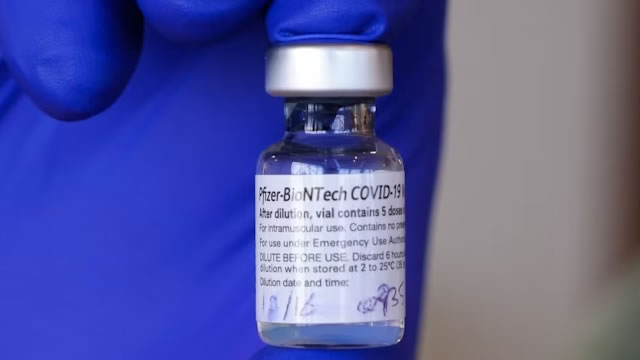
Core Viewpoint - Activist investor Starboard Value has exited its investment in Pfizer, concluding its efforts to implement changes to enhance the pharmaceutical company's stock price [1] Group 1 - Starboard Value has liquidated its position in Pfizer, as indicated by a regulatory filing [1] - The exit marks the end of Starboard's campaign aimed at driving changes within Pfizer to boost its share price [1]
