
Intel

Search documents
These 3 High-Yield Dividend ETFs Are Crushing the S&P 500. Here's the Best Buy for April.
Yahoo Finance· 2026-03-26 12:35
Core Insights - The technology, financial, communication, and consumer discretionary sectors represent approximately 65% of the S&P 500, all experiencing declines between 4.9% and 10.8% year to date [1] - ETFs with significant exposure to value stocks, particularly those with energy stock holdings, are outperforming the S&P 500 this year [1] ETF Analysis - **Schwab U.S. Dividend Equity ETF (SCHD)**: - Concentrated in energy, consumer staples, and healthcare sectors, achieving a yield of 3.3% [2][3] - Up over 10% year to date, primarily due to a 19.9% allocation in the energy sector, while the S&P 500 is down 5% [4] - **iShares Core High Dividend ETF (HDV)**: - Similar to SCHD, but with a higher concentration in energy, specifically 23.3% [5][6] - Major holdings include ExxonMobil, Chevron, and ConocoPhillips, which together account for 18.3% of the fund [5] Sector Weightings Comparison - **Schwab U.S. Dividend Equity ETF**: - Energy: 19.9% - Consumer staples: 18.5% - Healthcare: 16.2% - Financials: 9.7% - Consumer discretionary: 8.5% [6] - **iShares Core High Dividend ETF**: - Energy: 23.3% - Consumer staples: 24% - Healthcare: 17.3% - Financials: 10.7% - Consumer discretionary: 6% [6] - **Vanguard High Dividend Yield ETF**: - Energy: 9.6% - Consumer staples: 9.4% - Healthcare: 12.9% - Financials: 19.4% - Consumer discretionary: 10.1% [6]
Cathay Pacific to hike fuel surcharge by 34% as jet fuel prices surge
Reuters· 2026-03-26 09:47
Group 1 - Cathay Pacific Airways will increase fuel surcharges by 34% starting April 1, due to rising jet fuel prices linked to the ongoing war in the Middle East [1] - The global average jet fuel price has nearly doubled since February 28, reaching $197 per barrel as of the week ending March 20, significantly impacting the aviation industry [2] - Fuel costs account for up to 30% of Cathay Pacific's operating expenses, and the airline has expressed concerns about sustaining operations if fuel costs continue to rise without effective mitigation [3]



Intel Rallies 8% on New Chip Launch and Rising CPU Prices: Is the Turnaround Real?
247Wallst· 2026-03-25 18:10
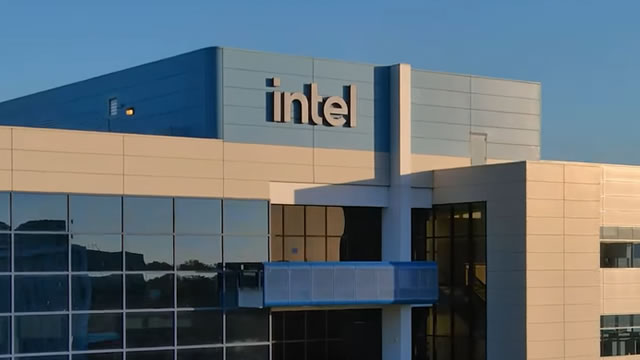
Core Insights - Intel's stock surged by 8% following the launch of its Core Ultra Series 3 enterprise chips and an increase in CPU prices, indicating positive momentum for the company [2][4] - The company has seen a 29% increase in stock value year-to-date and a remarkable 96% recovery from its April 2025 lows of approximately $22 [5] Product Launch and Technology - The Core Ultra Series 3 chips are built on Intel's new 18A process node, marking the first high-volume shipment using this advanced manufacturing technology [2][7] - This launch is significant as it demonstrates Intel's capability to produce competitive chips at scale, a critical milestone for the company's foundry strategy [8][9] Pricing Strategy and Market Demand - Intel is raising prices across its CPU lineup due to supply shortages and increased material costs, reflecting a market condition where demand exceeds supply [10] - The company's Q4 2025 non-GAAP gross margin was reported at 34.5%, with expectations to maintain this figure in Q1 2026, suggesting potential for improved profitability if pricing power continues [11] Financial Position and Strategic Moves - Intel has accepted advanced lithography tools from ASML, indicating progress in its manufacturing capabilities [12] - The company is exploring a sales-leaseback of its Folsom campus to enhance financial flexibility, having ended Q4 with $14.27 billion in cash [13] Challenges and Analyst Sentiment - Despite the positive developments, analysts maintain a cautious outlook with an average "Reduce" rating and a consensus price target of $45.74, which is below current trading levels [14] - The foundry segment reported a significant operating loss of $2.51 billion in Q4 2025, highlighting ongoing challenges in achieving profitability [14][16]
Investors Dumped These 3 AI Stocks After Earnings. They'll Regret It.
Yahoo Finance· 2026-03-25 18:05
Group 1: Micron Technology - Micron Technology reported a significant fiscal second-quarter revenue of $23.9 billion, nearly three times higher than the previous year, with gross margins increasing from 36.8% to 74.4% [2] - The company provided a fiscal third-quarter revenue guidance between $32.75 billion and $34.25 billion, surpassing analyst expectations of $24.3 billion [2] - A notable development from Micron's earnings report is the first-ever five-year strategic customer commitment for high bandwidth memory (HBM), which enhances business visibility and reduces cyclical fluctuations [4] - With HBM demand linked to the GPU and AI chip markets, Micron's stock is undervalued with a forward P/E ratio below 4.5 based on fiscal 2027 estimates, indicating potential regret for investors who sold off after earnings [5] Group 2: Amazon - Amazon's shares declined post-earnings despite an acceleration in cloud computing revenue and strong operating leverage in e-commerce, with Amazon Web Services (AWS) revenue climbing 24% in the fourth quarter, the fastest growth in over three years [6] - Investor concerns centered around Amazon's planned $200 billion in capital expenditures for the year, primarily aimed at expanding AI data center capacity to support cloud growth [6] - Historically, Amazon has demonstrated a strong track record of achieving significant returns on its investments, suggesting that the current spending should not be a cause for concern [7]


CrowdStrike Expands Strategic Collaboration With Intel to Secure the Next Generation of AI PCs
Businesswire· 2026-03-25 17:14
Core Viewpoint - CrowdStrike has expanded its strategic collaboration with Intel to enhance the security of AI PCs, utilizing the CrowdStrike Falcon platform to protect sensitive data and prevent breaches as AI workloads are processed directly on endpoints [1][3]. Group 1: Collaboration Details - The collaboration aims to optimize the Falcon platform for Intel-powered AI PCs, enabling faster threat detection and safeguarding sensitive data [1][3]. - By integrating Falcon's capabilities with Intel's AI acceleration technologies, the partnership enhances real-time threat detection and data protection within AI-driven workflows [3][4]. Group 2: Security Challenges and Solutions - AI PCs are increasing the attack surface as they process sensitive data directly on devices, necessitating specialized protection to mitigate risks [2][4]. - The Falcon platform offers features such as data security to prevent exposure and leakage during interactions with AI assistants and applications [5]. Group 3: Key Benefits of the Collaboration - The integration allows for faster threat response through hardware-accelerated intelligence, combining CrowdStrike's adversary intelligence with Intel's telemetry [5]. - Unified context from Intel's telemetry and Falcon's signals provides comprehensive visibility into user and device behavior across AI workflows [5]. - Intel vPro technology supports hardware-assisted recovery and fleet management, enhancing resilience and recovery capabilities for enterprise systems [5].


Where Will Micron Technology Stock Be in 2030?
Yahoo Finance· 2026-03-25 16:20
Core Viewpoint - Micron Technology's fiscal 2026 second-quarter results indicate strong growth driven by AI demand, with stock surging 346% over the past year and expected to continue this trend for the next five years [1][2]. Financial Performance - Micron's revenue for the quarter reached $23.9 billion, nearly tripling year over year, while adjusted earnings increased almost 8 times to $12.20 per share, surpassing Wall Street expectations of $9.31 per share in earnings on $20.07 billion in revenue [2]. Market Demand - AI data centers are projected to consume over half of the memory industry's shipments this year, with Micron currently fulfilling only 50% to two-thirds of demand from key customers [3]. - The memory supply is lagging demand by 20%, and SK Hynix anticipates that memory makers will not meet demand until 2030, despite increasing capacity [4]. Future Projections - Deloitte estimates that AI data center workloads could triple or quadruple annually between 2026 and 2030, necessitating more chips [5]. - The high-bandwidth memory (HBM) market is expected to grow at an annual rate of 42% through 2033, leading Micron to prioritize HBM production, which may create a gap in the PC and smartphone markets [6].
Intel's stock is climbing. Here's why the company's new chip launch is so significant.
MarketWatch· 2026-03-25 13:56
Core Viewpoint - The company's launch of enterprise-focused processors indicates its readiness to deliver high volumes of products utilizing its new chip technology [1] Group 1 - The new chip technology is aimed at the enterprise market, suggesting a strategic shift towards meeting business needs [1] - Analysts view this launch as a significant step for the company, highlighting its capability to produce and ship products at scale [1]
ControlUp Collaborates with Intel to Integrate Intel Device IQ with ControlUp for Desktops
Globenewswire· 2026-03-25 13:30
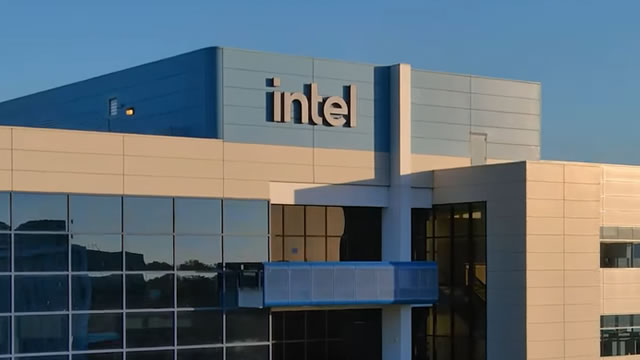
Core Insights - ControlUp has announced a strategic collaboration with Intel to integrate Intel Device IQ into ControlUp for Desktops, enhancing Digital Employee Experience (DEX) management through silicon-level telemetry and AI-driven intelligence [1][3] - The partnership aims to provide organizations with proactive detection and remediation of endpoint performance issues, shifting from reactive troubleshooting to a more automated approach [2][4] Group 1: Partnership and Integration - The integration of Intel Device IQ into ControlUp for Desktops allows for real-time DEX analytics, enabling organizations to detect and contextualize performance issues before they impact productivity [1][2] - ControlUp ONE has been validated as an Intel vPro Certified Application, ensuring optimized performance on Intel vPro-based PCs and reinforcing the solution's efficiency [5][6] Group 2: Benefits of the Collaboration - The collaboration provides continuous telemetry and AI-driven analysis at the silicon level, correlating hardware data with user experience metrics, leading to improved device performance and reduced support burdens [4][7] - Organizations can expect enhanced battery life, power efficiency, and lower CPU utilization, contributing to a more reliable and efficient IT environment [5][6] Group 3: Autonomous Endpoint Management - The partnership supports the transition towards Autonomous Endpoint Management (AEM), allowing IT teams to resolve issues proactively and reduce operational complexity [7][8] - By integrating real-time monitoring with guided decision-making, ControlUp helps create a self-healing environment that enhances employee productivity and optimizes digital workspace operations [7][8]

ESET Receives Intel vPro Certified App Status – Delivering Performance Benefits for Business Customers While Advancing Threat Detection Capability
Globenewswire· 2026-03-25 13:00
Core Insights - ESET has achieved Intel vPro Certified App status for its ESET PROTECT cybersecurity solutions, confirming its compliance with Intel's performance and efficiency standards [1][2] - The collaboration between ESET and Intel has focused on enhancing ransomware protection and optimizing ESET PROTECT's performance on Intel vPro platforms, resulting in significant improvements in background activity, CPU utilization, and power efficiency [2][3] Company Developments - ESET's CTO, Juraj Malcho, emphasized the importance of maintaining high performance while providing world-class protection, highlighting the company's commitment to innovation [2] - The partnership with Intel has led to the development of advanced detection capabilities through Intel Threat Detection Technology (Intel TDT), which utilizes AI to analyze real-time CPU execution for improved threat detection [3][4] Technological Advancements - Intel TDT-DTECT represents a new approach to threat detection by embedding capabilities at the hardware execution level, enhancing security beyond traditional software methods [4] - ESET's implementation of Intel TDT-DTECT aims to provide commercial users with better visibility and performance in threat detection, threat hunting, and intelligence sharing [5] Industry Engagement - ESET will showcase its strategic partnership with Intel at RSAC 2026, where key representatives from both companies will discuss their collaboration and innovations [6]

US Stocks Today | US stock futures gain on Mideast ceasefire hopes
The Economic Times· 2026-03-25 11:46
Group 1: U.S.-Iran Relations and Market Reactions - The U.S. has sent a 15-point plan to Iran to end the war, with discussions potentially taking place in Pakistan or Turkey [1][10] - Global markets reacted positively to the news, with hopes for a resolution that could restore shipping through the Strait of Hormuz, leading to a nearly 4% drop in oil prices [2][10] - Analysts at UBS Global Wealth Management caution against assuming a quick resumption of energy flows, but believe they will be restored without significant economic damage [5][10] Group 2: Market Performance and Sector Movements - U.S. stock index futures rose following reports of a potential ceasefire, with Dow E-minis up 406 points (0.87%), S&P 500 E-minis up 55.25 points (0.84%), and Nasdaq 100 E-minis up 248 points (1.02%) [6][10] - Shares of Arm surged 13.3% after announcing a new AI data center chip expected to generate billions in revenue, while other chipmakers like Intel, Marvell Technology, and Nvidia also saw gains [8][10] - Destiny Tech100 increased by 18% following news that SpaceX plans to file its IPO prospectus soon, benefiting other space companies as well [9][10] Group 3: Oil Prices and Economic Outlook - BlackRock CEO Larry Fink warned that oil prices could reach $150 per barrel if Iran remains a threat, potentially leading to a global recession [7][10] - The rise in oil prices due to the Iran conflict has heightened inflation concerns, complicating the interest rate outlook for central banks, with no easing expected from the Federal Reserve this year [7][10]

