Invitation Homes Inc.

Search documents
Why Trump's plan to shut out institutional investors could raise housing costs
Fortune· 2026-01-13 09:44
Core Viewpoint - The rising cost of housing in the U.S. has become a significant issue, with home prices increasing over 150% since 2019 and mortgage rates rising from approximately 3.7% to 6.2%, making home ownership unattainable for many Americans, particularly first-time buyers [2][3] Group 1: Housing Affordability Crisis - The affordability crisis is primarily driven by skyrocketing home prices and increasing mortgage rates, which have made home ownership an aspiration for three in four U.S. households [2][3] - President Trump has proposed banning institutional investors from purchasing single-family homes, which he believes are driving up prices and making home ownership less accessible [3][4] - The initiative has garnered bipartisan support, with various political figures acknowledging the negative impact of treating housing as a corporate strategy [3][4] Group 2: Institutional Investors' Role - Critics argue that institutional investors are reducing the inventory of homes available for sale, thereby driving up prices for regular buyers [4][5] - However, experts like Ed Pinto contend that institutional buyers are not the cause of rising prices but rather a symptom of deeper issues, such as restrictive zoning laws and a lack of new construction [5][14] - Institutional investors have historically played a role in stabilizing the housing market during downturns, such as the Great Financial Crisis and the post-pandemic recovery [7][13] Group 3: Market Dynamics and Misconceptions - Data shows that institutional investors account for only 1% of the total single-family housing stock, with small, mom-and-pop businesses dominating the market [9][14] - Recent trends indicate that large institutional investors have been net sellers rather than net buyers, contradicting claims that they are monopolizing the market [10][13] - Pinto's research highlights that there is no correlation between institutional ownership levels and housing price increases in various markets, suggesting that other factors are at play [13][14] Group 4: Potential Consequences of Policy Changes - Banning institutional investors from acquiring homes could have unintended negative consequences, such as reducing the availability of rental options for low-income families and hindering the repair and renovation of distressed properties [15] - The absence of institutional investors during economic downturns could exacerbate housing market volatility and limit options for aspiring homebuyers [15]



Benzinga Bulls And Bears: Chevron, Palantir, Aquestive — And Real Estate Stocks Plummet Benzinga Bulls And Bears: Chevron, Palantir, Aquestive — And Real Estate Stocks Plummet
Benzinga· 2026-01-10 13:31
Market Overview - U.S. equities ended the first full trading week of 2026 positively, with major benchmarks like the S&P 500 and Dow Jones Industrial Average reaching new record highs, influenced by geopolitical events and a mixed December jobs report [2] - Investors shifted focus from mega-cap technology stocks to cyclical sectors, particularly energy and defense, following a significant U.S. military operation in Venezuela and expectations of increased crude supply [2][3] Sector Performance - Energy and defense stocks led the market gains, with oil-related equities rising due to optimism about Venezuela's potential to supply crude oil to U.S. markets, while defense contractors benefited from plans for a larger Pentagon budget in 2027 [3] - Smaller defense contractors outperformed the broader market, indicating a shift in market leadership influenced by geopolitical factors [3] Economic Data - The December jobs report indicated slower than expected payroll growth but a lower unemployment rate, alleviating some investor concerns regarding labor market stress [4] - Mixed sentiments around inflation and labor conditions suggested that the Federal Reserve may maintain steady interest rates in the near term [4] Notable Stock Movements - Chevron Corp. (NYSE:CVX) shares rose approximately 5.8% following U.S. military actions in Venezuela, which boosted investor optimism about accessing Venezuelan oil resources [5] - Palantir Technologies Inc. (NASDAQ:PLTR) stock gained momentum amid speculation of its involvement in U.S. military operations in Venezuela, attracting attention from investors and analysts [6] - Nuclear energy stocks, including Centrus Energy Corp. (NYSE:LEU) and Energy Fuels Inc. (NYSE:UUUU), rallied after the Trump administration announced expanded federal support for domestic nuclear infrastructure, enhancing long-term demand prospects [7] Bearish Trends - Real estate and housing-linked stocks experienced significant sell-offs after President Trump announced plans to limit large institutional investors from purchasing single-family homes, impacting major players like Blackstone Inc. (NYSE:BX) and Invitation Homes Inc. (NASDAQ:INVH) [9] - U.S. defense stocks fell sharply after Trump ordered major defense contractors to halt dividends and share buybacks until they increased investments in production, affecting companies like Lockheed Martin Corp. (NYSE:LMT) and Northrop Grumman Corp. (NYSE:NOC) [10] - Aquestive Therapeutics Inc. (NASDAQ:AQST) shares dropped after the FDA flagged issues with its allergy drug application, raising concerns about potential delays in the approval process [11]


Trump vows to keep ‘American Dream’ alive by guarding homes from corporate buyers. Here’s how small investors can profit
Yahoo Finance· 2026-01-10 13:21
Core Insights - The housing market is facing a significant supply issue, with Federal Reserve Chair Jerome Powell highlighting the ongoing shortage of housing and the challenges in zoning land in desirable areas [1] - Institutional investors have played a notable role in the housing market, owning 3.4% of U.S. single-family homes, with larger players holding a smaller percentage [2] - The surge in institutional buyers from 2006 to 2014 contributed to a 58% increase in real house price growth and a 75% decline in homeownership rates [1] Market Reactions - The announcement regarding institutional investors' activities led to a decline in shares of major firms, including Blackstone, which fell by 5.6%, and single-family rental REITs like American Homes 4 Rent and Invitation Homes, which dropped by 4.3% and 6.0% respectively [3] Policy Implications - Former President Trump has proposed banning large institutional investors from purchasing single-family homes, citing the impact on affordability and the American Dream for younger Americans [4] - A Zillow report estimates a shortage of 4.7 million homes in the U.S., exacerbating the housing affordability crisis [5] Investment Opportunities - Despite challenges, real estate remains an attractive long-term investment for both institutional and ordinary investors, providing passive income and a hedge against inflation [6] - New crowdfunding platforms allow everyday Americans to invest in real estate with minimal capital, enabling access to income-generating properties without the burdens of traditional ownership [7][9] - Platforms like Homeshares and Lightstone DIRECT offer accredited investors opportunities to invest in diversified real estate portfolios with varying minimum investments [20][15]
The Truth According to Truth Social: How a President’s Posts Move Markets (and Mountains of Mortgage Bonds)
Stock Market News· 2026-01-10 06:00
Defense Sector - The defense sector experienced significant volatility following President Trump's announcement of a proposed military budget increase to $1.5 trillion for fiscal 2027, a 50% increase from the $962 billion requested for 2026, leading to a surge in defense stocks [3][4] - Lockheed Martin's shares rose 4.3% on January 8, followed by a 4.2% increase on January 9, closing at $542.78, while Northrop Grumman and RTX also saw gains [3] - Smaller companies like Kratos Defense experienced a remarkable 13.8% increase, and defense-focused ETFs outperformed the broader market [3] Housing Market - President Trump's proposal to ban large institutional investors from purchasing single-family homes caused a decline in major stock indices, with the Dow Jones Industrial Average dropping 0.9% and the S&P 500 slipping 0.3% [5] - Shortly after, Trump announced a directive for federal agencies to purchase $200 billion in mortgage bonds to lower mortgage rates, which led to a rally in housing stocks, with Rocket Companies surging 9.65% and homebuilders like Lennar and D.R. Horton also experiencing significant gains [6][8] - Analysts expressed concerns that while bond purchases might lower mortgage yields, they could also increase housing demand, complicating the affordability issue [7] Energy Sector - The capture of Venezuelan President Nicolás Maduro and Trump's announcement of a $100 billion oil investment plan for Venezuela positively impacted major stock indexes, with energy stocks like Chevron and Exxon Mobil seeing gains [10] - However, by January 7, oil prices fell due to concerns over the long-term implications of Trump's plan to refine and sell Venezuelan crude, indicating a mixed market reaction [11] Tariffs and Legal Uncertainty - The market showed anxiety ahead of a Supreme Court ruling on Trump's tariffs, with Wall Street futures dipping as uncertainty persisted regarding the legality of these policies [13] - Kevin Hassett's expectation that the Supreme Court would side with the Trump administration on tariffs adds another layer of speculation to the ongoing legal battle, highlighting the tension between executive power and trade norms [14] Market Dynamics - The overall market remains highly reactive to Trump's pronouncements, with significant fluctuations observed across various sectors, including defense, housing, and energy, reflecting the interplay between presidential policy and economic fundamentals [15][16] - On January 9, major indices were on track for weekly gains, with the S&P 500 reaching a new all-time high of 6,966, indicating a volatile yet upward trend in the market [16]




Camden Property Trust: This REIT Thinks They Are Undervalued
Seeking Alpha· 2026-01-09 14:16
Group 1 - The multifamily sector in real estate experienced significant volatility in 2025 due to oversupply following aggressive construction post-pandemic [1] - The construction surge was driven by large population migration and increasingly unaffordable home prices [1]


5 ways Trump’s proposed institutional single-family homebuying ban could affect the housing market
Fastcompany· 2026-01-08 19:15
Core Viewpoint - President Trump's announcement to ban large institutional investors from purchasing single-family homes has sparked discussions about its potential implications and feasibility [2] Group 1: Institutional Investor Impact - Large institutional investors, defined as those owning at least 100 single-family homes, currently hold about 1% of the total single-family housing stock in the U.S. [3] - Certain regional markets, particularly in the Sun Belt, have a higher concentration of institutional ownership, which could lead to significant effects if a ban is enacted [6][4] - The institutional presence in markets like Phoenix and Atlanta has established a robust ecosystem for single-family rentals, making it easier for these firms to operate [5] Group 2: Home Prices and Market Dynamics - A forced sell-off of institutional holdings could lead to increased downward pressure on home prices in specific neighborhoods already experiencing corrections [7] - Institutional buying has decreased significantly since the Pandemic Housing Boom, dropping from 3.1% of home purchases in Q2 2022 to around 1% currently [10][11] - If a ban were to be enacted, it would reduce housing demand that currently accounts for about 1% of total U.S. homebuying activity [9] Group 3: Homebuilding and Development - The proposed ban could negatively impact U.S. homebuilding, especially if it includes restrictions on build-to-rent developments, which currently represent about 8% of total U.S. single-family housing starts [14][12] - Institutional landlords have shifted focus from purchasing existing homes to building new single-family rentals, with a significant portion of acquisitions coming from in-house homebuilding units [16] - The current rate of new single-family home completions is about 1 million annually, which is still below historical averages, indicating a supply issue rather than a demand problem [17] Group 4: Tenant Implications - Most institutionally owned homes are currently occupied, and a forced sell-off could displace thousands of tenants who may not be able to afford to buy their homes [18] - A significant percentage of tenants in institutional rentals, approximately 85%, would not qualify to purchase the homes they currently occupy [19] - The assertion that institutional ownership is the primary cause of housing unaffordability is challenged, with arguments suggesting that policy failures are the root cause of the housing crisis [19]
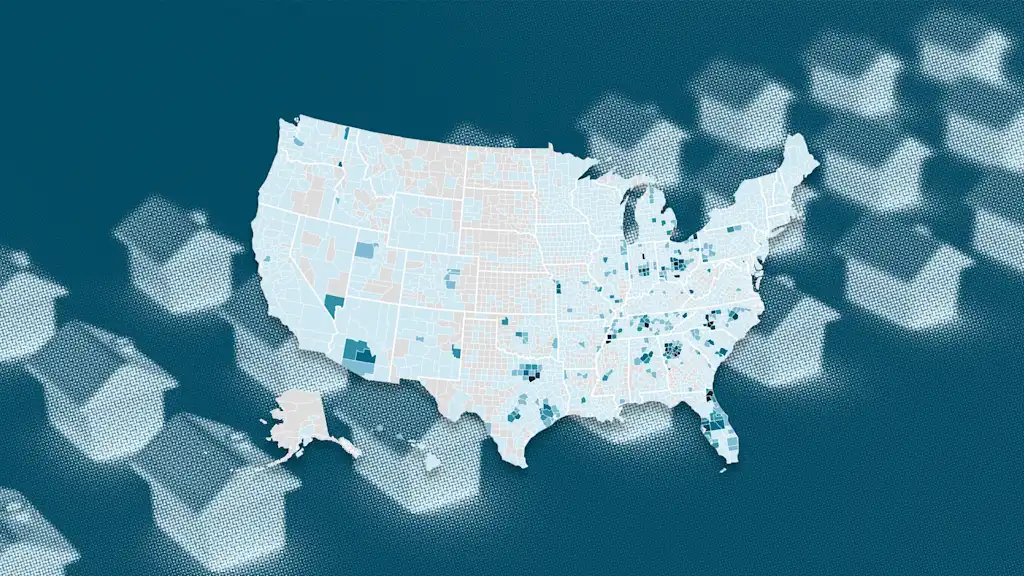
Trump Administration Plans to Prohibit Institutional Investors from Owning Single-Family Real Estate Properties
Crowdfund Insider· 2026-01-08 18:57
Core Viewpoint - The proposal by President Trump to restrict large institutional investors from purchasing single-family homes aims to improve housing affordability for individual Americans, particularly younger families [1][2]. Group 1: Proposal Details - The initiative seeks to bar major institutional investors, such as private equity firms, from acquiring additional single-family homes, which have been linked to rising property prices and rents [2][3]. - Trump plans to push for immediate action on this proposal and will discuss it further at the World Economic Forum in Davos [2]. Group 2: Market Reaction - The announcement led to a significant backlash in the stock market, with shares of firms involved in single-family rentals experiencing sharp declines [3]. - Blackstone's stock fell by as much as 9.3% intraday, closing down around 5-6%, while Invitation Homes saw a drop of up to 10%, ending approximately 6% lower [4]. Group 3: Industry Impact - Other related stocks, including American Homes 4 Rent and various homebuilders, also faced steep declines, indicating investor concerns over potential disruptions in the rental housing sector [5]. - Although institutional investors own only about 3-4% of single-family rental properties nationwide, their impact is more significant in certain markets, particularly in the Sun Belt [5]. Group 4: Expert Opinions - Some experts suggest that the overall impact on housing prices may be limited, as smaller investors might fill the gap left by institutional buyers, and broader issues like low housing supply remain unaddressed [6]. - The proposal aligns with criticisms from housing advocates and some bipartisan lawmakers who have previously suggested similar restrictions [6].
3 things Trump did in 24 hours to show that he’s in control of American business
Fortune· 2026-01-08 18:41
Market Interventions - President Trump has initiated three significant state interventions in various markets, indicating a shift from traditional Republican laissez-faire policies to more direct control over economic activities [2][3] - The interventions include a ban on large institutional investors from purchasing single-family homes, a cap on executive compensation in the defense sector, and control over Venezuelan oil proceeds [5][9][16] Housing Market - Trump announced a ban on "large institutional investors," such as private equity firms and real estate trusts, from buying single-family homes, emphasizing that "people live in homes, not corporations" [5] - Following the announcement, stocks of institutional investors like Blackstone and Invitation Homes dropped by 6%, with American Homes 4 Rent experiencing trading halts due to volatility [6] - Institutional investors currently own only 2% of the housing stock, but their presence is concentrated in cities like Atlanta and Jacksonville [7] Defense Sector - Trump expressed frustration with the slow pace of weapons production and announced a cap on executive compensation at major defense contractors at $5 million annually, contrasting with typical CEO salaries of $18 million to $25 million [9][10] - An executive order formalized this policy, restricting how defense contractors can use profits and compensating executives, including barring stock buybacks and dividends for underperforming firms [11] - This move has raised concerns about the legal implications and the potential expropriation of decision-making power from shareholders to the state [12][14] Venezuelan Oil Control - Following the arrest of Venezuela's president, Trump announced U.S. control over approximately 50 million barrels of Venezuelan crude oil, valued at around $3.5 billion, with proceeds to be used exclusively for American-made goods [16][17] - This arrangement creates a "closed-loop" system that prioritizes American manufacturing over market-driven decisions, marking a significant shift towards managed trade [18] - The administration's approach reflects a broader trend of dictating market outcomes, including home purchases and executive pay, rather than allowing market forces to operate freely [19]



特朗普拟颁布机构投资者“限房令”
Guo Ji Jin Rong Bao· 2026-01-08 12:10
Group 1 - President Trump blames large institutional investors for high housing prices and announces a ban on their purchase of single-family homes to address the housing shortage in the U.S. [1][3] - Following the announcement, stock prices of major rental companies like Invitation Homes and American Homes4Rent dropped significantly, indicating market volatility [2][4] - The U.S. is currently facing a housing shortage of millions of units, exacerbated by a slowdown in housing construction since the 2008 financial crisis, with institutional investors increasingly participating in the market [4][5] Group 2 - The median home price in the U.S. has risen over 50% since 2019, reaching $409,200 in November 2022, contributing to public dissatisfaction [5] - Analysts argue that attributing high housing prices solely to institutional investors lacks sufficient data, suggesting that the core issue is the overall supply shortage rather than investor participation [6][7] - There is skepticism regarding the legislative support for Trump's proposal, with indications that it may face challenges in Congress and potential legal actions from affected companies [7][8]
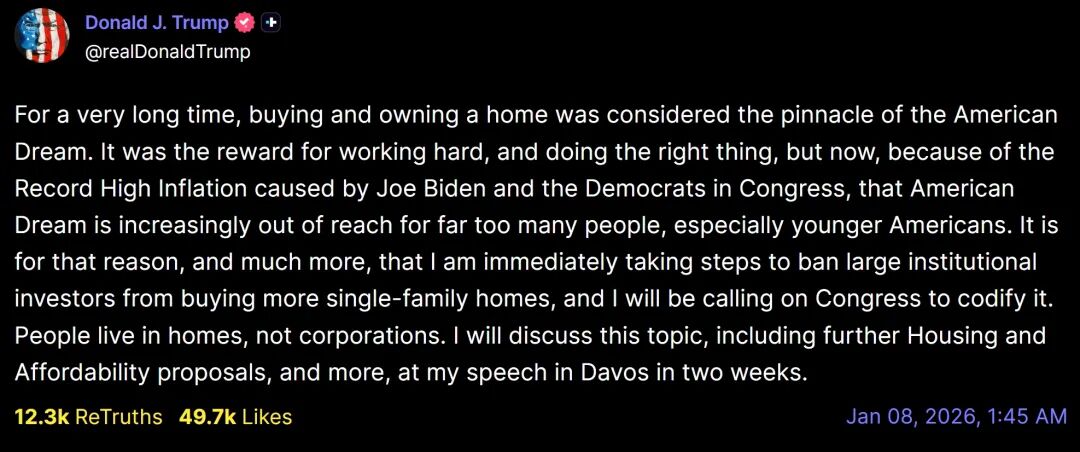
调控房价,特朗普要对华尔街开刀?
第一财经· 2026-01-08 09:23
Core Viewpoint - The article discusses President Trump's announcement to take measures to prevent institutional investors from purchasing single-family homes in the U.S., aiming to reduce housing costs for Americans. This move has led to a significant drop in the stock prices of major rental and management companies in the housing sector [3][4]. Group 1: Housing Affordability Crisis - Housing affordability has become a pressing issue for the White House, especially with the upcoming midterm elections. Trump highlighted that the dream of homeownership is increasingly out of reach for many Americans, particularly the youth [5]. - A report from the National Association of Realtors indicates that the proportion of first-time homebuyers has fallen to a historic low of 21%, with the median age of first-time buyers rising to a record 40 years [6]. - High home prices and mortgage rates hovering between 6% and 7% have made it difficult for many young Americans to own homes [6]. Group 2: Institutional Investors and Housing Market - Institutional investors have been criticized for contributing to high housing prices, particularly after purchasing foreclosed homes during the 2007-2009 financial crisis and converting them into rental properties [8]. - Various measures are being taken at federal and local levels to limit institutional investors, with 22 states proposing bipartisan legislation to restrict their activities in 2025 [8]. - The American Homeowners Alliance expressed support for government focus on housing affordability, noting that each home purchased by institutional investors reduces options for owner-occupiers [8]. Group 3: Market Data on Institutional Investors - A report from the American Enterprise Institute revealed that in Q1 2024, various investors purchased 25% of homes, while institutional investors accounted for only 1% of home purchases [9]. - Institutional investors hold a minimal share of the overall housing stock, with data showing they owned just 1% of single-family home inventory as of June last year [10]. - Blackstone's report indicated that it owned only 0.06% of single-family homes, and the overall share of institutional investors in the U.S. single-family housing market has decreased by 90% since 2022 [10].