
Nippon Steel

Search documents
President Trump’s Stock Bets Have Crushed the Market. Should You Buy Them Now?
Yahoo Finance· 2026-01-10 17:41
Investment Overview - The Trump administration made a historic investment of over $10 billion in four publicly traded companies to enhance national security in critical sectors like semiconductors and minerals [2][9] - The investments are aimed at strengthening domestic supply chains amid rising tensions with China [2] Company-Specific Investments - A 15% stake in MP Materials was acquired for $400 million, a 9.9% stake in Intel for $8.9 billion, a 5% stake in Lithium Americas, and a 10% stake in Trilogy Metals for $35.6 million [3] - The government also secured a non-economic golden share in United States Steel, granting veto rights over key decisions without financial ownership [4] Performance Metrics - MP Materials generated a 68.4% return in 2025 and a cumulative return of 106.5% since the investment, reflecting efforts to reduce reliance on China's rare earth supply [6][7] - Intel's investment yielded a 122.6% return since the $8.9 billion purchase in August 2025 [9] - Lithium Americas and Trilogy Metals also showed positive performance, with returns of 63.6% and 38.2% respectively [6] Strategic Shift - The government's investment strategy marks a shift from subsidies to direct ownership, emphasizing U.S. production in strategic areas [5]


中国收紧对日两用物项出口管制,媒体称稀土或面临实质限制风险_ China tightens controls on export of dual-use items to Japan, media reports on risk of facto restrictions on rare earth
2026-01-07 03:05
Summary of Conference Call Notes on Japan Industrials Industry Overview - The conference call discusses the Japan Industrials sector, particularly focusing on the implications of China's recent export control measures on dual-use items to Japan [1][2]. Key Points and Arguments 1. **Export Control Announcement**: On January 6, China's Ministry of Commerce announced strengthened export controls on dual-use items to Japan, citing national security and international obligations [1]. 2. **Prohibition Details**: The export of dual-use items to Japanese military users for military purposes is strictly prohibited. Violators will face legal consequences [2]. 3. **Rare Earths Inclusion**: Media reports suggest that rare earths may be included in these export controls, which could have significant implications for Japan's industrial sectors [2]. 4. **Historical Context**: The focus on rare earths is heightened due to China's previous actions in April 2025, when it added several rare earths to its dual-use item export control list [2]. 5. **Ambiguity in Applications**: There are gray areas in distinguishing between military and civilian applications of these items, leading to potential supply disruptions [6]. 6. **End-Use Certification Challenges**: The high bar for end-use certification complicates the situation, as items with both military and civilian applications may fail to pass review [7]. 7. **Industrial Impact**: The potential for widespread industrial impact, especially in Japan's precision and manufacturing sectors, necessitates close monitoring of future developments [7]. 8. **Historical Reactions**: Past issues related to rare earths have caused short-term shocks but also spurred the development of alternative materials in some fields [8]. Additional Important Content - **Analyst Disclosures**: Analysts from Goldman Sachs may have conflicts of interest due to their business relationships with companies covered in the report [3]. - **Valuation Comparisons**: The document includes a valuation comparison table for various companies within the Japan Industrials sector, detailing metrics such as price targets, P/E ratios, and expected returns [9][11]. - **Contact Information**: Contact details for analysts covering the sector are provided for further inquiries [4]. This summary encapsulates the critical insights and implications of the recent developments in the Japan Industrials sector, particularly concerning China's export controls and their potential impact on the industry.
MetalQuest Mining Announces Chairmans Message & Go-Forward Plan for 2026, Reflects on Achievements in 2025, First Tranche Closing of Private Placement
Thenewswire· 2025-12-30 12:15
Core Message - MetalQuest Mining Inc. (MQM) outlines its achievements in 2025 and strategic priorities for 2026, focusing on advancing its key projects and enhancing shareholder value [3][16]. Group 1: 2025 Achievements - The company executed a solid operational plan, particularly at the Lac Otelnuk Iron Project, which is one of North America's largest undeveloped high-purity iron projects [3]. - MQM completed the acquisition of the ROF-1 Project in Ontario, expanding its presence in a critical minerals district with a land package of approximately 20,800 hectares [4]. - Significant investor engagement occurred throughout 2025, with the company's share price appreciating several hundred percent at various points during the year, reflecting improved visibility and interest in its strategy [13]. Group 2: 2026 Strategic Priorities - The company plans to advance the Lac Otelnuk and Superior Iron projects in a disciplined manner while pursuing partnerships to accelerate value creation [16]. - A comprehensive Gap Analysis of the historic 2015 feasibility study for the Lac Otelnuk project is expected to be announced by the end of January 2026 [9]. - Initial work at the Superior Iron Project will include systematic ground truthing and environmental baseline studies, scheduled to commence in Winter/Spring 2026 [41]. Group 3: Financial Developments - As of December 30, 2025, MQM raised approximately $2,149,940 through financing activities, with plans for additional financing to support ongoing projects [12][11]. - The first tranche of a non-brokered private placement financing was completed, raising gross proceeds of $946,780.20 from flow-through units and $686,160.80 from non-flow-through units [25][26]. Group 4: Indigenous Engagement and ESG Commitment - The company emphasizes meaningful engagement with Indigenous communities, particularly in the Lac Otelnuk and Superior Iron projects, to build long-term relationships based on collaboration [15]. - MQM published its ESG/Sustainability reporting, reinforcing its commitment to responsible development and transparency [14].


ArcelorMittal Announces Renewable Energy Projects in India
ZACKS· 2025-12-24 16:16
Core Insights - ArcelorMittal S.A. (MT) has announced three new renewable energy projects in India, which will double its renewable energy capacity in the country to 2 GW and increase its global capacity to 3.3 GW [1][9] Group 1: Project Details - The Amaravati plant will feature a solar capacity of 36 MW, leading to annual CO2 savings of 0.04 million tons, with completion expected in the first half of 2027 [2] - The Bikaner plant will have a solar capacity of 400 MW and battery energy storage of 500 MW, resulting in annual CO2 savings of 0.65 million tons, projected to be completed by early 2028 [2] - The Bachau plant is planned to include 250 MW of wind and 300 MW of solar capacity, along with 300 MWh of integrated battery storage, expected to save 0.9 million tons of CO2 annually, with completion anticipated in the first half of 2028 [3] Group 2: Financial and Operational Impact - The total estimated cost for the three projects is $0.9 billion, and the generated power will be supplied to AMNS India, a joint venture between ArcelorMittal and Nippon Steel [4] - Combined with a previous 1 GW renewable project in India, these initiatives will lead to total annual CO2 savings of 4 million tons and fulfill 35% of the electricity needs for AMNS India's Hazira steelmaking operations [5] - The renewable energy projects in India, along with similar initiatives in Brazil and Argentina, will contribute to a total of 3.3 GW of electrical power generation once operational [5] Group 3: Market Performance - Over the past year, ArcelorMittal's shares have increased by 94.5%, outperforming the industry average rise of 45.2% [6]

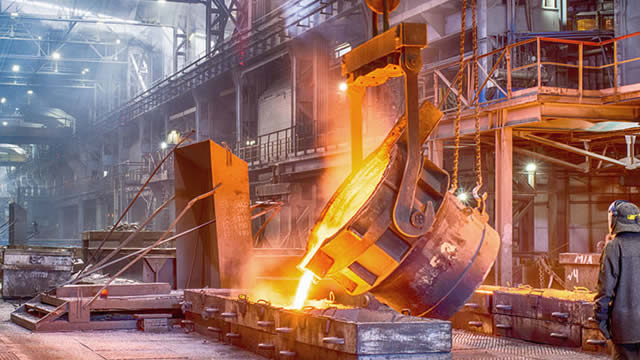
By the numbers: 2025 manufacturing trends
Yahoo Finance· 2025-12-23 12:08
Core Insights - The manufacturing sector is experiencing significant challenges due to tariffs and trade uncertainties, with experts urging companies to avoid hasty decisions regarding relocation and supplier relationships [1][12] - Major firms like TSMC and Nvidia are making substantial investments in the U.S., but skepticism remains about the overall impact on domestic manufacturing revitalization [1] - The U.S. Congress estimates a potential 13% annual decline in manufacturing investments by 2029 due to prolonged trade uncertainties [2] Tariffs and Economic Impact - A significant percentage of manufacturers plan to pass on tariff-related cost increases to consumers, with 54% indicating they will pass on some costs or absorb them through reduced margins [3] - President Trump's tariffs could generate approximately $1 trillion in revenue over the next decade, translating to an average tax increase of $1,100 per U.S. household in 2025 [4] Manufacturing Trends - In 2025, 18% of manufacturers are actively considering shifting production back to the U.S. within six months, while another 18% are looking to do so but require more time [10] - Kearney's Reshoring Index fell by 311 points in 2025, indicating a gap between intentions to reshore and the reality of implementation [11] M&A and Investments - Industrial deal volume saw an 11.4% year-over-year decline from Q2 2025 to Q2 2024, attributed to tariffs affecting M&A activity [16] - TSMC plans to invest $100 billion in the U.S., with Apple also committing $100 million to domestic investments [18] Workforce Dynamics - The U.S. manufacturing sector employed approximately 76,000 fewer people in November 2025 compared to the previous year, with 329,000 job separations reported in October [23][24] - The unemployment rate in manufacturing stands at 3.3%, lower than the national average, with 3.6 million women employed in the sector [24][25] Automation and Technology - 80% of manufacturing executives plan to invest over 20% of their improvement budgets into smart manufacturing initiatives, viewing it as a key driver of competitiveness [29] - The global installation of industrial robots reached 542,000 units in 2024, with the U.S. accounting for 34,200 units, reflecting a 9% decline from the previous year [30] Federal Policy and Regulation - The Trump administration has taken 43 actions to modify or roll back various EPA regulations, impacting the manufacturing sector [35] - The EPA estimates potential cost savings of $786 million for manufacturers from modifying reporting requirements under the Toxic Substances Control Act [37]
ArcelorMittal expands its portfolio of renewable energy projects
Globenewswire· 2025-12-22 07:30
Core Insights - ArcelorMittal announces three new renewable energy projects in India, totaling 1GW of capacity, which will double its renewable energy capacity in India to 2GW and increase its total global capacity to 3.3GW [1][4] - The projects will result in significant annual CO2 savings, contributing to the company's commitment to sustainable energy and climate responsibility [2][3] Project Details - The three projects include: - Amaravati, Maharashtra: 36MW solar capacity with annual CO2 savings of 0.04 million tonnes, expected completion in H1 2027 [1] - Bikaner, Rajasthan: 400MW solar and 500MWh battery storage, with annual CO2 savings of 0.65 million tonnes, expected completion in H1 2028 [1] - Bachau, Gujarat: 250MW wind, 300MW solar, and 300MWh integrated battery storage, with annual CO2 savings of 0.9 million tonnes, expected completion in H1 2028 [1] Financial Overview - Total capital expenditure for the three projects is estimated at $0.9 billion, with generated power supplied to AMNS India, a joint venture with Nippon Steel [1][2] Environmental Impact - Upon completion of all projects, total annual CO2 savings will reach 4 million tonnes, providing 35% of electricity requirements for AMNS India's Hazira steelmaking operations [3] Global Strategy - In addition to the Indian projects, ArcelorMittal is also developing renewable energy projects in Brazil and Argentina, contributing to a total of 3.3GW of electrical power generation across all regions [4]

Contra Corner The Donald Joins The UniParty's Clamber To Crony Capitalist Corruption
David Stockman's Contra Corner· 2025-12-13 20:22
Core Points - The Trump administration is engaging in a significant shift towards federal ownership in private companies, particularly in sectors deemed critical for national security, such as semiconductors and defense [2][3][4] - The administration's strategy includes acquiring equity stakes in various companies, which raises concerns about government influence on corporate decision-making and market dynamics [5][14][19] Group 1: Government Interventions - The administration has engineered deals to acquire stakes in companies like xLight, MP Materials, Intel, and others, indicating a trend towards partial nationalization [2][5][10] - A notable deal includes the government taking a 10% equity stake in Intel, making it the largest shareholder, which could influence the company's operations and strategic decisions [5][10][19] - The administration's actions are seen as a move towards "state capitalism," where the government directly influences corporate behavior under the guise of enhancing domestic capacity [4][5][27] Group 2: Economic Implications - The government's involvement in private companies may distort corporate decision-making, as seen with Intel's response to pressure from the administration regarding its operations [14][19] - The acquisition of stakes in companies could create an uneven playing field, disadvantaging smaller firms and startups that do not receive government backing [16][19] - The administration's approach may lead to inefficiencies and complacency in companies that are partially state-owned, reminiscent of past government enterprises [20][21] Group 3: Legislative and Political Context - The establishment of a U.S. sovereign wealth fund (SWF) was proposed, but critics argue that the U.S. does not need such a fund given its existing capital markets and significant national debt [7][8][11] - Congressional Republicans have largely remained passive in response to these developments, despite traditionally opposing such government interventions [2][35][36] - The potential for future Democratic administrations to leverage these government equity stakes for progressive agendas raises concerns about the long-term implications of current policies [37][38]

What Every Nucor Investor Should Know Before Buying
The Motley Fool· 2025-12-13 17:28
Core Insights - Nucor's stock has surged 15% since reporting strong third-quarter results, leading to a year-to-date return of 42.8%, significantly outperforming the S&P 500's 17% gain [1][2] Group 1: Market Dynamics - The steel sector is cyclical, with several catalysts potentially driving Nucor's stock higher [2] - A construction cycle is beginning to boost the steel sector, with high-growth markets like data center construction identified as ongoing catalysts for Nucor's business [4] - Significant capital investments in various sectors, including a $6 billion facility by Eli Lilly, are expected to drive demand for steel [5] Group 2: Capacity Expansion - Nucor is constructing a new steel mill in West Virginia, expected to ramp up production by the end of next year [8] - Nippon Steel plans to invest $4 billion in a new steel mill, adding approximately 3 million tons of annual domestic capacity [8] - The construction of new steel mills takes years, with Nippon's project site selection expected by early 2027 [9] Group 3: Pricing and Profitability - The dynamics of supply and demand will drive steel pricing, which could be impacted by the increase in domestic capacity [7] - An expanding economic and construction cycle is bullish for Nucor, which is one of the most efficient and profitable steel companies [10] - Lower steel pricing may negatively affect profitability for domestic mills, particularly Nippon's U.S. Steel, more than for Nucor [10]

Nippon Steel (OTCPK:NIST.F) 2025 Earnings Call Presentation
2025-12-12 08:00
Financial Targets and Strategies - Nippon Steel aims to achieve underlying business profit of ¥1 trillion or more per year from FY2026 to FY2030[9, 18, 20], with contributions of ¥500 billion or more each from domestic and overseas businesses[18, 21] - The company is targeting global crude steel production capacity of 100 million metric tons or more[9] - Nippon Steel plans strategic investments of approximately ¥75 trillion over 5 years (FY2021-2025) and approximately ¥6 trillion over 5 years (FY2026-2030)[25], focusing on overseas investments to secure profitability above capital cost[25] - The company maintains a consolidated annual payout ratio of approximately 30% and sets a minimum annual dividend of ¥24 per share after a 5-for-1 stock split[28, 31] Domestic Business Strategies - Nippon Steel aims to improve profitability by further strengthening the earnings base in the domestic market[4, 14] - The company plans to optimize direct sales price and marginal profit, targeting a 40% improvement in break-even point (BEP)[37] - Nippon Steel intends to reduce crude steel production capacity from 50 million metric tons per year to 40 million metric tons per year, a 20% reduction, through facility structural measures[37] Overseas Business Strategies - Nippon Steel aims to dramatically increase profit by implementing a global growth strategy[4, 15] - The company plans to maximize the impact of the U S Steel investment and expand capacity at AM/NS India[21] - Nippon Steel is targeting overseas capacity of 46% by FY2030, up from 33% in FY2024, reaching 63 million metric tons per year[79] Carbon Neutrality Vision - Nippon Steel aims for a 30% reduction in CO2 emissions by CY2030 compared to 2013 levels[33, 116] - The company is promoting the creation of a GX (Green Transformation) steel market where CO2 reduction value is shared across the entire value chain[116] - Nippon Steel is investing in EAF (Electric Arc Furnace) conversion and developing breakthrough technologies like hydrogen steelmaking to achieve carbon neutrality by 2050[116, 117] Raw Material Strategy - Nippon Steel aims to raise the self-sufficiency ratio of raw materials[104] - The company's total iron ore procurement in FY2024 was approximately 50 million metric tons, with a self-sufficiency ratio of approximately 20%[104] - The company's total coal procurement in FY2024 was approximately 26 million metric tons[104]
中国的产能过剩困境-China‘s overcapacity troubles
2025-12-08 15:36
Summary of Key Points from the Conference Call Industry Overview - **Industry Focus**: The conference call primarily discusses the implications of China's anti-involution policy on various sectors, particularly those facing overcapacity such as cement, steel, chemicals, alumina, lithium-ion batteries, new energy vehicles, and solar cells [3][34]. - **Economic Context**: The anti-involution policy aims to address issues of overcapacity, price wars, and margin erosion in China, pushing local producers to seek alternative overseas markets due to high inventories and price declines [1][9]. Core Insights and Arguments - **Overcapacity Issues**: Significant overcapacity is noted in sectors like cement, steel, chemicals, and aluminium, with specific vulnerabilities identified in fertilisers, household appliances, and integrated circuits [3][34]. - **Export Dynamics**: The movement of goods from China is expected to accelerate, with exports expanding to more sectors by 2026 as domestic demand remains sluggish [2][10]. - **Five-Year Plans**: The analysis of China's Five-Year Plans reveals a strategic focus on manufacturing and industrial production capacity, which has contributed to global oversupply and aggressive price undercutting in various sectors [15][16]. - **Export Performance**: Emerging sectors such as new energy vehicles and solar cells are experiencing significant export growth, with NEVs seeing a 688% increase in exports, while solar cells have surged by 170% [20][62]. Sector-Specific Observations - **Cement**: Exports increased by 105% due to producers seeking overseas markets amid declining domestic demand. However, enforcement of capacity controls may not fully alleviate oversupply pressures [63]. - **Fertilisers and Chemicals**: Fertiliser exports have declined sharply, particularly urea, due to government policies prioritising domestic supply. The value of exports surged due to global supply constraints [64][65]. - **Steel**: Steel exports rose by 75%, indicating a significant drop in domestic consumption. The shift towards higher-value products is noted, but overcapacity remains a risk [67][68]. - **Household Appliances**: Exports grew by 26%, driven by advancements in smart technology. Companies like Midea and Xiaomi are expanding overseas to mitigate domestic challenges [58][59]. - **Lithium-Ion Batteries**: Exports increased by 26%, with CATL positioned to benefit from rising demand, although competition is intensifying [42][45]. Additional Important Insights - **Price Trends**: Broad-based declines in the Producer Price Index (PPI) across upstream industries signal oversupply and weak demand, particularly in coal, petroleum, and steel [28][29]. - **Global Competition**: The rapid expansion of Chinese companies in international markets may lead to increased pricing competition and contribute to oversupply pressures globally [59]. - **Policy Implications**: The anti-involution campaign is expected to reshape competitive dynamics, encouraging firms to focus on innovation and brand strength rather than price wars [54]. This summary encapsulates the critical insights and data points discussed in the conference call, highlighting the challenges and opportunities within the Chinese industrial landscape.