
PDVSA

Search documents
Why the US, the world's top oil producer, wants Venezuela's oil, too
Yahoo Finance· 2026-01-17 10:03
Group 1: U.S. Oil Production and Refining Needs - The U.S. leads the world in oil production, pumping more than it consumes, yet still requires Venezuelan crude due to the specialization of Gulf Coast refiners in heavy crude [2][4] - U.S. oil producers primarily extract light crude, while nearly 70% of U.S. refining capacity operates most efficiently with heavier crude, leading to 90% of U.S. oil imports being heavy sour crude [3][4] Group 2: Venezuela's Oil Reserves and Potential - Venezuela possesses the world's largest proven oil reserves, estimated at 303 billion barrels, primarily consisting of extra-heavy crude, surpassing Saudi Arabia's 267 billion barrels [4] - Securing a significant portion of Venezuelan heavy crude could reduce U.S. dependency on other countries for this type of oil, enhancing energy security and enabling increased exports of refined products like gas and diesel [4] Group 3: Industry Dynamics and Challenges - The U.S. Gulf Coast refineries are recognized as the best globally for refining heavy crude, and there is a noted shortage of heavy crude worldwide, indicating strong demand from private industry if permitted [5] - Building new light crude refineries in the U.S. is financially prohibitive, with costs potentially reaching billions of dollars and requiring extensive time for permitting and construction [6]
API: Reviving Venezuela's Oil Sector Will Be Long, Multi-Billion Dollar Process
Yahoo Finance· 2026-01-14 20:00
Core Viewpoint - Reviving Venezuela's oil industry is a long, costly process requiring significant investment, legal frameworks, and infrastructure, despite political pressures for quick returns [1] Group 1: Investment Requirements - A total investment of $183 billion over 15 years is needed to restore Venezuela's oil production to its previous peak of 3 million barrels per day (bpd) [4] - Companies need stable, legally defined frameworks and investment security, including protection from expropriation, before committing major capital [3] - Small production increases of 100,000 to 200,000 bpd may occur sooner, particularly in areas like Lake Maracaibo, but significant boosts require long-term investment [2] Group 2: Industry Sentiment - Major oil companies, including ExxonMobil and ConocoPhillips, consider Venezuela "uninvestable" due to legal, commercial, and political risks [5] - The complex issues of asset seizures, lack of clear frameworks, corruption, and political instability are major barriers to investment [5] - ExxonMobil and ConocoPhillips lost billions in assets during the nationalization drive in 2007, leading to their exit and unresolved international arbitration for compensation [6]
Venezuelan Oil and the Limits of U.S. Refining Capacity
Yahoo Finance· 2026-01-14 01:00
Core Insights - U.S. President Trump's efforts to attract investment in Venezuela's oil sector were largely unsuccessful, with major oil executives deeming the country "uninvestable" under current conditions [1][2] Group 1: Investment Climate - Exxon Mobil's CEO described Venezuela as "uninvestable" due to its commercial frameworks and hydrocarbon laws [1] - ConocoPhillips' CEO highlighted the financial losses incurred when exiting Venezuela under the Chavez regime, emphasizing the risks involved [1][2] Group 2: Current Production and Infrastructure - Venezuela's oil production has plummeted to approximately 1 million barrels per day, significantly lower than its peak of 3.5 million barrels per day in the 1970s [4] - Chevron indicated it could immediately ramp up production to 240,000 barrels per day, showcasing some potential for recovery [3] Group 3: Refining Capacity and Demand - U.S. refiners favor Venezuelan crude for its competitive advantage, particularly for complex refiners capable of processing heavy oil into high-value products [4] - Less than half of U.S. refineries are equipped with coking units, which are essential for processing Venezuelan crude, indicating a limitation in refining capacity [5] Group 4: Refining Processes - Coking and hydrocracking are key processes in refining heavy crude oil into lighter products, with coking being a thermal process and hydrocracking involving high-pressure hydrogen [6] - Highly complex refineries can achieve higher distillate yields compared to medium-complexity plants, highlighting the importance of refining technology in maximizing output [6]

Trump’s Venezuela Oil Plan Runs Into Hard Reality
Yahoo Finance· 2026-01-13 18:00
Core Insights - The U.S. government plans to take control of Venezuela's oil sales and has announced that Venezuela's interim authorities will turn over up to 50 million barrels of oil to the U.S. [1] - Venezuela has the largest crude oil reserves in the world, estimated at 303 billion barrels, which is about 17% of the global total [6] Industry Overview - The Venezuelan oil sector is in a state of disrepair, producing only a fraction of its former output, which presents a significant opportunity for U.S. oil companies to invest in infrastructure [2] - However, the extraction of oil in Venezuela is technically challenging and costly, which may deter U.S. oil majors from pursuing investments despite the potential rewards [2] Political and Operational Risks - The political landscape in Venezuela poses a significant risk for foreign companies, as the oil industry was nationalized under former President Hugo Chavez, leading to the expulsion of major companies like Exxon and ConocoPhillips [3] - Currently, only Chevron is authorized to operate in Venezuela, and there is a general reluctance among oil companies to make major commitments until there is a stable government that can gain the confidence of international investors [4] Historical Context - Exxon’s CEO highlighted the challenges of re-entering the Venezuelan market, noting that the company has had its assets seized twice, indicating a need for significant changes before considering a return [5]
特朗普对委内瑞拉“石油野心”或吓退投资,数十亿计划悬了?
Sou Hu Cai Jing· 2026-01-12 07:38
Core Viewpoint - The handling of Venezuela by the Trump administration may jeopardize its oil objectives, as emphasized by former National Security Advisor John Bolton, who suggests that focusing on oil deals rather than regime change could deter investment from oil companies [1][3]. Group 1: Investment and Infrastructure - The U.S. government aims to allow major American oil companies to invest billions to repair Venezuela's severely damaged oil infrastructure, with an estimated cost of $183 billion needed for rebuilding the energy sector from 2026 to 2040 [3][5]. - Trump claims that Venezuela will "hand over" up to 50 million barrels of oil, valued at over $2 billion, to benefit both nations [1][3]. - Chevron, the only U.S. company still operating in Venezuela, is currently focused on employee safety and asset integrity [5]. Group 2: Political and Legal Environment - Bolton argues that U.S. oil companies prefer a democratically elected government with an independent judiciary rather than the current Maduro regime, which is viewed as a "thug rule" [3][4]. - The political situation remains uncertain, with Trump seemingly favoring former Vice President Delcy Rodríguez as the interim president, marking a shift from previous policies that supported opposition leaders [3][4]. - Historical context shows that Venezuela nationalized its oil industry in 1976, leading to the expropriation of foreign assets, which has created a legacy of distrust among potential investors [4]. Group 3: Challenges to Investment - The infrastructure in Venezuela is in a dire state due to decades of mismanagement and underinvestment, making it difficult to develop its vast oil reserves [5]. - The lack of political stability and legal order poses significant risks for foreign companies considering investment in Venezuela [5]. - Experts note that while the potential returns on investment could be substantial, the current political and regulatory uncertainties may dampen enthusiasm from oil giants [5].


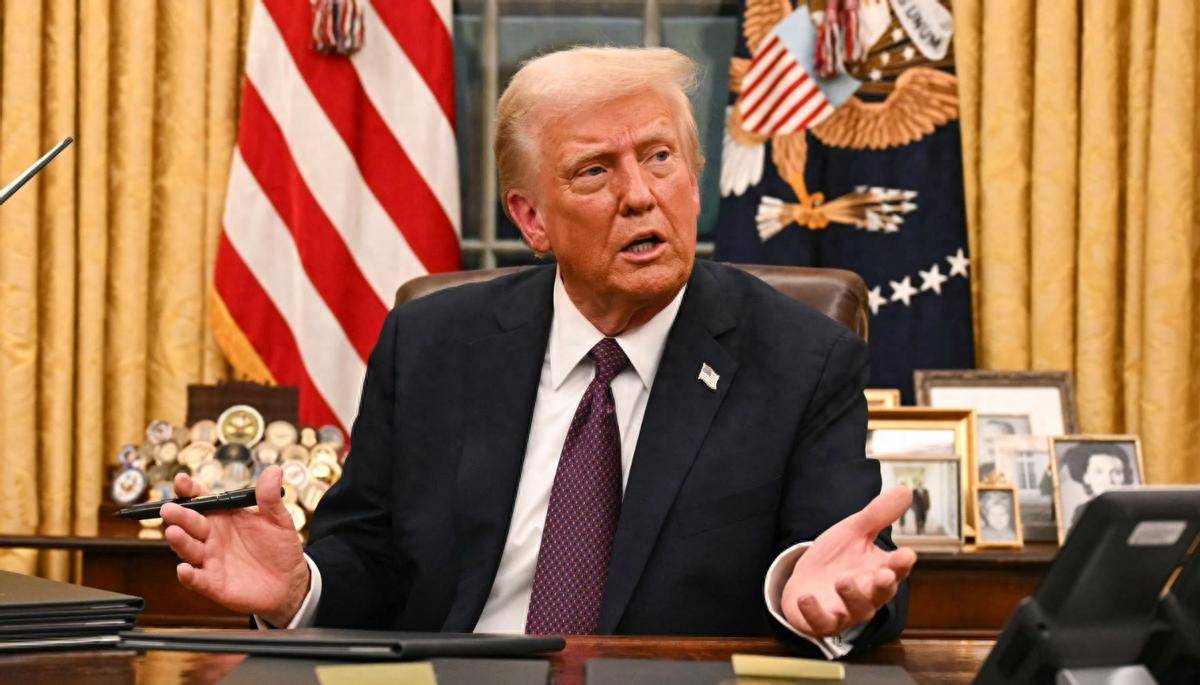
Exxon CEO calls Venezuela 'uninvestable' during meeting with Trump
Business Insider· 2026-01-10 17:35
Core Insights - President Trump's $100 billion plan to invest in Venezuela's oil industry received a muted response from US energy executives, with Exxon CEO describing the country as "uninvestable" at present [1][2] - Significant changes to Venezuela's legal and commercial frameworks are necessary for investment, according to Exxon CEO Darren Woods, who expressed confidence that the US could facilitate these changes [2] - Trump has been advocating for US oil firms to invest in Venezuelan energy infrastructure following the ousting of Nicolás Maduro, promising "total safety and security" for operations [4][5] Company Responses - ExxonMobil's CEO Darren Woods emphasized the need for durable investment protections and changes to hydrocarbon laws in Venezuela before considering investment [2] - Harold Hamm, founder of Continental Resources, acknowledged the challenges of entering Venezuela but expressed excitement about exploration opportunities [5] - Chevron's vice chairman Mark Nelson stated that the company is "committed" to Venezuela and may increase production by approximately 50% over the next 18 to 24 months [6]
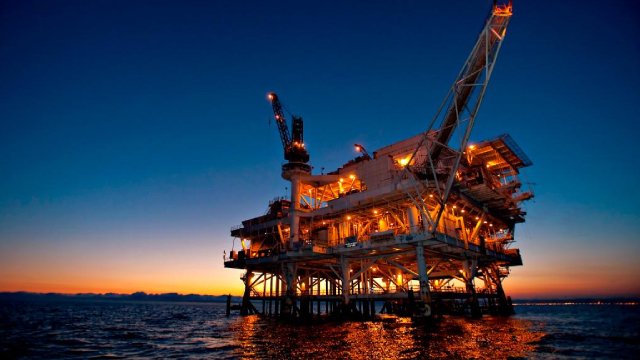
Why Sanctions Relief Alone Won't Fix Venezuela's Oil Industry
Yahoo Finance· 2026-01-10 00:00
Core Insights - Venezuela's oil industry faces significant challenges despite having the world's largest proven oil reserves, with production levels drastically lower than historical figures [1] Group 1: Structural Issues - The decline in Venezuela's oil production began with structural damage from government actions in 2007, which forced foreign operators into minority positions and led to asset seizures [4] - The Orinoco Belt, a technically demanding heavy oil region, requires advanced management and significant investment, which was lost when foreign companies exited [5] - The state-owned oil company PDVSA inherited assets but lacked the necessary capabilities, leading to maintenance issues, equipment failures, and a loss of skilled workers, resulting in a production decline that started before sanctions were imposed [6] Group 2: Impact of Sanctions - Sanctions have played a role in accelerating the decline of Venezuela's oil production, particularly the direct sanctions on PDVSA implemented in January 2019, which were more impactful than earlier measures targeting individuals [8] - The internal collapse of PDVSA, marked by political purges and mismanagement, has been a significant factor in the steep decline of oil production since 2015 [6][7] Group 3: Recovery Prospects - Recovery of Venezuela's oil production will depend on the resolution of sanctions and the long-term rebuilding of infrastructure and workforce, which is a multi-year effort even under stable political conditions [2][7]
Why One Oil Company Has a Head Start in Venezuela
Bloomberg Originals· 2026-01-09 09:01
The United States has carried out a series of strikes against Venezuela, announcing the capture of Nicolas Maduro and his wife. Nicolas Maduro stood in federal court and pleaded not guilty to narco-terrorism charges. Donald Trump said his military buildup in the Caribbean and destruction of civilian boats there was about alleged drug trafficking, but following the US attack on Venezuela, another reason has taken center stage.The oil business in Venezuela has been a bust, a total bust for a long period of ti ...
How Chevron's Expanded Venezuela Oil License Boosts Its Global Play
ZACKS· 2026-01-08 17:36
Core Viewpoint - Chevron Corporation is in discussions with the U.S. government to expand its license to operate in Venezuela, potentially increasing crude exports to both its own refineries and third-party buyers amid geopolitical shifts [1][9]. Group 1: Chevron's Operations in Venezuela - Chevron is currently the only U.S. oil major operating in Venezuela under a sanctions exemption, but tighter restrictions have significantly reduced its exports from 250,000 barrels per day (bpd) to about 100,000 bpd [2][9]. - The ongoing negotiations suggest that proceeds from Venezuelan oil sales would be managed through a U.S. trustee to finance American goods for Venezuela, while the oil embargo remains in effect [3][4]. Group 2: Broader U.S. Energy Policy - The U.S. government is exploring the reintroduction of other U.S. energy companies into Venezuela's oil export landscape, indicating a potential shift in U.S. energy policy [5]. - Companies like Valero Energy Corporation, Exxon Mobil Corporation, and ConocoPhillips are being considered for renewed involvement, which could stabilize Venezuelan exports and reintegrate the country into global energy markets [6][7]. Group 3: Market Performance and Valuation - Chevron's shares have increased by 4.5% over the past month, outperforming the Oil/Energy sector, which declined by 1.2% [8]. - The stock is currently trading at a premium compared to the industry average in terms of forward price-to-earnings ratio and is above its five-year mean of 11.86 [10]. - The Zacks Consensus Estimate for Chevron's 2025 earnings is projected at $7.34 per share, reflecting a 27% year-over-year decline [11].
Trump eyes control of Venezuela’s PDVSA to slash oil prices
Yahoo Finance· 2026-01-08 10:30
Core Viewpoint - The US is considering an initiative to gain control of Venezuela's state-run oil company, PDVSA, with the goal of reducing oil prices to $50 per barrel [1] Group 1: US-Venezuela Oil Relations - The US is exploring a deal to purchase and distribute PDVSA's oil, potentially collaborating with major oil companies like Chevron [2] - PDVSA has confirmed ongoing negotiations with the US regarding oil sales, with expectations that the US will buy cargoes at international market rates [2] - An agreement has been announced allowing the US access to up to $2 billion in Venezuelan crude oil, indicating a shift in Venezuelan authorities' stance towards US oil company involvement [3] Group 2: Impact of US Policies - A blockade imposed by the Trump administration has hindered Venezuela from exporting millions of barrels of crude, leading to a backlog of unsold crude [4] - The recent capture of Venezuela's president, Nicolás Maduro, by US forces has further strained relations between the two countries [4]