WeRide

Search documents
Bolt partners with Pony.ai for driverless cars in Europe
Yahoo Finance· 2025-11-25 00:06
Core Insights - Estonian ride-hailing company Bolt has partnered with Chinese autonomous driving firm Pony.ai to introduce driverless cars to its taxi services in Europe [1][2] - Bolt aims to be among the first platforms to offer fully driverless autonomous vehicles in the EU, with plans for initial deployments by 2026 [2] - Chinese self-driving technology firms, including Pony.ai, are expanding into Europe due to restrictions in the U.S. market, raising competition concerns among local rivals [3] Company Developments - Bolt is focused on testing and validating the safety of fully autonomous vehicles before deploying them across various European countries [1] - CEO Markus Villig emphasized the urgency for Europe to avoid regulatory mistakes that could hinder the development of autonomous vehicles [4] Industry Context - The autonomous driving sector is currently dominated by U.S. companies like Waymo and Tesla, as well as Chinese firms such as Baidu and Pony.ai [2] - Many European countries have not issued new operating licenses for professional drivers in decades, limiting the growth of ride-hailing services and creating a demand for innovation in autonomous vehicle deployment [4]
WeRide narrows Q3 losses as revenue jumps sharply
Yahoo Finance· 2025-11-24 19:52
Core Insights - WeRide has significantly reduced its third-quarter losses for 2025, reporting a net loss of 307.3 million yuan ($42.9 million), down from 1.04 billion yuan a year earlier, marking a substantial improvement in financial performance [1] - The company achieved a remarkable 144.3% year-on-year increase in total revenue, reaching 170.9 million yuan, compared to 70 million yuan in the same period of 2024 [1] Financial Performance - Product revenue surged by 428% to 79.2 million yuan, up from 15 million yuan a year earlier, driven by increased sales of robotaxis and robobuses [2] - Service revenue rose by 66.9% to 91.7 million yuan, compared to 55 million yuan in the third quarter of 2024 [2] - Gross profit reached 56.3 million yuan, a significant increase from 4.6 million yuan a year earlier, with gross margin improving to 32.9% from 6.5% in the same period of 2024 [2] Regulatory and Operational Developments - WeRide achieved multiple regulatory breakthroughs, including securing a city-level fully driverless robotaxi commercial permit in Abu Dhabi, and has started public operations in Saudi Arabia and Belgium [3][5] - The company is currently conducting road testing in Zurich, Dubai, and Singapore, and operates an autonomous vehicle fleet of over 1,600 units, including nearly 750 robotaxis as of October 31, 2025 [3] - With the latest regulatory approval in Switzerland, WeRide's autonomous vehicles are now licensed to operate in eight countries [4] Strategic Vision - The founder and CEO of WeRide emphasized the company's achievements in regulatory and commercial aspects across eight countries, highlighting the convergence of advanced technology and global execution capabilities [5] - The company aims to deploy hundreds of thousands of robotaxis by 2030, positioning itself to capitalize on the autonomous driving opportunity through its technology stack, global partnerships, and regulatory relationships [6]
X @Bloomberg
Bloomberg· 2025-11-24 09:50
WeRide narrowed its third-quarter net loss on increased robotaxi orders, as it races for a slice of the growing global market for driverless cabs https://t.co/nUhTUgS0jJ ...
‘Robotaxi has reached a tipping point': Baidu, Nvidia leaders see momentum as competition rises
CNBC· 2025-11-20 07:14
Core Insights - Baidu has announced the capability to sell robotaxi rides without human staff, indicating a significant advancement in autonomous driving technology [1] - Chinese robotaxi companies are expanding internationally at a faster pace than U.S. competitors, with industry leaders suggesting that autonomous driving is nearing a critical turning point [2] - Positive public feedback and increased exposure to driverless rides are expected to accelerate regulatory approvals for robotaxi services [3] Industry Growth Potential - The global robotaxi market is projected to exceed $25 billion by 2030, highlighting significant growth opportunities [4] - Chinese companies are aggressively pursuing international expansion, aiming to establish robotaxis as a viable business model rather than merely focusing on market share [6] Profitability and Operational Efficiency - Baidu's Apollo Go unit has achieved per-vehicle profitability in Wuhan, operating over 1,000 vehicles, which demonstrates the potential for profitability in other cities [8] - The cost of rides in Wuhan is approximately 30% lower than in major cities like Beijing and Shanghai, making it competitive against U.S. and European prices [9] - Partnerships with ride-hailing services like Uber are deemed critical for operational efficiency and quicker profitability [7] Fleet Size and Competitive Landscape - Companies like Baidu, Pony.ai, and WeRide are leading in fleet size, which is becoming a key competitive factor in the race for profitability [13] - Pony.ai plans to deploy 1,000 robotaxis in the Middle East by 2028, while WeRide aims for a similar fleet size by the end of next year [14] Safety and Regulatory Environment - No fatalities or major injuries have been reported by any of the six robotaxi operators, which is crucial for gaining regulatory approval [16] - The Chinese government is expected to increase support for robotaxi operations, which could further enhance market conditions [16][17]


Northstar Clean Technologies ($ROOOF) | Toyota ($TM) | WeRide ($WRD) | ECARX ($ECX)
Youtube· 2025-11-13 13:57
Group 1 - Northstar Clean Technologies has signed a 5-year contract with the city of Calgary to reprocess asphalt shingles, supporting Calgary's waste diversion goals and securing feedstock for its Empower Calgary facility [1][2] - Toyota Motor has commenced production at its new $14 billion battery plant in North Carolina, which will produce 30 gigawatt hours annually, contributing to Toyota's total US investment of nearly $60 billion [2] - We Ride and Grab have received approval for autonomous vehicle testing in Singapore, planning to quadruple test runs by year-end and launch the first autonomous shuttle service by early 2026 [3] Group 2 - E-CARX has secured a second contract from Volkswagen to supply advanced digital cockpit solutions, enhancing in-car connectivity with integrated Google automotive services [3][4]

中国多资产 -花旗 2025 中国会议需关注主题-China Multi-Asset-Themes to Watch at Citi’s 2025 China Conference
花旗· 2025-11-12 02:20
Investment Rating - The report maintains a positive outlook on various sectors, with specific "Buy" ratings for companies such as AIA Group, ASMPT, Atour, Hengrui, Sunny Optical, Tencent, and others [13][14][28][33]. Core Insights - The 15th Five-Year Plan (FYP) emphasizes technological innovation, consumption rebalancing, and building a strong domestic market, which are expected to drive growth in sectors like technology, healthcare, and renewables [14][29]. - The report anticipates a stable external environment for China, with net exports remaining a key growth driver despite potential challenges from high bases and external demand uncertainties [7]. - The healthcare sector is highlighted as a key beneficiary of government policies, with a focus on innovation and globalization, particularly in medical devices and pharmaceuticals [29]. - The consumer sector is shifting towards experience and service consumption, with a growing emphasis on well-being and the silver economy, indicating potential growth areas for companies in these segments [27]. Economics - The report projects a growth target of around 5.0% YoY for 2026, with a focus on policy continuity and structural support for consumption [7]. - The RMB exchange rate is expected to become a focal point, with potential for significant movements as trade tensions ease and internationalization efforts continue [7]. Commodities - The report notes a shift in China's commodity fundamentals due to economic transitions, with a focus on domestic demand and energy self-sufficiency [9][10]. - The Action Plan for the Nonferrous Metals Industry indicates a shift towards high-quality growth, with supply growth expected to remain constrained [9]. Sector Views - **Autos and Parts**: The sector is poised for growth driven by advancements in Robotaxi and ADAS technologies, with key players expected to benefit from commercialization efforts [19]. - **Banks**: The banking sector is expected to outperform due to positive earnings growth and attractive dividend yields, particularly among large H-share banks [22]. - **Brokers**: The report highlights a trend of households reallocating wealth into equities, benefiting brokers as market proxies [26]. - **Consumer**: Key investment themes include a shift towards experiential consumption and a focus on well-being, with specific companies identified as top buys [27][28]. - **Healthcare**: Innovation and globalization are seen as critical drivers, with a focus on companies with strong pipelines and global expansion capabilities [29]. - **Insurance**: The sector is viewed positively, with opportunities arising from comprehensive enhancements across various business lines [33]. Top Buys - The report lists several top buy recommendations across sectors, including AIA Group, Hengrui, Tencent, and Anta, among others, indicating strong growth potential and favorable market conditions [13][14][28][33].





Asian travel platform Klook is filing for a New York IPO
Fortune· 2025-11-11 09:51
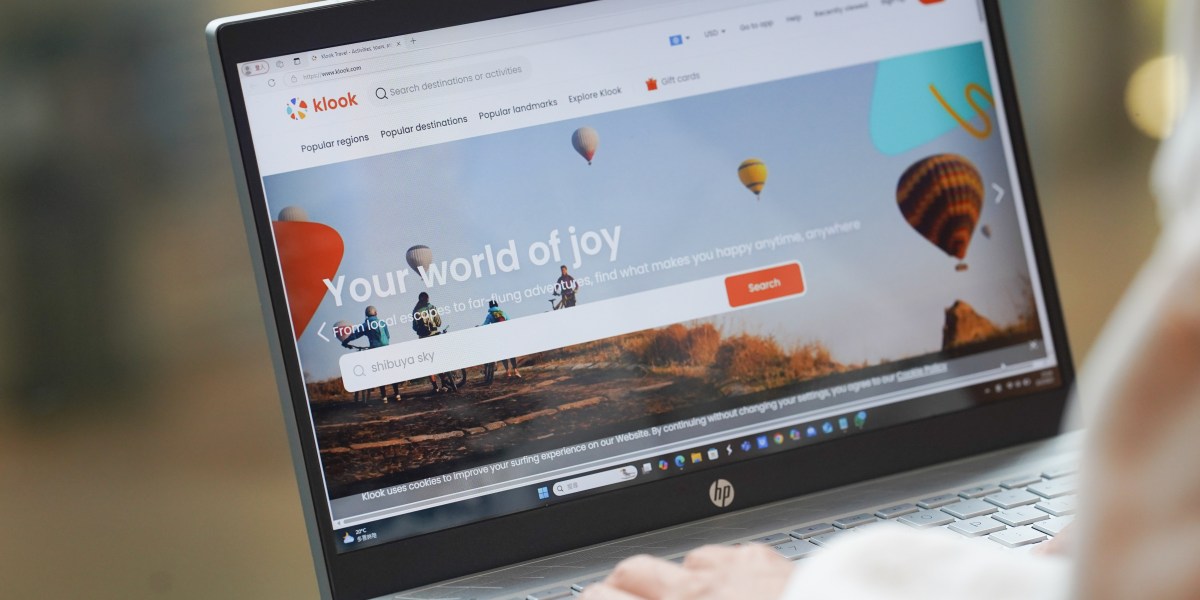
Company Overview - Klook is a travel booking company based in Hong Kong and Singapore, founded in 2014, and claims to be the largest experience booking platform in Asia by gross transaction volume, with 65 million experiences booked in the twelve months ending September 30 [1] IPO Details - Klook is filing for an initial public offering (IPO) in New York, working with Goldman Sachs, JPMorgan, and Morgan Stanley, and plans to list under the ticker "KLK" [2] - The company generated $417.1 million in revenue in 2024, reflecting a 24% increase, but reported a loss of $99.3 million last year [2] Market Context - The IPO is occurring amid a global surge in tourism as travelers are eager to vacation after COVID-era lockdowns, with the travel sector projected to generate $11.7 trillion in 2025, accounting for 10.3% of global GDP [4] - Klook competes with other Asian travel platforms such as Trip.com and Traveloka, as well as global competitors like GetYourGuide and Booking.com, offering services in 4,000 destinations worldwide [3] Regulatory Environment - Klook's listing comes at a time of tense relations between the U.S. and China, with concerns about potential delisting of Chinese companies from U.S. exchanges due to non-compliance with auditing standards [5][6] - The company has flagged concerns about delisting as a risk factor in its IPO filing, despite having principal executive offices in both Singapore and Hong Kong [7]
文远知行_首次覆盖文远知行 - H,评级 “买入”_高风险
2025-11-11 06:06
WeRide (WRD.O/0800.HK) Conference Call Summary Company Overview - **Company**: WeRide - **Ticker**: 0800.HK (H-share), WRD.O (ADR) - **Founded**: 2017 - **Industry**: Autonomous Driving - **Global Presence**: Operations in over 30 cities across 11 countries, with permits in seven markets including China, Saudi Arabia, UAE, Singapore, France, Belgium, and the US [16][21] Key Points Coverage Initiation - **Rating**: Initiated coverage on WeRide-H with a Buy/High Risk rating - **Target Price**: HKD39.6 for H-share and US$15.3 for ADR, adjusted from US$18.2 due to share dilution from H-share listing [1][4] Market Forecast - **Robotaxi Market Growth**: - Fleet size expected to grow from 3.8k units in 2025 to 538k units in 2030 and 2.3 million units in 2035 - CAGR of 169% from 2025 to 2030 and 34% from 2030 to 2035 - Total addressable market for robotaxis in China projected to reach US$15 billion in 2030 and US$68 billion in 2035, with a CAGR of 229% from 2025 to 2030 [2] Cost Reduction - **Vehicle Cost**: Anticipated decline in full vehicle cost per Robotaxi to US$32.4k in 2030 and US$28.2k in 2035, with a CAGR of -6% from 2025 to 2030 and -3% from 2030 to 2035 [2] Major Milestones - **Expansion**: Launched Robotaxi and Robobus pilots in Ras Al Khaimah, UAE, marking the third emirate of operation [3][10] Financial Projections - **EPS Forecast**: Updated EPS forecast for 2025-27E to Rmb -4.44/-3.89/-2.82, down from Rmb -5.34/-4.68/-3.39 due to share dilution [4] - **Free Cash Flow**: Expected outflow of Rmb1.58 billion in 2025, Rmb1.16 billion in 2026, and Rmb1.14 billion in 2027, with potential refinancing needed in 2027 [9] Valuation Metrics - **Valuation Methodology**: DCF valuation with a WACC of 17.1% and a terminal growth rate of 2% - **Target Price Implications**: Implies 13x 2027E PS and 1.3x 2030E PS/9.0x 2030E PE, with current trading around 8x 2027E PS and 0.8x 2030E PS/5.6x 2030E PE [4][18] Investment Strategy - **High-margin Overseas Business**: Significant milestones achieved overseas, with partnerships with Uber and Grab to accelerate deployment of L4 robotaxis [17][22] - **Cost Advantages**: Latest robotaxi model GXR priced at USD 40k with advanced computing power of 2,000 TOPS, expected fleet size of 1k units by end-2025 [17][22] Risks - **High Risk Rating**: Due to loss-making status and uncertainties in robotaxi development - **Key Risks**: Include technological challenges, business model uncertainty, safety concerns, competition, regulatory risks, cash shortages, and limited operating history [19][24] Conclusion - WeRide is positioned as a leader in the autonomous driving sector with significant growth potential in the robotaxi market, supported by strategic partnerships and cost advantages. However, the company faces substantial risks that could impact its future performance.

中国自动驾驶_聚焦自动驾驶、Robotaxi 与机器人领域-China Autonomous Driving_ All eyes on AD, robotaxis, and robotics
2025-11-10 03:35
Summary of Key Points from the Conference Call Industry Overview - The focus is on the autonomous driving (AD), robotaxi, and robotics sectors in China, which are at different stages of development but collectively represent significant growth opportunities over the next decade [2][8][10]. Core Insights and Arguments 1. **Commercialization Progress**: - Autonomous driving is nearing a demand inflection point, with the penetration rate of highway and city navigation on autopilot (NOA) in China increasing from 14% in Q4 2024 to 24% by August 2025 [3][11]. - Robotaxis are approaching commercialization, with fleets expected to grow from low thousands to tens of thousands by 2H 2025-2026, although they currently represent less than 1% of the market [3][21]. - Humanoid robotics is still in early stages, with significant potential but limited visibility [3][31]. 2. **Investment Preferences**: - Preferred companies include Horizon Robotics, Joyson, Tuopu, Xingyu, and XPeng, all rated as "Buy" [4][8][19]. - Horizon Robotics is highlighted as a leader in benefiting from rising AD penetration, while XPeng is noted for its strong product cycle and leading AD capabilities [4][19][20]. 3. **Catalysts for Growth**: - Upcoming Tesla AGM on November 6 is expected to provide updates on FSD V14, robotaxis, and humanoid robots, which could act as catalysts for the market [2][10][18]. - Regulatory support is increasing, with new safety standards and pilot programs for L3 vehicles expected to enhance commercialization [12][17]. 4. **Market Dynamics**: - The autonomous driving sector in China is entering a key inflection phase, driven by consumer demand and proactive supply-side initiatives from manufacturers like BYD [11][12]. - The robotaxi market is projected to grow significantly, supported by improved fleet economics and regulatory backing [21][22]. 5. **Technological Challenges**: - The core challenge for robotaxis is adapting autonomous driving algorithms to diverse urban environments while ensuring safety and cost-effectiveness [23][24]. - The average cost of a robotaxi is around RMB 300,000 (USD 40,000), with potential for further cost reductions in the long term [23]. Other Important Insights - The humanoid robotics market is characterized by high volatility and is heavily reliant on technological advancements and market catalysts [31][32]. - Companies like Waymo are demonstrating the safety benefits of robotaxis, with significant reductions in crash incidents compared to human drivers [25]. - The report emphasizes the importance of regulatory alignment and public acceptance as fleets expand, which will enhance visibility and usage rates of robotaxis [24]. Conclusion - The autonomous driving, robotaxi, and robotics sectors in China are poised for substantial growth, driven by technological advancements, regulatory support, and increasing consumer demand. Key players in the supply chain are well-positioned to capitalize on these trends, making them attractive investment opportunities.

WeRide CEO pitches robotaxi safety as shares start trading in HK
Fortune· 2025-11-06 05:01
Core Insights - WeRide has initiated trading on the Hong Kong Stock Exchange, complementing its existing Nasdaq listing, as part of a global strategy to fund research in autonomous driving technology [1][2][3] - The dual primary listing allows mainland Chinese investors to access WeRide's shares through the Southbound Stock Connect scheme, enhancing the company's market reach [2][3] - The funds raised from the Hong Kong IPO, amounting to $308 million, will support ongoing R&D and deployment efforts, although further fundraising will be necessary [3][7] Company Performance - WeRide's shares were priced at 27.10 Hong Kong dollars, slightly below its Nasdaq closing price, but fell nearly 12% on the first trading day in Hong Kong [7][8] - The company reported a revenue of $27.9 million for the first half of 2025, a 32% increase year-over-year, but also incurred a net loss of $110 million primarily due to $90 million spent on R&D [13] Market Context - The Hong Kong IPO market is thriving, with many Chinese firms seeking to attract international and mainland capital through secondary listings [4] - The Southbound Stock Connect scheme has seen record inflows, reaching $110 billion in the first seven months of the year, indicating strong demand from mainland investors [6] Industry Trends - The robotaxi sector is characterized by high costs and unprofitability, with predictions suggesting that it may take up to eight years for robotaxi operations to break even [14] - Chinese companies, including WeRide and Pony AI, are at the forefront of the global robotaxi movement, leveraging local manufacturing capabilities for essential components [15] Strategic Partnerships - WeRide is collaborating with global ride-share companies, including Uber and Grab, to expand its robotaxi services in international markets [16] - The company is also exploring partnerships for automated public transport solutions, indicating a broader application of its technology beyond just ride-hailing [12][16]