
Berkshire Hathaway

Search documents
EXCLUSIVE: Warren Buffett Is 'The Ultimate Investor' – Market Expert Jay Woods Says Berkshire CEO 'The Stuff Of Legends'
Benzinga· 2025-12-28 14:31
Core Viewpoint - Warren Buffett is set to step down as CEO of Berkshire Hathaway at the end of 2025, marking the end of an era for the company and the investment community [1][3]. Group 1: Buffett's Investment Philosophy - Buffett is recognized as the ultimate investor, known for his long-term approach and focus on quality investments rather than day-to-day operations [2][3]. - His trading philosophy has rewarded investors significantly, emphasizing the importance of buying quality at a cheap price [2][3]. Group 2: Impact of Buffett's Departure - The departure of Buffett signifies a major transition for Berkshire Hathaway, with expectations that the company's investment philosophy will remain largely unchanged [6]. - There is curiosity about the new team's investment strategy, especially as Berkshire has shown a more "risk on" approach with recent investments in companies like UnitedHealth Group and Alphabet Inc [7]. Group 3: Recent Investments by Berkshire Hathaway - Berkshire Hathaway has continued to invest in quality companies, with notable recent investments in UnitedHealth Group and Alphabet Inc, indicating a shift towards more technology names [7]. - The ongoing investment in Occidental Petroleum raises questions about Berkshire's commitment to the energy sector and its long-term strategy [8].


Warren Buffett Sends Wall Street a Final $400 Billion Warning: History Says the Stock Market Will Do This in 2026
The Motley Fool· 2025-12-28 11:00
Core Insights - Berkshire Hathaway, led by Warren Buffett, has amassed a cash reserve nearing $400 billion, indicating a cautious stance amidst market exuberance driven by AI investments [1][3][10] - Buffett's actions suggest a warning to investors about current market valuations, especially as he prepares for retirement in 2026 [2][10] Cash Position - The cash pile has increased from $100 billion at the start of the bull market in 2023 to approximately $400 billion, largely due to the decline in the value of its Apple stake from nearly $200 billion to around $60 billion [3][4] - This cash is primarily held in short-term U.S. Treasuries, yielding 3.6%, reflecting Buffett's belief that stock market returns are not exceeding this risk-free rate [5][10] Market Sentiment - Buffett has reduced or sold off many stock holdings, including Bank of America, and has largely avoided the AI stock trend, only making a minor investment in Alphabet [4][10] - The S&P 500 is trading at a high average price-to-earnings (P/E) ratio, with AI stocks showing P/E ratios above 30, indicating potential overvaluation [9][10] Historical Context - Buffett's history shows that significant cash accumulation often precedes poor stock market performance, as seen during previous market cycles [8][10] - His decision to raise cash during a bull market suggests a recognition of bubble-like conditions rather than an immediate market downturn [10] Investment Strategy - The current cash position signals a lack of attractive buying opportunities, with Buffett preferring to wait for more favorable valuations [12] - Investors are cautioned against assuming continuous market growth, especially those heavily invested in speculative stocks [14]
2 Unstoppable AI Stocks That Warren Buffett and Berkshire Hathaway Own
The Motley Fool· 2025-12-28 10:30
Core Viewpoint - Alphabet and Amazon are identified as strong investment opportunities, particularly in light of their potential growth in 2026, despite differing performances in 2025 [2][6]. Group 1: Company Performance - Alphabet's stock increased by approximately 60% in 2025, overcoming initial doubts regarding its capabilities in artificial intelligence and concerns about potential monopoly issues [6][7]. - Amazon's revenue grew by 13% in the third quarter, with its cloud computing unit, Amazon Web Services (AWS), accounting for 66% of operating income despite only representing 18% of total revenue [10][11]. Group 2: Investment Insights - Berkshire Hathaway's portfolio includes Alphabet, which makes up about 1.7% of its total holdings, and Amazon, which constitutes 0.7% [5]. - The performance of Alphabet in 2025 suggests continued dominance in generative AI, potentially leading to new revenue streams in 2026 [8][9]. - Amazon's AWS has shown its fastest growth quarter in several years, indicating a strong rebound potential for the company in 2026 [11].



If Warren Buffett Shared His Berkshire Hathaway Fortune, Here’s How Much Every American Would Get
Yahoo Finance· 2025-12-27 11:04
Core Viewpoint - Warren Buffett, with a net worth of nearly $150 billion, is recognized as one of the richest individuals globally, primarily due to the success of his holding company, Berkshire Hathaway [1]. Group 1: Buffett's Holdings - Buffett holds approximately 198,117 shares of Berkshire Hathaway Class A stock, valued at around $747,400 per share, totaling nearly $148 billion [3]. - The majority of Buffett's net worth is directly linked to the performance of Berkshire Hathaway stock prices, making it almost entirely dependent on this asset [3]. Group 2: Distribution of Shares - If Buffett were to distribute his shares evenly among the current U.S. population of approximately 342,788,829, each individual would receive about 0.0006% of a share, equating to a value of around $485.81 per person at current stock prices [4][5]. - If only adults (approximately 305,939,029) were eligible for the shares, the ownership per person would increase to about 0.00065% [5]. Group 3: Long-term Value of Shares - Holding onto the distributed Berkshire Hathaway shares for 10 years could potentially double the net worth of the recipients, given the historical average return of 13.68% per year over the last decade [6][7]. - Although the return is slightly lower than the S&P 500's average of over 15% during the same period, the compounding effect over 10 years could significantly enhance the value of the shares [7].
Here's How I'm Managing My Million-Dollar Portfolio Amid a Historically Pricey Stock Market
Yahoo Finance· 2025-12-26 09:26
Market Overview - The current stock market is the second priciest in history, as indicated by the Shiller Price-to-Earnings (P/E) Ratio, only surpassed before the dot-com bubble burst [3] - Major indices such as the Dow Jones Industrial Average, S&P 500, and Nasdaq Composite have seen significant gains in 2025, rising by 14%, 17%, and 22% respectively [5][6] Investment Strategy - The company is adopting a multi-pronged investment strategy to navigate a historically expensive market, focusing on long-term positions and avoiding impulsive trades [2][5] - There is an emphasis on maintaining core positions while increasing cash reserves to capitalize on future market dislocations [10][13] Stock Selection - The company is selectively adding to positions in firms like PubMatic and Goodyear Tire & Rubber, which are seen as undervalued despite current market conditions [17][18] - High-yield dividend stocks are being incorporated into the portfolio, as they have historically provided better returns and lower volatility compared to non-dividend payers [20][23] Risk Management - The company is divesting from non-core holdings that no longer align with investment goals, similar to corporate cost-saving initiatives [11][12] - The potential for an AI and quantum computing bubble is acknowledged, but core positions are not expected to be disproportionately affected [8]

As Warren Buffett Enters Retirement, An Overlooked Berkshire Trade From Last Year Is Back in Focus. Should Investors Be Worried Heading Into 2026?
The Motley Fool· 2025-12-25 18:45
Core Viewpoint - Warren Buffett will step down as CEO of Berkshire Hathaway at the end of 2025, marking the end of an era for the investment firm he has led for nearly 60 years [1][2]. Group 1: Leadership Transition - Greg Abel, a long-time steward under Buffett, will take over as CEO starting in 2026 [2]. - The investment community is reflecting on Berkshire's significant decisions over the past year as Buffett's tenure approaches its conclusion [2]. Group 2: Investment Strategy - Berkshire Hathaway previously held positions in two S&P 500-themed ETFs: the Vanguard S&P 500 ETF and the SPDR S&P 500 ETF Trust [5]. - In its Q4 2024 13F filing, Berkshire disclosed that it sold its positions in both S&P 500 ETFs late last year [6]. Group 3: Market Analysis - The S&P 500 Shiller CAPE ratio was around 37 at the end of 2024, indicating a potentially overvalued market [9]. - Historical data shows that the CAPE ratio has only reached similar levels twice before, leading to significant market corrections [10]. - The current CAPE ratio is approaching 40, suggesting the market may be increasingly heated and raising concerns about a potential correction [15]. Group 4: Buffett's Investment Philosophy - Buffett is known for his contrarian approach and typically avoids chasing market hype [8]. - The decision to sell the S&P 500 ETFs may reflect Buffett's view that the market was unsustainably frothy, particularly due to the influence of a few mega-cap stocks benefiting from AI advancements [12]. - Despite the S&P 500 being on track for its third consecutive year of double-digit gains, Buffett's decision to exit the ETFs may not have been poorly timed, as he prioritizes finding attractively valued stocks [13][14]. Group 5: Long-term Investment Outlook - Investing in the S&P 500 has historically proven to be profitable, regardless of market timing [15]. - There is no immediate need for investors to panic or strictly follow Buffett's investment moves, given the robust long-term average returns of the S&P 500 [16].
Wealth quote of the day by Warren Buffett: 'You do things when the opportunities come along...' - Why patience matters more than constant hustle
The Economic Times· 2025-12-25 16:12
Core Insights - The essence of Warren Buffett's philosophy emphasizes the importance of patience and strategic action in investing, suggesting that meaningful opportunities yield better long-term outcomes than constant, impulsive efforts [1][3]. Company Overview - Warren Buffett is recognized as one of the most successful investors in history, known as the "Oracle of Omaha," and has transformed Berkshire Hathaway from a struggling textile company into a global powerhouse through disciplined, long-term value investing [5][9]. Investment Philosophy - Buffett's approach to investing is characterized by a focus on fundamentals, avoidance of impulsive decisions, and maintaining emotional discipline, which has inspired many beyond Wall Street [7]. - He advocates for doing less but with greater purpose, promoting the idea that restraint can be wiser than busyness when opportunities are scarce [3]. Performance Metrics - From the 1960s to the 1990s, while major US stock averages rose by approximately 11% annually, Berkshire Hathaway's publicly traded shares achieved an impressive annual gain of roughly 28% [10]. Succession Planning - In May 2025, it was announced that Greg Abel, Vice Chairman of Berkshire Hathaway, would succeed Buffett as CEO by the end of the year, with Buffett remaining involved in some capacity [11]. Philanthropic Commitment - Buffett has pledged to donate over 80% of his fortune to charitable foundations, increasing this commitment to 99% in 2020, with significant contributions directed towards the Bill & Melinda Gates Foundation [12][17].

Why buying Berkshire was Warren Buffett's biggest mistake
CNBC· 2025-12-25 13:12
Core Insights - Warren Buffett is entering his final week as CEO of Berkshire Hathaway, a company he has transformed from a struggling textile manufacturer into a conglomerate valued at over $1 trillion [2] - Buffett's net worth is estimated at $151 billion, primarily from his Class A shares in Berkshire Hathaway, ranking him 10 on the Bloomberg Billionaires Index [2] - Despite his success, Buffett has referred to Berkshire Hathaway as "the dumbest stock I ever bought," highlighting a significant mistake that cost him hundreds of billions [3][10] Company History and Transformation - Buffett acquired control of Berkshire Hathaway in 1965, initially viewing it as a cheap stock in a declining textile business [5][6] - The company had been closing mills and buying back its stock, which led Buffett to believe he could profit from a tender offer [6][9] - After a disappointing tender offer price, Buffett decided to buy control of the company and eventually shifted its focus away from textiles [9][10] Lessons Learned - Buffett acknowledges that investing in a poor business can be detrimental, stating that if he had invested in a good business instead of textiles, Berkshire Hathaway would be worth twice as much today, estimating a potential value of $200 billion [11][12] - He emphasizes the importance of recognizing when to exit a bad business, stating that it took him 20 years to abandon the textile operations [12][17] - The experience taught Buffett that it is better to invest in good businesses at fair prices rather than cheap businesses with poor economics [16][20] Business Philosophy - Buffett's management philosophy diverges from conventional business school teachings, as he prefers to retain underperforming businesses unless they are permanently losing money or facing major issues [22][23] - He believes that the difficulty of a business does not equate to its potential for success, advocating for a focus on simpler, more manageable investments [20][21] - Buffett credits his business partner, Charlie Munger, for influencing his investment approach and acknowledges that he could have avoided many mistakes by heeding Munger's advice [24]

Berkshire Hathaway beyond Warren Buffett: The legacy and future
Youtube· 2025-12-25 11:00
Core Insights - Warren Buffett is stepping down as CEO of Berkshire Hathaway, with Greg Abel set to take over, marking a significant leadership transition for the company [3][27] - Berkshire Hathaway is characterized as a unique conglomerate with three main business engines: operating businesses, a stock portfolio, and an insurance business that provides a structural advantage through its float [4][5][6] - The company has shown strong performance, with a 120% increase over the last five years, outperforming the S&P 500, which increased by 80% during the same period [8] Business Structure - Berkshire Hathaway operates as a holding company with distinct segments: wholly-owned businesses, a diverse stock portfolio led by significant investments in companies like Apple, and an insurance business that generates float for investment [4][5][6] - The insurance segment, particularly Geico, plays a crucial role in providing capital for investments, allowing Berkshire to maintain a patient investment strategy [17][18] Financial Performance - Berkshire Hathaway's stock has performed well, particularly during market downturns, indicating resilience and effective capital allocation strategies [8][12] - The company currently holds over $300 billion in cash, raising questions about future capital deployment strategies under new leadership [13][31] Leadership Transition - The transition from Buffett to Abel is seen as a pivotal moment, with expectations that Abel may implement changes to enhance profitability and operational efficiency [28][30] - Shareholders express a desire for Abel to focus on capital management, including potential dividends and share buybacks, while maintaining the company's long-term value investment philosophy [31][43] Market Position and Valuation - Berkshire Hathaway is viewed as a lower-risk alternative to broader market investments, with a diverse portfolio that includes both cyclical and counter-cyclical businesses [54] - Current valuations are considered reasonable, with a price-to-earnings ratio that aligns closely with the overall market, although slightly above historical averages [55][56] Investor Sentiment - There is cautious optimism among investors regarding the future of Berkshire Hathaway post-Buffett, with expectations that the company's core values and operational culture will remain intact [58] - Concerns exist about the potential loss of the "Buffett premium," as many investors are drawn to the company due to Buffett's iconic status rather than its underlying fundamentals [60][61]
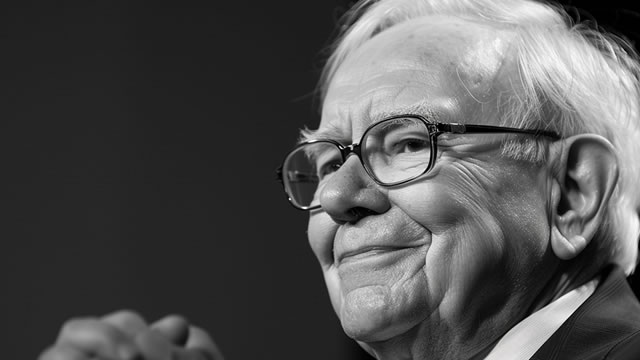
Warren Buffett is resigning as CEO but remaining chairman. He once said retiring would be 'unthinkable' and worse than death.
Yahoo Finance· 2025-12-24 17:23
Warren Buffett is in the final stretch of his six-decade run as Berkshire Hathaway's CEO. But at 95, Buffett intends to remain Berkshire's chairman and assist his successor. The investor has said he loves Berkshire and retirement would be "unthinkable." Warren Buffett is days away from stepping down as Berkshire Hathaway's CEO, but at age 95, he's skipping retirement to stay on as chairman. That's not a shock from the investor who "tap dances to work." After revealing his resignation plans to Berks ...