Boeing

Search documents
China to Suspend Rare-Earth Curbs, US Chip Firm Probes; Oil Fluctuates | Bloomberg Brief 11/03/2025
Bloomberg Television· 2025-11-03 11:57
Market Trends & Global Economy - China effectively suspends additional export curbs on rare earth minerals and terminates probes on US chip firms, signaling a potential ease in trade tensions [1][6][42] - The US administration's de-risking strategy with China continues, but the fragility of the situation requires both sides to comply with agreements [8][9][10] - Concerns about debt and uncertainty around budgets in Europe, particularly in France and the UK, are allowing the US dollar to rally [54][55] Company Performance & Financial Activities - Alphabet plans to sell at least $35 million worth of bonds to fund AI expansion and cloud infrastructure [15][62] - Berkshire Hathaway's cash pile soared to over $380 billion in the third quarter, a fresh record, but the company is not engaging in buybacks [19][20] - BP is getting rid of $15 million worth of assets in the Permian Basin and Eagle Ford as part of an investment strategy [5] - Ryanair expects to exceed its passenger growth for the full year, with traffic growth around 3% [27][33] Commodities & Interest Rates - OPEC signals a pause in production hikes in the next quarter, leading to fluctuations in oil prices [1][43] - The Federal Reserve is reluctant to cut rates due to sticky inflation, and the market anticipates structural changes leading to a more dovish Fed [48][50][51] - The 10-year Treasury yield is up, reflecting investor selling off treasuries [3][44]


Why This Texas-Based Company Could Be a Key Pick for Airline Investors
Yahoo Finance· 2025-11-01 17:14
Core Viewpoint - The airline industry, particularly American Airlines, faces challenges but may present investment opportunities as the company shows signs of recovery despite past losses and external pressures [1][2]. Company Performance - American Airlines' stock has decreased by 23.08% year to date as of October 27, indicating a challenging environment for investors [3]. - The airline has recently experienced a stock increase of 18.57% over the past month, suggesting a potential turnaround [6]. Industry Challenges - The airline sector has been negatively impacted by trade tariffs, which have affected international travel and increased operational costs for American Airlines and its peers [4][5]. - The tariffs have specifically targeted countries that are significant sources of travelers to the U.S., contributing to a decline in international business and leisure travel [4]. Management Outlook - American Airlines' management remains optimistic about the company's future, believing it has more growth potential compared to its competitors [7]. - Some industry experts maintain a positive long-term outlook for the airline sector, which could support American Airlines' stock performance [7].

The 'Halo Effect' Bolstering Edwards Lifesciences' Biggest Moneymaker
Investors· 2025-10-31 14:43
Core Insights - Edwards Lifesciences has raised its 2025 sales outlook, driven by strong performance in its transcatheter heart-valve replacement (TAVR) business, which saw over 12% growth to $1.15 billion, surpassing expectations of $1.1 billion [1][2][5] Financial Performance - The company reported adjusted earnings of 67 cents per share on sales of $1.55 billion for Q3, with earnings rising 12% and sales climbing nearly 15%, both exceeding forecasts of 60 cents and $1.5 billion respectively [5][7] - Revenue from the nonsurgical replacement of mitral and tricuspid valves (TMTT) surged over 59% to $145.2 million, outperforming analyst projections of $142.1 million [6] Future Outlook - Edwards anticipates sales growth at the high end of the 9% to 10% range and projects adjusted profit of $2.56 to $2.62 per share, which is an increase of 9 cents from previous guidance [7] - Analysts expect earnings per share of $2.51 and total sales of $5.98 billion [7] Management Changes - The Chief Financial Officer, Scott Ullem, will transition from his role by mid-2026, prompting a selection process for a new CFO [8]

Can Boeing's Recovery Story Defy Its Biggest Hurdles Yet?
Benzinga· 2025-10-30 17:45
Core Viewpoint - Boeing Co. reported a mixed quarter with strong commercial momentum but ongoing challenges from the 777X program, leading to a decline in share price [1] Group 1: Operational Performance - Operational stability is improving in Boeing's commercial business, aided by the FAA's approval to increase 737 output to 42 jets per month and maintain 787 production at seven per month [2] - The company is making steady progress in restoring execution discipline and supply chain reliability, despite a $4.9 billion charge related to the 777X program and its delayed entry into service until 2027 [3] Group 2: Future Projections - Analyst Ronald J. Epstein expects 737 production to reach 47 jets per month by late 2026 and 787 output to increase to 10 per month by 2027, indicating a positive long-term growth trajectory for Boeing [3] - The forecast for 2026 free cash flow is $3.7 billion, revised down from $4.7 billion, with an expectation to rise to $8 billion by 2028 as deliveries normalize [4] Group 3: Market Sentiment and Valuation - Epstein maintains a Buy rating with a price target of $270, based on normalized free cash flow of $10 per share and valuation parity with the S&P 500 multiple [4] - Despite risks from program delays and cost overruns, Boeing's improving operations, a $600 billion backlog, and the planned acquisition of Spirit AeroSystems are expected to support a more stable outlook [5]


Boeing's Big Rebound Isn't Here Yet: Why It's Still A Wait-And-See Story
Seeking Alpha· 2025-10-30 14:19
Core Viewpoint - Boeing's stock has declined approximately 6.3% from $227.84 to $213.58 since the last quarter, indicating that the previous optimism may have been premature and investors should await further evidence before anticipating a significant recovery [1]. Summary by Relevant Sections - **Stock Performance**: Boeing's stock price fell from $227.84 to $213.58, reflecting a decrease of about 6.3% [1]. - **Investment Strategy**: The recommendation was changed to a Hold rating, suggesting that the potential for easy gains has diminished and caution is advised for investors [1]. - **Analyst Background**: The analyst has over 15 years of market experience and emphasizes a data-driven approach to evaluating companies, focusing on tangible business performance rather than market narratives [1].

Airbus SE (PNK:EADSF) Q3 2025 Earnings Overview
Financial Modeling Prep· 2025-10-30 05:00
Core Insights - Airbus reported an earnings per share (EPS) of $1.89 for Q3 2025, meeting analyst expectations, but revenue of approximately $20.9 billion fell short of the estimated $27.4 billion [2] - The company's strong performance in commercial jetliner deliveries and gains in its helicopters and defense sectors contributed to exceeding profit expectations despite the revenue miss [2] - Ongoing supply-chain challenges have led to a reduction in the production target for the A220 aircraft, with plans to produce 12 units per month next year, down from 14 [3] Financial Metrics - Airbus has a price-to-earnings (P/E) ratio of approximately 33.81, indicating the price investors are willing to pay for each dollar of earnings [4] - The price-to-sales ratio stands at about 2.39, suggesting that investors are paying $2.39 for every dollar of the company's sales [4] - The enterprise value to sales ratio is around 2.43, reflecting the company's total valuation compared to its sales [4] Financial Health - The debt-to-equity ratio is approximately 0.46, indicating a moderate level of debt relative to equity [5] - Airbus has a current ratio of around 1.16, showing a reasonable level of liquidity to cover its short-term liabilities [5] - The earnings yield is about 2.96%, providing insight into the return on investment for shareholders [5]
Boeing Shares Fall 3% After Wider-Than-Expected Loss, $4.9 Billion 777X Charge
Financial Modeling Prep· 2025-10-29 20:05
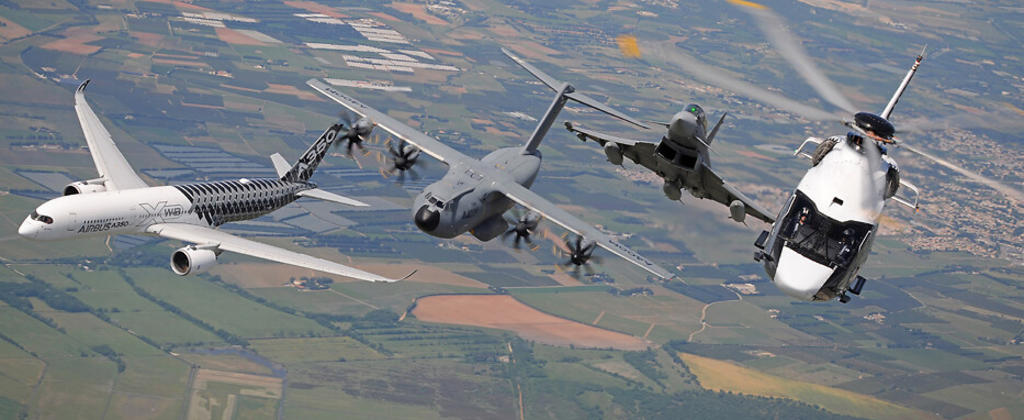
Core Insights - Boeing Co. reported a deeper than expected third-quarter core loss per share, primarily due to a $4.9 billion pre-tax charge related to delays in the 777X jet program, leading to a more than 3% drop in shares during intra-day trading [1] Financial Performance - Adjusted core loss per share was $7.47, which is an improvement from the $10.44 loss a year earlier but fell short of Bloomberg's consensus estimate of a $4.92 loss. The 777X charge increased the loss per share by $6.45, accumulating total program charges to over $15 billion since 2013 [2] - Revenue increased by 30% year-over-year to $23.27 billion, surpassing forecasts of $22.29 billion, driven by higher commercial jet deliveries. Adjusted free cash flow turned positive at $238 million, contrasting with expectations for a negative $884 million [4] Operational Updates - The delivery schedule for the 777X has been pushed back to early 2027 from 2026, with analysts estimating a potential impact of $1 billion to $4 billion. CEO Dave Calhoun acknowledged that significant work remains for certification, although no new technical issues have been reported [3] - Production of the 737 MAX has stabilized at 38 units per month, with FAA approval obtained to increase output to 42 units monthly [3]
Boeing's Q3 Earnings Miss Estimates, Revenues Increase Y/Y
ZACKS· 2025-10-29 17:31
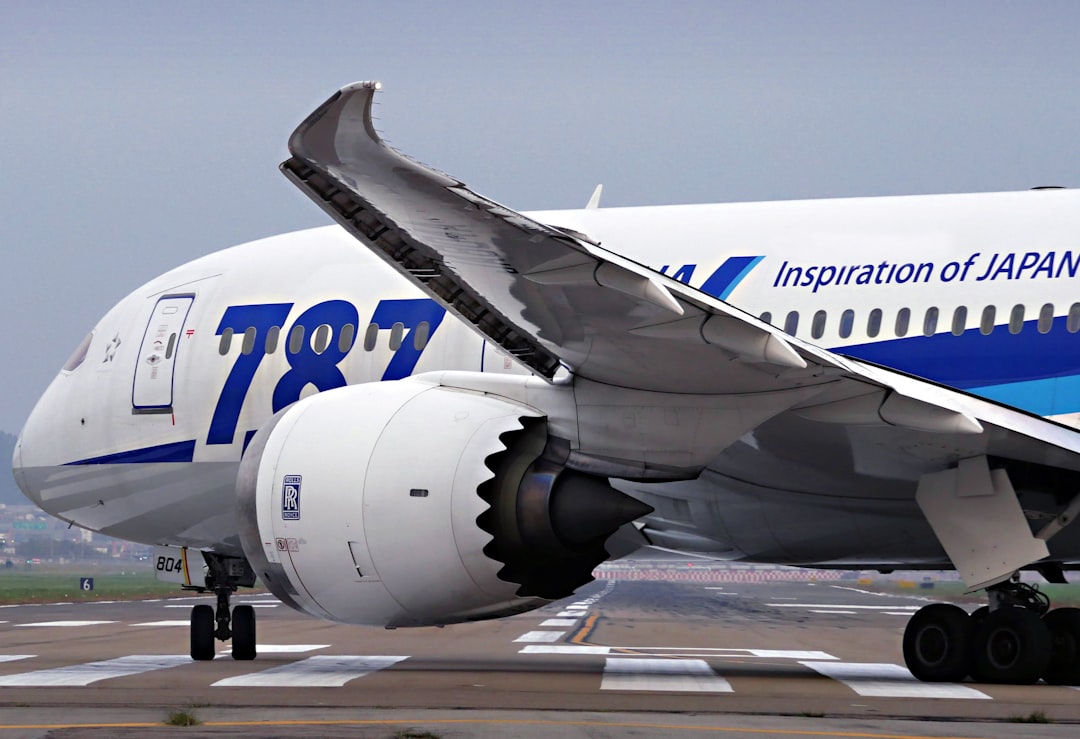
Core Insights - Boeing Company reported an adjusted loss of $7.47 per share in Q3 2025, which was wider than the Zacks Consensus Estimate of a loss of $3.68, but improved from a loss of $10.44 per share in the same quarter last year [1][9] - The company achieved revenues of $23.27 billion, exceeding the Zacks Consensus Estimate of $21.92 billion by 6.2% and representing a 30.4% increase from $17.84 billion in the year-ago quarter [3][9] - Total backlog increased to $635.69 billion from $618.54 billion at the end of Q2 2025 [4] Revenue Breakdown - Commercial Airplane segment revenues surged 49% year over year to $11.09 billion, driven by higher jet deliveries, although it incurred an operating loss of $5.35 billion, worsening from a loss of $4.02 billion in the prior year [5] - Boeing delivered 160 commercial planes during the quarter, a 38% increase year over year [5] - Boeing Defense, Space & Security (BDS) recorded revenues of $6.90 billion, a 25% year-over-year growth, with an operating income of $0.11 billion compared to an operating loss of $2.38 billion in the previous year [6] - Global Services segment revenues reached $5.37 billion, reflecting a 10% year-over-year growth, with an operating income of $938 million, up 12% from the prior year [7] Financial Condition - At the end of Q3 2025, Boeing had cash and cash equivalents of $6.17 billion and short-term investments of $16.81 billion, compared to $13.80 billion and $12.48 billion, respectively, at the end of 2024 [8] - Long-term debt decreased to $44.61 billion from $52.59 billion at the end of 2024 [10] - The company's operating cash outflow for the first nine months of 2025 was $0.27 billion, significantly improved from $8.63 billion in the same period of 2024 [10]
Boeing(BA) - 2025 Q3 - Quarterly Report
2025-10-29 16:56
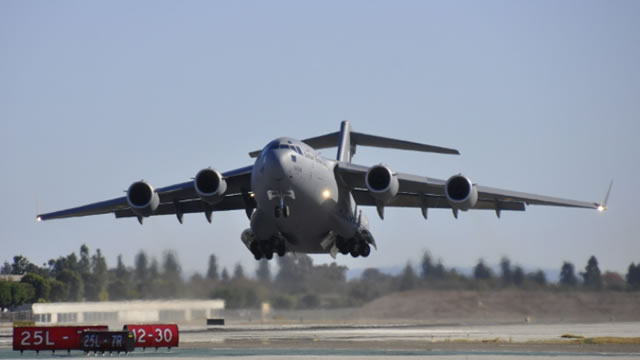
Financial Performance - Revenues for the nine months ended September 30, 2025, increased by $14,240 million, or 27.8%, compared to the same period in 2024, driven primarily by higher revenues in Commercial Airplanes and Defense, Space & Security [156]. - Total revenues for the nine months ended September 30, 2025, were $65.5 billion, compared to $51.3 billion for the same period in 2024, representing a year-over-year increase of 27.7% [246]. - Loss from operations for the nine months ended September 30, 2025, decreased by $2,441 million, or 35.2%, compared to the same period in 2024, primarily due to improvements in Defense, Space & Security [158]. - Loss from operations for the nine months ended September 30, 2025, was $4.5 billion, an improvement from a loss of $6.9 billion in the same period in 2024 [246]. - Core operating loss for the nine months ended September 30, 2025, improved by $2,486 million, or 32.0%, compared to the same period in 2024, reflecting favorable changes in segment operating loss [160]. - Core operating loss (non-GAAP) for the nine months ended September 30, 2025, was $5.3 billion, compared to a loss of $7.8 billion for the same period in 2024, indicating a reduction of 31.9% [246]. - Net loss attributable to Boeing shareholders for the nine months ended September 30, 2025, was $5,985 million, a decrease of $1,967 million, or 24.7%, compared to the same period in 2024 [155]. Revenue Breakdown - Commercial Airplanes revenues for the nine months ended September 30, 2025, increased by $12,016 million, or 66.4%, primarily due to higher deliveries [156]. - Defense, Space & Security revenues for the nine months ended September 30, 2025, increased by $1,310 million, or 7.1%, primarily due to lower net unfavorable cumulative contract catch-up adjustments [156]. - BCA revenues for the nine months ended September 30, 2025, were $30,115 million, up from $18,099 million in the same period in 2024, representing a $12,016 million increase [184][185]. - BDS revenues for the nine months ended September 30, 2025, increased by $1,310 million to $19,817 million, with operating margins improving to 1.9% from a loss of 17.0% in the same period of 2024 [208][210]. - Global Services revenues for the nine months ended September 30, 2025, rose by $879 million to $15,714 million, with operating margins at 18.6% [220][221]. Operational Metrics - Operating margins for the nine months ended September 30, 2025, improved to (6.9)%, compared to (13.5)% for the same period in 2024, reflecting operational improvements [155]. - Commercial airplane deliveries increased to 440 units during the first nine months of 2025, compared to 291 units in the same period in 2024, marking a significant increase in production [185]. - Loss from operations for BCA was $6,447 million for the nine months ended September 30, 2025, compared to a loss of $5,879 million in the same period in 2024, reflecting higher reach-forward losses on the 777X program [184][186]. Backlog and Orders - Total backlog increased from $521,336 million as of December 31, 2024, to $635,688 million at September 30, 2025, reflecting a $99,749 million increase in contractual backlog primarily due to a $99,438 million increase in BCA backlog [172][189]. - Unobligated backlog increased by $14,603 million during the nine months ended September 30, 2025, primarily due to an increase in BDS backlog [173]. - Aircraft order cancellations during the nine months ended September 30, 2025, totaled $3,037 million, primarily related to 737 aircraft [189]. Costs and Expenses - Cost of sales for the nine months ended September 30, 2025, increased by $11,361 million, or 22%, compared to the same period in 2024, primarily due to higher revenues and increased reach-forward losses at Commercial Airplanes [168]. - Research and development expenses for the nine months ended September 30, 2025, decreased by $325 million, or 10.9%, compared to the same period in 2024, mainly due to lower spending at Commercial Airplanes and Defense, Space & Security [171]. - Capital expenditures for the nine months ended September 30, 2025, were $2.0 billion, up from $1.6 billion in the same period in 2024, reflecting a 25% increase [230]. Cash Flow and Debt - Net cash used by operating activities was $266 million for the nine months ended September 30, 2025, a significant improvement from $8,630 million in the same period in 2024 [226]. - Net cash used by investing activities during the nine months ended September 30, 2025, was $5.9 billion, compared to net cash provided of $0.7 billion in 2024 [230]. - As of September 30, 2025, total debt was $53.4 billion, down from $53.9 billion at December 31, 2024 [232]. - The company had $6.2 billion in cash and $16.8 billion in short-term investments as of September 30, 2025 [233]. Market and Regulatory Environment - The U.S. government funding has lapsed as of October 1, 2025, which could result in payment delays and impact operations [175]. - The global trade landscape remains volatile, with new tariffs affecting imports and potential retaliatory actions from other countries [176][180]. - The U.S. government's FY26 budget request includes $848 billion for the Department of Defense and $19 billion for NASA, with potential impacts on future contracts and programs [205][206]. Production and Program Updates - The 737 program is targeting a production rate increase to 42 units per month, contingent on compliance with FAA safety and quality standards [194]. - Reach-forward losses of $241 million were recorded during the nine months ended September 30, 2025, for the 767 program, driven by higher production costs [197]. - The accounting quantity for the 777 program increased by six units, with cumulative firm orders for the 777X rising from 358 units to 473 units, and the accounting quantity for the 777X program increased to 600 units [199]. - The first delivery of the 777-9 is now expected in 2027 due to delays in FAA certification flight testing, resulting in an incremental reach-forward loss of $4,899 million in Q3 2025 [200]. Labor Relations - Approximately 3,200 IAM 837 employees have been on strike since August 4, 2025, impacting several programs including F/A-18 and F-15 [219]. Credit Ratings - The company maintains investment grade credit ratings, with Fitch affirming a BBB- rating and revising the outlook to stable from negative in June 2025 [235].
What Nvidia's $5 trillion market cap means for AI stocks, reasons to be bullish on Boeing
Youtube· 2025-10-29 16:50
Group 1: Nvidia - Nvidia has reached a market valuation of $5 trillion, becoming the first company to achieve this milestone [3][102]. - The stock price of Nvidia increased by 5.4% following positive developments, including CEO Jensen Huang's remarks at the GTC conference regarding data center revenue expectations exceeding analyst forecasts [4][5]. - The broader semiconductor sector is experiencing gains, with companies like Broadcom, TSM, and AMD benefiting from Nvidia's performance, although Intel and Texas Instruments are exceptions [6][7]. Group 2: Boeing - Boeing reported third-quarter revenue and free cash flow that exceeded estimates, but faced a nearly $5 billion write-down due to delays in the 777X program [9][12]. - Despite the write-down, analysts believe Boeing's overall outlook remains positive, with improvements across all segments and positive free cash flow [15][12]. - The company has a significant backlog of 600 planes for the 777X program, indicating strong future demand despite current challenges [12][19]. Group 3: CVS Health - CVS Health reported record revenue for the third quarter and raised its full-year earnings outlook, despite a one-time charge of $5.7 billion related to its healthcare delivery unit [26][27]. - The company is facing challenges in its primary care segment, particularly with Oak Street, due to difficulties in patient reimbursement and a shift in focus back to its core pharmacy business [30][32]. - CVS's medical loss ratio for the quarter was 92.8%, which, while better than expected, remains higher than competitors like United Health [33][34]. Group 4: Tokenization and Securitize - Securitize is set to go public through a SPAC deal valued at $1.25 billion, marking a significant milestone in the tokenization space [43]. - Tokenization is described as a method to modernize capital market transactions by using blockchain technology to improve efficiency and democratize access to assets [45][47]. - The CEO of Securitize emphasized that tokenization represents the actual ownership of assets, providing benefits such as immediate dividend payments and direct voting rights for shareholders [48][50]. Group 5: Market Trends and Analyst Calls - Analysts have raised price targets for Nvidia, with UBS setting a target of $235 and Melius at $300, reflecting optimism about the company's future orders [63][64]. - Apple also saw its price target raised to $320 by Bank of America, driven by expectations of new product introductions and AI's impact on revenue [64]. - Victoria's Secret received an upgrade from UBS, citing management's ability to reposition the brand and potential earnings growth [66].