Stripe

Search documents
‘Our funds are 20 years old’: Limited partners confront VCs’ liquidity crisis
Yahoo Finance· 2025-11-18 17:00
Core Insights - The venture capital landscape is experiencing significant valuation discrepancies, with some companies seeing offers as low as 2 times revenue compared to previous valuations of 20 times revenue, indicating a 90% discount in the secondary market [1] - Limited partners (LPs) are adapting to longer fund lifespans, with some firms modeling fund lives of up to 18 years, and are reassessing their capital allocation strategies to avoid overexposure [2][4] - The current fundraising environment is particularly challenging for emerging managers, who are struggling to attract capital compared to established funds [9][10] Valuation Discrepancies - A venture firm reported a portfolio company valued at 20 times revenue was recently offered just 2 times revenue, highlighting a drastic valuation drop [1] - The "messy middle" of venture-backed companies, which are growing at 10% to 15% with annual recurring revenues between $10 million and $100 million, are facing markdowns of up to 80% [7][8] Fund Lifespan and Allocation - Venture funds are lasting nearly twice as long as before, leading to challenges for institutional investors [6] - Firms like Makena Capital are now modeling fund lives of 18 years, with most capital returning in the last few years [2] Fundraising Challenges - Emerging managers are facing a tough fundraising environment, with established funds raising significantly more capital [9][10] - Institutional LPs are now prioritizing quality over quantity, concentrating investments in larger, established funds [10] Market Dynamics - The rise of AI has intensified competition, with companies that did not adapt facing serious challenges [9] - The stigma around secondary sales has diminished, with a third of distributions coming from secondaries sold at premiums rather than discounts [14][16] Manager Selection and Networking - The panel emphasized the importance of networking and access to founders for emerging managers, as proprietary networks are no longer effective [18] - Successful managers are those who actively engage with founders and adapt to changing market conditions [18] Sector Focus - Current investment interest is heavily focused on AI and American innovation, with traditional strengths in biotech, fintech, and crypto in specific regions [19]
The merchant economy: How integrated payments are re-architecting banking
Yahoo Finance· 2025-11-18 10:14
Core Insights - The merchant economy is transforming banking by shifting focus from traditional banking services to integrated payment solutions that enhance customer relationships and provide actionable insights [6][65][74] Merchant Ecosystems - Merchant ecosystems create defensible scale for banks, offering continuous customer touchpoints and recurring fee income, while increasing switching costs for businesses that integrate their operations with a single provider [1] - Leading banks are repositioning themselves to occupy the operating layer of commerce, moving beyond merely financing transactions to integrating analytics and payment solutions into merchant platforms [2][6] Performance Metrics - The evaluation of merchant portfolios has shifted from cost-to-income ratios to metrics like throughput, retention, and share of wallet, indicating a new frontline of competition in merchant services [3][5] - The focus has moved from the number of accounts to the number of active terminals, reflecting the importance of transaction volume in retail banking [3] Technological Advances - Advances in cloud computing and data analytics enable real-time interpretation of transaction flows, turning them into actionable intelligence for banks [4][20] - The digitization of commerce post-pandemic has expanded acceptance networks, allowing small businesses to utilize various payment methods beyond traditional card rails [4] Strategic Shift in Banking - Merchant services have evolved from a back-office function to a strategic center of growth, with banks now required to orchestrate relationships rather than merely process transactions [11][12] - The role of relationship managers has transformed to focus on conversion rates and platform integration, emphasizing the need for multidisciplinary teams in merchant services [12][13] Instant Payments - Instant payments have become a defining standard in the merchant economy, reshaping liquidity management and customer experience for both banks and merchants [15][16] - The shift to real-time payments requires banks to manage liquidity dynamically, responding to new expectations from merchants for immediate transaction confirmation [17][20] Embedded Lending - Modern merchants view lending as an embedded service integrated into daily transactions, allowing for contextual lending that activates based on real-time cash flow [22][24] - The evolution of lending from traditional methods to algorithmic assessments based on live transaction data enhances credit decision-making and reduces risk [23][30] Data Utilization - Data generated from transactions serves as a new form of collateral, enabling banks to assess creditworthiness through behavioral risk analytics rather than traditional metrics [28][30] - The ability to turn transaction data into predictive insights allows banks to anticipate merchant needs and provide timely support [41][46] Partnerships and Ecosystem - The future of banking will rely on strategic partnerships, where banks collaborate with technology firms and other service providers to create integrated solutions for merchants [59][60] - The emerging value chain in merchant banking emphasizes horizontal collaboration over vertical integration, focusing on the orchestration of services rather than unilateral control [52][53] Reliability and Trust - Reliability is becoming a key differentiator in the banking sector, with merchants prioritizing consistent service and operational resilience over cost [71] - The relationship between banks and merchants is evolving into a compact of shared data, responsibility, and growth, fostering a more integrated approach to financial services [72][76]
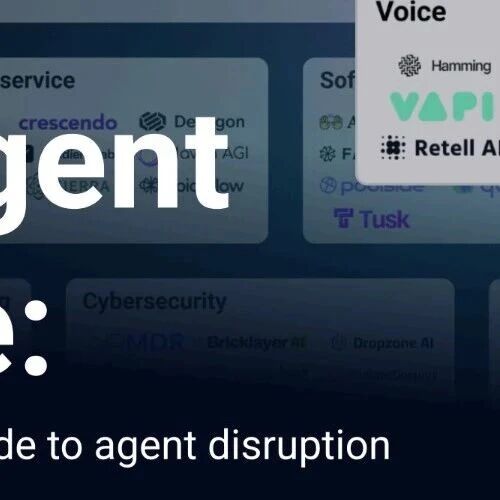
深度|CB Insights69页报告精华解读:Voice AI引爆,6大趋势定义AI新战场
Z Potentials· 2025-11-18 02:51
Core Insights - The article discusses the evolution of AI Agents from assistants to autonomous agents, highlighting the transition towards fully autonomous agents by 2026 and beyond [4][11]. - It identifies four major trends in the AI Agent landscape, emphasizing the rapid growth and commercialization of AI technologies [3][17]. Market Outlook - Voice AI is leading the charge, with early GenAI companies focusing on voice AI development showing significant employee growth [6][32]. - The report notes that over 35 acquisitions in the AI Agent and Copilot space have occurred since 2025, indicating a wave of consolidation in the industry [11][28]. Financial Performance - AI Agent startups raised a total of $3.8 billion in 2024, nearly tripling the amount raised in 2023, with a shift from AI Copilots to more capable autonomous agents [17][30]. - The highest revenue-generating AI Agent company, Cursor, achieved an Annual Recurring Revenue (ARR) of $500 million, while Replit reached $150 million ARR [26][31]. Key Trends - The report highlights two primary sectors achieving large-scale commercialization: Software Development (Mosaic score of 737) and Customer Service (Mosaic score of 714) [19][20]. - Trust remains a significant barrier to the full autonomy of AI Agents, with issues related to reliability, reasoning capabilities, and access permissions being critical challenges [21][29]. Future Directions - The next wave of AI Agents is expected to focus on verticalization, targeting specific industries such as finance, healthcare, and industrial sectors [22][34]. - The emergence of Agent monitoring tools is becoming essential due to the unreliability of AI Agents, creating a new enterprise-level category [35][36]. Competitive Landscape - Major cloud players like Amazon, Google, and Microsoft are competing to dominate the AI Agent economy through various strategies, including infrastructure and open ecosystems [38].

Forget Airline Miles: A New Wave Of Shoppers Are Earning Bitcoin Rewards On Amazon, Target And Apple Purchases
Yahoo Finance· 2025-11-18 00:01
Core Insights - A new trend in consumer rewards is emerging, shifting from traditional loyalty points to Bitcoin rewards, which are gaining popularity among shoppers [1][4]. Group 1: Decline of Traditional Loyalty Points - Traditional loyalty points, such as frequent flyer miles and retail rewards, have lost value due to unexpected charges and devaluation practices by airlines and retailers [2][3]. - Airline miles are devalued by an average of 10% to 20% per year, leading to a significant erosion of purchasing power for consumers [3]. Group 2: Bitcoin Rewards Model - The Bitcoin rewards model, as offered by companies like Fold, allows consumers to earn Bitcoin (sats) instead of store-specific points, providing a more stable and valuable asset [4]. - Bitcoin's value is not controlled by retailers or credit card companies, making it less susceptible to sudden devaluations compared to traditional loyalty points [4]. Group 3: Adoption of Bitcoin Rewards Credit Card - Fold has introduced a Bitcoin Rewards Credit Card in partnership with Visa and Stripe Issuing, which offers up to 3.5% back in Bitcoin on purchases [6]. - Cardholders can earn a base of 2% back instantly, with an additional 1.5% when using a linked Fold Checking Account, and up to 10% back at select retailers during promotions [7].


Key Takeaways From The Singapore FinTech Festival’s 10th Anniversary
Forrester· 2025-11-17 03:40
Core Insights - The payments industry is undergoing transformation driven by five key forces: agentic payments becoming competitive tools, emergence of payments-specific foundational models, necessity of robust fraud management, transaction banking leveraging AI, and fragmentation of stablecoins as they scale [1] Group 1: Agentic Payments - Agentic payments are transitioning from experimental phases to becoming essential competitive assets, with a focus on protocol standardization and multi-rail enablement to reduce friction in transactions [2] - Companies must enhance risk models to recognize agents as active participants, incorporating new signals such as agent reputation and intent authorization [2] Group 2: Payments-Specific Models - A shift is anticipated from general-purpose large language models (LLMs) to industry-specific models tailored for payments, prompting firms to decide between building or partnering for access to these specialized models [3] Group 3: Fraud Management - Fraud management has become a baseline requirement for banks and merchants, necessitating a unified risk stack that includes device, identity, transaction, and agentic signals to cover the entire customer journey [4] - Companies are advised to integrate deepfake detection and real-time scoring to combat emerging fraud tactics [4] Group 4: Transaction Banking and AI - Transaction banking is emerging as a key area for AI application, with firms encouraged to develop an AI adoption heatmap to identify and expand use cases [5][8] Group 5: Stablecoins - The stablecoin ecosystem is expanding with various use cases, but it is also becoming increasingly fragmented, necessitating exploration of alternative solutions like tokenized deposits and central bank digital currencies (CBDCs) [8][12] - Multiple regulated stablecoin issuers are competing, with Ripple's RLUSD surpassing $1 billion in circulation and Circle working on reducing fragmentation in USDC [12] Group 6: Alternative Payment Rails - Alternative payment methods are gaining traction alongside traditional card payments, with both infrastructures coexisting and advancing digital payment solutions [9] Group 7: Future of Payments - The future of payments is expected to be characterized by agent-led, model-driven, and multi-rail systems, with standards like ACP and domain-specific foundational models shaping the landscape [10] Group 8: Innovations and Developments - Companies like Ant International and Stripe are launching innovative solutions such as the Agentic Commerce Protocol and AI-driven payment models to enhance transaction efficiency and security [6][13] - Visa is scaling its generative Large Transaction Model, which has significantly improved fraud detection rates [7]


AI与短剧:出海增速最快的2条赛道,创业者如何构建壁垒
Sou Hu Cai Jing· 2025-11-17 02:32
Core Insights - The GTC 2025 Global Traffic Conference in Shanghai attracted over 14,000 attendees and recorded more than 24,000 total entries over two days [1] - The conference featured two main summits focused on AI and short dramas, where entrepreneurs shared valuable experiences to accelerate growth in these sectors [3] AI and Emotional Companion Hardware - The rapid increase in the global single population, particularly in China, the US, and Japan, is driving demand for emotional companion AI hardware [5] - Technologies such as deep learning and natural language processing are evolving AI products from functional tools to emotional companions, with a significant user base in the "ACG" (Anime, Comic, Game) culture [5] Market Potential of Generative AI Applications - The generative AI application market is projected to reach $1.3 trillion by 2032, with downloads and revenue increasing by 96% and 150% respectively from 2022 to 2024 [7] - A mixed monetization model combining IAA (In-App Advertising), IAP (In-App Purchases), and subscriptions is becoming mainstream, particularly in emerging markets like Mexico and Brazil [7] AI Native Systems and Productivity - AI is transitioning to a "software-first" paradigm, with human roles shifting towards supervision and decision-making [9] - The implementation of AI native systems involves three stages: single-task applications, multi-application collaboration, and general intelligence for cross-departmental coordination [9] Non-Gaming App Growth - Non-gaming apps are expected to surpass gaming revenue for the first time, with user attention shifting towards diverse app categories [11] - Effective user engagement outside of "walled gardens" is crucial for developers to achieve growth [11] AI Product Revenue Growth Strategies - AI companies are experiencing unprecedented growth but face challenges such as high operational costs and the need for effective monetization strategies [15] - High-growth companies are more likely to adopt outcome-based pricing models, reflecting a shift in customer expectations towards paying for actual results rather than usage [15][16] Short Drama Market Trends - The global in-app purchase revenue for short drama apps reached nearly $700 million in Q1 2025, a fourfold increase from the previous year, with the US contributing nearly half of this revenue [27] - The typical user profile for overseas short dramas is primarily women aged 25-44, including young mothers [27] Production Cost Efficiency in Short Dramas - Filming locations for short dramas are shifting to lower-cost countries like China and Poland, allowing for significant cost savings while maintaining quality [36] - The industry is moving towards a more integrated approach, combining content, marketing, and production to enhance competitiveness [37]


COOPERATE GOVERNANCE: Can a co-founder and CTO of a company be removed?
Medium· 2025-11-15 19:10
Core Perspective - The article discusses the potential for a co-founder and CTO to be removed from their position within a company, particularly in the context of acquisitions and corporate governance [1][4]. Group 1: Removal Scenarios - A co-founder and CTO can be removed through various means, including voluntary resignation, negotiated exit, or involuntary removal by the board of directors or shareholders [5][6][8]. - The removal process is influenced by the company's structure, governing documents, and the founder's equity and voting rights [1][5]. Group 2: Case Study - Apple Inc. - The article references the case of Steve Jobs, who was removed from Apple Inc. in 1985 following a power struggle with the board and CEO John Sculley, primarily due to differing visions for the company's future [2][3]. - Jobs' removal was also attributed to his demanding management style, which created a challenging work environment and led to tensions within the company [4][3]. Group 3: Ownership Retention - Despite removal from management, founders retain ownership of their shares in the company, which is not affected by their operational status [4]. - The degree of influence a founder has post-removal depends on their voting rights and share ownership, which can complicate the removal process if they hold significant shares [8].