Dell Technologies

Search documents
Should You Hold on to APLD Stock Despite its 24% Dip in 3 Months?
ZACKS· 2025-03-28 16:40
Core Viewpoint - Applied Digital Corporation (APLD) has experienced a significant decline in stock price, dropping 23.5% over the past three months, contrasting with a 4% growth in the broader Finance sector. Despite this short-term struggle, the long-term growth potential for APLD remains strong, suggesting that holding the stock may be beneficial for investors [1][4][18]. Group 1: Reasons for Decline - The recent decline in APLD's stock price is attributed to broader market weaknesses rather than company-specific issues, particularly following the release of a competitive AI model by Chinese startup DeepSeek that requires less powerful hardware [4][5]. - A widespread sell-off in tech stocks in February, driven by fears of escalating trade tensions and slowing economic growth, has also impacted APLD, leading to valuation corrections for companies benefiting from the AI boom [6]. Group 2: Valuation and Financial Performance - APLD is currently trading at a premium, indicated by a Value Score of F, and maintains a high forward 12-month price-to-earnings (P/S) ratio compared to the industry, despite the recent stock price drop [7]. - The data center segment, which provides services primarily for crypto mining, accounted for 83% of APLD's total revenues in fiscal 2024. The company is benefiting from a surge in Bitcoin prices, which increased over 23% in the past year [9][10]. - The Zacks Consensus Estimate for APLD's fiscal 2025 revenues is projected at $526.57 million, reflecting a year-over-year growth of 111.2%, with earnings estimated at 64 cents per share, indicating a growth of 181% [12]. Group 3: Strategic Developments - APLD is nearing completion of a lease agreement for a 100 MW facility at the Ellendale HPC campus, which is designed for high-performance computing applications, including AI. The company is also expanding its capacity to 400 MW with additional buildings [11]. - APLD has established partnerships with major companies such as Super Micro Computer, Hewlett Packard Enterprise, and NVIDIA, enhancing its capabilities in high-performance server and storage solutions for AI applications [15][16][17].



3 Deeply Discounted Dividend Stocks to Buy Today
The Motley Fool· 2025-03-27 12:17
Group 1: Bristol Myers Squibb - Bristol Myers Squibb is trading at a forward price-to-earnings (P/E) multiple of just 9, significantly lower than the S&P 500 average of 21 [2] - The company faces challenges such as multiple patent cliffs and a high long-term debt of $47.6 billion, compared to cash and marketable securities of $11.2 billion [3] - Despite risks, the company has secured approvals for two potential blockbuster drugs, Cobenfy and Breyanzi, which could generate substantial revenue [4] - The dividend payout ratio is 60%, supporting a 4% yield, making it attractive for dividend-focused investors [5] Group 2: United Parcel Service (UPS) - UPS has seen a 25% decline in stock price over the past year, resulting in a forward P/E multiple of less than 15 [6] - The company reported a profit of $5.8 billion on revenue of $91.1 billion last year, despite struggles in growth [7] - The payout ratio is around 100%, but free cash flow of $6.2 billion exceeds the $5.4 billion paid out in dividends, indicating a safe payout [8] - UPS offers a high yield of 5.7%, making it appealing for income investors [8] Group 3: Dell Technologies - Dell Technologies trades at a low forward P/E multiple of 10, with significant growth opportunities in artificial intelligence (AI) [9] - The server and networking business reported 54% sales growth in the most recent fiscal year [10] - The stock has a 2.2% dividend yield with a modest payout ratio of 28%, allowing for both dividend payments and growth investments [11]



Better Artificial Intelligence (AI) Stock: Oracle vs. Dell
The Motley Fool· 2025-03-22 13:00
Core Insights - Demand for AI hardware has surged significantly, with global AI spending projected to reach $337 billion in 2023 and expected to exceed $749 billion by 2028, benefiting companies like Oracle and Dell Technologies [2][3] Oracle - Oracle's cloud infrastructure revenue increased by 51% year over year in Q3 of fiscal 2025, significantly outpacing the overall revenue growth of 8% [5] - The company received $48 billion in bookings last quarter, leading to a 63% year-over-year increase in remaining performance obligations (RPO), totaling $130 billion [6][7] - Oracle plans to double its available power capacity within the calendar year and triple it by the end of the next fiscal year, anticipating a 15% revenue growth in the next fiscal year and 20% in fiscal 2027 [8][9] - The company is also set to benefit from the $500 billion Stargate Project, which could enhance its growth trajectory [10] Dell Technologies - Dell's infrastructure business saw a 29% year-over-year revenue increase to $43.6 billion, driven by the rising demand for AI servers [13] - The company sold $10 billion worth of AI servers last year and is targeting a 50% increase in AI server revenue for the current fiscal year, with a backlog of $9 billion [14][15] - Dell expects an 8% revenue increase in the current fiscal year, similar to the previous year, with potential for growth if PC sales improve [16][17] Comparative Analysis - Oracle's growth outlook appears stronger due to its aggressive capacity expansion and substantial revenue pipeline, while Dell's growth may depend on the recovery of its PC business [18][19] - Oracle's valuation is considered reasonable compared to the Nasdaq-100 index, suggesting a favorable investment opportunity [20]


Should AI Stock Investors Buy Dell Stock?
The Motley Fool· 2025-03-21 11:00
Core Insights - Dell Technologies is increasingly positioning itself as an AI business, focusing on revenue generation from building data centers [1] Company Summary - The company is experiencing growth in its AI-related revenue streams, indicating a strategic shift towards artificial intelligence [1] Industry Summary - The trend of companies investing in AI and data center infrastructure is becoming more prevalent, reflecting a broader industry movement towards digital transformation and AI integration [1]

非x86服务器收入,大增262.1%
半导体行业观察· 2025-03-21 01:08
Core Viewpoint - The report highlights the transformative impact of the AI boom on the global server market, with Nvidia GPUs being a key driver of this growth, leading to a significant increase in server revenue in Q4 2024 compared to the previous year [1][5]. Market Overview - The global server market revenue reached $77.321 billion in Q4 2024, marking a 91% year-over-year increase, the second-largest growth since 2019 [5][7]. - Non-x86 server revenue surged by 262.1% to $22.5 billion, while x86 server revenue grew by 59.5% to $54.8 billion [1][5]. - Embedded GPU servers accounted for over half of the market revenue growth, with a 192.6% increase year-over-year [1][5]. Company Performance - Nvidia dominated the embedded GPU market, capturing 90% of the total shipments in Q4 2024 [2][5]. - Dell Technologies and Super Micro tied for the top position in market share at 7.2% and 6.5% respectively, with revenue growth of 20.6% and 55% [3][7]. - ODM Direct suppliers accounted for 47.3% of total revenue, experiencing a remarkable 155.5% growth [3][7]. Regional Insights - Canada recorded the highest year-over-year growth rate at 118.4%, while the U.S. accounted for 56% of total revenue [6][7]. - China saw a 93.3% increase, representing nearly a quarter of global quarterly revenue [6][7]. - Other regions, including Japan (66.9%), other Asian countries (43.8%), and EMEA (28.2%), also experienced significant growth [6][7].

NVIDIA and Storage Industry Leaders Unveil New Class of Enterprise Infrastructure for the Age of AI
Globenewswire· 2025-03-18 19:24
Core Insights - NVIDIA has introduced the NVIDIA AI Data Platform, a customizable reference design aimed at building AI infrastructure for enterprise storage platforms that support demanding AI inference workloads [1][12] - The platform enables storage providers to create AI query agents that enhance data insights generation in near real-time using NVIDIA's AI Enterprise software [2][5] Group 1: Infrastructure and Technology - The NVIDIA AI Data Platform allows certified storage providers to optimize their infrastructure with NVIDIA Blackwell GPUs, BlueField DPUs, and Spectrum-X networking to enhance AI reasoning workloads [3][6] - BlueField DPUs can deliver up to 1.6 times higher performance than traditional CPU-based storage while reducing power consumption by up to 50%, achieving over 3 times higher performance per watt [6] - Spectrum-X networking can accelerate AI storage traffic by up to 48% compared to traditional Ethernet through adaptive routing and congestion control [6] Group 2: Collaboration and Industry Impact - Leading storage providers such as DDN, Dell Technologies, and IBM are collaborating with NVIDIA to develop customized AI data platforms that leverage enterprise data for complex query responses [4][13] - Jensen Huang, CEO of NVIDIA, emphasized the importance of data as a key resource in the AI era, stating that the collaboration aims to build infrastructure necessary for deploying and scaling agentic AI across hybrid data centers [5] Group 3: AI Query Agents and Capabilities - AI query agents developed using the NVIDIA AI-Q Blueprint can access and process various data types, including structured, semi-structured, and unstructured data from multiple sources [8] - The AI-Q Blueprint utilizes NVIDIA NeMo Retriever microservices to accelerate data extraction and retrieval by up to 15 times on NVIDIA GPUs [7]

NVIDIA Announces DGX Spark and DGX Station Personal AI Computers
Globenewswire· 2025-03-18 18:59
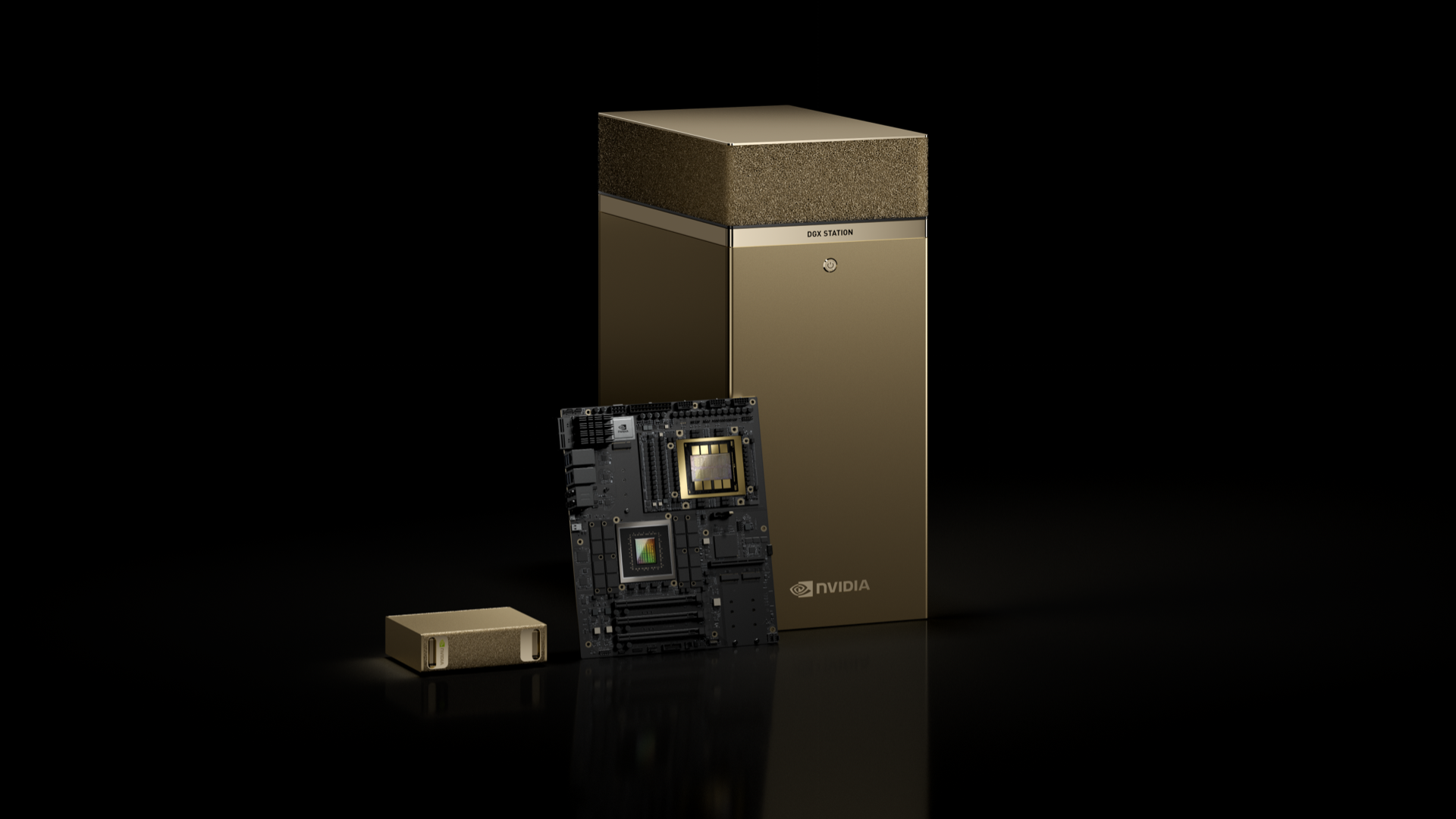
Core Insights - NVIDIA has launched DGX Spark and DGX Station, personal AI supercomputers powered by the NVIDIA Grace Blackwell platform, aimed at developers, researchers, and data scientists [1][2][3] - These systems allow users to prototype, fine-tune, and run large AI models locally or on NVIDIA DGX Cloud, enhancing accessibility to advanced AI capabilities [2][7] Product Features - DGX Spark is described as the world's smallest AI supercomputer, designed to empower millions of users with high performance for generative and physical AI applications [4] - The heart of DGX Spark is the NVIDIA GB10 Grace Blackwell Superchip, which delivers up to 1,000 trillion operations per second for AI compute tasks [5] - DGX Station features the NVIDIA GB300 Grace Blackwell Ultra Desktop Superchip, providing 784GB of coherent memory space for large-scale AI workloads [8] Technical Specifications - The GB10 Superchip utilizes NVIDIA NVLink-C2C interconnect technology, offering 5x the bandwidth of fifth-generation PCIe, optimizing performance for memory-intensive workloads [6] - DGX Station includes the NVIDIA ConnectX-8 SuperNIC, supporting networking speeds of up to 800Gb/s, facilitating high-speed connectivity for larger workloads [9] Software and Integration - Users of DGX Spark can seamlessly transition their models to DGX Cloud or other infrastructures with minimal code changes, streamlining the development process [7] - The integration of NVIDIA CUDA-X AI platform and NVIDIA NIM microservices enhances the performance and deployment of AI applications [10] Availability - Reservations for DGX Spark systems are open, while DGX Station is expected to be available later this year through manufacturing partners [11]
Can AMD's Expanding EPYC Portfolio Push the Stock Higher in 2025?
ZACKS· 2025-03-18 18:20
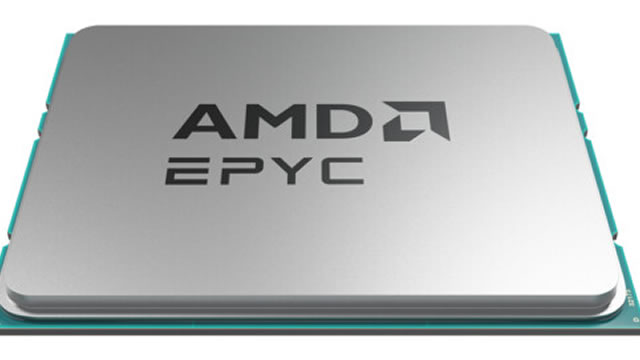
Core Viewpoint - Advanced Micro Devices (AMD) has expanded its product offerings with the launch of the fifth-generation EPYC family server processors and the AMD Radeon RX 9070 XT and RX 9070 graphics cards, aiming to enhance its competitive position in the market [1][2]. Product Expansion - AMD's new EPYC processors support high-performance compute, high-bandwidth network connectivity, and security, catering to enterprise and cloud infrastructure needs [2]. - The EPYC Embedded 9005 Series processors offer core counts from 8 to 192 and provide up to 1.3X and 1.6X increases in data processing throughput for networking and storage workloads [9]. - The Radeon RX 9070 XT and RX 9070 graphics cards feature 16GB of memory and advanced AI accelerators, making them suitable for gaming and creative applications [11]. Market Position and Competition - AMD has faced stiff competition from NVIDIA in the cloud-data center and AI chip markets, raising concerns about its market share [3]. - Year-to-date, AMD shares have declined by 13.1%, underperforming the Zacks Computer and Technology sector's decline of 8.2% [6]. Financial Performance - In 2024, AMD's Data Center revenues accounted for approximately 50% of annual revenues, increasing by 69% year-over-year to $3.9 billion [7]. - The consensus estimate for AMD's 2025 earnings is $4.59 per share, indicating a year-over-year growth of 38.67%, while revenues are expected to reach $31.87 billion, reflecting a growth of 23.61% [16]. Strategic Partnerships and Acquisitions - AMD has established a strong partner base, including major companies like Cisco, IBM, Amazon, and Microsoft, which is crucial for expanding its market presence [13]. - Recent acquisitions, such as Silo AI and ZT Systems, are aimed at enhancing AMD's AI capabilities and bridging the technological gap with competitors like NVIDIA [15]. Valuation Concerns - AMD stock is currently considered overvalued, with a forward Price/Sales ratio of 5.12X compared to the industry's 3.07X, indicating a stretched valuation [18]. - The stock is trading below its 50-day and 200-day moving averages, suggesting a bearish trend [21].

3 Dividend Stocks Offering Higher Yields and Bullish Forecasts
MarketBeat· 2025-03-17 11:02
Core Insights - Investments that combine consistent income with solid balance sheets can provide both immediate and long-term income for investors, with dividend stocks offering a cushion against market downturns [1] Dividend Stocks Overview - Not every stock that pays dividends is suitable for long-term holding; a dividend trap can occur when a company with poor fundamentals offers high dividends, leading to potential cuts and price drops [2] Devon Energy - Devon Energy has raised its annual dividend to $0.96, with a dividend yield of 2.78% and a 25.99% annualized three-year dividend growth [3][4] - The company's payout ratio is 21.05%, and it pays out only 11.25% of its free cash flow as dividends, indicating potential for future increases if earnings remain stable [4] - Analyst consensus gives Devon Energy a Moderate Buy rating with a projected one-year price increase of 42% [4] Dell Technologies - Dell Technologies has a dividend yield of 2.19% and an annual dividend of $2.10, with a payout ratio of 33.76% [5][6] - Despite a 23% decline in share prices over the past year, analysts maintain a Moderate Buy rating, anticipating a 56% recovery in share prices [6][7] - Dell's price-to-earnings ratio has decreased to 15.96, and it pays about 25% of its free cash flow as dividends, suggesting potential for long-term dividend increases [7] Occidental Petroleum - Occidental Petroleum has a dividend yield of 2.06% and has seen a significant three-year annualized dividend growth of 180.20% [9][11] - The company has attracted institutional investor attention, with buying increasing from $45 million to over $5.6 billion, indicating positive sentiment [9] - Analysts have a Hold rating on OXY, with a one-year price target of $60.86, representing a 28.54% potential upside [10] - The company pays out less than 10% of its cash flow as dividends, suggesting that recent increases are sustainable [11][12]

Americas Technology_ Hardware_ AI data center equipment 4Q24 market share & outlook update
2025-03-16 14:52
Summary of the Conference Call on AI Data Center Equipment Market Industry Overview - The conference call focused on the AI data center equipment market, specifically networking and server segments, with insights from 650 Group data for 4Q24 and projections for 2025-2028 [1][2]. Key Market Insights - **Market Share Changes**: In 4Q24, Arista Networks (ANET) and Cisco Systems (CSCO) gained market share in AI Ethernet, while Nvidia (NVDA) lost share. Dell Technologies (DELL) and Super Micro Computer Inc. (SMCI) lost share to white box competitors in the AI server market [1]. - **Growth Projections**: The AI data center switching market is expected to grow at a +41% compound annual growth rate (CAGR) from 2024 to 2028, reaching $22 billion. The AI server market is projected to grow at a +31% CAGR, reaching $335 billion by 2028 [2][3][4]. Detailed Market Estimates - **AI Data Center Switching**: - Back end Ethernet is projected to grow by +60% to $12 billion by 2028. - Front end Ethernet is expected to grow by +52% to $8 billion by 2028. - Infiniband is expected to remain stable at $2 billion by 2028 [3]. - **AI Servers**: - Hyperscaler customers are expected to see an +18% CAGR, Tier 2 Cloud at +58%, and enterprise at +48% [4]. - In 4Q24, SMCI's market share in hyperscale AI servers decreased by -3 percentage points to 4%, while white box share increased by +4 percentage points to 26% [4]. Company-Specific Insights - **Arista Networks (ANET)**: Rated as a "Buy" with a target price of $145, benefiting from strong cloud spending and digital transformation trends [16][24]. - **Cisco Systems (CSCO)**: Rated as "Neutral" with a target price of $63, facing market share losses but maintaining a comprehensive product offering [17][27]. - **Dell Technologies (DELL)**: Rated as a "Buy" with a target price of $145, positioned to benefit from AI server demand and strong growth in enterprise solutions [18][30]. - **Super Micro Computer Inc. (SMCI)**: Rated as "Neutral" with a target price of $40, well-positioned in AI infrastructure but facing competitive pressures in the enterprise segment [20][34]. Risks and Challenges - **General Risks**: Slower cloud capital expenditure, customer concentration risks, competition from lower-cost providers, and potential margin degradation due to supply chain issues [26][28][31][36]. - **Company-Specific Risks**: - ANET faces risks from customer concentration with major clients like META and MSFT [24]. - CSCO is challenged by competition from white box solutions and smaller companies [27]. - DELL may encounter weaker-than-expected demand in consumer and commercial PC markets [31]. - SMCI faces risks from customer concentration and potential cybersecurity concerns [36]. Conclusion - The AI data center equipment market is poised for significant growth, particularly in AI switching and server segments, with key players like ANET, CSCO, DELL, and SMCI navigating competitive landscapes and market dynamics. The outlook remains robust, but companies must address various risks to capitalize on growth opportunities.