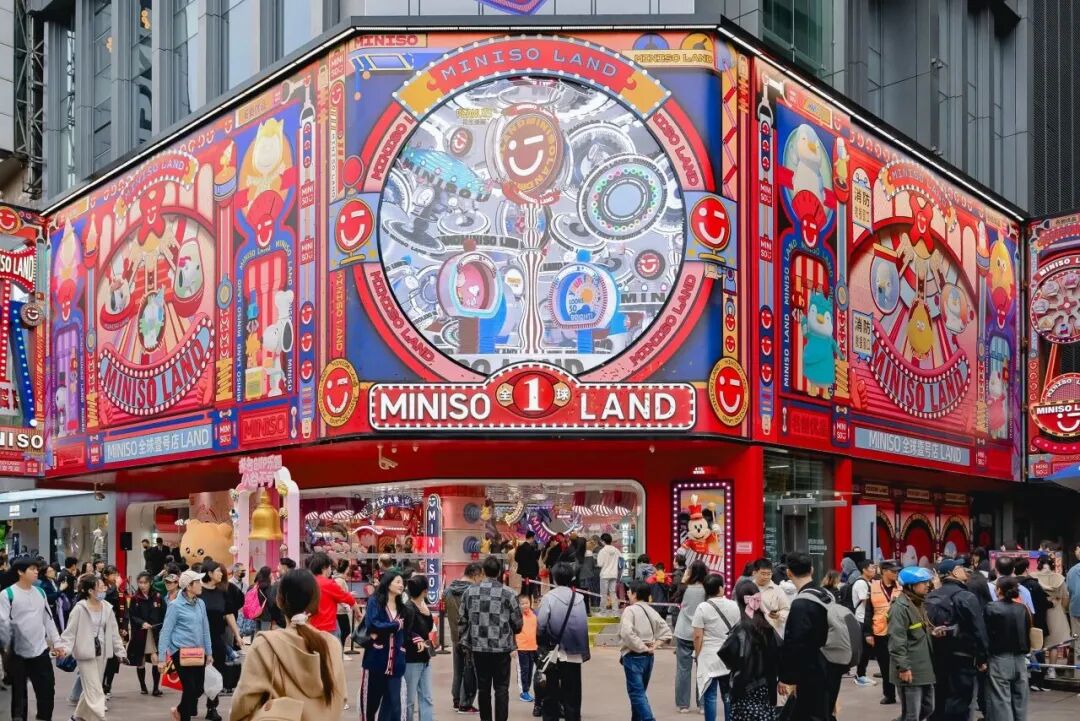
名创优品

Search documents
名创优品于12月26日斥资2514.84美元回购516股
Xin Lang Cai Jing· 2025-12-29 00:36
名创优品(09896)发布公告,于2025年12月26日斥资2514.84美元回购516股。 责任编辑:卢昱君 热点栏目 自选股 数据中心 行情中心 资金流向 模拟交易 客户端 名创优品(09896)发布公告,于2025年12月26日斥资2514.84美元回购516股。 责任编辑:卢昱君 热点栏目 自选股 数据中心 行情中心 资金流向 模拟交易 客户端 ...

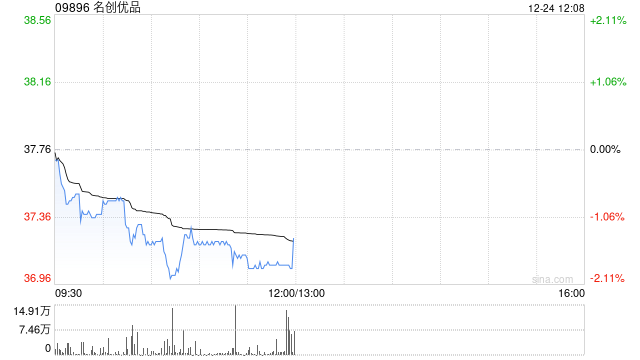
名创优品(09896.HK):于12月26日斥资2514.84美元回购516股
Ge Long Hui· 2025-12-28 11:22
格隆汇12月28日丨名创优品(09896.HK)公布,于2025年12月26日斥资2514.84美元回购516股。 ...
名创优品(09896)12月26日斥资2514.84美元回购516股
Zhi Tong Cai Jing· 2025-12-28 11:09
Group 1 - The company Miniso (09896) announced a share buyback plan, intending to repurchase 516 shares at a total cost of $2,514.84 million [1]
名创优品(09896.HK):于12月24日斥资24.92万美元回购5.13万股
Ge Long Hui· 2025-12-28 10:57
Group 1 - The company Miniso (09896.HK) announced a share buyback plan, intending to repurchase 51,300 shares at a cost of $249,200 on December 24, 2025 [1]
名创优品(09896)12月24日斥资24.92万美元回购5.13万股
智通财经网· 2025-12-28 10:39
智通财经APP讯,名创优品(09896)发布公告,于2025年12月24日斥资24.92万美元回购5.13万股。 ...
名创优品(09896) - 翌日披露报表
2025-12-28 10:09
公司名稱: 名創優品集團控股有限公司 FF305 翌日披露報表 (股份發行人 ── 已發行股份或庫存股份變動、股份購回及/或在場内出售庫存股份) 表格類別: 股票 狀態: 新提交 如上市發行人的已發行股份或庫存股份出現變動而須根據《香港聯合交易所有限公司(「香港聯交所」)證券上市規則》(「《主板上市規則》」)第13.25A條 / 《香港聯合交易所有限公司GEM證券 上市規則》(「《GEM上市規則》」)第17.27A條作出披露,必須填妥第一章節 。 呈交日期: 2025年12月28日 | 第一章節 | | | | | | | | | --- | --- | --- | --- | --- | --- | --- | --- | | 1. 股份分類 | 普通股 | 股份類別 | 不適用 | | 於香港聯交所上市 | 是 | | | 證券代號 (如上市) | 09896 | 說明 | | | | | | | A. 已發行股份或庫存股份變動 | | | | | | | | | | | 已發行股份(不包括庫存股份)變動 | | | 庫存股份變動 | | | | | 事件 | 已發行股份(不包括庫存股份)數 目 | | ...
名创优品(09896) - 翌日披露报表
2025-12-28 10:05
FF305 翌日披露報表 (股份發行人 ── 已發行股份或庫存股份變動、股份購回及/或在場内出售庫存股份) 表格類別: 股票 狀態: 新提交 公司名稱: 名創優品集團控股有限公司 呈交日期: 2025年12月28日 如上市發行人的已發行股份或庫存股份出現變動而須根據《香港聯合交易所有限公司(「香港聯交所」)證券上市規則》(「《主板上市規則》」)第13.25A條 / 《香港聯合交易所有限公司GEM證券 上市規則》(「《GEM上市規則》」)第17.27A條作出披露,必須填妥第一章節 。 | 第一章節 | | | | | | | | | --- | --- | --- | --- | --- | --- | --- | --- | | 1. 股份分類 | 普通股 | 股份類別 | 不適用 | | 於香港聯交所上市 | 是 | | | 證券代號 (如上市) | 09896 | 說明 | | | | | | | A. 已發行股份或庫存股份變動 | | | | | | | | | | | | 已發行股份(不包括庫存股份)變動 | | 庫存股份變動 | | | | | 事件 | 已發行股份(不包括庫存股份)數 目 | | ...
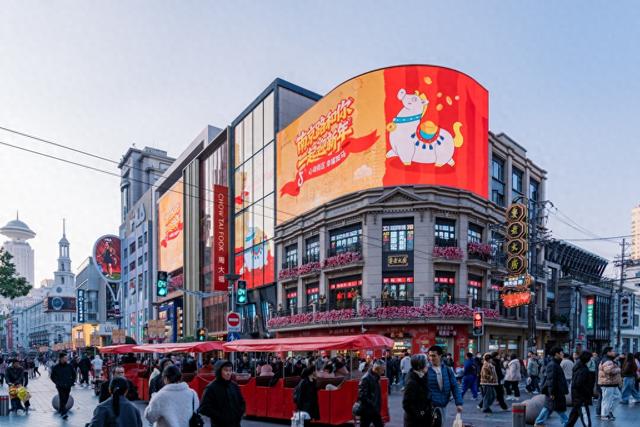
南京路步行街跨年消费“大餐”来了:线上线下可抢券、商家延时至凌晨
Xin Lang Cai Jing· 2025-12-27 11:30
Core Viewpoint - Shanghai's New Year consumption event is set to stimulate spending through a combination of digital coupons, extended business hours, and music performances, creating a festive atmosphere for consumers [1][3]. Group 1: Consumption Coupons - The first round of consumption coupons will be distributed from December 30, 2025, to January 3, 2026, via Douyin, with 11,000 coupons worth 800 yuan available for 550 yuan and 10,000 coupons worth 300 yuan for 200 yuan [3]. - Offline coupons will be available for collection starting December 31, 2025, with 1,000 coupons (500 each for two locations) offering a discount of 300 yuan on purchases over 800 yuan [3]. - Historical data shows significant coupon redemption rates, with 2023 seeing 48,000 coupons sold out in under a minute and a redemption rate of 82.82%, contributing to a 52.6% year-on-year increase in sales in the shopping district [4]. Group 2: Extended Business Hours - Over 30 merchants, including traditional brands and trendy stores, will extend their operating hours until the early morning of January 1, 2026, to enhance nighttime consumption [5]. - Notable participants include established brands like New Ya, Tai Kang, and the Huawei flagship store, aiming to maximize consumer engagement during the New Year celebration [5]. Group 3: Music and Cultural Events - A New Year celebration featuring music and art will take place from December 31, 2025, to January 3, 2026, at the Jiatinghui City Life Plaza, enhancing the cultural experience of the event [6]. - The main event on December 31 will feature popular artists and bands, including performances by Douya Band and Vaniah, culminating in a countdown to the New Year [6]. - Additional performances from January 1 to 3 will include jazz music, immersive drama, and diverse dance showcases, further enriching the festive atmosphere [6].

众品牌加码潮玩IP 情绪消费的狂热与风险
Xin Lang Cai Jing· 2025-12-26 21:01
Group 1: Core Insights - The holiday season, particularly Christmas, is a significant time for emotional consumption, with brands leveraging various IPs to boost sales and profits [1] - Companies are increasingly focusing on audience segmentation to create scarcity and collectability for core fans while emphasizing practicality and trendiness for broader audiences [1][5] - The IP collaboration trend is gaining momentum, with brands like Heineken and Pop Mart successfully launching products that resonate with consumers [2][3] Group 2: Market Trends - The Chinese IP retail market is experiencing historic growth, with retail sales reaching $13.77 billion in 2023, a 9.6% increase year-on-year [6] - The interest consumption market is projected to exceed 380 billion yuan by the end of 2025, reflecting a growth rate of over 10% compared to the previous year [2] - The collaboration between brands and popular IPs, such as Disney's "Zootopia 2," is seen as a benchmark for IP commercialization, with over 60 brands participating [5][6] Group 3: Business Models - There are three main business models for IP: self-owned IP, licensed IP, and short-term collaborations for exposure [7] - Successful IPs typically possess cross-media content value, allowing for low-cost and precise connections with users [7] - Companies like Disney have established a robust commercial ecosystem, generating $62 billion in retail sales from IP licensing [8] Group 4: Strategic Approaches - Brands are exploring innovative strategies to avoid homogenization in IP collaborations, such as creating unique product categories [6][7] - Miniso is actively signing original toy artists to build its own IP matrix, aiming for a dual strategy of international licensed IP and exclusive artist collaborations [8][9] - The emotional connection between consumers and IP characters is crucial for successful branding, requiring a deeper understanding of consumer needs [9]

从始祖鸟到雪王,为什么都在开大店?
3 6 Ke· 2025-12-26 10:55
Core Insights - The article discusses the emerging trend of large retail stores that not only expand brand business boundaries but also enhance community engagement and lifestyle leadership. Group 1: Large Store Trends - The new wave of large stores is characterized by their ability to break traditional retail boundaries and expand brand business scope, leading to enhanced community engagement and lifestyle influence [17]. - Miniso has successfully implemented a new model with its large stores, where nearly 80% of sales come from IP products, shifting consumer focus from practical value to emotional value [5][7]. - The trend of opening large stores is not limited to Miniso; other brands like Mixue Ice City and H&M are also adopting this strategy to adapt to market saturation and consumer preferences [8][15]. Group 2: Performance Metrics - Miniso's flagship store in Shanghai achieved sales exceeding 150 million yuan within its first year, demonstrating the potential profitability of large stores [5]. - Mixue Ice City's flagship store in Zhengzhou reported that nearly 50% of its sales came from cultural products, with monthly revenues surpassing 15 million yuan [9]. - The performance of large stores often exceeds expectations, with flagship stores serving as significant traffic drivers and enhancing brand visibility [21][20]. Group 3: Market Context - The current retail environment is challenging, with a national average vacancy rate of 14.2% in shopping centers and a commercial real estate vacancy rate reaching 28.7%, the highest in a decade [19]. - Despite these challenges, certain brands are leveraging large stores to achieve differentiation and high-end positioning, indicating a strategic pivot in response to market conditions [19][18]. Group 4: Design and Experience - The design of contemporary retail spaces has evolved from mere product display to creating strategic experiences that attract and retain customers [25]. - Large stores are increasingly seen as content hubs, where the experience and engagement offered can surpass traditional retail formats, thus enhancing customer loyalty [27][40]. - Successful large stores incorporate unique design elements and exclusive products that create a compelling reason for customers to visit and stay longer [28][29]. Group 5: New Brand Opportunities - New brands are emerging that focus on aesthetic and experiential retail, such as Tagi., which emphasizes unique store designs and local cultural integration to attract consumers [35][37]. - The trend indicates a shift towards brands that can tell compelling stories and create memorable experiences, which are crucial for customer retention in the competitive retail landscape [39][40].