L3Harris Technologies

Search documents
美国国防公司美股盘前上涨, L3Harris Technologies(LHX.N)涨4%,洛克希德马丁(LMT.N)涨1.6%,雷神科技(RTX.N)涨1.7%。
news flash· 2025-05-21 10:09
美国国防公司美股盘前上涨, L3Harris Technologies(LHX.N)涨4%,洛克希德马丁(LMT.N)涨1.6%,雷 神科技(RTX.N)涨1.7%。 ...
研判2025!中国空中交通管理系统行业发展历程、政策汇总、产业链、发展现状、竞争格局及发展趋势分析:行业国产化进程加速,为低空经济发展奠定坚实基础[图]
Chan Ye Xin Xi Wang· 2025-05-21 01:22
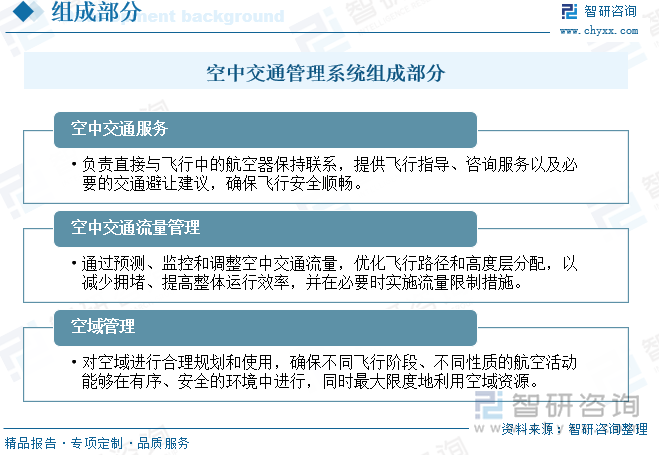
Core Viewpoint - The Chinese air traffic management system is undergoing significant advancements through domestic innovation and digital transformation, aiming to reduce reliance on foreign technology and enhance international competitiveness. The market size is projected to reach 6 billion yuan in 2024, reflecting a year-on-year increase of 15.38% [1][14]. Industry Overview - The air traffic management system (ATMS) is essential for overseeing and managing civil aviation operations, ensuring safety and efficiency in aircraft operations. It consists of three main components: air traffic services, air traffic flow management, and airspace management [3][10]. - The industry has evolved from relying on international products to achieving significant domestic technological breakthroughs, including the development of new-generation flight data processing systems and airport surveillance radars [1][14]. Industry Development History - The ATMS in China has developed from its inception in the early 1950s to a more sophisticated system today, marked by key reforms and technological advancements since the 2000s. The establishment of the Civil Aviation Administration of China in 1994 was a significant milestone [5][12]. Policy Support - Recent policies, such as the "14th Five-Year Plan for Civil Aviation Development" and the "Smart Civil Aviation Construction Roadmap," emphasize the modernization of the air traffic management system and the integration of advanced technologies [7][9]. Market Dynamics - The demand for air traffic management systems is increasing due to the rising passenger and cargo throughput in China's civil aviation sector, which is expected to continue growing post-pandemic [12][14]. - The market is characterized by both domestic and international players, with key domestic companies including Sichuan Chuan Da Zhisheng, Sichuan Electronic Technology, and Nanjing Lais Information Technology leading the way in technological capabilities [16][20]. Future Trends - The industry is moving towards greater intelligence and networking, leveraging technologies such as AI and big data to enhance operational efficiency and safety. This shift aims to create a more integrated and responsive air traffic management system [22][23]. - The integration of military and civilian air traffic management systems is becoming increasingly important, with a focus on collaboration and standardization to improve overall system coordination [24].


RTX Ships AN/TPY-2 Radar to the US Missile Defense Agency
ZACKS· 2025-05-20 15:21
Core Insights - RTX Corporation's Raytheon segment has delivered the first AN/TPY-2 radar equipped with full Gallium Nitride technology to the U.S. Missile Defense Agency, which is expected to enhance revenue performance in the second quarter of 2025 [1] - The demand for advanced military weapons, including radar systems, is increasing due to rising geopolitical tensions and expanding defense budgets globally, benefiting companies like RTX [2] - The AN/TPY-2 radar is crucial for national security, capable of detecting and tracking ballistic missiles with enhanced clarity, showcasing its versatility in missile defense systems [3] RTX's Market Position - The military radar market is projected to grow at a CAGR of 5.2% from 2025 to 2030, driven by increased defense spending and the need for advanced threat detection, which is favorable for RTX [4] - RTX's diverse portfolio of combat-proven radars, including SPY 6 and GhostEye, positions the company for continued deliveries and revenue growth in the coming years [5] Competitive Landscape - Other defense contractors like Lockheed Martin, Northrop Grumman, and L3Harris Technologies are also major players in the radar market, with Lockheed Martin projected to have a long-term earnings growth rate of 10.5% and a 2025 sales growth estimate of 4.6% [6][7] - Northrop Grumman has a long-term earnings growth rate of 3.3% with a 2025 sales growth estimate of 2.8%, while L3Harris Technologies has a higher long-term earnings growth rate of 12% and a 2025 sales improvement estimate of 1% [8][9] Stock Performance - Over the past six months, RTX shares have increased by 13.8%, outperforming the industry growth of 11.1% [10]

RTX Wins $581M Contract for Next Generation Jammer Mid-Band System
ZACKS· 2025-05-19 15:01
RTX Corporation’s (RTX) unit, Raytheon, recently clinched a contract for the production and delivery of Next Generation Jammer Mid-Band (NGJ-MB) pod shipsets. The award has been provided by the Naval Air Systems Command, Patuxent River, MD.Details of the Deal Secured by RTXValued at $580.6 million, the contract is expected to be completed by November 2028. Per the terms of the deal, RTX will deliver additional NGJ-MB pods for the Royal Australian Air Force, along with spares and specialized support equipmen ...

President Trump Just Cut the Budget on Boeing's and Lockheed's Most Important Space Program
The Motley Fool· 2025-05-17 11:07
Core Insights - The Trump administration's proposed budget for fiscal year 2026 includes a significant 24% cut to NASA's funding, reducing it from $24.8 billion to $18.8 billion, which may impact major space companies' revenue streams [3][4] - The budget proposal suggests the termination of the Space Launch System (SLS) program, which has been criticized for its high costs and delays, with a projected cost of $4 billion per launch and being 140% over budget [6][8] - The proposed budget allocates $7 billion for lunar exploration under Project Artemis and $1 billion for Mars missions, but cuts funding for the Mars Sample Return mission [5][6] Impact on Companies - The termination of the SLS program threatens an estimated $82 billion in contracts for major contractors like Boeing, Lockheed Martin, and Northrop Grumman, which were expected to benefit from Project Artemis [8] - Conversely, the budget cuts could create opportunities for more cost-effective space contractors like SpaceX and Blue Origin, which are positioned to take over roles currently held by traditional aerospace companies [9][11] - SpaceX's Starship and Blue Origin's New Glenn rocket are projected to offer lunar missions at significantly lower costs, with Starship estimated at less than $3 billion per trip and New Glenn at $3.4 billion [9][10] Long-term Industry Outlook - The proposed changes indicate a shift towards more budget-conscious space operations, potentially sidelining established companies in favor of newer, more efficient competitors [11][12] - While this transition may not be favorable for current investors in traditional aerospace stocks, it could lead to a more sustainable and cost-effective future for the space industry [12]


LightPath Technologies(LPTH) - 2025 Q3 - Earnings Call Transcript
2025-05-15 22:02
Financial Data and Key Metrics Changes - Revenue for Q3 2025 increased by 19.1% to $9.2 million compared to $7.7 million in the same quarter last year [28] - Gross profit rose by 66% to $2.7 million, representing 29.1% of total revenues, up from 20.9% in the prior year [29] - Operating expenses increased by 44% to $6 million, primarily due to higher legal consulting fees and costs associated with the G5 acquisition [29] - Net loss for the quarter totaled $3.6 million, compared to a loss of $2.6 million in the same quarter last year [30] - Cash and cash equivalents as of March 31, 2025, totaled $6.5 million, up from $3.5 million as of June 30, 2024 [30] Business Line Data and Key Metrics Changes - Revenue from infrared components was $3.6 million (40% of total revenue), visible components at $2.8 million (31%), assemblies and modules at $1.9 million (20%), and engineering services at $800,000 (9%) [28] - The new direction of the company, including optical assemblies and cameras, now constitutes roughly 50% of total revenue, with the other half from optical components [7] Market Data and Key Metrics Changes - The company has seen significant growth in demand for its proprietary Black Diamond materials, leading to the need for increased manufacturing capacity [15] - The company has reduced its exposure to risks associated with tariffs and recessions in China, with 45% of headcount and 56% of footprint now in the U.S. [18][19] Company Strategy and Development Direction - The company is transitioning from a pure component supplier to a vertically integrated global solution provider for infrared imaging technologies [4] - Recent acquisitions, including G5 infrared, are expected to enhance the company's capabilities in high-margin, high-ASP products, particularly in defense [35] - The company aims to achieve long-term goals of 15% EBITDA margins and sustained growth [35] Management's Comments on Operating Environment and Future Outlook - Management expressed confidence in the company's growth trajectory, citing geopolitical tensions and new product launches as key drivers [4] - The company is focused on optimizing internal supply chains and engaging with customers regarding supply chain resilience [20] - Management acknowledged potential challenges related to the supply of germanium but noted that redesigns using Black Diamond materials are progressing well [22][23] Other Important Information - The G5 acquisition is expected to generate $51 million in revenue over the twelve months following the acquisition [33] - The company has booked over $19 million in new orders in the 90 days following the G5 acquisition [16] Q&A Session Summary Question: Can you discuss the delays related to the Apache program? - Management indicated that delays were due to taking on a challenging project and capacity issues, but they do not foresee any permanent problems [40][41] Question: What is the outlook for gross margins in the next quarter? - Management expects gross margins to increase due to a full quarter of higher-margin assemblies and modules from G5 [49] Question: What is the current backlog number? - The backlog as of March was reported at $27.4 million [28] Question: Is the $51 million revenue expectation for G5 a downshift from previous estimates? - Management clarified that the $51 million figure pertains to a different timeframe than previously discussed [53] Question: What is the status of the Navy and border security contracts? - The Navy contract has been awarded, while the border security contract is more complex and involves multiple suppliers [95][96] Question: How is the integration of sales teams progressing post-acquisition? - Management confirmed that the sales teams are working closely together, despite a recent resignation in the sales leadership [80][82]

LightPath Technologies Reports Third Quarter Fiscal 2025 Financial Results
Prnewswire· 2025-05-15 20:05
Core Viewpoint - LightPath Technologies reported a 19.1% increase in revenue for the third quarter of fiscal 2025, driven by the acquisition of G5 Infrared and significant orders in the defense sector, positioning the company for growth in the infrared imaging market valued at $9 billion [1][4][5]. Financial Performance - Revenue for the third quarter of fiscal 2025 was $9.2 million, up from $7.7 million in the same quarter of the previous year, reflecting a 19.1% increase [2][8]. - Gross profit increased by 65.9% to $2.7 million, representing 29.1% of total revenues, compared to 20.9% in the prior year [10]. - Operating expenses rose 42.9% to $6.0 million, primarily due to higher legal and consulting fees related to business development and the G5 acquisition [11]. - The net loss for the quarter was $3.6 million, or $0.09 per share, compared to a loss of $2.6 million, or $0.07 per share, in the same quarter of the previous year [12][23]. Strategic Developments - The acquisition of G5 Infrared is expected to enhance LightPath's capabilities in the infrared imaging market, with G5's product offerings complementing LightPath's existing portfolio [4][9]. - Significant orders received include a $4.8 million qualification order and a $4.9 million follow-on order from defense customers, along with a $2.2 million order from L3Harris Technologies [5][9]. - The company is focusing on transitioning to its Germanium-free BlackDiamond™ infrared imaging solutions, which are gaining traction due to supply chain issues affecting competitors [6]. Market Positioning - LightPath aims to become a leading vertically-integrated provider in the infrared imaging market, leveraging G5's established contracts and operational synergies [4][5]. - The company is actively participating in key defense programs, including a major missile program for the U.S. Army in collaboration with Lockheed Martin [7]. Product Group Performance - Revenue breakdown for the third quarter of fiscal 2025 shows: - Infrared Components: $3.6 million (0% change) - Visible Components: $2.8 million (6% increase) - Assemblies & Modules: $1.9 million (123% increase) - Engineering Services: $0.8 million (54% increase) [8]. Cash Flow and Financial Position - Cash and cash equivalents at the end of the period were $6.5 million, up from $3.5 million at the end of the previous fiscal year [21][27]. - The company reported a net cash used in operating activities of $5.4 million for the nine months ended March 31, 2025 [27].

Even After Trump's Tariff Turmoil, Defense Stocks Cost Too Much
The Motley Fool· 2025-05-10 09:05
Core Viewpoint - Defense stocks are currently considered too expensive for investment despite ongoing global tensions and increased defense spending [1][8]. Group 1: Current Valuation of Defense Stocks - The average price-to-sales (P/S) and enterprise-value-to-sales (EV/S) ratios for defense stocks remain elevated compared to historical norms, indicating that they are still overpriced [8]. - As of now, half of the ten major defense stocks are trading at higher valuations than in January, while the other half are slightly cheaper but overall valuations have not significantly changed [2][8]. - The average EV/S ratio for the defense sector is currently 2.15, compared to an average of 1.89 over the 2014-2023 period, suggesting a continued increase in valuation [7]. Group 2: Historical Valuation Data - Historical analysis shows that the average EV/S ratio for major defense companies has increased from 1.06 (2004-2013) to 1.89 (2014-2023) [5]. - Specific companies like Boeing and L3Harris Technologies have seen significant increases in their EV/S ratios, with Boeing at 2.46 today compared to an average of 1.36 over the last 20 years [5][7]. Group 3: Potential Investment Opportunities - Leidos Holdings is identified as a potential value option, trading at an EV/S of 1.4 and a P/S of 1.2, which is close to its historical fair value [9]. - Leidos operates in multiple sectors, including national security and healthcare, which may provide additional growth opportunities beyond defense spending [9].


印巴冲突专题解读
2025-05-07 15:20
Summary of Key Points from the Conference Call Industry Overview - The conference call primarily discusses the military and defense industry, particularly in the context of the India-Pakistan conflict and China's military capabilities [1][2][3][4]. Core Insights and Arguments - **Escalation of India-Pakistan Conflict**: The conflict has intensified, linked to U.S.-India defense cooperation during Elon Musk's visit to India, which has heightened regional tensions [1][2]. - **China's Military Advantage**: China has developed a competitive edge in military equipment through self-research and systematic construction, enhancing its influence in the region over the long term [1][4]. - **Global Arms Procurement Shift**: The Russia-Ukraine war has revealed issues with Russian weapon performance, prompting countries to reconsider their military procurement strategies. China is gaining attention for its cost-effective weapons, such as phased array radars and PL series missiles [1][10]. - **Water Resource Disputes**: The India-Pakistan water resource conflict could lead to larger confrontations, with India's actions potentially causing a survival crisis for Pakistan [1][12]. - **Increased Military Spending**: Global geopolitical tensions are driving countries to increase military budgets, with Europe initiating defense plans and the U.S. raising its defense budget significantly [1][19][20]. Important but Overlooked Content - **Military Equipment Utilization**: India is using advanced aircraft like the Russian Su-30 and French Rafale, while Pakistan is equipped with Chinese-made early warning aircraft and J-10CE fighters, showcasing China's military technology superiority [1][5]. - **Elon Musk's Strategic Remarks**: Musk's emphasis on India's role in the Quad Security Dialogue and U.S.-India defense cooperation highlights the geopolitical dynamics at play [6]. - **China's Military Development**: China's military industry has rapidly advanced, establishing a complete weapon system that has been validated through real combat scenarios, indicating a global leading standard [7][8]. - **Military Cooperation Dynamics**: The complex military cooperation and confrontation among China, India, and Pakistan are influenced by historical grievances and resource control, particularly regarding the Indus River [9][12]. - **Impact of the Russia-Ukraine War**: The war has shifted global arms procurement focus, with countries looking for reliable suppliers, benefiting China's military exports [10][14]. - **Investment Opportunities**: The military industry is expected to grow significantly, with high certainty in investments due to limited competition and unique technologies [29][30]. Future Outlook - **China's Military Trade Position**: Although China ranks fourth in global military trade, it has opportunities to expand its market share due to the challenges faced by other countries like Russia and France [32]. - **Potential Investment Targets**: Key products to watch include the Chengdu J-10 and J-16 fighters, as well as the Xi'an Y-20 transport aircraft, which are competitive in international markets [34][35]. - **Military-Industrial Integration**: The integration of military and civilian industries presents significant growth potential, particularly in sectors like satellite internet and advanced electronic products [33]. This summary encapsulates the critical insights and implications discussed in the conference call, focusing on the military and defense industry's current landscape and future prospects.
Rocket Lab Wins Share of a $46 Billion Defense Contract.
The Motley Fool· 2025-05-04 12:08
Core Viewpoint - Rocket Lab's recent inclusion in a $46 billion contract for hypersonic test launch capabilities is significant but may not have the transformative impact on its stock that the headline suggests [2][3]. Group 1: Contract Details - The $46 billion contract is part of the U.S. Air Force's Enterprise-Wide Agile Acquisition Contract (EWAAC), which is an indefinite delivery-indefinite quantity (IDIQ) contract [3]. - Rocket Lab is one of 297 vendors participating in the EWAAC, meaning its share of the contract could be as low as $155 million if work is distributed evenly [4]. - The EWAAC contract is expected to run through 2031, which would imply an annual revenue share of approximately $22 million for Rocket Lab [5]. Group 2: Competitive Landscape - Rocket Lab faces competition from larger aerospace and defense companies such as Boeing, Lockheed Martin, and Northrop Grumman, which may secure larger shares of the EWAAC funds [7]. - In addition to EWAAC, Rocket Lab is also participating in the UK's Hypersonic Technologies & Capability Development Framework (HTCDF), valued at $1.3 billion, with about 90 companies expected to compete [9]. Group 3: Revenue Implications - The worst-case scenario for Rocket Lab, combining potential revenues from both contracts, suggests an increase of about $24 million to its annual revenue stream [11]. - This increase represents roughly 6% of Rocket Lab's current annual revenue, which may not significantly enhance the company's growth trajectory or stock attractiveness [12].