Tesla

Search documents
VW's software partnership with Rivian clears investment hurdle
Reuters· 2026-03-27 08:32
Core Insights - Volkswagen's software partnership with Rivian has reached a significant milestone, advancing the U.S. partner towards its next funding tranche [1][3] - The joint venture aims to create a software platform that will support a model revamp for Volkswagen's core brand, as well as its U.S. pickup truck business Scout and premium subsidiary Audi [2] Group 1: Partnership and Strategy - The collaboration with Rivian is part of CEO Oliver Blume's turnaround strategy for Volkswagen, addressing challenges faced by its software division, Cariad [3] - Volkswagen is under pressure to compete with data and software-driven companies like Tesla and BYD [3] Group 2: Financial Commitments - Volkswagen has committed to invest $5.8 billion in the partnership by 2027, which includes a $1 billion tranche expected this year upon achieving specific technological milestones [3][4]



Elon Musk's Tesla Sees Q1 Slowdown—365K Deliveries Expected
Benzinga· 2026-03-27 08:20
Delivery Estimates - Tesla expects 365,645 deliveries in Q1 2026, with 351,179 units being Model 3 and Model Y [2] - This figure represents a decline of over 12.5% from Q4 2025's 418,227 units, but an 8% year-over-year increase from Q1 2025's 336,681 units [3] - Analysts estimate Tesla will deliver over 1,689,691 units in 2026 and over 3,032,000 units by 2030 [2] Battery Deployments - Analysts project battery deployments of 14.4 GWh in Q1 2026, a slight increase from 14.2 GWh in the previous quarter [3] - For the entire year of 2026, analysts estimate Tesla will deploy over 65.2 GWh of batteries [3] New Model Developments - Leaked images from Tesla's Gigafactory in Texas suggest a new model that resembles the Model Y but features enhanced space and large windows [4] Market Performance - Tesla's stock (TSLA) closed at $372.11, down 3.59%, but gained 0.58% to $374.25 in overnight trading [5]

Tesla Stock Tries to Break 5-Week Losing Run. SpaceX IPO, Rosy Sales Estimates May Not Be Enough.
Barrons· 2026-03-27 07:30
Group 1 - The company led by Elon Musk is aiming for a weekly gain by Friday [1]
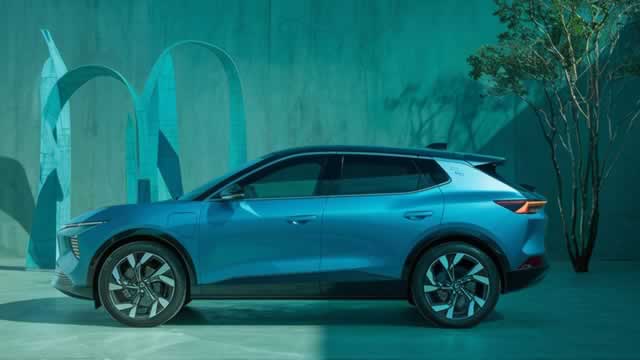
Elon Musk Drops Fresh Clues On Possible 3-Row Vehicle From Tesla
Benzinga· 2026-03-27 04:35
Core Insights - Tesla CEO Elon Musk has hinted at a new model featuring three rows of seats, potentially targeting family-oriented consumers [1][2] - The new vehicle could address market demands for larger family vehicles, which may influence family planning decisions [2] - Musk has indicated that the upcoming model will be more innovative than a traditional minivan, with design elements that include increased rear space and larger windows [3] Market Impact - The introduction of a three-row vehicle could help Tesla revamp its product lineup and attract more customers, potentially boosting sales, especially after a surge in European sales in February [4] - Tesla's stock experienced a decline of 3.59% to $372.11 at market close, but saw a slight recovery of 0.58% to $374.25 in after-hours trading [5]
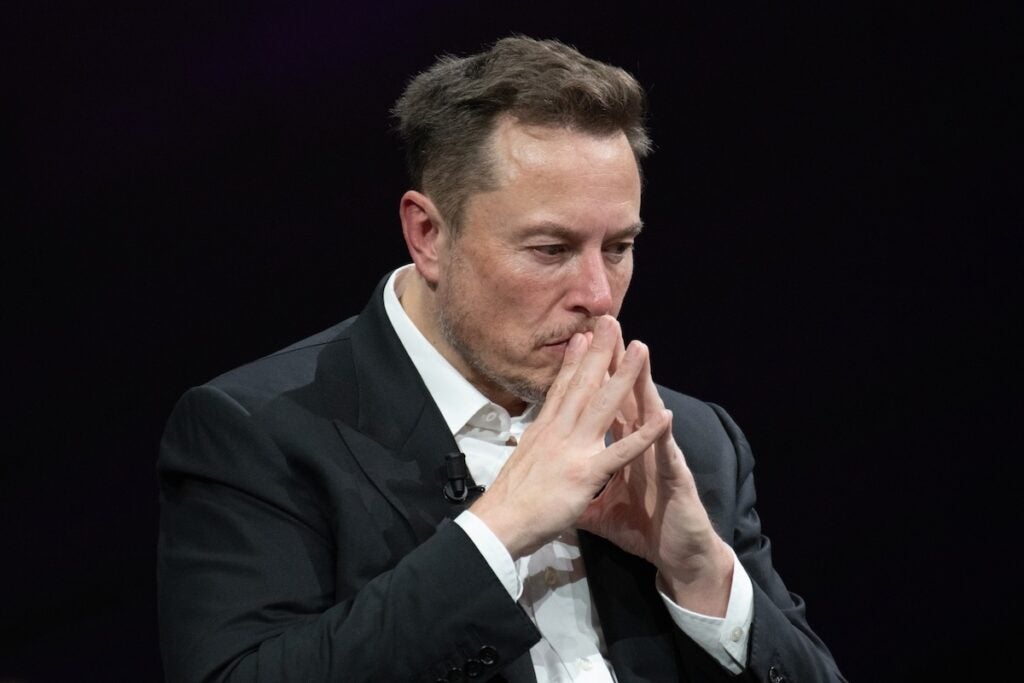
Tesla Beware: BYD Just Played The James Bond Card In Europe
Benzinga· 2026-03-26 22:27
Core Viewpoint - BYD is launching a new advertising campaign for its DENZA brand featuring actor Daniel Craig, aiming to expand its sales in Europe and other international markets Group 1: Advertising Strategy - BYD is utilizing Daniel Craig to promote several DENZA vehicles through marketing materials and TV commercials, with the first European model, the Z9GT, launching on April 8 [2] - The partnership with Craig is intended to associate the DENZA brand with qualities of strength, sophistication, and authenticity, which align with the brand's identity [2][5] Group 2: Product Launch and Goals - The DENZA Z9GT is marketed as the "world's longest-range pure EV" and features ultra-fast charging capabilities [3] - BYD aims to sell 1.3 million vehicles outside of China by 2026, indicating a strong growth ambition in international markets [3] Group 3: Competitive Landscape - Unlike BYD, Tesla does not use celebrity endorsements, relying instead on word-of-mouth and customer reviews, which highlights a contrasting marketing approach within the EV industry [4] - Traditional automakers have historically used celebrity endorsements, which BYD is now adopting to enhance brand perception [4]
Why Tesla isn't getting a boost from high gas prices
MarketWatch· 2026-03-26 21:21
Core Insights - Higher electric vehicle (EV) prices and increased borrowing costs are likely deterring potential buyers from making purchases [1] Group 1 - The rise in EV prices is a significant factor affecting consumer interest in the market [1] - Increased borrowing costs are compounding the issue, making financing less attractive for prospective buyers [1]
Exclusive: Musk rewrites IPO playbook with large slice of SpaceX stock for retail investors, source says
Reuters· 2026-03-26 17:59
Group 1 - Elon Musk plans to allocate up to 30% of SpaceX's initial public offering (IPO) to retail investors, significantly higher than the typical 5% to 10% allocation [1][9] - The IPO structure deviates from standard Wall Street practices, reflecting Musk's intent to control both ownership and trading dynamics of SpaceX shares post-IPO [2][3] - Demand from retail investors is anticipated to be strong, similar to the enthusiasm seen during Google's IPO, with interest from both wealthy family offices and smaller investors [6][8] Group 2 - SpaceX is employing a targeted approach in selecting banks for the IPO, assigning specific roles based on personal relationships rather than allowing broad competition [3][10] - Bank of America has been chosen to focus on domestic retail distribution, while other banks like Morgan Stanley and UBS will target different investor segments [4][11][12] - The IPO could reach a valuation of approximately $1.75 trillion, making it one of the largest in history, with the final size and timing yet to be determined [4][13]

Musk urges judge to review Twitter verdict, questions jury's integrity
Reuters· 2026-03-26 17:42
Core Viewpoint - Elon Musk's legal team is requesting a federal judge to review a jury verdict that found Musk liable for defrauding Twitter investors during his acquisition of the company, arguing that the jury acted improperly by using the verdict to "send a message" [1][5]. Group 1: Jury Verdict and Allegations - Musk's lawyer, Alex Spiro, claims that jurors mocked Musk by writing "$4.20" in bright blue on the verdict form, contrasting with the black ink used for other entries [2]. - The number 420 is linked to marijuana culture and has been frequently referenced by Musk in various contexts, including his valuation of Twitter at $54.20 per share during the $44 billion buyout [3][6]. - Spiro argues that the jury's use of this "numerical joke" raises questions about the integrity of the March 20 verdict, which could result in damages of up to $2.5 billion [4]. Group 2: Impact on Twitter and Investor Claims - The jury found Musk liable for statements he made shortly after announcing the buyout, where he suggested that Twitter was plagued by fake and spam accounts, which investors claim led to a decline in Twitter's stock price and financial losses when they sold their shares [6]. - Musk completed the acquisition of Twitter in October 2022, and the implications of the jury's findings could have significant financial repercussions for him and the company [6].
拓普集团 - 2025 年第四季度业绩符合预期;聚焦海外业务、机器人与热管理系统
2026-03-26 13:20
Summary of Ningbo Tuopu Group Co Ltd Conference Call Company Overview - **Company**: Ningbo Tuopu Group Co Ltd - **Industry**: China Autos & Shared Mobility - **Stock Rating**: Equal-weight - **Price Target**: Rmb62.00 - **Current Share Price**: Rmb57.05 - **Market Capitalization**: Rmb97,665.6 million - **52-Week Range**: Rmb86.88 - Rmb42.43 - **Average Daily Trading Value**: Rmb2,324 million [7][68] Key Financial Highlights - **4Q25 Earnings**: Grew 6% YoY and 21% QoQ to Rmb813 million, aligning with the preliminary earnings range of Rmb633-933 million [2][3] - **4Q25 Revenue**: Increased 19% YoY and 8% QoQ to Rmb8.65 billion, driven by Geely's 30% and Aito's 62% YoY production growth, despite declines from BYD (14%) and Tesla (5%) [3][5] - **Gross Margin**: Improved by 0.2 percentage points YoY and 1.3 percentage points QoQ to 20.0% [4][5] - **Operating Margin**: Increased to 11.7%, up 0.3 percentage points YoY and 1.8 percentage points QoQ [4][5] - **Net Profit**: Reported at Rmb813 million for 4Q25, a 6% increase YoY [5] Revenue Growth Drivers - **Key Clients**: Revenue growth was significantly supported by Geely and Aito, while Tesla's performance negatively impacted overall results [3] - **Overseas Revenue**: 2H25 overseas revenue grew 13% YoY, contrasting with an 11% decline in 1H25, indicating a recovery in contributions from US and EU OEMs [3] Strategic Focus Areas - **Future Initiatives**: The company aims to focus on: 1. Winning new orders for overseas projects 2. Achieving breakeven for overseas plants 3. Advancing humanoid robotics projects 4. Increasing revenue from cooling systems [4] Risks and Opportunities - **Upside Risks**: - New project wins from existing and new customers - Higher value content per vehicle from product expansion - Margin expansion due to falling aluminum alloy costs - Growth in the robotics business [13] - **Downside Risks**: - Weaker-than-expected demand from Tesla - Lower utilization rates for chassis parts capacity - Rising costs of aluminum alloys [13] Conclusion Ningbo Tuopu Group Co Ltd is positioned for growth with a focus on expanding its overseas presence and enhancing its product offerings in robotics and cooling systems. The financial results indicate a solid performance, although external factors such as Tesla's demand and material costs present potential risks. The company maintains an equal-weight rating, reflecting a balanced outlook on its growth potential in the automotive sector [7][11].


Stocks, Bonds Slide As Ceasefire Hopes Fade
ZeroHedge· 2026-03-26 12:29
Market Overview - Global stocks and bonds fell as ceasefire optimism faded amid mixed messages regarding the Iran conflict, leading to rising oil prices [1][5][37] - S&P 500 futures dropped 0.9% and Nasdaq futures fell more than 1% as military options for Iran were reported [1][19] - Brent crude oil prices increased by 3.8% to above $106 per barrel, marking the largest monthly jump in over three decades [1][40] Corporate News - Blackstone is nearing a deal to acquire Rowan Digital Infrastructure, potentially valuing the company at over $10 billion [3] - Equitable Holdings Inc. and Corebridge Financial Inc. are set to merge in an all-stock deal valued at $22 billion [4] - Kodiak Sciences shares surged 43% following positive efficacy data from a late-stage trial for its drug targeting diabetic retinopathy [4] - Olaplex's stock rose over 50% after Henkel agreed to acquire the hair-care brand for $1.4 billion [4] Sector Performance - US mining stocks declined while energy stocks rose due to ongoing Middle East tensions [4] - Memory-chip stocks fell as Google researchers introduced a new compression technique that could reduce memory requirements for AI workloads, impacting companies like Micron and Sandisk [4][6] - Private credit markets are under scrutiny following Jefferies' disappointing results and warnings from industry leaders about potential risks [7][8] Economic Indicators - Initial jobless claims and Kansas City Fed manufacturing activity data are scheduled for release, which may impact market sentiment [16][47] - The Fed's Stephen Miran adjusted interest rate projections in response to inflation data, indicating a potential shift in monetary policy [10][32] Geopolitical Impact - The Pentagon is reportedly preparing military options for a "final blow" in Iran, which could escalate tensions further [5][36] - Investors are concerned about the implications of rising oil prices on economic growth and inflation, with BlackRock's president highlighting the risks stemming from the ongoing conflict [8][9]