
Volkswagen

Search documents
X @Tesla Owners Silicon Valley
Tesla Owners Silicon Valley· 2025-08-11 20:20
Stock Performance Comparison - Tesla's stock performance shows a significant increase of 18,800% over 15 years [1] - BYD's stock increased by 548% over 15 years [1] - Tata Motors' stock increased by 370% over 15 years [1] - Subaru's stock increased by 345% over 15 years [1] - Toyota's stock increased by 314% over 15 years [1] - Ford's stock decreased by 11% over 15 years [1] - Nissan's stock decreased by 45% over 15 years [1] Automotive Industry Trends - The data highlights the varying stock performance of different automotive manufacturers over a 15-year period [1] - The data suggests a wide range of investment returns within the automotive sector [1]

Volkswagen: Financial Prospects Improving As CEO Fights To Minimize Tariff Impact
Seeking Alpha· 2025-08-11 14:21
Core Insights - The article discusses the automotive industry, highlighting trends and developments that could impact investment opportunities and risks in the sector [1]. Group 1: Industry Overview - The automotive industry is undergoing significant changes, driven by technological advancements and shifts in consumer preferences [1]. - Analysts are closely monitoring the performance of major automotive companies, particularly in relation to electric vehicle (EV) adoption and market share [1]. Group 2: Company Analysis - Specific companies within the automotive sector are being evaluated for their long-term growth potential, especially those with strong positions in the EV market [1]. - The article emphasizes the importance of understanding each company's strategic initiatives and financial health to assess investment viability [1].

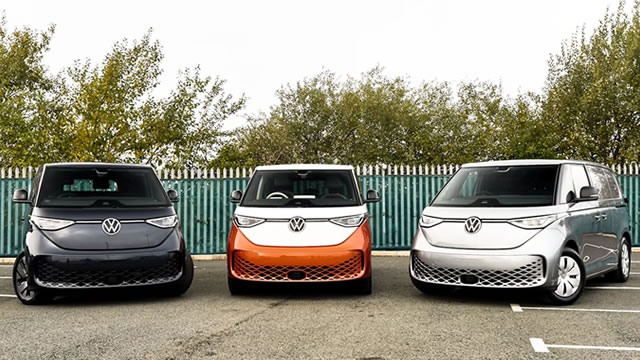
Hot EV and AV Stocks That You Can't Afford to Miss
ZACKS· 2025-08-11 13:35
Industry Overview - The electric vehicle (EV) market is projected to grow significantly, with sales expected to increase by 25% in 2025, reaching over 20 million units globally, driven by falling battery prices and increased affordability [2] - China is anticipated to dominate the EV market, accounting for nearly two-thirds of global sales, followed by Europe and the United States [2] - The autonomous vehicle (AV) market is valued at approximately $1.9 trillion in 2023 and is expected to grow to over $13.6 trillion by 2030, reflecting a compound annual growth rate (CAGR) of 32% [4] Company Highlights QuantumScape - QuantumScape aims to revolutionize EV batteries with solid-state lithium-metal technology, focusing on energy density, charging speed, and safety [6] - The company has secured a partnership with Volkswagen, which will provide up to $131 million in milestone-based payments to accelerate battery development [7] - QuantumScape's new Cobra separator process is 25 times faster and more cost-efficient than its predecessor, enhancing its competitive edge in solid-state battery production [9] Lucid Motors - Lucid is expanding its product line beyond the luxury Air sedan to include the Gravity SUV, targeting a larger market [12] - The company has established a multi-year deal with Graphite One to secure U.S.-sourced natural graphite, enhancing its supply chain resilience [12] - Lucid vehicles will now be compatible with Tesla's Supercharger network, significantly increasing charging convenience for customers [13] XPeng - XPeng is rapidly scaling in China's EV market, delivering over 190,000 vehicles in 2024, a 34% year-over-year increase, and achieving a staggering 331% growth in Q1 2025 [19] - The company is focusing on intelligence-driven vehicles, with models like the G7 featuring advanced AI technology for improved self-driving capabilities [18] - XPeng is also innovating with AI-powered systems and exploring futuristic concepts such as flying cars and humanoid robots, positioning itself as a leader in the EV sector [20]





Rivian Investors Face a Real Setback
The Motley Fool· 2025-08-10 01:05
Core Viewpoint - Rivian faces significant challenges in its second quarter, including sluggish sales and the impact of tariffs on imported auto parts, alongside a critical setback related to the loss of revenue from zero-emission credits [1][10]. Q2 Financial Performance - Rivian's second-quarter revenue increased by 13% year-over-year to $1.3 billion, with a net loss of $1.1 billion, an improvement from the previous year's loss of $1.5 billion [2]. - The adjusted earnings per share were reported at a loss of $0.97, which was worse than analysts' expectations of a loss of $0.80 per share [2]. - The company reaffirmed its delivery guidance for 2025, expecting to deliver between 40,000 to 46,000 vehicles, although a strong performance in the second half of the year is necessary to meet this target [2]. Gross Loss and EBITDA Forecast - Rivian's gross loss for the second quarter was $206 million, an improvement from the prior year's loss of $451 million, but still disappointing as investors hoped for gross-profit positivity for the full year [3]. - The adjusted EBITDA loss forecast for the full year was lowered to between $2 billion and $2.5 billion, compared to the previous forecast of $1.7 billion to $1.9 billion [3]. Zero-Emission Credits Revenue - Rivian generates a significant portion of its revenue from selling zero-emission credits, which are crucial for young electric vehicle manufacturers [5][10]. - The removal of the emissions penalty by the administration has eliminated the incentive for automakers to purchase these credits, leading to a projected revenue drop from $300 million to approximately $160 million for 2025 [9][10]. - This loss of revenue from zero-emission credits is a major setback for Rivian, potentially impacting its ability to achieve gross profits in 2025 [10]. Future Outlook - Despite the setback from lost revenue, Rivian's future largely depends on the success of its upcoming R2 electric SUV, with production expected to begin in the first half of 2026 [11]. - If the R2 is successful, it may mitigate concerns over lost revenue and profits from zero-emission credits [11].

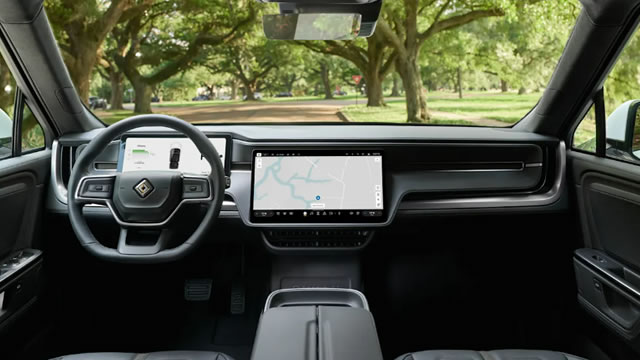
Better Buy: Rivian vs. Ford
The Motley Fool· 2025-08-09 22:05
Core Viewpoint - The electric vehicle (EV) market is evolving, with a contrast between growth-oriented start-ups like Rivian and established automakers like Ford, with Ford currently positioned as the better investment choice [2][12][14]. Rivian - Rivian has ambitious growth plans but faces heavy costs, with a net loss of $541 million in Q1 2025, an improvement from a $1.44 billion loss in Q1 2024 [4]. - The company shifted from gross losses of $527 million in 2024 to a gross profit of $206 million in Q1 2025, yet continues to struggle with cash burn and supply chain inefficiencies [4]. - A strategic partnership with Volkswagen includes a $5 billion investment and joint development of EV platforms, providing confidence and access to global scale, but the new factory under this deal will incur significant costs [6][7]. Ford - Ford has a solid foundation with scale, cash flow, and a dividend, achieving four consecutive years of revenue growth [8]. - The company has embraced EVs with models like the F-150 Lightning and Mustang Mach-E while maintaining a strong lineup of internal combustion vehicles, which provide steady income [9]. - Ford assembles over 80% of its vehicles in the U.S., giving it an advantage against rising tariffs, with an expected $2 billion tariff bill, which is more manageable compared to competitors like General Motors [10]. - The stock trades at a modest multiple of 14 times earnings and offers a reliable dividend yield of around 5.43%, which Rivian cannot match [11]. Investment Outlook - Rivian is seen as a speculative investment with high burn rates and no profits in sight, despite its potential and brand appeal [12]. - Ford is positioned to offer value, income, and relative geopolitical insulation, making it a more compelling choice for investors seeking stability combined with EV growth potential [13][14].


Integral Ad Science (IAS) - 2025 Q2 - Earnings Call Transcript
2025-08-07 22:00
Financial Data and Key Metrics Changes - Total revenue increased by 16% to $149 million, exceeding prior expectations due to higher spending on social measurement offerings and optimization products [24] - Adjusted EBITDA increased by 12% to $52 million, maintaining a 35% margin, driven by higher revenue [30] - Net income for the second quarter was $16 million, or $0.10 per share, compared to $8 million, or $0.05 per share in the prior year [30] Business Line Data and Key Metrics Changes - Optimization revenue grew by 16% to $68 million, benefiting from the industry's shift towards performance products [24] - Measurement revenue increased by 8% to $57 million, with social media revenue growing by 22%, representing 60% of measurement revenue [25] - Publisher revenue rose by 36% to $24 million, representing 16% of total revenue, driven by new CTV products and OEM partnerships [26] Market Data and Key Metrics Changes - International revenue grew by 8% to $43 million, representing 30% of total revenue, with 45% of measurement revenue coming from outside The Americas [27] - The company continues to see strong demand in EMEA and APAC, particularly in social optimization and CTV products [58] Company Strategy and Development Direction - The company is focused on expanding its AI infrastructure to enhance customer relationships and drive demand in the evolving AI landscape [6] - Strategic partnerships with major broadcasters and technology companies are being pursued to enhance product offerings and market reach [15][20] - The company is investing in new capabilities, including GenAI, to accelerate activation and deliver actionable insights [17] Management's Comments on Operating Environment and Future Outlook - Management raised the full-year outlook based on positive second-quarter performance, expecting continued growth in the advertising environment [32] - The company anticipates maintaining gross margins in the range of 77% to 79% for the full year [34] - Management expressed confidence in the ongoing strength of the Oracle business and the adoption of optimization solutions [40] Other Important Information - The company received the first ethical artificial intelligence certification from the Alliance for Audited Media, highlighting its commitment to responsible AI use [20] - The company appointed a new CFO, Alpanna Wagner, who brings over 25 years of financial leadership experience [21] Q&A Session Summary Question: Progress on onboarding Oracle customers - Management noted strong momentum with Oracle customers, with a focus on cross-selling and upselling optimization solutions [39] Question: Critical mass for social optimization adoption - Management indicated that they are seeing significant adoption of pre-bid social optimization, particularly in EMEA, and highlighted a new partnership with Meta for Threads [44] Question: Drivers of growth in the Publisher segment - Management attributed the 36% growth in the Publisher segment to expanding OEM partnerships and the adoption of new CTV products [52] Question: Guidance for Q3 across business lines - Management expects measurement to grow in the high single digits, optimization in the mid-teens, and strong double-digit growth in the Publisher segment [56] Question: Volatility in measurement and optimization segments - Management acknowledged the volatility but emphasized the overall strength and growth across all business lines, particularly in social and CTV [65] Question: Drivers of optimization average CPM growth - Management explained that optimization pricing increased by 10% year over year due to the adoption of QSP, despite a deceleration in optimization volumes [69] Question: Advertiser adoption of Meta optimization products - Management reported that the number of brands adopting Prebid Social on Meta has more than doubled, with significant international adoption [71]

Information Services Group(III) - 2025 Q2 - Earnings Call Transcript
2025-08-07 14:00
Financial Data and Key Metrics Changes - The company reported Q2 revenues of approximately $62 million, a 7% increase year-over-year, excluding results from the previously divested automation unit [6][22] - Adjusted EBITDA rose 17% to $8.3 million, with an adjusted EBITDA margin of 13.5%, up 240 basis points year-over-year [6][22] - Net income for the quarter was $2.2 million, or $0.04 per fully diluted share, compared to $2 million, or $0.04 per fully diluted share in the prior year [23] Business Line Data and Key Metrics Changes - Recurring revenues reached $28 million, up 7% sequentially, representing 45% of overall revenue [7] - AI-related revenue was 2.5 times higher than a year ago, accounting for nearly 20% of total revenue [8] - The Americas region saw revenues increase by 16% to $39.5 million, driven by growth in technology advisory and various industry verticals [15][22] Market Data and Key Metrics Changes - Europe experienced a 21% sequential revenue increase to $16.6 million, with double-digit growth in banking and health sciences [16][22] - Asia Pacific revenues were flat at $5.4 million compared to the prior year [22] - The company noted strong demand in the U.S. and an improving outlook in Europe, with inflation concerns being less severe than initially feared [19] Company Strategy and Development Direction - The company is focusing on AI and has made a strategic acquisition of Martino and Partners to enhance its capabilities in Italy [11][28] - The strategy includes expanding geographic reach and capabilities through tuck-in acquisitions, with a focus on recurring revenue streams [11][49] - The company aims to leverage AI to optimize technology use for clients, driving efficiency and cost savings [13][19] Management's Comments on Operating Environment and Future Outlook - Management expressed optimism about continued demand trends in Q3, driven by cloud, AI, and infrastructure modernization spending [20] - The company anticipates that interest rate cuts will stimulate further tech spending in the next twelve months, with AI as a long-term growth driver [19] - Management acknowledged ongoing uncertainty in Europe but noted that clients are adjusting and moving forward with investments [12][19] Other Important Information - The company generated nearly $12 million in cash during the quarter, marking one of its best cash generation quarters [7][27] - The headcount remained flat at 1,311, with consulting utilization at 76% [24] - The company has approximately $11 million remaining on its share repurchase authorization [25] Q&A Session Summary Question: Sustainability of strong cash generation - Management indicated that strong cash collections were due to improved invoicing and due dates, but does not expect the same level of cash generation in the second half [33] Question: Pipeline and customer engagement - Management noted an acceleration in client engagement, particularly in sectors like energy, utilities, and healthcare, with a full pipeline of opportunities [34][36] Question: Industry verticals leading AI activity - Key sectors driving demand include energy, utilities, banking, pharma, healthcare, and public sector, with significant growth observed [42][44] Question: Acquisition of Martino and Partners - The acquisition aims to enhance capabilities in Italy, particularly in public sector engagements, and is expected to close in early September [11][46] Question: Current state of AI infrastructure - Management described the market as being in the early stages of AI adoption, with ongoing efforts to help clients improve their data infrastructure [52] Question: Labor shortages related to AI - Management stated that they are not turning away business due to labor shortages, as they are utilizing automation and training existing staff [55][57] Question: Geographic performance expectations - The company expects the Americas to continue leading growth, with Europe anticipated to return to year-over-year growth in the second half [58][60] Question: Impact of end-to-end transformation deals on margins - Management indicated that AI-related projects are strongly priced, contributing to margin expansion, with a target of 300 basis points improvement year-over-year [62][63]

X @The Wall Street Journal
The Wall Street Journal· 2025-08-07 13:29
Hippies loved the Volkswagen bus. The company bet that a reboot would resonate with Americans again. Here’s why it flopped. https://t.co/pk4DVMOkLt ...
Rivian's Path To Profitability Gets Longer As Regulatory Changes Squeeze Margins
Benzinga· 2025-08-06 17:49
Core Viewpoint - Rivian Automotive's shares declined following mixed second-quarter results and a downbeat outlook, leading to price target cuts from analysts [1][3][8] Financial Performance - Second-quarter revenue was reported at $1.303 billion, a 5.1% year-over-year increase, slightly exceeding the consensus estimate of $1.29 billion [1] - The adjusted loss was 97 cents per share, wider than the expected 76 cents per share loss, indicating ongoing profitability challenges [2] - Adjusted EBITDA loss was $667 million, significantly worse than the anticipated loss of $492.7 million, attributed to increased investments in the R2 product line and service infrastructure [5][11] Revenue Breakdown - Software and services revenue rose to $376 million from $318 million in the prior quarter, with approximately $182 million from a joint venture with Volkswagen [4] - Regulatory credit revenue was only $3 million, far below the forecast of $107 million, due to legislative changes affecting demand for EPA and CAFE credits [9] Profitability Metrics - Adjusted gross margin fell sharply to 4.9%, down from 26.5% in the previous quarter, primarily due to lower production volumes and fixed cost impacts of approximately $137 million [4] - Core automotive gross margin excluding credits dropped to -36%, compared to an estimated -11%, resulting in a combined gross profit loss of $335 million [10] Guidance and Outlook - Rivian reaffirmed its full-year delivery guidance of 40,000 to 46,000 vehicles but downgraded its profitability outlook, now expecting gross profit to be roughly breakeven, down from a prior forecast of $300 million [5][6] - Adjusted EBITDA guidance was revised to a range of negative $2.25 billion to $2.0 billion, below the consensus estimate of negative $1.88 billion [6][12] Analyst Ratings and Reactions - Wedbush analyst maintained an Outperform rating but lowered the price forecast from $18 to $16, citing regulatory uncertainty and macro headwinds as challenges [3][7] - JP Morgan analyst reaffirmed an Underweight rating and cut the price forecast from $10 to $9, reflecting a more pessimistic view following the wider-than-expected EBITDA loss [8][12] Cash Position - The company maintains sufficient liquidity with $7.5 billion in cash and expected inflows from Volkswagen and DOE loans [13]

中国汽车业_反内卷及其潜在受益者_将广州汽车和中升集团评级上调至增持-China Autos_ Anti-involution and its potential beneficiaries_ Upgrade Guangzhou Auto and Zhongsheng Auto to OW
2025-08-05 03:19
Summary of Key Points from the Conference Call Industry Overview - **Industry**: China Autos - **Key Focus**: The impact of the Chinese government's "anti-involution" initiatives aimed at curbing irrational competition and addressing overcapacity in the automotive sector, particularly in New Energy Vehicles (NEVs) [2][8][12] Core Insights - **Challenging Pricing Environment**: - The average industry capacity utilization rate was around 70% in 2024, with significant variance among OEMs [6][15] - The top 10 brands accounted for only 55% of the market share in 1H25, indicating a lack of market concentration [6][18] - The pricing environment worsened in 2Q25 due to price cuts initiated by key OEMs like BYD and Nissan [14] - **Government Initiatives**: - The government is implementing measures to stabilize pricing and improve margins by phasing out outdated capacity [12][14] - Initial signs of a stabilizing pricing environment are emerging, supported by government actions and company-level restructuring [6][12][37] - **Consolidation Trends**: - A two-phase consolidation is expected, with the first phase involving the exit of smaller OEMs and the second phase seeing Chinese brands gaining market share from foreign brands [6][23][32] Company-Specific Insights - **Guangzhou Auto (GAC)**: - Upgraded from Underweight (UW) to Overweight (OW) with a price target of Rmb11.00, implying a potential upside of 42% [40][58] - GAC is undergoing a comprehensive restructuring aimed at improving profitability, with expected benefits starting in 2026 [41][61] - The company plans to launch new NEV models and enhance its product offerings, focusing on technology and connectivity [44][46] - **Zhongsheng Auto**: - Upgraded to Overweight (OW) due to expected benefits from Mercedes-Benz's restructuring and a strong model cycle [2][40] Financial Projections - **Guangzhou Auto Financials**: - Revenue is projected to grow from Rmb107.78 billion in FY24 to Rmb139.34 billion in FY27 [57] - Adjusted net income is expected to improve significantly, with a forecast of Rmb1.33 billion in FY26 [57] - The company is currently trading at a low price-to-book (P/B) ratio of 0.2x for FY25E and FY26E, indicating favorable risk-reward dynamics [40][41] Risks and Considerations - **Downside Risks**: - Potential risks include worse-than-expected sales volume and profitability at major joint ventures, as well as slower-than-anticipated growth for GAC's own-brand operations [63] Conclusion - The Chinese automotive sector is poised for a turnaround driven by government initiatives and company-level restructuring, with specific companies like Guangzhou Auto and Zhongsheng Auto positioned to benefit significantly from these changes [2][8][40][58]
