
BAE Systems

Search documents
BAE Systems: Underperformance Isn’t What It Seems; Here’s The Real Story (BAESF)
Seeking Alpha· 2025-12-26 09:59
Core Insights - The article emphasizes the importance of data-driven analysis in identifying investment opportunities within the aerospace, defense, and airline sectors [2]. Group 1: Analyst Background - Dhierin-Perkash Bechai is an analyst specializing in aerospace, defense, and airline industries, leveraging a background in aerospace engineering to provide insights [2]. - The investing group, The Aerospace Forum, aims to uncover investment opportunities in these sectors, highlighting significant growth prospects [2]. Group 2: Investment Research Service - The Aerospace Forum is described as the leading investment research service on Seeking Alpha, offering access to proprietary data analytics tools [1]. - The service is designed to provide comprehensive reports and data to assist investors in making informed decisions [1].


3 Growing European Defense Stocks
The Motley Fool· 2025-12-23 03:26
Industry Overview - The European defense industry is experiencing a significant upward trend due to geopolitical tensions, particularly the ongoing conflict in Ukraine, which has shifted European countries' perspectives on military capabilities [2][4]. - NATO members are increasing their defense spending commitments, with some countries aiming for up to 5% of GDP, driven by the urgency of the Ukraine war [3][4]. Company Analysis Rheinmetall - Rheinmetall, based in Germany, has seen its stock value increase over 12 times since the onset of the Ukraine conflict, with projected annual sales growth exceeding 30% and earnings growth around 50% for the next few years [6][8]. - The company has a market capitalization of $84 billion and is the largest defense firm in Europe, benefiting from increased public spending in Germany and rising NATO spending targets [8][9]. - Despite a high forward price-to-earnings ratio of 39, which is above the European defense average of 28, the stock is trading 24% below its yearly highs, indicating potential for further growth [9]. Kongsberg Gruppen - Kongsberg, Norway's national defense champion, is projected to achieve mid-teens sales growth in the coming years, driven by its involvement in drones, missile projects, and air defense systems [10][12]. - The company plans to spin off its slower-growing maritime business in April 2026, positioning itself for more than 20% annual growth as a pure play [12]. - Kongsberg has a market cap of $22 billion and a forward P/E ratio of 28, aligning with the industry average, suggesting room for growth from its smaller base [13]. BAE Systems - BAE Systems, one of the largest defense firms in the UK, is expected to see annual sales growth of around 7% over the next two years, which is slower compared to other firms [14]. - Nearly half of BAE's sales come from contracts with the U.S. Department of Defense, providing stability and a strong hedge against market fluctuations [15]. - The company has a more reasonable forward P/E ratio of 21, indicating a solid valuation relative to its growth prospects [14].
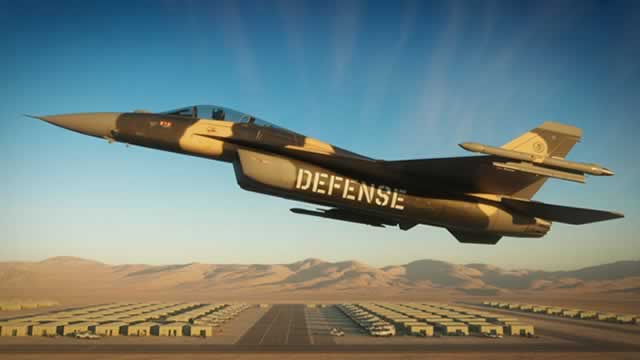
Trade Surveillance System Market to Surpass USD 9.31 Billion by 2033, Driven by Rising Regulatory Scrutiny and Electronic Trading Growth | SNS Insider
Globenewswire· 2025-12-20 13:00
Market Overview - The Trade Surveillance System Market is valued at USD 2.53 billion in 2025 and is projected to reach USD 9.31 billion by 2033, with a CAGR of 17.75% from 2026 to 2033 [1][2] U.S. Market Insights - The U.S. Trade Surveillance System Market is valued at USD 0.76 billion in 2025 and expected to grow to USD 2.73 billion by 2033, with a CAGR of 17.40% from 2026 to 2033 [4] Market Drivers - The growth of the trade surveillance systems market is driven by increased regulatory pressure to identify market abuse, insider trading, and fraudulent activities in real time [2][11] - The complexity of multi-asset markets, rapid expansion of electronic trading, and increasing transaction volumes are key factors contributing to market growth [2] Segmentation Analysis By Component - Solutions hold a 41.8% market share, with analytics and reporting tools being the fastest-growing segment at a CAGR of 21.4% [5] By Deployment Type - Cloud-based solutions lead with a 47.6% market share, while hybrid deployment is the fastest-growing segment with a CAGR of 20.2% [6] By Organization Size - Large enterprises account for 45.2% of the market share, with SMEs being the fastest-growing segment at a CAGR of 18.7% [8] By End-User Industry - The BFSI sector leads with a 38.9% market share, while capital markets and trading firms are the fastest-growing segment with a CAGR of 20.9% [9] Regional Insights - North America dominates the market with approximately 35% revenue share in 2025, driven by a highly regulated financial ecosystem and early adoption of advanced monitoring technologies [10] - The Asia Pacific region is projected to grow at the fastest CAGR of about 19.56% from 2026 to 2033, fueled by the rapid expansion of digital trading platforms and tightening regulatory requirements [10] Regulatory Environment - Global financial regulators are enforcing stricter laws to prevent market manipulation and insider trading, leading to increased demand for advanced surveillance technologies [11] Key Players - Notable companies in the market include Nasdaq Inc., NICE Actimize, Aquis Technologies, and BAE Systems among others [14] Recent Developments - Nasdaq launched Surveillance AI in 2024, an advanced platform for detecting complex market manipulation [15] - NICE Actimize introduced X-Sight in 2025, a unified surveillance platform for correlating trading activities across various asset classes [15]

BAE Systems halves stake in Kazakh carrier Air Astana
Reuters· 2025-12-16 17:43
Group 1 - BAE Systems will reduce its stake in Kazakh carrier Air Astana by nearly half [1]

BAE Systems Secures a Contract to Support USS Forrest Sherman
ZACKS· 2025-12-16 15:51
Core Insights - BAE Systems Inc. has secured a $117.7 million contract for the maintenance, modernization, and repair of the USS Forrest Sherman (DDG 98), with completion expected by August 2027 [1][10] - The majority of the work will be conducted in Norfolk, VA [2] Growth Prospects for BAE Systems - Global defense spending is increasing, particularly on military weapons and naval vessels, with a forecasted compound annual growth rate of 6.46% for the naval vessels market from 2025 to 2030 [3] - BAE Systems is positioned to benefit from this trend through its Platforms & Services business, which manufactures and upgrades combat vehicles, weapons, and provides naval ship repair [4] Opportunities for Other Defense Stocks - Lockheed Martin (LMT) is involved in integrated warfare systems and has a long-term earnings growth rate of 11.9%, with a 2025 sales growth estimate of 4.7% [5][6] - Huntington Ingalls Industries (HII) constructs various naval vessels and has a long-term earnings growth rate of 13.8%, with a 2025 sales growth estimate of 4.7% [7][8] - General Dynamics (GD) is a leader in nuclear-powered submarines and has a long-term earnings growth rate of 13.1%, with a 2025 sales growth estimate of 8.9% [8]

Defense Stocks Tumble as U.S. Offers Ukraine Security Guarantee
Barrons· 2025-12-16 10:19
Group 1 - European defense stocks experienced a significant sell-off, with the Stoxx Europe Total Market Aerospace and Defense index declining by 1.9% following the U.S. offering a security guarantee to Ukraine, which may contribute to peace in the region [1][2] - The best-performing stock in the index, Safran, saw a minor decrease of 0.3%, while Saab, a Swedish aerospace company, was the largest decliner, dropping by 6.4% [2] - Major blue-chip companies such as Leonardo and Rheinmetall both experienced declines of approximately 4.5%, with Indra Sistemas falling by 5%, and BAE Systems and Babcock decreasing by 2.2% and 1.75% respectively [2]
全球及中国多功能军用雷达行业现状分析与前景规模预测报告2026年版
Sou Hu Cai Jing· 2025-12-12 16:46
Core Insights - The report provides a comprehensive analysis of the multifunctional military radar market, including growth trends, market segmentation, and competitive landscape [2][3][4]. Market Overview - The multifunctional military radar market is categorized by product types such as L-band, S-band, C-band, and X-band, with projected growth trends from 2020 to 2031 [2][3]. - The market is also segmented by applications, including air and missile defense, intelligence, surveillance, reconnaissance, navigation, weapon guidance, and space situational awareness [2][3]. Industry Development Status - The report outlines the overall development status of the multifunctional military radar industry, highlighting key characteristics and influencing factors [3][4]. - It discusses both favorable and unfavorable factors affecting industry growth, as well as barriers to entry [3][4]. Supply and Demand Analysis - Global supply and demand trends for multifunctional military radar from 2020 to 2031 are analyzed, including production capacity, output, and utilization rates [3][4]. - The report provides insights into the production and demand trends specifically for the Chinese market [3][4]. Regional Market Analysis - The report includes a detailed analysis of the multifunctional military radar market across major regions, including North America, Europe, Asia-Pacific, Latin America, and the Middle East and Africa [4][5]. - It presents sales revenue and market share data for these regions from 2020 to 2025, along with forecasts for 2026 to 2031 [4][5]. Competitive Landscape - The competitive landscape of the multifunctional military radar market is examined, detailing market share and sales data for leading manufacturers [5][6]. - The report categorizes manufacturers into tiers based on their market presence and provides insights into their product offerings and applications [5][6]. Product and Application Analysis - The report analyzes sales and revenue trends for different product types and applications of multifunctional military radar from 2020 to 2031 [6][7]. - It includes forecasts for market share and pricing trends for various product types and applications [6][7]. Industry Trends and Drivers - The report identifies key trends and drivers influencing the multifunctional military radar industry, including technological advancements and regulatory factors [7][8]. - A SWOT analysis of Chinese enterprises in the industry is also included [7][8]. Supply Chain Analysis - The supply chain dynamics of the multifunctional military radar industry are discussed, including procurement, production, and sales models [8][9]. - The report highlights key raw materials and major downstream customers in the industry [8][9].



金融网络安全靶场市场深度分析-筑牢数字金融的“数字沙盘”
QYResearch· 2025-12-12 02:22
Core Viewpoint - The financial cybersecurity range is evolving from a technical validation tool to a core infrastructure for digital financial security, enhancing the defensive capabilities of financial institutions and promoting proactive immunity against cyber threats [5]. Industry Overview - The financial cybersecurity range integrates virtualization, big data, and other technologies to provide a comprehensive security infrastructure for financial institutions, including attack-defense drills, vulnerability verification, emergency response training, and system testing [1]. - The industry value chain consists of upstream technology providers, midstream platform developers, and downstream financial institutions, forming a complete chain from equipment supply to operational services, with a gross margin of approximately 50-65% [3]. Market Trends - According to QYResearch, the global financial cybersecurity range market is projected to reach $1.37 billion by 2031, with a compound annual growth rate (CAGR) of 7.1% over the coming years [3]. - The financial cybersecurity range is becoming a critical infrastructure in the digital transformation of the financial industry, driven by the acceleration of digitalization and the evolution of cyberattack methods [5]. Industry Chain Collaboration - The industry chain covers three main segments: upstream technology support focusing on core technology development, midstream platform construction and operation, and downstream application scenarios expanding to fintech companies and third-party payment platforms [7]. - Upstream focuses on core technology research, including virtualization engines and AI attack-defense algorithms, while midstream involves specialized security vendors providing modular designs for core functional modules [7]. Policy Drivers - Global financial regulatory frameworks have set clear requirements for the construction of cybersecurity ranges, with policies accelerating their adoption among financial institutions [8]. - The Chinese "Financial Technology Development Plan (2022-2025)" emphasizes the establishment of a cybersecurity attack-defense exercise system, mandating regular drills for financial institutions [8]. Challenges and Opportunities - The financial cybersecurity range faces challenges such as reliance on imported technologies, high construction costs, and a significant talent gap in the industry [9]. - The market has high entry barriers, requiring expertise in core patents, substantial funding, and compliance with security certifications [10]. Future Directions - The financial cybersecurity range is expected to evolve into a "financial security brain," integrating various technologies and expanding its application scenarios [10]. - Companies are encouraged to pursue differentiated competition by focusing on full-scenario coverage in the financial industry and collaborating with academic institutions to overcome technological bottlenecks [10].
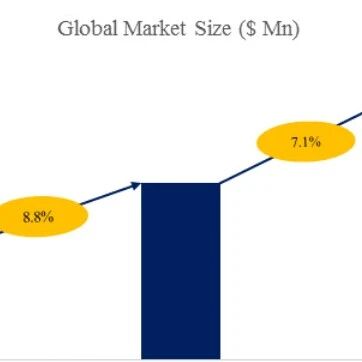
BAE Systems wins $1.7 billion US Navy contract
Reuters· 2025-12-10 15:16
Core Viewpoint - BAE Systems, the largest defense company in Britain, has been awarded a significant contract by the U.S. Navy, valued at up to $1.7 billion over five years for the supply of laser-guidance kits [1] Group 1: Company Overview - BAE Systems is recognized as Britain's biggest defense contractor [1] - The awarded contract is part of the company's ongoing relationship with the U.S. Navy [1] Group 2: Contract Details - The contract spans five years and is worth up to $1.7 billion [1] - The purpose of the contract is to supply laser-guidance kits that convert unguided rockets into precision-guided munitions [1]

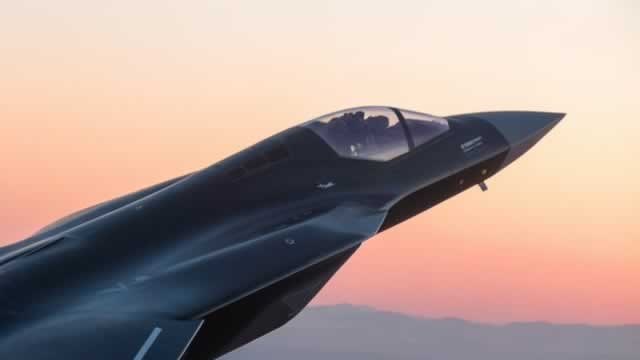
Ducommun Incorporated named BAE Systems Supplier of the Year for Vertical Launch Systems at Seventh Annual ‘Partner2Win’ Supplier Symposium
Globenewswire· 2025-12-04 11:30
Core Points - Ducommun Incorporated has been awarded the Vertical Launch Systems Supplier of the Year by BAE Systems, recognizing its exceptional performance and commitment to operational excellence in 2025 [1][2] - The award highlights Ducommun's contributions to the supply chain success of BAE Systems, ensuring quality and timely deliveries of combat vehicles and weapon systems to the U.S. military and its allies [1][2] - This recognition marks Ducommun as a Gold Supplier for the third consecutive year, reflecting its ongoing commitment to excellence in supporting BAE Systems programs [2] Company Overview - Ducommun Incorporated specializes in providing value-added, innovative manufacturing solutions and products primarily for the aerospace, defense, and industrial markets [5] - The company focuses on two core areas: Electronic Systems and Structural Solutions, producing complex products and components for commercial aircraft, military, and space programs [5] Industry Context - BAE Systems' 'Partner2Win' program, now in its seventh year, acknowledges suppliers excelling in operations, quality, and procurement, fostering close relationships and sharing best practices to drive mutual success [3] - BAE Systems operates as a global defense, aerospace, and security company with approximately 100,000 employees worldwide, delivering a full range of products and services across various domains [4]

