AMD

Search documents
AMD Unveils New AI Chips and Processors. The Stock Is Rising.
Barrons· 2026-01-06 10:01
Advanced Micro Devices CEO Lisa Su believes the computer artificial-intelligence revolution is in the early innings. ...

AMD CEO Lisa Su Says AI Is Entering 'Yottascale' Era At CES 2026: Predicts 'Massive Increase' In Global Compute Demand, Far Beyond Data Centers - Advanced Micro Devices (NASDAQ:AMD)
Benzinga· 2026-01-06 08:57
Core Insights - AMD CEO Lisa Su announced a vision for the "yottascale" era of computing, indicating a significant increase in global demand for computing resources driven by AI advancements [2][4] - The transition to this new era will require a broader computing footprint, including cloud systems, AI PCs, and embedded computing, emphasizing the need for an open ecosystem and industry collaboration [3][4] Industry Trends - The demand for AI computing resources is expected to accelerate, with Su highlighting that AI represents a transformative technology that will be ubiquitous [2][4] - Concerns have been raised about a potential slowdown in AI capital expenditures, although major tech companies continue to invest heavily in AI infrastructure [5] Competitive Landscape - AMD's stock experienced a slight decline of 1.07% to close at $221.08, but showed a 0.4% increase overnight, indicating a favorable momentum in the medium and long term [7]

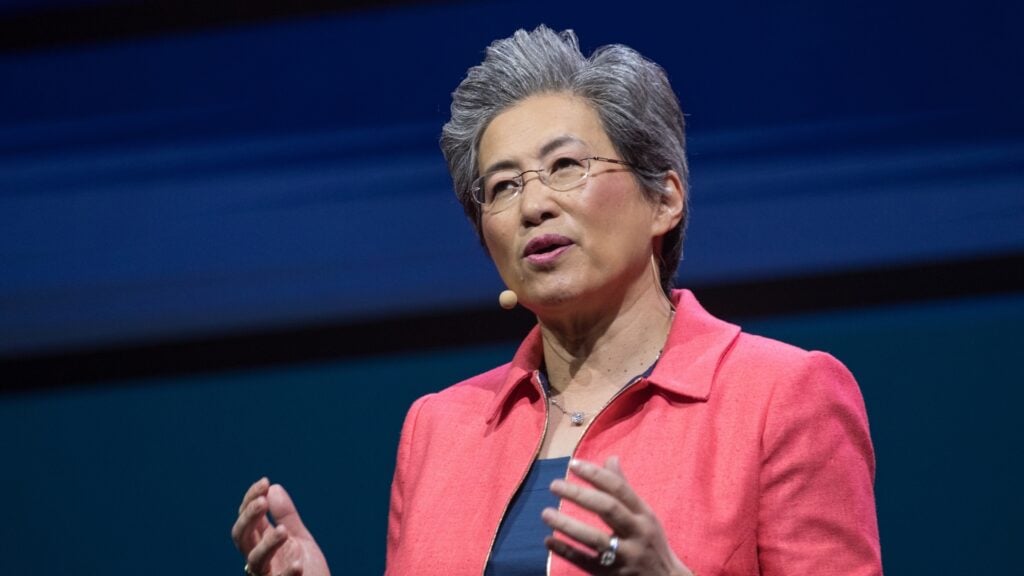
AMD deepens enterprise AI push with new data centre chips
Invezz· 2026-01-06 08:57
Core Insights - Advanced Micro Devices Inc. (AMD) has introduced a new chip targeting smaller corporate data centers, indicating a strategic move to capture a segment of the market that has been traditionally dominated by larger players [1] - The company has also outlined a long-term roadmap aimed at closing the competitive gap with market leader Nvidia Corp, suggesting a focus on innovation and market share expansion [1] Company Developments - The new chip is specifically designed for smaller corporate data centers, which reflects AMD's strategy to diversify its product offerings and cater to a broader range of customers [1] - AMD's long-term roadmap includes plans to enhance its technology and product capabilities, which may lead to increased competitiveness against Nvidia in the graphics processing unit (GPU) market [1] Industry Context - The introduction of AMD's new chip comes at a time when the demand for data center solutions is growing, highlighting the importance of innovation in meeting market needs [1] - AMD's efforts to narrow the gap with Nvidia indicate a competitive landscape in the semiconductor industry, where advancements in technology are crucial for maintaining market position [1]

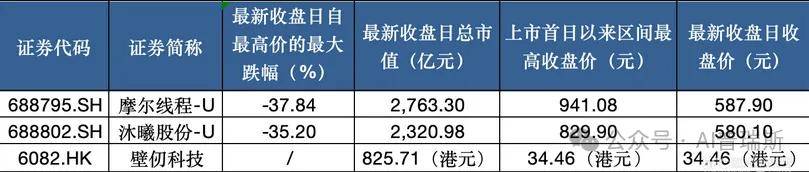
市值回落近40%,国产GPU神话终结?
Sou Hu Cai Jing· 2026-01-06 07:20
Core Viewpoint - The domestic GPU sector is experiencing a rare capital-intensive period, with companies like Moore Threads, Muxi Co., and Birran Technology achieving significant market attention and initial public offering (IPO) success, but investor enthusiasm has quickly cooled, leading to substantial stock price corrections [1][8]. Group 1: Market Performance - Moore Threads and Muxi Co. saw their stock prices drop nearly 40% from their respective peaks shortly after their IPOs, indicating a significant market correction [1][2]. - Birran Technology's market capitalization is notably lower than that of Moore Threads and Muxi Co., despite a strong initial performance, with a first-day increase of 75.82% but a market value only one-third of the other two companies [1][2]. - The domestic GPU sector transitioned from a state of "extreme enthusiasm" to "rational cooling" within a month [1]. Group 2: Financial Metrics - As of the latest data, Moore Threads has a market capitalization of approximately 2887 billion, down from an initial 4400 billion, reflecting a 37% decline [2][3]. - Muxi Co. reported a market value of 2418 billion, with a stock price decline of about 35% from its highest point [2][6]. Group 3: Industry Challenges - All three companies are in a "high investment, low revenue, unprofitable" phase, with combined R&D expenditures in the tens of billions over the past three years, yet their revenue remains limited [8]. - The GPU industry is characterized by high capital requirements and long development cycles, particularly for complex chips, which leads to significant cash consumption [8]. - The competitive landscape is dominated by major players like NVIDIA, AMD, and ASIC, which hold a combined market share of 91.1% in the AI chip market, leaving little room for domestic manufacturers [9]. Group 4: Ecosystem and Competition - The competition in the GPU market extends beyond performance metrics to include the developer ecosystem, with NVIDIA's CUDA framework being a de facto industry standard [10]. - Domestic manufacturers are exploring different strategies, such as compatibility with CUDA or building their own ecosystems, but face challenges in disrupting the existing market dynamics [10]. Group 5: Future Outlook - The recent stock price corrections reflect a market reassessment of the "imagination space" of domestic alternatives versus the reality of their operational timelines [11]. - The true test for these companies will come in subsequent financial reporting periods, focusing on order sustainability, product integration into core applications, ecosystem development, and cash flow management [11]. - The stock price decline may not signify the end of the narrative but could represent the beginning of a long-term competitive journey for domestic GPU companies [11].
AMD and its Partners Share their Vision for "AI Everywhere, for Everyone" at CES 2026
Financialpost· 2026-01-06 04:34
Core Viewpoint - Advanced Micro Devices, Inc. (AMD) is focusing on the development and expected benefits of its new product lines, particularly in the AI and computing sectors, while acknowledging the inherent risks and uncertainties in the semiconductor industry [1]. Product Development - AMD is launching several new product lines including the AMD "Helios" rack-scale platform, AMD Instinct™ MI400 Series, AMD Instinct™ MI500 Series, and various AMD Ryzen™ AI processors [1]. - The company anticipates significant future demand for AI technologies and aims to leverage ecosystem partnerships to enhance its market position [1]. Market Conditions - AMD operates in a highly competitive semiconductor market characterized by cyclical trends and varying demand across different industries [1]. - The company faces challenges such as the timely introduction of products, potential loss of significant customers, and economic uncertainties that could impact sales [1]. Manufacturing and Supply Chain - AMD relies on third-party manufacturers for product production and is subject to risks related to manufacturing yields, supply chain efficiency, and the availability of essential materials and technologies [1]. - The company must navigate potential security vulnerabilities and disruptions in its internal business processes and information systems [1]. Regulatory and Environmental Factors - AMD is affected by government regulations, including export controls and trade tariffs, which could impact its operations and market access [1]. - The company is also mindful of environmental laws and corporate responsibility expectations from stakeholders [1].

AMD and its Partners Share their Vision for “AI Everywhere, for Everyone” at CES 2026
Globenewswire· 2026-01-06 04:30
Core Insights - AMD is leveraging its extensive AI product portfolio and industry collaborations to create real-world impacts from AI technology [2][4] - The company is entering an era of yotta-scale computing, with a projected increase in global compute capacity from 100 zettaflops to over 10 yottaflops in the next five years [5] AI Infrastructure - The AMD "Helios" rack-scale platform is designed to deliver up to 3 AI exaflops of performance in a single rack, focusing on maximum bandwidth and energy efficiency for large-scale AI training [6] - The platform is powered by AMD Instinct MI455X accelerators, EPYC "Venice" CPUs, and Pensando "Vulcano" NICs, all integrated through the open AMD ROCm software ecosystem [6] Product Launches - AMD unveiled the full AMD Instinct MI400 Series accelerator portfolio and previewed the next-generation MI500 Series GPUs, which are expected to deliver up to a 1,000x increase in AI performance compared to the MI300X GPUs [7][9] - The new AMD Instinct MI440X GPU is designed for enterprise AI deployments, supporting scalable training and inference workloads [7][8] AI in PCs - AMD introduced new Ryzen AI platforms for AI PCs, including the Ryzen AI 400 Series, which delivers 60 TOPS NPU and supports seamless cloud-to-client AI scaling [10][11] - The Ryzen AI Max+ series supports models with up to 128 billion parameters, enhancing local inference and content creation capabilities [12] Embedded AI Solutions - AMD launched the Ryzen AI Embedded processors, aimed at powering AI-driven applications in various sectors, including automotive and healthcare [14] Strategic Initiatives - AMD is participating in the U.S. government's Genesis Mission, which aims to secure U.S. leadership in AI technologies and includes the deployment of AMD-powered AI supercomputers [15][16] - The company committed $150 million to expand AI education and access in classrooms and communities [16]

As AMD chases Nvidia, here's how it's positioning itself for the future of AI
MarketWatch· 2026-01-06 04:13
Core Insights - AMD CEO Lisa Su emphasized the company's focus on cost benefits, memory improvements, and a transition towards real-world AI applications, highlighting the growing demand for computing power [1] Group 1: Cost Benefits - The keynote addressed significant cost advantages that AMD is leveraging to enhance its competitive position in the market [1] Group 2: Memory Improvements - AMD is making strides in memory technology, which is expected to contribute to better performance and efficiency in its products [1] Group 3: AI Transition - The company is shifting its focus towards practical AI applications, indicating a strategic move to meet the increasing demand for advanced computing capabilities [1] Group 4: Demand for Compute Power - There is an insatiable demand for compute power, which AMD aims to fulfill through its innovative technologies and product offerings [1]
AMD Speeds Up Its Mobile Processors
CNET· 2026-01-06 04:05
Core Insights - AMD is expected to refresh its Ryzen AI lines, focusing on mobile processors transitioning from the 300 series to the 400 series, along with updates to its gaming-focused desktop processors [1] Product Updates - The Ryzen 7 9850X3D is introduced in the 9000X series, offering a 7% performance improvement with a clock speed of 5.6GHz compared to the 5.5GHz of the Ryzen 7 9900X3D [3] - Two new processors, Ryzen AI Max Plus 392 and Ryzen AI Max Plus 388, have been added to the Ryzen AI Max Plus 300 series, featuring an upgrade in GPU performance from 32 to 40 compute units [4] - The Ryzen AI 400 series is launched, providing faster versions of the 300-series equivalents, with improvements in NPU performance, reaching up to 60 TOPS for the HX 475 model [5] New Product Launches - AMD has developed a compact desktop system named Ryzen AI Halo for local AI development, capable of handling models with up to 200 billion parameters, featuring a Ryzen AI Max chip and 128GB shared memory [6]
AMD (NasdaqGS:AMD) 2026 Conference Transcript
2026-01-06 03:32
Summary of CES 2026 Keynote Address by AMD CEO Dr. Lisa Su Industry Overview - The keynote was part of CES 2026, a major technology event showcasing innovations across various sectors, particularly focusing on AI and high-performance computing [1][4][5] - AMD is positioned as a central player in the global AI transformation, emphasizing its role in high-performance and AI computing [5][6] Core Points and Arguments AI and Computing Demand - AI is described as the most important technology of the last 50 years, with AMD prioritizing its development [15][16] - The number of active AI users has surged from 1 million to over 1 billion, with projections of reaching over 5 billion users [16][17] - Global compute infrastructure demand is expected to grow from approximately 1 Zettaflop in 2022 to over 100 Zettaflops by 2025, necessitating a further increase to over 10 Yottaflops in the next five years [17][19] - AI's integration into various sectors, including healthcare, education, and productivity, is highlighted as transformative [15][16] AMD's Technological Innovations - AMD's Helios platform is introduced as a next-generation rack scale solution designed for AI, featuring advanced MI455 GPUs and EPYC CPUs [23][30] - The MI455 GPU boasts 320 billion transistors and is designed for high performance, delivering up to 10 times more performance compared to previous generations [27][30] - The Helios rack is designed for optimal serviceability and reliability, weighing nearly 7,000 pounds and integrating cutting-edge technologies [24][25][26] Partnerships and Collaborations - AMD's collaboration with OpenAI is emphasized, showcasing the need for increased compute capacity to support advanced AI models [31][39] - Luma AI's CEO, Amit Jain, discusses their partnership with AMD, highlighting the efficiency and performance improvements achieved through AMD's hardware [50][59] Future Outlook - The demand for compute is expected to continue growing, with AMD's next-gen MI500 series already in development, promising a 1,000x increase in AI performance over four years [63][64] - The Ryzen AI 400 Series is introduced as the most advanced family of AI PC processors, set to enhance productivity and content creation capabilities [67][68] Additional Important Content - The keynote emphasizes the collaborative nature of innovation, stating that AI is not a solo act but a shared pursuit among industry leaders [2][4] - The importance of an open ecosystem for AI development is stressed, with AMD advocating for shared technology standards across hardware and software [48][49] - The potential of AI in personal computing is highlighted, with AI PCs becoming essential partners in productivity and creativity [65][66] This summary encapsulates the key themes and innovations presented during the CES 2026 keynote by AMD's CEO, focusing on the transformative impact of AI and the company's strategic advancements in computing technology.
AMD Introduces Ryzen AI Embedded Processor Portfolio, Powering AI-Driven Immersive Experiences in Automotive, Industrial and Physical AI
Globenewswire· 2026-01-06 03:32
Core Insights - AMD has launched the Ryzen AI Embedded processors, specifically the P100 and X100 Series, aimed at enhancing AI-driven applications in various sectors such as automotive and industrial markets [2][10]. Product Features - The new processors utilize the "Zen 5" core architecture, RDNA 3.5 GPU, and XDNA 2 NPU, all integrated into a single chip, providing high performance and efficient AI compute capabilities [3][10]. - The P100 Series features 4-6 cores optimized for digital cockpits and human-machine interfaces, offering up to a 2.2X performance boost compared to the previous generation [5][10]. - The X100 Series is designed for more demanding applications, featuring higher CPU core counts and AI TOPS performance [4][10]. Performance Metrics - The P100 Series processors deliver an estimated 35% faster rendering, capable of supporting up to four 4K or two 8K displays at 120 frames per second [6][10]. - The XDNA 2 NPU in these processors can achieve up to 50 TOPS, providing up to 3X higher AI inference performance compared to previous models [7][10]. Software and Development - The processors come with a unified software stack that includes optimized CPU libraries and open-standard GPU APIs, facilitating easier development for OEMs and developers [8][9]. - The software stack is built on an open-source virtualization framework, allowing multiple operating systems to run securely in parallel, which aids in reducing costs and accelerating production timelines [9]. Availability - The P100 Series processors are currently sampling with early access customers, with production shipments expected in the second quarter of 2026 [12].