
Neuralink

Search documents
X @Bloomberg
Bloomberg· 2025-09-19 04:18
RT Saritha Rai (@SarithaRai)A rash of Chinese startups is challenging Musk's Neuralink in cutting-edge field in US-China AI wars: brain computer interfaces.Backed by Beijing, they've unleashed a wave of clinical trials @business @AmberTongPWGift link (free to read until Sept 26)https://t.co/cRivMC8Jzi https://t.co/sI1M85HUlN ...
资本涌入脑机接口:融资频创新高,企业格局一览
Sou Hu Cai Jing· 2025-09-19 04:16
Core Insights - The brain-computer interface (BCI) sector is experiencing a significant surge in investment and financing activities, with notable examples including Shanghai Brain Rhythm Technology's angel round financing and Guangdong Daoshi Technology's investment in Qiangnao Technology [1][2] - In 2024, the financing activities in the BCI field accelerated, with the total investment in the first half of the year surpassing the entire previous year, and a notable $650 million raised by Neuralink in its Series E funding round [1][2] Investment Trends - Domestic companies are also showing strong performance, with Beijing Zhiruan Medical Technology completing over 300 million RMB in Series A financing and other companies like BrainCo and Boryu Kang securing significant funding to advance their BCI technologies [2] - The largest domestic financing in the implanted BCI sector to date was completed by JieTi Medical, raising 350 million RMB to accelerate clinical trials and technology development [2] Industry Chain and Market Outlook - The BCI industry chain in China has been established, covering components from chips to terminal applications, with a clear direction for development outlined in a report by the China Academy of Information and Communications Technology [3] - The report emphasizes the importance of a closed-loop system connecting research, clinical applications, and industry, with ongoing clinical trials and technological advancements [3] Technological Diversity and Healthcare Focus - BCI technology is expanding into various fields, including medical rehabilitation and cognitive enhancement, with non-invasive optical BCI technologies gaining significant attention due to their safety and scalability [4] - The first prospective clinical trial of an invasive BCI in China has been successfully conducted, showcasing the potential for AI-assisted BCIs to improve patient capabilities [4] Corporate Innovations and Compliance - Companies are actively exploring compliant business models, with innovations such as closed-loop stimulators for Parkinson's disease treatment and high-density flexible electrode systems [5] - Huichuang Medical has developed a complete closed-loop BCI system and is collaborating with hospitals to establish BCI assessment clinics [5] Consumer Applications - In the consumer electronics sector, BCIs are enhancing user experiences through non-invasive devices that monitor brain activity and provide personalized interventions for mental health and cognitive training [7] Policy and Standardization - The establishment of the Brain-Computer Interface Standardization Technical Committee by the Ministry of Industry and Information Technology aims to optimize standards and accelerate technological development [8] - Recent policies are set to foster innovation in the BCI industry, with goals to establish a competitive ecosystem by 2030 [8]

X @Bloomberg
Bloomberg· 2025-09-19 02:27
Chinese startups are accelerating brain implant trials, mounting a direct challenge to Elon Musk’s Neuralink https://t.co/2RINNptLpq📷: Qilai Shen/Bloomberg https://t.co/1J3Ze7q4Oj ...
拆分即上市,脑机接口赛道添“独角兽”
思宇MedTech· 2025-09-19 02:19
Core Viewpoint - Vivani Medical is splitting its subsidiary Cortigent, allowing both companies to focus on their respective business areas, with Vivani concentrating on micro drug delivery systems and Cortigent on neural modulation and brain-computer interface technologies [4][14]. Group 1: Vivani's Split of Cortigent - Vivani announced the split plan in May 2025 and confirmed the record date in September, with shareholders receiving shares of Cortigent based on their holdings [4]. - The split aims to create two independent companies that can generate value in their respective fields, enhancing strategic flexibility and optimizing capital structures [4][14]. Group 2: Vivani's Business Focus - Post-split, Vivani will focus on implantable drug delivery systems, particularly long-acting GLP-1 drug delivery devices, and will expand into other chronic disease treatments [5][10]. - The company plans to collaborate with pharmaceutical firms to accelerate clinical progress and commercialization, aligning with the trend of long-term treatment and chronic disease management [10]. Group 3: Cortigent's Business Layout - Cortigent will focus on neural modulation and brain-computer interface (BCI) technologies, aiming to help patients restore critical physiological functions through implanted neural stimulation and visual prosthetics [6][13]. - The product pipeline includes a stroke rehabilitation system designed to assist stroke patients in regaining motor and sensory functions [8]. Group 4: Clinical and Regulatory Progress - The Orion system has completed a six-year follow-up feasibility study, showing safety and functional improvement potential in severely blind patients [9]. - Cortigent plans to initiate pivotal clinical trials for Orion to facilitate FDA approval and conduct early clinical research for the stroke rehabilitation system [18]. Group 5: Capital Operations and Strategic Implications - The split enhances strategic flexibility, allowing both companies to independently develop R&D and commercialization plans, thus avoiding resource dilution [14]. - Each company can design financing models suited to their business characteristics, with Vivani focusing on drug delivery and Cortigent seeking capital in the neural modulation and BCI markets [15]. - Shareholders will benefit from continued growth in Vivani while also gaining exposure to the emerging field of neural modulation and BCI through their ownership in Cortigent [16]. Group 6: Industry Context and Trends - The split reflects the increasing interest in brain-computer interfaces and neural modulation, with companies like Neuralink and Synchron gaining attention [20]. - Regulatory bodies, such as the FDA, are showing more support for implantable BCI systems, indicating a shift towards clinical implementation [20][21]. - The industry is moving from conceptual stages to serious industrialization and capitalization, with companies seeking to enhance strategic clarity and financing efficiency through specialization [21].

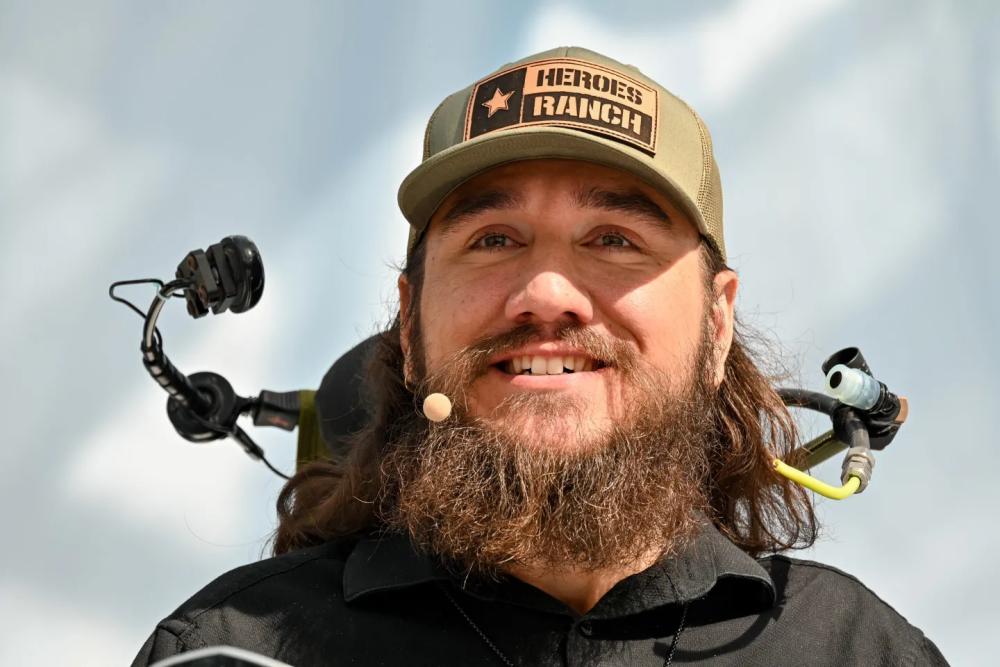
首位Neuralink脑机芯片植入者自述:马斯克帮我重生,他太酷了
3 6 Ke· 2025-09-18 10:41
Core Insights - Noland Arbaugh, the first human to receive a Neuralink brain chip, shared his transformative experience and interaction with Elon Musk, highlighting the potential of brain-machine interface technology [2][4] Group 1: Background and Personal Journey - Arbaugh, a 29-year-old, became paralyzed from the neck down after a diving accident in 2016, leading to a life of dependency and limited mobility for eight years [3] - A turning point came when a friend suggested the possibility of a brain chip implant, to which Arbaugh agreed, feeling he had nothing to lose [3] Group 2: Neuralink and Technological Advancements - Neuralink, founded by Elon Musk in 2016, developed brain-machine interface technology and received FDA approval for human testing in May 2023 [3] - Arbaugh underwent a two-hour surgery on January 28, 2024, where a coin-sized chip was implanted in his skull, connected to thousands of ultra-thin electrodes [3] Group 3: Post-Surgery Experience and Impact - Arbaugh reported that he felt no discomfort from the chip, stating, "If no one told me, I wouldn't feel the chip's presence" [4] - He demonstrated the technology by controlling a computer cursor with his thoughts during a live chess match, emphasizing its intuitive use [4] - His life has significantly changed; he returned to university to study neuroscience, started his own company, and traveled to various cities, embodying the role of an unofficial ambassador for the technology [4]
X @Elon Musk
Elon Musk· 2025-09-18 08:45
RT Ellie in Space 🚀💫 (@esherifftv)"Neuralink was like a gift from God"Powerful words from P7.I had the privilege of interviewing Jake Schneider, Neuralink's 7th patient, about what life is like now having a Neuralink brain implant for 3 months.Jake was diagnosed with ALS a few years ago and says before Neuralink, he felt overcome by hopelessness due to his condition.He says now @neuralink not only enhances his quality of life, but working with the team gives him a sense of purpose. And his son says his dad ...
X @Tesla Owners Silicon Valley
Tesla Owners Silicon Valley· 2025-09-16 21:49
RT Neura Pod – Neuralink (@NeuraPod)Listening to stories directly from the Neuralink patients make it crystal clear the team is doing life-changing work.Watch here: https://t.co/F9v2KDOo5j ...
计算机行业“一周解码”:昇腾获大订单,大模型进入强效低耗时代
Bank of China Securities· 2025-09-16 07:48
Investment Rating - The industry investment rating is "Outperform the Market" [38] Core Insights - The report highlights significant advancements in AI infrastructure, particularly with the launch of the Qwen3-Next model by Alibaba, which marks a new era of efficient and low-energy consumption in large models [13][15] - The establishment of the 300P AI computing center in Ordos signals a strong commitment to enhancing AI capabilities and infrastructure [11][12] - Oracle's cloud computing infrastructure business has shown remarkable growth, with a notable contract signed with OpenAI worth $300 billion, indicating a robust demand for AI computing power [17][18] - Neuralink is accelerating its global trials for brain-machine interfaces, showcasing the potential for commercial applications in medical technology [19][21] Summary by Sections AI Infrastructure Development - The Ordos AI computing center project has a total investment of 210 million yuan, with 120 Huawei Ascend 910C servers to support AI model training and inference [11][12] - The Qwen3-Next model features significant innovations, including a 90% reduction in training costs compared to its predecessor and a tenfold increase in inference efficiency [13][15] Cloud Computing Sector - Oracle's cloud infrastructure revenue reached $3.3 billion, a 55% year-over-year increase, driven by strong demand for AI capabilities [16][18] - The $300 billion contract with OpenAI is set to begin in 2027, highlighting the increasing need for AI computing resources [17][18] Brain-Machine Interface Technology - Neuralink has successfully implanted its N1 chip in 12 patients, demonstrating the technology's potential to restore functions for individuals with severe disabilities [19][21] - The company aims to expand its applications to include vision restoration by 2026, indicating a broader scope for brain-machine interface technology [20][21]
【解放日报】脑机接口长期稳定植入
Jie Fang Ri Bao· 2025-09-15 03:37
Core Insights - A significant breakthrough in brain-computer interface (BCI) technology has been achieved with the development of a universal implantable flexible BCI system by BrainTiger Technology, enabling long-term stable implantation and precise control of over 20 digital/physical devices [1][2] - The research, conducted by the Shanghai Institute of Microsystem and Information Technology, BrainTiger Technology, and Huashan Hospital affiliated with Fudan University, represents the first long-term clinical trial article based on high-throughput, high-resolution flexible BCIs [1] Technical Innovations - The research team utilized semiconductor micro-nano processing technology to create an ultra-flexible 256-channel electrode array with a density of 64 channels per square centimeter, enhancing traditional electrode performance by 64 times [1] - The ultra-thin mesh recording area closely adheres to the brain cortex, ensuring high-fidelity signal acquisition, while the thickened lead area guarantees mechanical stability for long-term implantation [1] - The system features a customized titanium alloy waterproof shell and low-power processing unit, achieving breakthroughs in high throughput, high resolution, and low invasiveness [1] Performance Metrics - In clinical trials, subjects completed a total of 25,412 training tasks, achieving a maximum bit rate of 4.15 bits per second, comparable to the performance levels of subjects from Elon Musk's Neuralink [2] - The electrode array is placed subdurally, adhering to the surface of the brain cortex without penetrating brain tissue, significantly reducing implantation risks while maintaining performance on par with Neuralink [2]
X @Tesla Owners Silicon Valley
Tesla Owners Silicon Valley· 2025-09-15 02:27
Neuralink Breakthrough- “It’s Physically Possible to Restore Full Body Functionality” — Elon Musk https://t.co/dAS2VMAZQS ...