
Meituan

Search documents
中国互联网-抖音电商专家电话会议核心要点-Takeaways from Douyin ecommerce expert call
2025-11-24 01:46
Summary of Douyin Ecommerce Expert Call Industry Overview - **Industry**: Ecommerce in China, specifically focusing on Douyin (unlisted) and its performance during the Double 11 shopping festival Key Points 1. **Growth Performance**: Douyin's gross merchandise value (GMV) during the Double 11 period grew by 25% year-on-year, which is noted as the fastest growth in the industry, although it has slowed from over 30% growth in the previous three quarters [2][3] 2. **Year-End Expectations**: Douyin is expected to conclude the year with a GMV of CNY4.4 trillion, representing a 29% year-on-year increase, surpassing the initial target of CNY4.2 trillion set for 2025 [2] 3. **Factors Contributing to Growth**: The expert attributed Douyin's growth to: - A less tough base effect compared to competitors JD and Alibaba - Increased subsidies - Strong momentum in its marketplace ecommerce [3] 4. **Subsidy Program Expansion**: Douyin's trade-in subsidy program (TSP) expanded from 8 provinces last year to approximately 22 provinces this year, contributing to its growth despite starting slower than JD and Alibaba [4] 5. **Subsidy Spending**: Douyin spent CNY5 billion in subsidies during this year's Double 11, which is a 27% increase year-on-year [5] 6. **Marketplace Model Success**: Douyin's marketplace model saw GMV growth of approximately 50% year-on-year, accounting for 45% of total GMV from January to October, while live-streaming ecommerce GMV grew by 14-18% year-on-year [6] 7. **Challenges in Marketplace**: Despite strong growth, Douyin faces challenges with lower shopper mind share compared to established competitors like Alibaba, JD, and Pinduoduo, with nearly half of its marketplace GMV relying on user traffic from live-streaming ecommerce [6] 8. **Grocery Category Performance**: The grocery category performed well, benefiting from the shift of consumption from offline to online channels, driven by competition in quick commerce between Alibaba and Meituan [7] Additional Insights - **Competitive Landscape**: There was a notable competition between Douyin and Alibaba towards the end of the Double 11 period, as both platforms sought to capture growth in a sluggish consumer market [5] - **Market Dynamics**: The overall ecommerce industry is experiencing a significant migration of grocery shopping from offline to online, influenced by competitive pressures [7]


China's Corporate Pivots: Alibaba's Food Delivery Gambit and WuXi AppTec's Geopolitical Hedge
Benzinga· 2025-11-19 13:21
Group 1: Alibaba's Strategic Shift - Alibaba is retiring the Ele.me brand, which has been synonymous with food delivery in China, and is transitioning to a broader "instant commerce" strategy under the Taobao brand [3][4] - This rebranding aligns Alibaba with competitors like JD.com and Meituan, which have unified their delivery services under a single brand, enhancing customer navigation within Alibaba's ecosystem [4] - The shift acknowledges past shortcomings, as Ele.me has lagged behind Meituan in market share since its acquisition by Alibaba in 2018, indicating a renewed focus on the delivery business [5][6] Group 2: WuXi AppTec's Move to Saudi Arabia - WuXi AppTec is pivoting towards the Middle East, planning to build a new facility in Saudi Arabia while selling off non-core assets, driven by U.S.-China trade tensions [7][8] - The move is motivated by financial incentives from Saudi Arabia, which is diversifying its economy away from oil and gas, and is actively attracting high-tech and biotechnology industries [8] - Establishing a manufacturing base in Saudi Arabia allows WuXi AppTec to mitigate risks associated with U.S.-China relations and label its products as made in Saudi Arabia, creating a separation from Beijing [10]


中国电商追踪_10 月线上零售增长回归常态;重述双十一购物节五大核心亮点-Navigating China Internet_ eCommerce tracker_ Normalized Oct online retail growth; Re-capping five key highlights from Singles’ Day shopping festival
2025-11-16 15:36
Summary of the Conference Call on China's E-commerce Industry Industry Overview - The conference call discusses the e-commerce sector in China, particularly focusing on the Singles' Day shopping festival and its implications for online retail growth and consumer behavior. Key Highlights from Singles' Day Festival 1. **GMV Growth and Parcel Volume**: - Estimated gross merchandise value (GMV) growth of approximately 10% during the Singles' Day festival period from November 1 to November 11, with parcel volume growth of about 9% year-over-year (yoy) [2][8][36]. - The growth rate for parcel volume has moderated compared to the previous year, which saw a 21% increase [2]. 2. **Impact of National Subsidies**: - The fourth batch of national subsidies, totaling RMB 69 billion, was rolled out on October 1, contributing to the overall GMV growth [8][13]. - The subsidies are expected to have a diminishing impact in 4Q25 due to a high base effect from the previous year [13]. 3. **Performance of Major E-commerce Players**: - Alibaba (BABA) reported an 8% growth in GMV, while JD.com (JD) saw a 7% increase in GMV and a 40% increase in active buyers [16]. - Pinduoduo (PDD) emphasized its everyday low price strategy, achieving a 12% GMV growth during the festival [16]. 4. **Shift to Online Services**: - Online services GMV grew by 27% in October, indicating a shift in consumer spending towards services rather than goods [1]. 5. **AI Integration in E-commerce**: - Significant adoption of AI tools by major platforms, with Alibaba rolling out six AI tools that improved click-through rates (CTR) by 10% and merchant return on investment (ROI) by 12% [10]. Additional Insights - **Consumer Behavior Trends**: - There is a noted decline in home appliance sales, down 15% yoy, while communication devices saw a robust growth of 23% yoy [1][54]. - The overall retail sales growth was 2.9% yoy in October, aligning with expectations [1]. - **Quick Commerce Growth**: - Quick commerce GMV increased by 138.4% yoy, with platforms like Meituan and JD seeing substantial growth in their respective categories [12]. - **Market Competition**: - The competition in the quick commerce sector is intensifying, with expectations of a fragmented long-term landscape as companies focus on improving unit economics [12]. - **Sustainability of Growth**: - Concerns regarding the sustainability of national trade-in subsidies and their impact on appliance sales moving forward [13]. Conclusion - The e-commerce sector in China is experiencing a normalization in growth rates post-Singles' Day, with significant shifts towards online services and AI integration. The competitive landscape remains dynamic, with major players adapting their strategies to maintain market share amidst changing consumer preferences and regulatory pressures.
中国互联网行业_人工智能的下一站_来自美国人工智能先驱的关键洞见
2025-11-16 15:36
Summary of Key Points from the Investor Call on AI Development Industry Overview - The discussion focused on the evolution of the AI industry, particularly in the context of US AI companies such as OpenAI, Anthropic, and xAI [1][2]. Core Insights 1. **Model Evolution**: The AI model advancement paradigm is shifting from merely scaling to strategic differentiation. Investment in compute infrastructure remains essential, but competitive advantages now lie in strategic data acquisition and algorithmic efficiency [1]. 2. **Market Commoditization**: A clear bifurcation is emerging in the AI market. For general-purpose tasks, commoditization is inevitable, leading to intense price competition. OpenAI's 80% reduction in GPT-4 API pricing exemplifies this trend [2]. 3. **Defensible Business Strategies**: Leading AI developers are adopting three core strategies to build defensible businesses: - **Proprietary & Synthetic Data**: Access to unique datasets and the ability to generate synthetic data are becoming critical [5]. - **Advanced Training Techniques**: Techniques like Reinforcement Learning from AI Feedback (RLAIF) are enhancing model alignment and capabilities [5]. - **Specialization**: Developing industry-specific models (e.g., finance, legal) that outperform general models in high-value tasks [6]. Competitive Landscape 4. **Infrastructure Constraints**: The US faces power capacity limitations for AI development, while Chinese developers are achieving efficiency with limited access to advanced chips, producing models that deliver 80% of the quality of US models at 10% of the cost [10]. 5. **Future of User Interfaces**: The current dominant user interface, chatbots, is seen as temporary. The industry is exploring more advanced, context-aware interactions, with significant investments in post-smartphone AI interfaces [7]. Outlook 6. **Super Compute Era**: The next leap in AI capabilities will be supported by large-scale infrastructure, including gigawatt-scale data centers and next-generation GPUs [8]. 7. **Application Layer Battle**: The competitive landscape will shift towards the application layer, where the most successful companies will leverage domain expertise and unique data assets to create indispensable AI products [9]. Additional Considerations 8. **AI Safety as Competitive Advantage**: A strong commitment to AI safety is transitioning from a cost center to a competitive advantage, especially for enterprise clients in regulated industries [6]. 9. **Global Divergence**: The strategies and constraints faced by AI developers in the US and China are markedly different, influencing their respective approaches to AI development [10]. This summary encapsulates the critical insights and trends discussed during the investor call, highlighting the evolving landscape of the AI industry and the strategic responses of key players.
JD.com's Food Delivery Isn't A Side Bet — It's Converting Users At Nearly 50%
Benzinga· 2025-11-13 18:18
Core Insights - JD.com has shifted its narrative from being solely a logistics powerhouse to a significant player in the food delivery market, achieving nearly 50% conversion of new users into active retail users [1][5]. Group 1: Business Performance - JD's food delivery business has shown double-digit GMV growth quarter over quarter, indicating strong performance despite intensified competition [3]. - The average order price has increased, and the order mix has improved, suggesting a healthier business model [3][4]. - The platform's daily active users (DAUs) have grown at industry-leading rates, with shopping frequency up over 40% year on year, enhancing user engagement [4]. Group 2: User Acquisition and Retention - The conversion rate for the earliest group of food delivery users reached close to 50% in Q3, showcasing an unmatched cross-sell rate in China's e-commerce landscape [5]. - Retention rates for food delivery users are relatively high, contributing positively to overall user engagement [5]. Group 3: Financial Health - JD has narrowed its food delivery losses in Q3, indicating improved unit economics and more targeted subsidies [6]. - The food delivery initiative is viewed as a user-acquisition strategy with a high return on investment (ROI), potentially becoming a new growth engine for various categories [7].
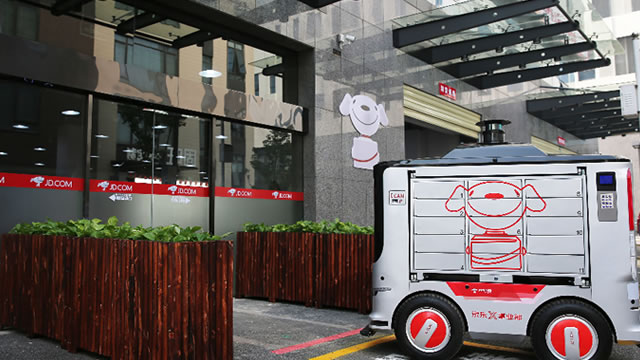
JD.com Earnings Are Coming. Food-Delivery Costs Are the Big Question.
Barrons· 2025-11-13 00:00
Core Insights - JD.com and its competitors, Alibaba Group Holding and Meituan, are engaged in a significant e-commerce price war [1] Group 1 - The price war among these companies is intensifying, impacting their market strategies and consumer pricing [1] - This competitive environment may lead to changes in market share dynamics within the e-commerce sector [1] - The ongoing rivalry highlights the aggressive tactics employed by these firms to attract and retain customers [1]

中国股票策略_2025 年三季度投资者持仓更新 - 外资本季度加仓-China Equity Strategy _3Q25 investor positioning update - foreign funds added in the quarter
2025-11-11 06:06
Some global funds started dipping their toes in Chinese equities We track c800 active foreign funds that include Chinese equities as part of their their benchmark and altogether hold US$270bn of Chinese stocks. In aggregate, these funds cut their China underweight positions by 30bps to -1.3% during 3Q25, the least underweight since 4Q22. Out of these funds, 145 funds (AUM US$212bn) do not hold any Chinese equities as of 3Q25, which has declined from 167 funds in 2Q25. Funds that added Chinese equities back ...
Quick-Delivery price war hits Eternal, Swiggy shares
BusinessLine· 2025-11-10 03:12
Group 1 - Intensifying competition in India's online grocery delivery space is negatively impacting the shares of market leader Eternal Ltd. and its competitor Swiggy Ltd., with Eternal's shares dropping nearly 4% to their lowest level in three months [1] - The ongoing discount war is raising concerns about the profitability of India's delivery firms, as second-quarter earnings missed estimates and companies are prioritizing growth over margins, which could affect investor sentiment ahead of Swiggy's planned follow-on share sale of over $1 billion and Zepto Pvt. Ltd.'s upcoming IPO [2] - The quick commerce market is not infinitely expanding, and as companies increase charges to achieve profitability, growth is expected to slow significantly [3] Group 2 - Swiggy's Instamart and Zepto have recently removed certain charges and lowered minimum order values for free deliveries, with Jefferies noting more aggressive discounting across categories, led by Amazon Now [4] - The price war in India mirrors a similar trend in China, where companies like Meituan, JD.com, and Alibaba are offering deep discounts, with Meituan losing almost a third of its market value this year due to market share loss [5]

Buy Alibaba, Sell Meituan Pair Trade Thrives on Price War Bets
Yahoo Finance· 2025-11-07 02:46
Group 1 - The stock performance gap between Alibaba and Meituan has widened significantly, with a year-to-date return of 130% for a long position in Alibaba and a short position in Meituan [2] - Meituan's shares have declined due to market share loss in food delivery to Alibaba, while Alibaba's stock has doubled, driven by the artificial intelligence boom [2][3] - Analysts maintain a cautious stance on Meituan and a positive outlook on Alibaba, suggesting that the pair-trade strategy may continue to be effective [4] Group 2 - Intense price competition in the food delivery sector has escalated since Alibaba increased its efforts in April, with implications for other market segments [5] - Alibaba is enhancing its app to support local services and has started offering in-store dining vouchers in three cities, indicating a strategic expansion [5][6] - Meituan plans to raise approximately $3 billion in bonds to compete more effectively, as it faces challenges from Alibaba and other competitors [6] Group 3 - Meituan is expected to report a net loss of around 14.5 billion yuan ($2 billion) for the quarter ending September 30, while Alibaba is projected to have a net profit of 9.5 billion yuan, despite a 78% year-over-year decline [7]
双十一成直播电商、即时零售新业态最大秀场,关注港股互联网
Mei Ri Jing Ji Xin Wen· 2025-11-06 02:40
Group 1 - The "Double Eleven" event has become a major showcase for new business models such as live-streaming e-commerce, content seeding, and instant retail, demonstrating significant explosive growth and providing strong support for the long-term investment logic of the Hong Kong internet sector [1] - The user base for generative AI in China has rapidly increased, surpassing 515 million in just six months, positioning AI as a key narrative for the fourth quarter and potentially leading to a new round of asset revaluation in the Hong Kong stock market [1] - The Hong Kong stock market is experiencing enhanced capital attraction due to a global shift towards emerging markets amid a rate-cutting cycle, with the technology and internet sectors being particularly favored by international investors [1] Group 2 - Despite short-term adjustments, the upward trend of the Hong Kong stock market remains intact, with current upward momentum driven by favorable industry conditions and accelerated AI development in China [1] - The Hang Seng Internet ETF (513330) supports T+0 trading and focuses on the internet platform economy, including major players like Alibaba, JD.com, Tencent, Meituan, Kuaishou, and Baidu, making it a valuable tool for investors looking to capitalize on AI applications and core assets in the "AI + internet" space [1]