
eCommerce

Search documents
Jim Cramer Recommended Amazon (AMZN) As A Long Term Stock In January 2025
Yahoo Finance· 2026-03-18 22:01
Amazon.com Inc. (NASDAQ:AMZN) is one of the Jim Cramer’s Hottest AI Stock Picks. eCommerce and cloud computing giant Amazon.com Inc. (NASDAQ:AMZN)’s shares are up by a modest 8% over the past year. Cramer discussed the firm on the episode of Mad Money aired on January 16th. Since then, Amazon.com Inc. (NASDAQ:AMZN)’s shares are down by 6.3%. According to media reports, a slowdown in the firm’s cloud computing business and higher AI capital expenditures are responsible for some of the movement. For instance ...

Amazon.coM (AMZN)’s Deepens AI Presence With New Partnership
Yahoo Finance· 2026-03-17 06:57
Core Insights - Amazon.com, Inc. (NASDAQ:AMZN) has formed a strategic partnership with OpenAI to develop a runtime environment for generative AI applications on its AWS Bedrock platform [1] - OpenAI will utilize Amazon's Trainium AI chips for its workloads, and Amazon will invest $50 million in OpenAI [1] Group 1: Partnership and Investment - The partnership aims to enhance Amazon's capabilities in the AI sector, leveraging OpenAI's technologies [1] - Amazon's investment of $50 million in OpenAI signifies its commitment to advancing AI technologies [1] Group 2: Market Reactions - TD Cowen has reiterated a Buy rating for Amazon with a price target of $300, viewing the partnership as a positive development [2] - Wells Fargo has slightly adjusted its price target for Amazon from $305 to $304 while maintaining an Overweight rating, emphasizing the importance of compute capacity in the AI industry [2] Group 3: Company Overview - Amazon.com, Inc. is recognized as one of the largest technology companies globally, with significant influence in eCommerce and cloud computing [4]
Jim Cramer Discusses Etsy (ETSY) & the Secondhand Clothes Market
Yahoo Finance· 2026-02-25 16:35
Core Insights - Etsy Inc. (NASDAQ:ETSY) recently sold its Depop business to eBay for $1.2 billion, resulting in a 14% increase in its share price [2] - The company reported a revenue growth of 6.6% and a Gross Merchandise Sales (GMS) increase of 2.4% to $3.6 billion for Q4 2025 [2] - Analysts have mixed views on Etsy's stock, with Truist raising the price target to $83 while BofA and Stifel reduced their targets to $63 and $62 respectively, citing industry-wide pricing pressures [2][3] Company Developments - The sale of Depop marks a significant strategic move for Etsy, as it previously acquired the business for $1.62 billion five years ago [2] - The management change at Etsy is noted as a potential factor influencing its market position, particularly in the secondhand clothing sector [3] Analyst Commentary - Jim Cramer highlighted Etsy's potential in the secondhand clothes market, while also suggesting that some AI stocks may offer better investment returns with lower risks [3] - The mixed analyst ratings reflect a cautious outlook on Etsy's pricing power and market challenges in the eCommerce sector [2][3]

Amazon (AMZN) Feels Misunderstood, Says Jim Cramer
Yahoo Finance· 2026-02-22 17:05
Core Viewpoint - Amazon.com, Inc. (NASDAQ:AMZN) is experiencing a decline in share price, with a 2.9% drop over the past year and a 7.2% drop year-to-date, leading to reduced price targets from analysts [2]. Financial Performance - Bernstein has lowered its price target for Amazon from $300 to $265 while maintaining an Outperform rating, citing high capital expenditures of $200 billion as a concern despite strong operating income and growth in Amazon Web Services (AWS) [2]. - Benchmark also reduced its price target from $295 to $275, keeping a Buy rating on the shares [2]. Market Sentiment - Jim Cramer highlighted a shift in sentiment regarding Amazon's free cash flow, noting that the company has gone negative in this area, which has affected perceptions of its financial health [2][5]. - Cramer expressed that while Amazon's spending may be perceived as excessive, there is a belief that some AI stocks may offer better investment opportunities with higher returns and lower risks [3].
Saks Global Winds Down eCommerce Deal With Amazon
PYMNTS.com· 2026-02-02 01:05
Core Insights - Saks Global is terminating its eCommerce partnership with Amazon to focus on its own website and areas with greater growth potential [3][5] - The decision follows Saks' bankruptcy filing, which highlighted financial struggles, particularly in its off-price division [6][7] - Amazon has expressed concerns over its investment in Saks, claiming it is now "presumptively worthless" due to the bankruptcy [7] Company Developments - Saks is closing its Saks on Amazon storefront, citing limited brand participation and a strategic shift towards driving traffic to its own platform [3] - The company is winding down most of its off-price operations, including Saks Off 5th and Neiman Marcus Last Call stores, to concentrate on full-price luxury sales [5][6] - Saks' off-price division is projected to incur a loss of $139 million in fiscal year 2025, indicating significant financial challenges [6] Industry Context - The downsizing of Saks reflects broader structural challenges in the brick-and-mortar retail sector, as physical stores lose competitive status to digital platforms [7] - Analysts predict that the decline in luxury store counts may create opportunities for off-price and beauty retailers to expand in the current market [8]


美洲互联网:美国电商 2025 年第四季度前瞻 —— 行业争议与预期分析-Americas Technology_ Internet_ US eCommerce Q4'25 Preview_ Analyzing the Industry Debates & Estimates
2026-01-14 05:05
Summary of Key Points from the Conference Call Industry Overview - The conference call focuses on the US eCommerce sector, particularly the outlook for Q4'25 and the implications for 2026, highlighting the volatility experienced in 2025 due to tariffs and consumer behavior changes [1][15]. - The sector is expected to remain volatile in 2026, with potential tailwinds for middle and high-income households due to reduced tariff impacts and easier financial conditions [1][16]. Core Insights and Arguments - **Consumer Behavior**: Consumer spending has shown resilience, particularly among higher-income households, but concerns persist regarding lower-income consumers' health and shopping habits [1][16]. - **Macroeconomic Factors**: Key macroeconomic implications will influence future revenue estimates, particularly for the upper 20-50% of household income levels [1][15]. - **Agentic Commerce**: The rise of agentic commerce is noted as a significant trend, with referral traffic from various sources impacting traditional marketing channels. This trend is expected to be a key debate in the industry over the next 12-18 months [2][6]. - **Amazon (AMZN)**: AMZN is highlighted as a top large-cap pick for 2026, with a price target increase from $290 to $300. The Q4 earnings report is expected to reflect similar narratives as Q3 [5][84]. Financial Estimates and Adjustments - **Amazon's Financials**: Adjustments to AMZN's operating estimates include: - AWS revenue growth projected at +21.5% YoY for Q4'25, with GAAP EBIT margins of 34.0% [84]. - Total gross additions to PP&E forecasted at approximately $125 billion (+61% YoY) for FY26 [84]. - Modest reductions in 1P eCommerce segment estimates [84]. - **Revenue Estimates**: Total revenue for AMZN is expected to be $212.29 billion for Q4'25, with no change from previous estimates [84]. Market Dynamics - **Consumer Confidence**: Overall consumer confidence remains weak, particularly among lower-income households, while higher-income consumers show more positive sentiment [21][25]. - **Spending Trends**: Spending on services is growing faster than on goods, with services now representing 70% of consumer wallets, returning to pre-COVID levels [26][30]. - **Market Share**: Major platforms like AMZN, WMT, and COST have shown double-digit growth, indicating a trend of market consolidation among larger companies [32][33]. Additional Insights - **Traffic Trends**: eCommerce platforms are experiencing varied traffic growth, with AMZN and EBAY seeing positive trends in web traffic [45][46]. - **Consumer Preferences**: AMZN and CHWY have the highest Net Promoter Scores (NPS) and Net Purchase Intent (NPI) rates, indicating strong consumer loyalty and purchase intent [55][67]. - **Challenges**: The rise of automated intermediaries and competition for consumer attention poses new challenges for eCommerce companies [2][6]. Conclusion - The eCommerce sector is poised for continued evolution, with significant implications for major players like Amazon. The interplay of macroeconomic factors, consumer behavior, and emerging trends such as agentic commerce will shape the landscape heading into 2026 [1][5][15].
Walmart Website and App Outage Impacts Thousands of Customers
PYMNTS.com· 2025-12-30 14:27
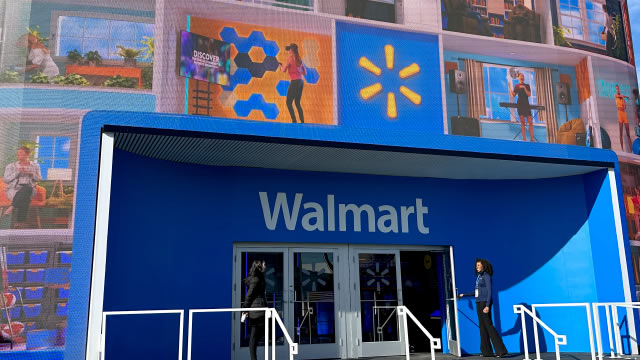
Core Insights - Walmart's app and website experienced an outage on December 30, affecting over 6,500 customers, with approximately 75% of users reporting issues with the mobile app and others facing problems on the website [2][3] Group 1: Outage Impact - The outage occurred during a critical time for eCommerce, highlighting the importance of high uptime standards, often referred to as "five nines" or 99.999% uptime, which has become essential for businesses [3][4] - Customers reported difficulties in checking out, indicating a significant disruption in service that could impact sales and customer satisfaction [2] Group 2: Industry Context - The year has seen several notable outages across various sectors, including disruptions to AWS and Cloudflare, which affected numerous online services, emphasizing the growing reliance on stable digital infrastructure [4] - Companies are increasingly evaluated not just on innovation but also on their operational reliability, with uptime becoming a critical metric for success in finance, commerce, and technology [4][5] Group 3: Expert Opinions - Industry experts emphasize the importance of platform resiliency and business continuity planning as key factors in maintaining operational success, with some companies achieving 100% uptime [5][6] - The financial implications of downtime are significant, as even a few minutes of outage can lead to millions of dollars in lost transactions for payment processing businesses [5]

Retail Sales Stall as Paycheck-to-Paycheck Pressure Builds
PYMNTS.com· 2025-12-16 16:40
Group 1: Consumer Financial Health - Two-thirds of U.S. consumers live paycheck to paycheck, with 42% doing so out of necessity, marking an 18% increase since August [5][6] - Income instability is prevalent, with 60% of consumers earning income outside a fixed salary, relying on hourly wages, gig work, or contract arrangements [6][7] - Tariff-related uncertainties and layoffs have further eroded income predictability, making it difficult for households to manage expenses [7] Group 2: Retail Sales Performance - U.S. retail and food services sales for October were unchanged at $732.6 billion, with retail sales edging up just 0.1% [8] - Performance varied by category, with department stores seeing a 4.9% monthly gain, while big-ticket items like motor vehicles declined by 1.6% [9][10] - Consumers are prioritizing essentials and delaying discretionary purchases, indicating a shift in spending behavior [14] Group 3: Labor Market Conditions - The unemployment rate rose to 4.6%, with the number of unemployed increasing to 7.8 million, reflecting a gradual upward trend [11] - Nonfarm payrolls increased by only 64,000 jobs in November, with gains concentrated in healthcare, construction, and social assistance [12] - Average hourly earnings rose by 0.1% in November, resulting in year-over-year wage growth of 3.5%, indicating stable employment but limited wage acceleration [13]

智能代理时代- 它将如何改变商业与支付方式-The Age of Agents How does it change commerce and how we pay
2025-12-11 02:24
Summary of Key Points from the Conference Call on Agentic Commerce Industry Overview - The discussion centers around the evolution of commerce driven by AI agents, termed "Agentic Commerce," which is expected to transform payment and retail sectors significantly [2][24]. Core Insights and Arguments - **Historical Context**: The evolution of retail from department stores to eCommerce and now to AI-driven commerce is highlighted, indicating a significant shift in how consumers interact with products and services [2]. - **Current State of AI in Commerce**: While a growing number of consumers are using AI tools for product searches, the impact on actual commerce remains minimal, with AI chatbots contributing to only a small fraction of total web traffic [3][30]. - **Future of AI Agents**: The potential for AI agents to autonomously plan and execute tasks on behalf of consumers is discussed, which could lead to a more personalized shopping experience [4][5][44]. - **Impact on Payments**: The rise of AI agents is expected to change payment methods, with traditional card networks likely emerging as winners due to their established trust and governance frameworks [9][10][68]. - **Consumer Behavior**: The shift in consumer behavior towards AI-driven shopping experiences is anticipated to take time, with incremental changes being observed in the near term [7][16]. Important Data and Statistics - **Consumer Usage of AI**: Approximately 47% of consumers in the U.S. have used AI for shopping-related tasks, with the most common use cases being finding gift ideas (21%) and conducting product research (16%) [26][30]. - **Market Potential**: McKinsey estimates that orchestrated revenue from Agentic Commerce within B2C retail could reach $1 trillion by 2030 in the U.S., with a global potential of $3 to $5 trillion [28][29]. Risks and Challenges - **Trust and Governance**: The need for robust governance frameworks and trust in AI agents is emphasized, as these agents will handle sensitive transactions and consumer data [9][68]. - **Disintermediation Risks**: Concerns about disintermediation in eCommerce marketplaces are raised, particularly if consumers begin their shopping journeys on third-party AI platforms [16][60]. - **Fragmentation of Protocols**: The current landscape is characterized by fragmentation and experimentation with various protocols for agent communication and payments, which could complicate the adoption of Agentic Commerce [48][69]. Merchant Responses and Developments - **Cautious Adoption**: Merchants are approaching the integration of AI agents with caution, balancing the potential for increased traffic against risks related to brand recognition and data control [60]. - **Innovative Integrations**: Companies like Etsy and eBay are actively integrating AI capabilities to enhance consumer experiences, while Amazon is taking a more protective stance against external AI agents [61][66]. Conclusion - The transition to Agentic Commerce represents a significant paradigm shift in how consumers shop and how payments are processed, with implications for both traditional and new-age payment networks. The evolution of AI agents will require careful navigation of trust, governance, and consumer behavior dynamics as the industry adapts to these changes [46][70].



解读中国互联网:后续方向与核心焦点- 财报季之后的讨论;中国互联网出行要点-Navigating China Internet_ What to do from here & key focuses_debates post results season; China Internet Trip takeaways
2025-12-08 02:30
Summary of Key Points from the Conference Call Industry Overview - The report focuses on the **China Internet** sector, particularly the **Cloud & Data Centers**, **Games**, and **Mobility** sub-sectors, highlighting their performance and future outlook post-3Q results and a recent China Internet trip [1][9][10]. Core Insights and Arguments 1. **Sub-sector Preferences**: - The **Cloud & Data Centers** sub-sector has been elevated to the top preference (1) due to expected sustained AI growth momentum driven by AI training/inference demand and positive order volume outlook for data centers [1][9]. - **Games** sub-sector is now ranked 2, while **Mobility** has dropped to 3, reflecting their defensive nature and favorable pricing power amidst a soft macro backdrop [1][9]. 2. **AI and Valuation Performance**: - The China Internet sector has shown outperformance driven by AI and valuation multiples, with notable EPS growth expected from companies like **Alibaba** and **Tencent** [9][10]. - The sector's median 2026E P/E is noted at **18X**, indicating that valuation multiple expansion has been a significant driver of performance rather than profit growth [9][10]. 3. **Competitive Landscape**: - **Bytedance** is highlighted as a key competitor, particularly with its recent launch of the **Doubao Phone Assistant**, which could disrupt existing app traffic and advertising models [1][9][10]. - The potential for a new era of AI assistants in China is discussed, with implications for user engagement and privacy concerns [9][10]. 4. **Food Delivery and Quick Commerce**: - The competition in food delivery is intensifying, with **Meituan**, **Alibaba**, and **JD** expected to see adjusted EBIT declines in the upcoming quarter [9][10]. - Market share dynamics are projected to stabilize at a ratio of **5:4:1** between Meituan, Alibaba, and JD, with Meituan maintaining a leadership position [9][10]. 5. **Global Expansion**: - The report notes the increasing competition among Chinese players in the **LatAm food delivery market**, with companies like **DiDi** and **Meituan** expanding their international footprints [1][9][10]. - **JD** is also highlighted for its international expansion efforts, particularly in Europe, which could provide a re-rating opportunity for the company [9][10]. Additional Important Insights - The report emphasizes the importance of strategic pivots for eCommerce and local services players in response to Bytedance's advancements in AI and eCommerce [1][9][10]. - The potential disruption of the advertising market due to AI assistants filtering out ads is noted, indicating a shift in how users interact with apps [10]. - The report includes a detailed earnings summary and market reactions for various companies within the sector, providing insights into their performance and future outlook [12][46]. This summary encapsulates the key points discussed in the conference call, focusing on the China Internet sector's dynamics, competitive landscape, and future growth opportunities.
