Neuralink

Search documents
X @Tesla Owners Silicon Valley
Tesla Owners Silicon Valley· 2025-09-03 04:33
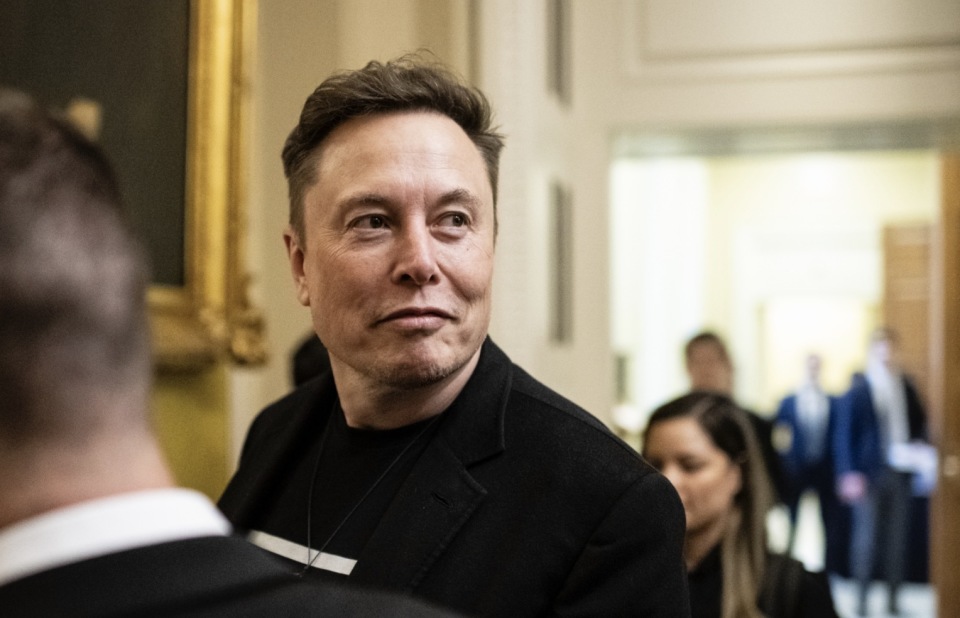
"The vast majority of diseases or brain issues, I think are fixable with a Neuralink device."Elon Muskhttps://t.co/FVCBNaQ8KD ...

X @Tesla Owners Silicon Valley
Tesla Owners Silicon Valley· 2025-09-01 06:06
“Neuralink could soon make reaction times faster than the fastest esports pros. The future is closer than you think.”Elon Muskhttps://t.co/j6FdKyxAqL ...
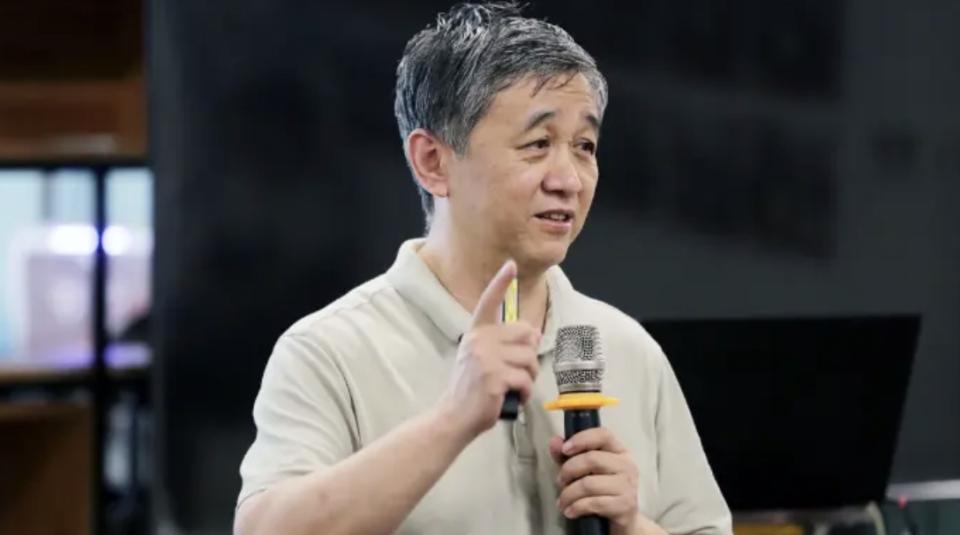
清华教授高小榕:大脑的未来,或许没有那么科幻
3 6 Ke· 2025-08-30 16:33
Core Viewpoint - The brain-computer interface (BCI) technology is advancing rapidly, with companies like Neuralink and Synchron making significant strides in clinical trials, aiming to restore lost functions in patients with paralysis or neurological diseases. However, there is a growing divide between the optimistic visions promoted by tech leaders and the ethical considerations surrounding the technology's potential applications [1][2][3]. Group 1: Current Developments in BCI Technology - Neuralink has completed craniotomy implants in a small number of patients, focusing on restoring motor and speech functions, with plans to conduct speech cortex experiments by Q4 2025 [1]. - Synchron has validated the safety and partial recovery of daily functions for paralyzed patients through minimally invasive vascular implants [1]. - The technology is being explored for various applications, including movement compensation, speech recovery, and potential treatments for conditions like schizophrenia and autism [8][9]. Group 2: Ethical Considerations and Limitations - The concept of "superhuman" capabilities through BCI, such as consciousness uploading, is deemed ethically unacceptable and currently unrealistic [2][3][7]. - The focus of BCI technology is on repair and assistance rather than enhancement, with a clear distinction between restoring normal function and exceeding natural human abilities [3][4]. - The potential for BCI to facilitate human-machine collaboration is emphasized, particularly in bridging communication gaps between human and artificial intelligences [4]. Group 3: Future Prospects and Challenges - The timeline for achieving mature BCI technology has been revised to approximately 15 to 20 years, although significant limitations remain, such as the lifespan of implanted devices [17][18]. - The advancement of AI is expected to play a crucial role in overcoming current challenges in data processing and signal interpretation within BCI systems [10]. - There is a notable difference in research focus between the US and China, with China leading in non-invasive and semi-invasive methods, while the US excels in invasive techniques [16].

X @Tesla Owners Silicon Valley
Tesla Owners Silicon Valley· 2025-08-30 06:08
“Neuralink could soon make reaction times faster than the fastest esports pros. The future is closer than you think.”Elon Muskhttps://t.co/j6FdKyxAqL ...
X @Tesla Owners Silicon Valley
Tesla Owners Silicon Valley· 2025-08-29 00:14
Elon Musk: “Neuralink could restore memories, repair the brain, and even bring us closer to immortality.” https://t.co/MpqigLo0ur ...
X @Tesla Owners Silicon Valley
Tesla Owners Silicon Valley· 2025-08-26 21:25
Technology & AI - Neuralink's technology has the potential to narrow the speed disparity between human cognition and artificial intelligence [1] - The industry acknowledges that Neuralink's efforts alone are insufficient to guarantee AI safety [1]
X @Elon Musk
Elon Musk· 2025-08-26 05:49
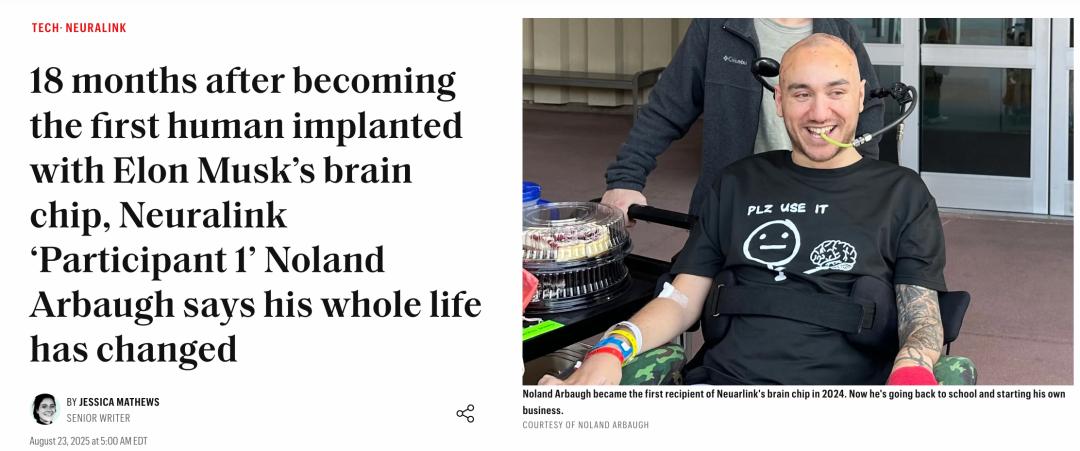
RT Wes Roth (@WesRothMoney)Eighteen months after receiving Neuralink’s first-in-human brain-computer implant, Noland Arbaugh has turned a life once limited by paralysis into one filled with study, gaming, entrepreneurial plans, and near-daily public speaking.The wireless chip’s 1,000-plus electrodes let him control a computer cursor, play Mario Kart, and manage everyday tasks solely with thought.Now enrolled in neuroscience courses and launching a speaking business, he credits the device with restoring purp ...
直面挑战微软,马斯克高调推出AI新公司“巨硬”
3 6 Ke· 2025-08-25 10:22
Core Viewpoint - Elon Musk's new company "Macrohard" aims to disrupt the $1.2 trillion software industry by leveraging artificial intelligence to automate software development, directly challenging Microsoft's Office suite and Azure AI platform [2][4]. Group 1: Company Overview - "Macrohard" is positioned as a "pure AI software company" that intends to replace human developers with hundreds of specialized AI agents, covering coding, testing, and user experience design [4]. - The company is supported by Musk's xAI startup and utilizes the Grok chatbot, powered by the Colossus 2 supercomputer in Memphis [3][4]. - A trademark application for "Macrohard" was submitted to the U.S. Patent and Trademark Office on August 1 [2]. Group 2: Competitive Landscape - Musk's vision includes the potential to reduce development costs by 70% and accelerate time-to-market by 40%, while eliminating human error [4]. - Microsoft has integrated xAI's Grok into its Azure cloud services and is focusing on AI, security, and quality as strategic priorities [4]. - The competitive environment is intensified by Musk's criticism of Microsoft's partnership with OpenAI, which he claims prioritizes profit over ethics [4]. Group 3: Challenges and Regulatory Environment - The company faces significant challenges, including the limitations of AI in creativity and complex decision-making, which are crucial for enterprise software [4]. - Regulatory pressures from the EU's AI Act and U.S. data privacy laws may increase compliance costs for "Macrohard" [5]. - The high costs of procuring NVIDIA GPUs and supply chain bottlenecks could also hinder the company's expansion [5]. Group 4: Investment Outlook - The emergence of "Macrohard" has sparked excitement in the tech sector, but investors must weigh opportunities against risks [6]. - Analysts express optimism about the AI market over the next 2-3 years, yet a report indicates that 95% of companies have not yet profited from AI [6]. - The success of "Macrohard" will depend on its ability to meet enterprise demands, regulatory requirements, and manage infrastructure costs [6].

马斯克首位脑机植入者重磅发声:我重生了
创业邦· 2025-08-25 10:11
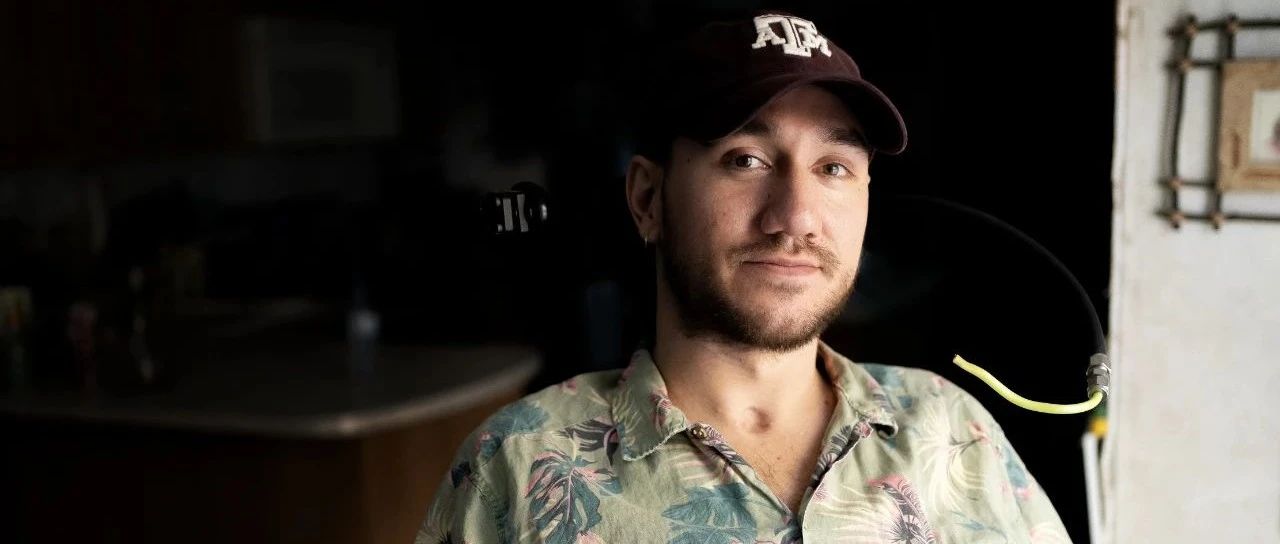
Core Viewpoint - Neuralink's brain-machine interface technology has the potential to significantly enhance the quality of life for individuals with paralysis, as demonstrated by the first participant, Noland Arbaugh, who has regained autonomy and control over digital devices after receiving the implant [7][16][31]. Group 1: Noland Arbaugh's Experience - Noland Arbaugh became the first human participant to receive a Neuralink brain-machine interface implant, allowing him to control devices using his thoughts [7][16]. - The surgery was performed using a Neuralink-designed robotic surgical device, which implanted a chip with over 1000 electrodes into the motor cortex of his brain [12][22]. - After the surgery, Arbaugh was able to perform tasks such as playing video games and controlling household devices without physical movement, breaking previous records for cursor control speed and accuracy [16][19]. Group 2: Neuralink's Technological Innovations - Neuralink's device offers a higher connection rate compared to other brain-machine interfaces currently in research, as it is implanted deeper into the brain's motor control area [22]. - The device is wireless, allowing participants to move freely without being tethered to external receivers, although it requires charging approximately every five hours [24]. - The company aims to develop further applications, including restoring vision for the blind and creating robotic arms for participants to regain sensory control [56][60]. Group 3: Public and Personal Impact - Since revealing his identity as the first participant, Arbaugh has become a public figure, facing both opportunities and challenges, including media attention and personal security issues [28][30]. - He has expressed a renewed sense of purpose and autonomy, engaging in educational pursuits and planning to start a business focused on professional speaking [31][33]. - Arbaugh's experience highlights the potential societal impact of Neuralink's technology, as he believes it represents a significant leap in the field of neuroscience and technology [49][70]. Group 4: Future Directions and Controversies - Neuralink is expanding its clinical trials and aims to increase the number of participants, with ongoing studies in multiple countries [60][66]. - The company faces criticism regarding the invasiveness of its methods and ethical concerns related to animal testing, although it maintains a commitment to safety and ethical standards [61][62]. - Elon Musk has emphasized the careful approach taken in human trials, asserting that the company prioritizes safety in its advancements [63][64].
「机械飞升」18个月后,马斯克首位脑机植入者重磅发声:我重生了
3 6 Ke· 2025-08-25 03:34
Core Insights - Noland Arbaugh, the first human participant in Neuralink's brain-machine interface trial, describes his experience as life-changing, allowing him to control devices and regain a sense of purpose after being paralyzed for years [1][4][18] - Neuralink's technology features over 1,000 electrodes implanted in the motor cortex, providing a higher connectivity rate compared to competitors, and operates wirelessly, requiring charging approximately every five hours [12][8][11] - The company aims to expand its clinical trials and has plans for future projects, including restoring vision for the blind and developing robotic arms for participants [40][41][44] Company and Technology Overview - Neuralink is at the forefront of brain-machine interface technology, with a history of over 50 years in neurological research and several companies conducting limited human trials since 1998 [11] - The device implanted in Arbaugh allows him to control computers and play video games using only his thoughts, breaking records for speed and accuracy in cursor control [8][9] - The invasive nature of Neuralink's approach, while criticized, is seen as a significant advancement in the field compared to less invasive methods used by competitors [12][44] Participant Experience and Impact - Arbaugh's journey from paralysis to regaining autonomy has garnered public attention, leading to increased interest in Neuralink's trials and technology [16][45] - Since Arbaugh's surgery, additional participants have joined the trials, indicating growing momentum for Neuralink's research and development efforts [16][44] - The participant's positive outlook on the technology reflects a broader belief in the potential of tech advancements to address disabilities and improve quality of life [46][18]