Grok聊天机器人

Search documents
马斯克芯片厂开建,年产能是全球50倍、服务太空任务
阿尔法工场研究院· 2026-03-24 09:26
Core Viewpoint - Elon Musk has announced the launch of the TERAFAB project, aiming for an annual production capacity of 1 terawatt (TW) of computing chips, which is approximately 50 times the current global chip production capacity. About 80% of this capacity will directly serve space missions [3][5]. Group 1: Project Overview - The TERAFAB project is a joint strategic initiative led by Tesla, SpaceX, and xAI, located in Austin, Texas, and is the largest public manufacturing plan in human history [4]. - Musk emphasized the necessity of building TERAFAB, stating that existing suppliers like TSMC and Micron cannot meet the accelerating demand for chips in robotics, autonomous driving, and AI [4][5]. - The project aims to create a closed-loop system for design, production, testing, and packaging of chips within a single facility, integrating logic chips, memory chips, and advanced packaging [4][10]. Group 2: Demand and Supply Dynamics - Musk predicts that the demand for chips will be extreme, with the Optimus humanoid robot alone requiring 100 to 200 gigawatts (GW) of computing power, and space solar AI satellite clusters needing terawatt-level capacity [8]. - The current global chip production is about 20 gigawatts (GW), which is only about 2% of the projected demand for TERAFAB [4][8]. - The existing suppliers are unable to fill the demand gap, as the semiconductor industry is expanding but not at a sufficient pace to meet Musk's expectations [8]. Group 3: Technological and Structural Aspects - The factory will produce two types of chips: one optimized for edge inference, primarily for the Optimus robot and Tesla vehicles, and another designed for space environments to withstand high-energy particle bombardment and extreme temperatures [11][12]. - Musk claims that the integration of chip manufacturing processes in a single building is unprecedented globally, with an expected iteration speed that is an order of magnitude faster than current methods [11]. Group 4: Strategic Implications and Financing - The announcement of TERAFAB coincides with SpaceX's plans for a large-scale IPO, which is expected to raise up to $50 billion, with a valuation potentially exceeding $1.75 trillion [5][13]. - The chips produced by TERAFAB are expected to be primarily consumed by xAI for space AI model training and satellite data processing, indicating a strong synergy among the three companies [13][14]. - Musk envisions TERAFAB as a critical step for humanity to become a multi-planetary civilization, with future plans including the construction of an electromagnetic mass driver on the Moon [16]. Group 5: Challenges and Concerns - Analysts express skepticism regarding the feasibility of the project, highlighting the significant financial investment required, estimated to be around $30 billion to $45 billion for a factory capable of producing 100,000 advanced logic chips per month [17]. - The supply chain for high-end extreme ultraviolet (EUV) lithography machines is heavily reliant on ASML, with long delivery times, complicating the project further [17]. - There are concerns about the availability of skilled talent, as the semiconductor manufacturing process is complex and requires specialized expertise [17].


新浪财经隔夜要闻大事汇总:2026年2月28日
Xin Lang Cai Jing· 2026-02-27 23:39
Market - US stock market closed down with the Dow Jones falling over 500 points, and all three major indices recorded weekly declines. The Dow, Nasdaq, and S&P 500 dropped by 1.05%, 0.92%, and 0.43% respectively [2] - UBS downgraded the US stock market rating due to concerns over a weakening dollar, high valuations, and rising policy risks [2] - The Producer Price Index (PPI) for January rose more than expected, with core PPI increasing by 0.8% month-on-month, indicating persistent inflation [2] Company - Dell's stock surged by 21.93% after strong revenue forecasts, while Nvidia's stock fell by 4.16% despite exceeding earnings expectations due to concerns over the sustainability of AI spending [3] - Paramount has reached a final merger agreement to acquire Warner Bros. Discovery, valuing the company at $110 billion, with the deal expected to close in Q3 2026 [33] - Trump Media is considering spinning off its social platform Truth Social into an independent company, marking a significant shift for the firm [31] - TPG disclosed a £44 million exposure to the troubled UK lender Market Financial Solutions (MFS), indicating a small percentage of its overall loan exposure [37] Macro - US companies disclosed stock buyback plans totaling $233 billion in February, marking the highest level for the month in history [12] - The SEC announced new regulations requiring foreign company executives to disclose stock trades promptly, aligning with US standards [14] - The US government is facing over 2,000 lawsuits for tariff refunds following a Supreme Court ruling declaring many tariffs unconstitutional [17]
美国法官暂时驳回xAI针对竞争对手OpenAI的商业机密诉讼
Jin Rong Jie· 2026-02-25 00:03
Core Viewpoint - Elon Musk's AI startup xAI accused competitor OpenAI of stealing trade secrets, but a federal judge dismissed the lawsuit, allowing xAI to refile if desired [1][2]. Group 1: Legal Proceedings - U.S. District Judge Rita Lin stated that xAI failed to allege any wrongdoing by OpenAI in the lawsuit filed in September [2]. - The lawsuit claimed that a former xAI employee took source code and confidential information related to the Grok chatbot when joining OpenAI [2]. - Judge Lin noted that there were no allegations that OpenAI induced the former employee to steal trade secrets or that the employee used any stolen information while employed at OpenAI [2]. Group 2: Additional Legal Actions - xAI has also filed a separate lawsuit against former engineer Li Xueqin, accusing him of providing trade secrets to the maker of ChatGPT [2]. - Li Xueqin has been barred from sharing xAI's technology with OpenAI, but OpenAI claims he never worked for them or accessed any of xAI's confidential information [2].
美国法官暂时驳回 xAI 针对竞争对手 OpenAI 的商业机密诉讼
Xin Lang Cai Jing· 2026-02-24 23:30
Core Viewpoint - Elon Musk's AI startup xAI accused competitor OpenAI, led by Sam Altman, of stealing trade secrets, but a federal judge dismissed the lawsuit, allowing xAI to refile but stating no wrongdoing was proven against OpenAI [1][2]. Group 1: Lawsuit Details - The lawsuit, filed in September, claimed that a former xAI employee took source code and confidential information related to the Grok chatbot when joining OpenAI [1][2]. - Judge Rita Lin noted that the lawsuit did not accuse OpenAI of any misconduct, stating that xAI failed to show that OpenAI induced the former employee to steal trade secrets or that the employee used any stolen information while employed at OpenAI [1][2]. - Lin had previously indicated in a January opinion that she was likely to rule in favor of OpenAI [1][2]. Group 2: Additional Legal Actions - xAI also filed a separate lawsuit against former engineer Li Xueqin, accusing him of providing trade secrets to the maker of ChatGPT [1][2]. - In this case, Li Xueqin was prohibited from sharing xAI's technology with OpenAI, but OpenAI claimed that he never worked for them and did not obtain or use any of xAI's confidential information [1][2].
3名华人联合创始人接连出走,马斯克的xAI发生了什么
Guan Cha Zhe Wang· 2026-02-14 09:49
Core Viewpoint - xAI is experiencing a significant wave of departures among its founding members, particularly affecting its reputation and operational stability in the tech industry [1][4][11] Group 1: Departures and Impact - The recent departures include two Chinese co-founders, Tony Wu and Jimmy Ba, marking a total of three co-founders lost within a month [1][4] - The founding team, initially composed of 12 experts, has seen half of its members leave in just 30 months, indicating an unusually high turnover rate [4][6] - The departures have raised concerns about the company's academic reputation, especially with the exit of key figures like Wu and Ba, who were trained under prominent AI pioneers [6][9] Group 2: Reasons Behind Departures - Elon Musk attributed the departures to a company restructuring aimed at enhancing execution speed, suggesting that some employees may not fit the new demands of an expanding organization [3][11] - High-pressure work culture has been cited as a contributing factor to the departures, with former employees expressing that the intense work environment led to health issues and burnout [7][9] - The shift in focus towards capital operations and storytelling post-SpaceX acquisition has disillusioned some employees who initially joined with a vision of advancing AI for the greater good [8][9] Group 3: Company Restructuring and Future Plans - Musk announced a restructuring of xAI into four distinct teams, focusing on various AI projects, to stabilize the organization amid the ongoing departures [11][13] - The merger with SpaceX has led to ambitious plans, including the construction of AI satellite factories on the Moon, although specific timelines and details remain vague [13] - Musk's optimistic vision for the future of xAI and its integration with SpaceX aims to attract new talent, despite the current instability within the core team [13]
马斯克xAI雪崩!24小时两联创离职,一月内连失三位华人创始人,12人梦之队只剩一半
猿大侠· 2026-02-14 04:11
Core Viewpoint - The recent wave of departures from xAI, including three key Chinese co-founders within a month, raises concerns about the company's stability and future direction as it prepares for a potential IPO following its acquisition by SpaceX [1][34][41]. Group 1: Departures of Key Personnel - Three Chinese co-founders, Tony Wu, Jimmy Ba, and Greg Yang, have left xAI within a month, marking a significant loss for the company [2][5][6]. - The original founding team of 12 has seen 6 members depart in less than three years, indicating a troubling trend in talent retention [6][28]. - The departures include notable figures such as Tony Wu, who was a key expert in mathematics and symbolic reasoning, and Jimmy Ba, known for his contributions to deep learning [17][19][22]. Group 2: Reasons Behind Departures - The high-pressure work culture at xAI, exemplified by Greg Yang's health issues attributed to overwork, is a significant factor in the recent departures [30][31]. - Strategic shifts within the company, including the acquisition by SpaceX and the integration with the social platform X, may have led to disagreements among founding members regarding the company's future direction [34][36]. - xAI is facing external pressures, including regulatory scrutiny over its AI products, which could impact its operational stability and reputation [38][40]. Group 3: Implications for xAI - The loss of key personnel raises questions about xAI's ability to maintain its competitive edge against giants like OpenAI and Google [40]. - The ongoing talent exodus could pose risks to the company's planned IPO, as losing half of the founding team in under three years may lead to skepticism from investors [41][42]. - The current environment in the AI sector, characterized by a surge in startups, may provide opportunities for the departing scientists, hinting at a broader trend in the industry [43][44].
xAI并入SpaceX后首次架构调整:两名创始成员离职,划分四大业务
3 6 Ke· 2026-02-12 09:48
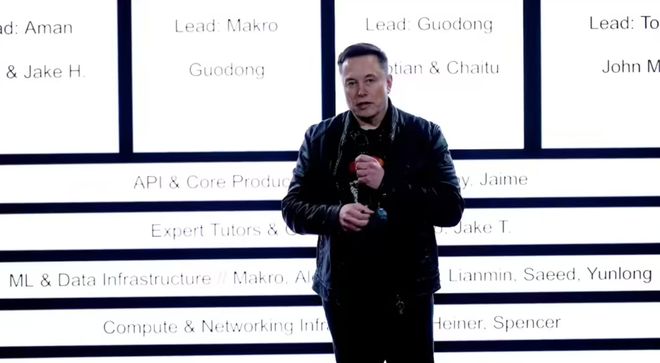
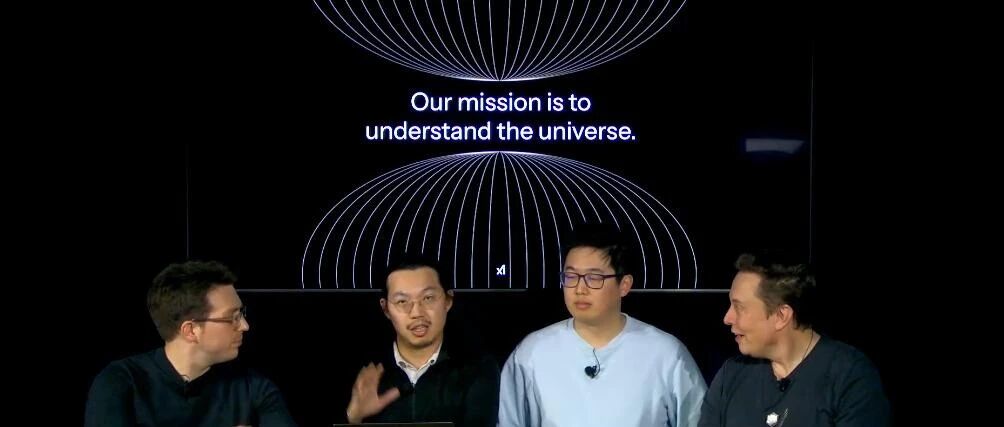
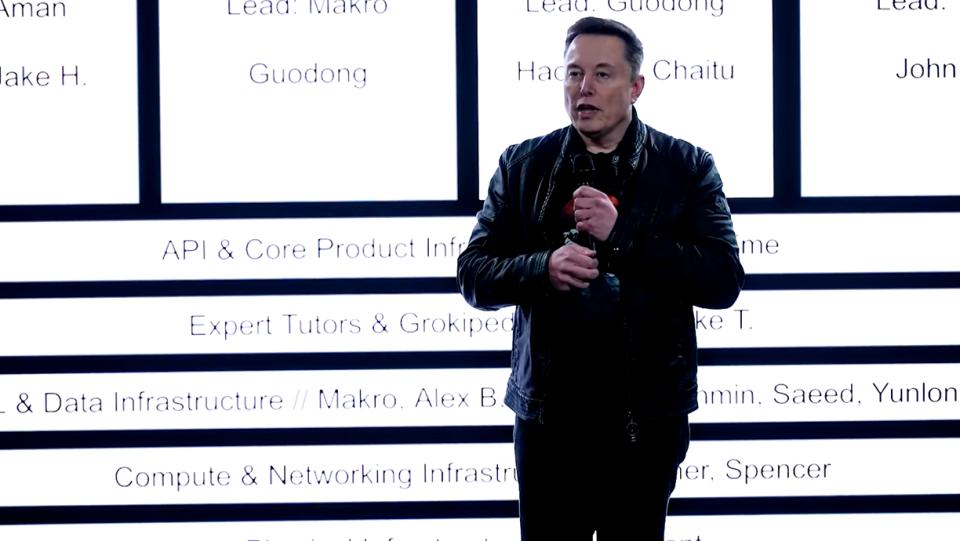
Core Insights - Elon Musk announced a significant restructuring of xAI, dividing the business into four core segments following its merger with SpaceX [2] - The restructuring comes after the departure of several founding members, including Tony Wu and Jimmy Ba [5] - Musk emphasized the importance of speed and acceleration in leadership during the announcement [2] Group 1: Business Structure - xAI's new business segments include Grok chatbot and voice products, programming, Imagine video products, and the "Macrohard" digital intelligence project [2] - Aman Madaan will lead the Grok model and voice products, while Guodong Zhang will oversee programming and image generation teams [2] - Toby Pohlen, a former Google DeepMind engineer, will manage the Macrohard project aimed at automating white-collar work [2] Group 2: Leadership Changes - The founding team of xAI has seen significant turnover, with only half of the original 12 members remaining, including Musk [7] - The restructuring was partly driven by Musk's dissatisfaction with engineering progress and the performance of data centers [7][8] - Anthony Armstrong, the new CFO, reports to Brett Johnsen, who must balance SpaceX's profitability with xAI's substantial funding needs [8] Group 3: Financial and Operational Aspects - xAI is projected to burn approximately $1 billion per month in 2025, primarily for data center construction and chip procurement [8] - The company is expanding its operations on the ground, with plans to build a third large data center in Memphis, Tennessee [8] - SpaceX's organizational structure remains stable, focusing on Starship development while maintaining a degree of independence from xAI [8]
马斯克xAI雪崩!24小时两联创离职,一月内连失三位华人创始人,12人梦之队只剩一半
Sou Hu Cai Jing· 2026-02-12 07:10
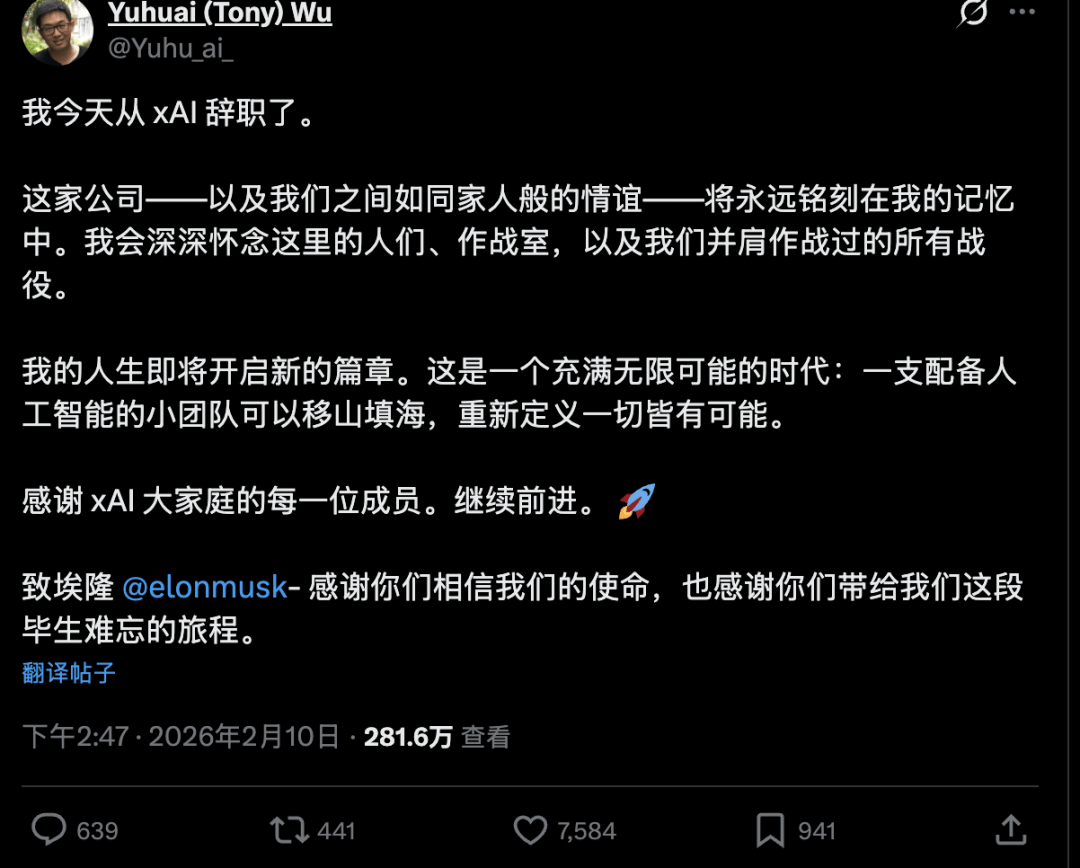
Core Insights - xAI has recently experienced a significant leadership exodus, losing three key Chinese co-founders within a month, raising concerns about the company's stability and future direction [1][3][24] - The departures include Tony Wu, Jimmy Ba, and Greg Yang, who were integral to the company's AI development and research efforts [5][10][12] - The loss of these key figures, who contributed to critical areas such as mathematical reasoning and deep learning, poses a challenge for xAI in maintaining its competitive edge against industry giants like OpenAI and Google [24][25] Group 1: Recent Departures - Tony Wu announced his departure from xAI, expressing a desire to explore new opportunities in a rapidly evolving era of AI [8] - Jimmy Ba, known for his contributions to deep learning, also announced his exit shortly after Wu, highlighting the significance of 2026 for human development [10] - Greg Yang had previously left due to health issues, marking a troubling trend of talent loss within the company [3][5] Group 2: Company Culture and Strategic Changes - The high-pressure work culture at xAI, attributed to Elon Musk's management style, has been cited as a contributing factor to the recent departures [18][19] - Strategic shifts, including the acquisition of xAI by SpaceX and the integration with the social platform X, have led to potential disagreements among founding members regarding the company's future direction [21][23] - Regulatory pressures and product challenges, particularly concerning Grok AI's capabilities, have further complicated the company's operational landscape [23][24] Group 3: Implications for Future Operations - The loss of key personnel raises questions about xAI's ability to sustain its technological advantages in a competitive market [24][25] - The ongoing talent exodus could hinder the company's plans for a future IPO, as losing half of the founding team within three years raises concerns among investors [25][26] - The current environment in the AI sector, characterized by a surge in startups, may influence the future paths of the departing scientists [26]
马斯克,危矣
投资界· 2026-02-12 03:50
Core Viewpoint - The recent wave of departures from xAI, particularly among its founding members, raises concerns about the company's stability and future direction, especially in light of its impending IPO plans and competition with industry giants like OpenAI and Google [2][14]. Group 1: Departures of Founding Members - Three key Chinese founding scientists have left xAI within a month, including Tony Wu, Jimmy Ba, and Greg Yang, marking a significant loss for the company [3][9]. - The initial founding team of 12 has seen 6 members depart in less than three years, indicating a troubling trend in talent retention [10]. - The departures are attributed to various factors, including the high-pressure work culture instilled by Elon Musk and potential strategic shifts within the company [11][14]. Group 2: Individual Backgrounds and Contributions - Greg Yang, who left due to health issues, was a core architect at xAI and had a strong academic background, including a degree from Harvard [6][8]. - Tony Wu, a key expert in mathematics and symbolic reasoning, had previously worked with major AI organizations like Google and OpenAI before joining xAI [8][9]. - Jimmy Ba, known for his contributions to deep learning theory, announced his departure shortly after Wu, further emphasizing the loss of expertise in critical areas [9][14]. Group 3: Company Challenges and Strategic Changes - xAI is facing internal pressures related to its organizational structure, which is described as flat, leading to direct pressure from Musk on core members [11]. - The recent acquisition of xAI by SpaceX and the associated valuation of approximately $250 billion may have contributed to strategic disagreements among founding members [11][14]. - Regulatory challenges are also mounting, as xAI's products face scrutiny and backlash from users and authorities, complicating its operational landscape [13][14]. Group 4: Implications for Future Operations - The loss of key personnel raises questions about xAI's ability to maintain its technological edge in a competitive landscape dominated by established players [14]. - The ongoing talent exodus could pose risks to the company's planned IPO, as external skepticism about its leadership and direction grows [14]. - The current environment in the AI sector is characterized as a golden age for startups, suggesting that departing members may pursue new opportunities elsewhere [14][15].
马斯克公布 xAI 新组织架构,提出月球人工智能卫星工厂构想
Huan Qiu Wang Zi Xun· 2026-02-12 03:31
Core Insights - xAI, under Elon Musk, held a rare 45-minute all-hands meeting, revealing its new organizational structure, product development data, and ambitious projects including a lunar AI satellite factory [1][3] Organizational Changes - xAI is undergoing an organizational restructuring, resulting in some employee departures, including members of the founding team. Musk emphasized the need for an adaptable structure in a rapidly growing company, and recruitment efforts are ongoing, particularly for the lunar autonomous vehicle project [3] - The new structure divides xAI into four core teams, each with a specific focus: Team One on Grok chatbot development, Team Two on application coding systems, Team Three on optimizing the Imagine video generation tool, and Team Four on the Macrohard project, which aims to handle a wide range of tasks from simple computer operations to enterprise modeling [3] Product Performance - The latest operational data from xAI and the X platform shows strong market performance, with X's subscription business achieving an annual recurring revenue exceeding $1 billion, attributed to holiday marketing efforts [4] - xAI's Imagine tool generates an average of 50 million videos daily, with over 6 billion images produced in the past 30 days, showcasing its robust content generation capabilities [4] Future Plans - Musk reiterated the importance of a space-based data center, despite existing technical challenges. He proposed the construction of an AI satellite factory on the moon, equipped with a lunar mass driver for satellite launches. This infrastructure could enable the deployment of powerful AI clusters capable of harnessing a significant portion of solar energy and potentially expanding operations to other star systems [4]