
Intel

Search documents
ASML: The US$378 Million Machines That Make Modern Life Possible
The Smart Investor· 2025-10-02 09:30
Core Insights - ASML Holdings is a critical player in the semiconductor industry, providing essential machines that power modern technology, yet remains relatively unknown to many [2][10] - The company's Extreme Ultraviolet (EUV) lithography machines, costing up to US$378 million each, are vital for manufacturing advanced semiconductors [3][9] - ASML's technology enables the production of chips with billions of transistors on surfaces as small as a fingernail, making it a foundational element of the digital economy [8][11] Company Overview - Founded in 1984 and based in Veldhoven, Netherlands, ASML specializes in advanced semiconductor materials lithography [5] - The EUV lithography machines are complex, consisting of over 100,000 parts that require nanometer-level precision and operate in a vacuum [9] - Major semiconductor manufacturers like TSMC, Intel, and Samsung depend on ASML's machines for producing cutting-edge processors [9] Strategic Importance - ASML has become a strategic asset amid global technological competition, particularly between the US and China [12][20] - The US has restricted ASML's advanced machines from being sold to China to maintain its technological advantage [14] - The company is often involved in international trade disputes and national security discussions due to its pivotal role in innovation [15] Future Developments - ASML is developing High-NA EUV machines, which promise higher resolution and efficiency, targeting chips at the 2-nanometer logic nodes [16][17] - Challenges include rising costs, complex R&D, and fragile supply chains, but ASML has a strong track record in the industry [18][19] Competitive Landscape - The US and China are competing for leadership in artificial intelligence, with ASML being the sole manufacturer of EUV machines necessary for advanced semiconductors [20][21] - China is significantly behind in this technology, facing challenges in both development and mass production of similar machines [22][25] - ASML's limited production capacity, despite its head start, underscores the difficulty of scaling up semiconductor manufacturing [22] Industry Impact - ASML's machines are essential for the future of smartphones, AI, and global economies, indicating that without ASML, the digital age would face significant setbacks [26]


Which U.S. Companies Are Poised to Profit From Reshoring Supply Chains?
The Motley Fool· 2025-10-02 09:00
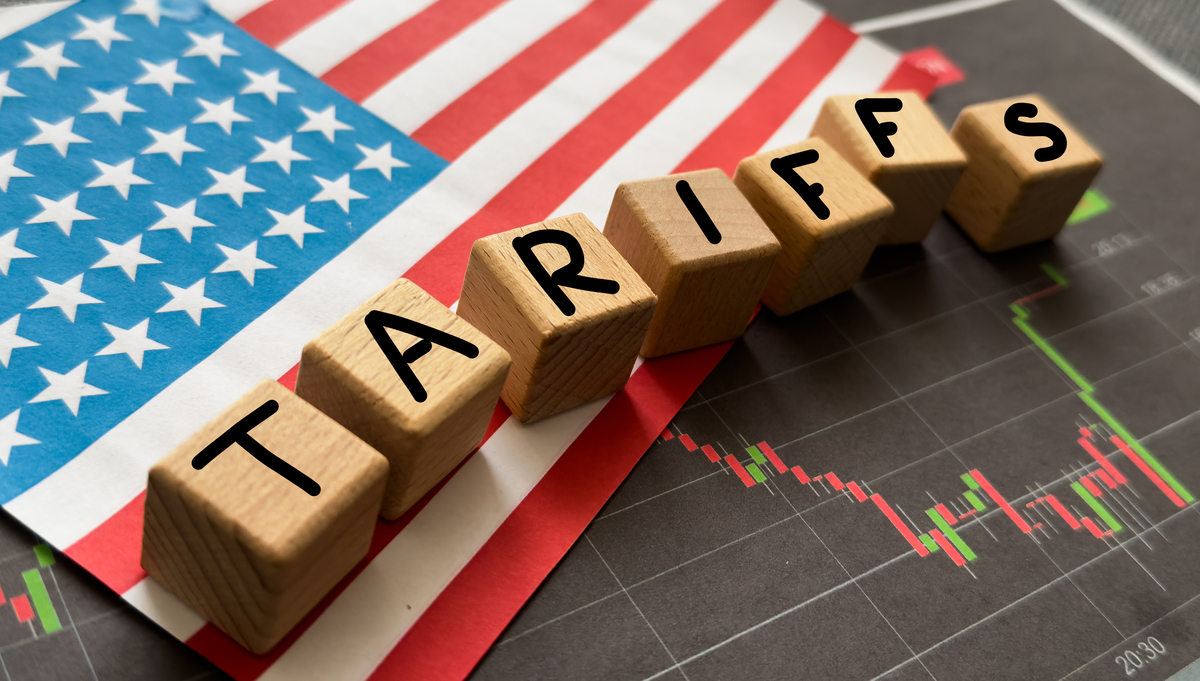
Core Insights - The implementation of new tariffs by the Trump administration is significantly reshaping global supply chains, prompting companies to adjust their sourcing and production strategies [1][3]. Group 1: Company Adjustments - RH plans to reduce its sourcing from China to just 2% by the end of the year and is increasing production in North Carolina [2]. - Lululemon is modifying its e-commerce fulfillment network due to the removal of the de minimis exemption for shipments valued under $800 [2]. Group 2: Beneficiaries of Reshoring - Prologis, the largest owner of logistics real estate, is expected to benefit from increased demand for warehouses as companies reshore manufacturing [5]. - Prologis reported a historically high leasing pipeline and raised its guidance for the year, indicating strong demand and accelerated expansion efforts [6]. - Manhattan Associates, a logistics software provider, is likely to see increased demand for its services as companies adapt to new trade rules, with a 26% increase in remaining performance obligations in the second quarter [8]. - Intel is positioned to benefit from reshoring, receiving an $8 billion grant from the CHIPS Act and a $8.9 billion investment from the federal government to support U.S. semiconductor manufacturing [10].
Lithium Americas Shares Surge Again after Confirmation of US Government Equity Stake
Small Caps· 2025-10-01 23:54
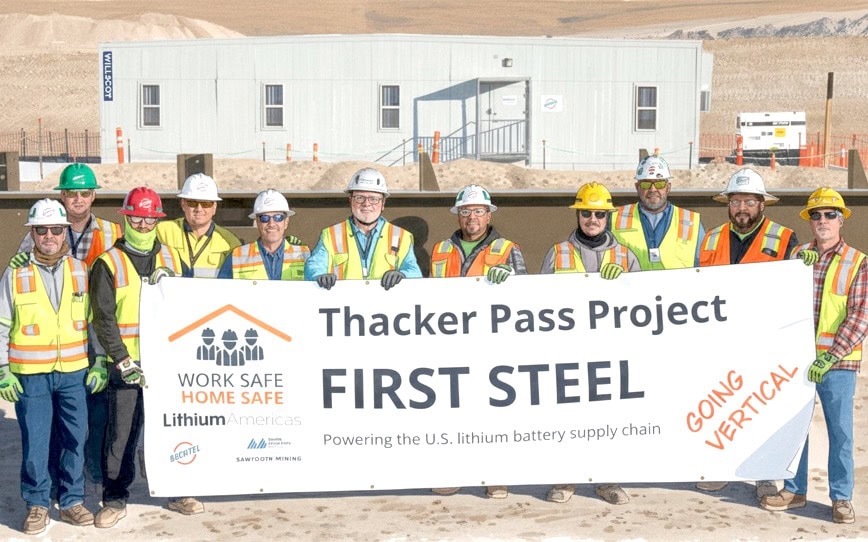
Core Insights - Lithium Americas' stock surged 23.3% to $7.04 after the US Department of Energy (DOE) acquired a 5% equity stake in the company and its joint venture with General Motors (GM) for the Thacker Pass lithium project [1] - The agreement allows for the first $435 million drawdown from a previously announced $2.3 billion loan from the DOE and enables the joint venture to enter new third-party offtake agreements for lithium not contracted to GM [1] Group 1 - CEO Jonathan Evans emphasized the strategic importance of the deal, stating it strengthens America's supply chain and enhances long-term energy security [2] - The DOE's revised structure includes over $100 million of new equity and offers additional protections for US taxpayers [2] - The US government is shifting towards direct equity co-investments in critical minerals and advanced manufacturing projects, moving beyond loans and grants [3] Group 2 - Lithium Americas' stock has increased by 91% in the past month, driven by speculation regarding government involvement [5] - The US government's stake in Thacker Pass marks a new era of policy-backed equity capital for critical minerals, reducing financing hurdles and strengthening offtake confidence for developers [5] - The DOE's equity and funding significantly reduce financing risk ahead of the project's first production, targeted for 2028 [6] Group 3 - The deal allows Lithium Americas and GM to attract new strategic partners through offtake agreements [6] - The government's direct involvement provides a "policy put," reinforcing market confidence and supporting higher development-stage multiples [6] - The confirmation of government equity participation validates expectations for blended financing packages among ASX-listed lithium developers with North American projects [6]

Deutsche Bank and Mizuho Raise Price Target on ASML Holding N.V. (ASML)
Yahoo Finance· 2025-10-01 23:39
Core Insights - ASML Holding N.V. is recognized as one of the best quality stocks to buy, with significant upside potential according to hedge funds [1] Price Target Adjustments - Deutsche Bank raised its price target for ASML from $742 to $954, citing increased memory capital expenditure trends expected to last until 2026, maintaining a Buy rating [2] - Mizuho increased its target from $689 to $985 and upgraded ASML from Neutral to Outperform, highlighting a persistent demand for extreme ultraviolet (EUV) lithography equipment [4] Stock Performance - Since early September, ASML's stock has risen approximately 29%, driven by improved confidence in semiconductor capital expenditures [3] Growth Projections - Analysts project ASML's earnings growth of 6% in 2026 and 21% in 2027, supported by increased spending from TSMC, Samsung's DRAM expansion, Intel's capacity plans, and steady demand from China [4] Market Position - ASML is a key player in the semiconductor industry, providing lithography, metrology, and inspection solutions essential for the production of advanced semiconductors globally [5]
Cramer says that Q3 winners may keep inching higher but the biggest gains may 'have already been made'
CNBC· 2025-10-01 23:12
Group 1 - The market's third quarter winners provide a roadmap for the final stretch of the year, with many fund managers likely to invest in these stocks to showcase strong performance to clients [2] - AppLovin, a mobile ad tech company, led the gains with a 105% increase in stock price during Q3, attracting attention from institutional investors [2] - Western Digital and Seagate saw significant gains of 87% and 63% respectively, driven by increased demand for data storage due to the AI boom [3] Group 2 - Warner Bros. Discovery surged 70% due to balance sheet improvements and speculation of a potential takeover from Paramount Skydance [3] - Teradyne and Intel also performed well, with gains of 53% and nearly 50% respectively, attributed to strategic moves and leadership changes [3] - Invesco, the asset manager, experienced a 45% gain, reflecting strong overall market performance [4] Group 3 - Cramer expressed skepticism about Q3's underperformers, suggesting limited potential for recovery, with Chipotle being the only candidate for a possible reversal [4] - Other sectors such as managed care, cable, used cars, and Invisalign braces were advised against for investment [4]

Intel: Be On The Safe Side And Trim (Rating Downgrade) (NASDAQ:INTC)
Seeking Alpha· 2025-10-01 22:39
Intel Corporation's ( INTC ) shareholders faced quite a volatile performance through the last five years, with INTC's stock price falling below $20 per share this year. My past articles dived into some of the problems INTC wasWelcome to Cash Flow Venue, where dividends do the heavy lifting! Blending my financial chops with the timeless wisdom of value investing (and love for steady income), I’ve built a rock-solid pillar in my financial foundation through dividend investing. I believe it’s one of the most a ...
Intel: Be On The Safe Side And Trim (Rating Downgrade)
Seeking Alpha· 2025-10-01 22:39
Intel Corporation's ( INTC ) shareholders faced quite a volatile performance through the last five years, with INTC's stock price falling below $20 per share this year. My past articles dived into some of the problems INTC wasWelcome to Cash Flow Venue, where dividends do the heavy lifting! Blending my financial chops with the timeless wisdom of value investing (and love for steady income), I’ve built a rock-solid pillar in my financial foundation through dividend investing. I believe it’s one of the most a ...
X @外汇交易员
外汇交易员· 2025-10-01 22:12
Market Overview - US stock market closed higher, with the Dow Jones up 0.09%, the Nasdaq up 0.42%, and the S&P 500 up 0.34% [1] - Nasdaq Golden Dragon China Index rose 1.44% [1] Individual Stock Performance - Intel increased by over 7% [1] - Tesla increased by over 3% [1] - Microsoft, Apple, Google, and Amazon saw gains of less than 1% [1] - Meta decreased by over 2% [1] - Baidu and 21Vianet (世纪互联) increased by over 4% [1] - JD.com increased by over 3% [1] - Alibaba, Bilibili, and XPeng increased by over 1% [1]
X @BREAD | ∑:
BREAD | ∑:· 2025-10-01 20:13
So what does this mean for Flashblocks on Unichain, Base, et al? https://t.co/CUKRo52Vd9Yannik Schrade (☂️) (@yrschrade):3/ Today's exploit is brutal💀Given physical access, anyone can completely break Intel SGX, Intel TDX and AMD SEV‑SNP.Even a hobbyist-level attacker can extract attestation keys and enclave secrets.The paper demonstrates real attacks on blockchains. TEEs in crypto are done. ...
Intel stock climbs on talks to add AMD as customer: report
Proactiveinvestors NA· 2025-10-01 19:56
About this content About Sean Mason Sean Mason is a Senior Journalist at Proactive, having researched and written about Canadian and US equities for 20 years. Sean graduated from the University of Toronto with a BA in history and economics and has also passed the Canadian Securities Course. He previously worked at Investors Digest of Canada, Stockhouse, and SmallCapPower.com. Read more About the publisher Proactive financial news and online broadcast teams provide fast, accessible, informative and action ...
