
Baker Hughes Company

Search documents
美国原油供需数据摘要-Oil Data Digest-US Oil Supply and Demand
2026-01-14 05:05
Summary of Key Points from the Conference Call Industry Overview - The conference call focuses on the **US Oil Industry**, specifically discussing crude oil production, supply, demand, and refinery operations. Core Insights and Arguments 1. **Record Crude Production**: US crude production reached a record of **13.87 million barrels per day (mb/d)** in October, primarily driven by gains in the US Gulf region, despite a stall in shale production growth [2][3][4]. 2. **Shale Production Trends**: Shale production saw a slight decline of **10 kb/d month-over-month (MoM)** in October, with New Mexico's output increasing by approximately **30 kb/d**, while Texas experienced a decline of **45 kb/d** [5][6]. 3. **Rig Count Decline**: The US oil rig count decreased by **6 rigs** in October, with significant losses in the Eagle Ford basin [8][12]. 4. **Fracking Activity Increase**: Frac activity rose sharply in October, with **1,261 frac jobs** initiated, marking a **21% increase** from September [13]. 5. **Gulf of Mexico Production Growth**: Offshore production in the Gulf of Mexico increased by **45 kb/d** MoM, reaching **2.0 mb/d**, supported by new projects like the Leon-Castille field [14][17]. 6. **Crude Imports and Exports**: Crude imports fell sharply by **500 kb/d** MoM to **5.9 mb/d**, while exports decreased by **140 kb/d** but were still up **9% year-over-year (YoY)** [24][26][29]. 7. **Refinery Runs Decline**: US refinery runs dropped by **940 kb/d** MoM to **15.53 mb/d**, attributed to seasonal maintenance and unplanned outages [35][40]. 8. **Oil Demand Contraction**: Total US oil demand contracted by **2% YoY** in October, ending four months of growth, with notable declines in gasoline and jet fuel consumption [48][49]. 9. **Finished Products Output**: Refinery output of finished products fell by **3% MoM**, with gasoline being the only product to see an increase in output [91][94]. 10. **Crude Inventory Build**: US crude inventories rose by **15.8 million barrels** in October due to reduced refinery demand, with significant builds in PADD 3, PADD 2, and PADD 5 [136][141]. Additional Important Insights - **Transfers to Crude Oil Supply**: In October, **860 kb/d** of transfers to crude oil supply were recorded, indicating an increase in blending materials used for refinery feedstock [22][23]. - **Impact of Seasonal Factors**: The decline in refinery runs and oil demand was influenced by seasonal factors, including maintenance schedules and the end of the harvest season affecting diesel demand [71][74]. - **Future Outlook**: Weekly EIA data suggests a recovery in refinery runs in November as maintenance concludes, with crude imports also expected to rise [138]. This summary encapsulates the critical developments and trends in the US oil industry as discussed in the conference call, highlighting production, demand, and operational challenges faced by the sector.
TETRA Technologies (NYSE:TTI) FY Conference Transcript
2026-01-13 22:32
TETRA Technologies (NYSE:TTI) FY Conference Summary Company Overview - TETRA Technologies is currently on a run rate of approximately $600 million in revenue and over $100 million in EBITDA, with EBITDA margins steadily increasing over the years, reaching 33% recently [1][3] - The company has divested from compression, offshore oil and gas, and decommissioning businesses to focus on water and flowback services and industrial chemicals in offshore oil and gas completion fluids [2] Financial Performance - Revenue for the trailing 12 months ended September was $362 million, the highest in a decade [3] - EBITDA margins have historically been in the mid- to high 20s, with a recent increase to 33% due to significant deep water wells completed in the Gulf of Mexico [3] - The calcium chloride business generated about $160 million in revenue with 30% EBITDA margins, which is not correlated to oil and gas [3] Strategic Focus and Growth Initiatives - TETRA is transitioning into sectors with higher growth opportunities beyond oil and gas, including battery storage and water treatment [5][14] - The company has seen a significant ramp-up in sales of a zinc bromide-based solution to EOS, increasing from $3 million in 2024 to approximately $20 million in 2025, with expectations of $50-$60 million in 2026 [5][6] - TETRA is developing technologies for water desalination and purification, targeting applications in crop irrigation and data center cooling [6][22] Market Dynamics and Competitive Position - TETRA is expanding its operations to extract bromine from the Smackover Formation in Arkansas to meet increasing demand from EOS and the offshore oil and gas market [7][27] - The company competes with larger firms like Schlumberger, Halliburton, and Baker Hughes, but maintains a market share of up to 30% due to its vertically integrated business model and unique chemistry know-how [11] Future Projections - TETRA aims to grow revenue from $600 million to $1.25 billion and EBITDA from over $100 million to about $325 million by 2030, with a balanced revenue mix from oil and gas, water treatment, and specialty chemicals [13][14] - The company plans to treat 500,000 barrels of produced water per day by 2030, translating to over $400 million in revenue and over $100 million in EBITDA [35] Operational Insights - TETRA's water treatment model involves cleaning produced water for beneficial reuse, with a focus on meeting the specifications required for data center operations [22][40] - The company has a solid balance sheet with a leverage ratio of 1.2 times and $50-$60 million in cash, positioning it well for future investments [28][29] Conclusion - TETRA Technologies is strategically repositioning itself to capitalize on high-growth markets in battery storage and water treatment while maintaining strong margins in its traditional oil and gas business, which is expected to create significant shareholder value [29][50]

油气ETF(159697)收涨超1.1%,今日净申购1500万份
Sou Hu Cai Jing· 2026-01-13 08:03
Group 1: Industry Overview - According to Raytad Energy, global upstream exploration and development spending is expected to be around $600 billion in 2025, a decrease of 4% year-on-year, with deepwater investments projected to decline by 6% [1] - China's crude oil production has rebounded since 2019 due to a long-term strategy for increasing reserves and production, with a CAGR of 2.2% from 2019 to 2024, while natural gas production has a CAGR of 7.3% during the same period [1] - The "Big Three" oil companies in China have significantly increased capital expenditures from 2020 to 2023 and are expected to maintain high levels in 2024 and 2025, which will support upstream reserve growth and benefit their oil service subsidiaries [1] Group 2: Company Performance - In the first half of 2025, major oil service companies benefited from the ongoing domestic "increase reserves and production" initiative and the gradual release of overseas business performance, leading to improved operational quality despite falling oil prices [2] - CNOOC's oil service subsidiary reported a 23.3% year-on-year increase in net profit attributable to shareholders, while other companies like Haiyou Development and Haiyou Engineering saw net profit changes of +13.1% and -8.2% respectively, with the latter experiencing a 27% increase in gross profit [2] - The annualized ROE for CNOOC's oil service companies in the first half of 2025 showed resilience, with CNOOC at +1.5 percentage points compared to the full year of 2024, indicating a potential improvement in international competitiveness [2] Group 3: Market Performance - As of January 13, 2026, the National Petroleum and Natural Gas Index (399439) rose by 0.81%, with significant increases in stocks such as CNOOC's oil service (+6.03%) and China National Petroleum (+3.57%) [3] - The oil and gas ETF (159697) increased by 1.15%, reflecting a four-day consecutive rise, with the latest price reported at 1.23 yuan and a net subscription of 15 million units [3] - The top ten weighted stocks in the National Petroleum and Natural Gas Index account for 67.11% of the index, including major players like China National Petroleum, Sinopec, and CNOOC [3]





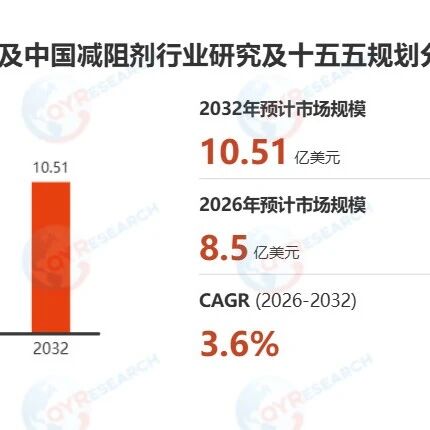
减阻剂市场洞察,全球前5 强生产商排名及市场份额
QYResearch· 2026-01-12 09:00
减阻剂 (DRA) 市场主要围绕注入流体管道的专用化学添加剂展开,这些添加剂能够降低摩擦压力损失,从而提高输送量或降低泵送能耗。大多数商用减阻剂是高 分子量聚合物(通常是聚α - 烯烃或其他长链分子)或表面活性剂配方,即使在极低浓度下,也能改变原油、成品油或水基体系等液体的湍流特性。通过平滑流动 并抑制管壁附近的湍流,减阻剂使运营商能够通过现有管道输送更多产品,或在较低压力下维持流量,这对于长距离油气管道、多相管道以及某些水或浆料输送 系统而言极具吸引力。 对减阻剂的需求主要受能源运输增长和优化现有基础设施的需求驱动。由于原油、成品油和天然气液需要长距离输送,管道运营商正在寻找经济高效的方式来提 升输送能力,而无需进行昂贵的扩建或新建工程。动态响应装置 (DRA) 可以有效"释放"额外输送能力,并在高峰需求、季节性波动或维护相关的线路改道期间提 高输送灵活性。能源价格上涨以及对运营效率和降低排放的日益重视也推动了 DRA 的应用,因为增加流量或降低泵送功率可以直接降低运营成本和碳排放。在某 些地区,新建管道的监管和许可方面的挑战进一步促使人们使用 DRA 来最大限度地提高现有管网的性能。 市场面临着技术和商业 ...

Oilfield Chemicals Market is expected to generate a revenue of USD 38.09 Billion by 2031, Globally, at 5.31% CAGR: Verified Market Research®
Globenewswire· 2026-01-10 15:49
Core Insights - The Global Oilfield Chemicals Market is projected to grow at a CAGR of 5.31% from 2024 to 2031, increasing from USD 25.18 Billion in 2024 to USD 38.09 Billion by 2031 [1][8] Market Size & Forecasts - The market is expected to experience significant growth driven by the rising demand for Enhanced Oil Recovery (EOR) methods, which rely on chemicals like surfactants and polymers [8] - The report provides detailed analysis of current market trends and projections for the next decade [7] Regional Insights - North America is the leading region in the Oilfield Chemicals Market, supported by extensive oil and gas exploration, particularly in the U.S. shale industry [14] - The region's advanced drilling technology and substantial investments in EOR contribute to the demand for specialized chemicals [14] Competitive Landscape - Key players in the market include Akzo Nobel N.V., Albemarle Corporation, Ashland Inc., Baker Hughes Incorporated, BASF SE, Canadian Energy Solutions, Clariant, Croda International Plc., and Drilling Specialties Company [15] Technological Innovations - Innovations in shale gas extraction, such as hydraulic fracturing and horizontal drilling, are driving the demand for specialized chemicals [10] - The focus on sustainable drilling solutions is leading to a shift towards environmentally friendly and biodegradable chemicals [9] Growth Opportunities - The market is poised for growth in sectors focused on sustainability-driven innovations, as companies seek to minimize environmental impacts [9] - The increasing emphasis on improved oil recovery methods presents substantial development prospects for producers catering to oil and gas operators [8]

委内瑞拉产能重启潜力是否能支撑油服股上涨?-US Oil Gas Services and Exploration Production Does the Venezuela Restart Potential Justify the OFS Stock Pop-
2026-01-10 06:38
Summary of Conference Call Notes on US Oil & Gas Services and Exploration & Production Industry Overview - The focus is on the Oilfield Services (OFS) sector, particularly in relation to Venezuela's oil production potential and its impact on stock prices of major OFS companies [1][2]. Key Points and Arguments 1. **Market Reaction to Venezuela News**: - The stock prices of major OFS companies such as SLB, HAL, and WFRD increased significantly (approximately 9%, 8%, and 10% respectively) due to expectations of increased foreign investment in Venezuela's oilfields [2]. - The market capitalization increase of 8-10% on a single day appears disproportionate when considering the EBITDA contribution needed to justify it, estimated at over $6 billion for the Big 4 OFS companies [1][2]. 2. **Revenue Opportunity Assessment**: - A return to around 75 active rigs in Venezuela could represent a market opportunity of approximately $3-3.5 billion for OFS services, which is less than the market capitalization increase suggests [1][3]. - Historical data indicates that when Venezuela produced 2.5-3 million barrels per day, it operated 70-80 rigs, suggesting a potential $10 billion drilling and completion (D&C) market if similar activity levels are achieved [3]. 3. **Valuation and Yield Analysis**: - The stock movement has closed the valuation gap between large-cap OFS and E&P companies, particularly at a WTI price of $60 [4][9]. - The 2027 Free Cash Flow (FCF) yield for OFS companies has improved, reflecting a rebound in the Middle East, although it did not significantly drop below E&P yields [4][9]. 4. **Historical Context and Future Outlook**: - The Big 4 OFS companies previously wrote off billions in receivables from Venezuela, and restarting collection efforts may influence current stock movements [4]. - The overall sentiment suggests that while some of the stock price increases may be temporary, a portion of the gains could be sustained as the market recognizes the valuation gap [4]. Additional Important Information - The report includes a detailed analysis of stock movements and their implications for revenue opportunities, with a total implied revenue opportunity exceeding $6 billion for the global OFS sector [8]. - The report also highlights the competitive landscape, indicating that OFS companies may face competition in certain product lines, which could affect their revenue from D&C services [3]. Conclusion - The conference call emphasizes the potential for growth in the OFS sector driven by developments in Venezuela, while also cautioning that the current stock price increases may not fully reflect the underlying revenue opportunities. The analysis suggests a complex interplay between market sentiment, historical performance, and future expectations in the oil and gas services industry [1][4][8].
Drilling Fluids Market is expected to generate a revenue of USD 16.59 Billion by 2032, Globally, at 4.36% CAGR: Verified Market Research®
Globenewswire· 2026-01-09 03:47
Market Overview - The Global Drilling Fluids Market is projected to grow at a CAGR of 4.36% from 2026 to 2032, with a market value of USD 11.79 Billion in 2024, expected to reach USD 16.59 Billion by the end of the forecast period [1]. Key Highlights - The report provides actionable insights for decision-makers, including competitive analysis, market trends, regulatory impacts, and technology forecasts, essential for manufacturers, service providers, and oilfield operators [5][6]. - The market is driven by increased offshore and onshore drilling activities and the rising demand for unconventional energy sources like shale gas [7]. Technological Advancements - Advancements in drilling fluid formulations, including biodegradable and synthetic-based fluids, are enhancing operational efficiency and minimizing environmental impact [9]. - Innovative solutions are being developed to improve wellbore stability, reduce drilling downtime, and enhance well productivity [6]. Regional Dynamics - North America, particularly the U.S. shale boom, remains a dominant force in the market, with emerging markets in the Middle East, Asia Pacific, and Africa expected to shape future demand [7][14]. Environmental Regulations - Increased environmental regulations in key markets, especially in the U.S. and Europe, are driving the adoption of environmentally sustainable and low-toxicity drilling fluids [10]. - The focus on sustainable alternatives is creating opportunities for innovation within the drilling fluids industry [10]. Market Challenges - Volatility in crude oil prices may impede exploration and drilling operations, affecting the demand for drilling fluids [11]. - The high cost of advanced drilling fluids could restrict widespread adoption, particularly among smaller operators [12]. - Limited availability of raw materials for synthetic and petroleum-based drilling fluids may impact production capacities and profit margins [13]. Key Players - Major players in the Global Drilling Fluids Market include Baker Hughes Company, Halliburton Company, Schlumberger Limited, and others [15].

Baker Hughes Completes Divestiture of Its PCI Unit to Crane
ZACKS· 2026-01-08 18:21
Core Insights - Baker Hughes Company (BKR) has completed the divestiture of its Precision, Sensors and Instrumentation (PSI) unit to Crane Company (CR) for $1.15 billion in cash [1][5] - The divestment includes technology, tools, physical locations, and approximately 1,600 employees from the PSI unit [2][5] - This strategic move aligns with Baker Hughes' focus on asset management, operational efficiency, and disciplined investment [2][5] Financial Impact - The divestiture is expected to generate cash that can be reinvested into more profitable business areas, thereby strengthening Baker Hughes' balance sheet and increasing investor appeal [2] - The current business environment for Baker Hughes is influenced by crude oil prices, with West Texas Intermediate crude oil prices below $60 per barrel, impacting revenues from oil and gas exploration and production companies [3] Industry Context - Other players in the oil and gas equipment and service industry, such as Halliburton Company (HAL) and Cactus, Inc. (WHD), are similarly affected by crude price volatility [4] - Halliburton currently holds a Zacks Rank 3 (Hold), while Cactus has a Zacks Rank 1 (Strong Buy) [4]



Retail traders had one of their best years ever in 2025. Here's what they're buying now
CNBC· 2026-01-08 18:09
Core Viewpoint - Retail investors are increasingly focusing on energy stocks, particularly following the U.S. military intervention in Venezuela, which has led to significant inflows into oil-related companies [2][4][5]. Group 1: Retail Investor Behavior - Retail investors have returned to the market with a strong interest in energy stocks, marking the second-highest buying level in nearly eight months at the start of 2026 [2]. - There has been a notable spike in net daily inflows into Halliburton, reaching the highest level since early 2022, while Chevron also saw significant inflows, indicating a strong interest in companies that could benefit from the situation in Venezuela [4]. - The trend of retail investors gravitating towards energy stocks suggests a potential shift from high-growth sectors to those with more stable cash flow generation [7]. Group 2: Market Dynamics and Predictions - The situation in Venezuela, where the country has the largest proven crude oil reserves, has prompted speculation about the return of Venezuelan heavy crude to the U.S., which could benefit companies involved in rebuilding the oil infrastructure [3][5]. - Despite recent stock price fluctuations, retail investors are likely to remain committed to energy stocks, similar to their behavior with artificial intelligence stocks, indicating a potential long-term interest in the sector [6][7]. - The strong performance of retail investors in 2025, with record inflows into various sectors, has shifted perceptions of retail traders from "dumb money" to more mature market participants, prompting institutional investors to reconsider their strategies [9][10].



2026 年能源展望:十大主题、40 张图表-2026 Energy Outlook_ 10 Themes, 40 Charts
2026-01-08 10:42
Summary of Key Points from the Energy Sector Conference Call Industry Overview - The conference call focuses on the energy sector, particularly oil and natural gas, with insights into market dynamics and future trends for 2026 and beyond [1][2][3]. Core Themes and Insights 1. **Affordability and Inflation**: The U.S. administration is prioritizing lower oil prices and inflation control, particularly in the lead-up to the 2026 midterms. Gasoline, diesel, and electricity prices are key focus areas [4][24][30]. 2. **Oil Market Outlook**: A bearish consensus on oil prices is expected to hold in the first half of 2026, driven by OPEC's production adjustments and modest U.S. shale growth. The market is characterized by rising inventories, indicating a well-supplied environment [4][37]. 3. **U.S. Shale Production**: U.S. shale is facing challenges in sustaining production levels due to maturing core acreage and the need for higher prices to support growth. Efficiency gains are being leveraged by larger operators to offset declines [5][38][42]. 4. **Natural Gas Volatility**: The natural gas market is expected to experience increased volatility as demand outpaces storage capacity. The projected rise in power demand for gas in 2026 is significant, with a forecasted increase of approximately 4% [5][53]. 5. **M&A Activity**: The energy sector is likely to see increased mergers and acquisitions, driven by the need for scale and efficiency. Integrated models combining upstream, midstream, and downstream operations are becoming more attractive [6][54][59]. 6. **LNG Market Dynamics**: The global LNG market is adjusting to oversupply concerns, with U.S. LNG capacity projected to reach approximately 264 million tons per annum by 2030. However, project delays and lower utilization rates may pressure margins [9][68]. 7. **Refining and Marketing Sector**: The refining sector is expected to face volatility in 2026, with lower crack spreads year-over-year. Underinvestment in the sector may support long-term stability, but short-term revisions are likely downward [10][12]. 8. **Offshore and Deepwater Growth**: Offshore capital expenditures are expected to remain flat in 2026, with a cautious outlook for deepwater growth. Investment in subsea technology is anticipated to improve utilization rates [11][12]. Key Companies Mentioned - **Top Picks**: OVV, SLB, EQT, CVX, XOM, COP, CRC, CVE CN, BKR, FLOC, GPOR, SOBO CN, SOC, WMB [3][15][17]. - **Specific Company Insights**: - **Chevron (CVX)**: Conservative growth outlook with potential upside from various projects [19]. - **ExxonMobil (XOM)**: Strong upstream and downstream assets, operational excellence driving growth [19]. - **ConocoPhillips (COP)**: High-quality assets with competitive returns [19]. - **EQT Corporation (EQT)**: Positioned well for long-term growth in the Appalachian basin [19]. - **Baker Hughes (BKR)**: Strong positioning in diverse end markets with a focus on long-term earnings [20]. Additional Important Insights - **Market Sensitivity**: The natural gas market's sensitivity to weather and LNG flows is increasing due to limited storage capacity, which could lead to price volatility [50][51]. - **Technological Advancements**: Companies are increasingly adopting AI and other technologies to enhance operational efficiency, with significant potential for further deployment across the sector [45]. - **Geopolitical Factors**: Ongoing international tensions, particularly in oil-producing regions, could impact market dynamics and pricing strategies [3][37][27]. This summary encapsulates the key themes and insights from the energy sector conference call, highlighting the challenges and opportunities facing the industry as it heads into 2026.


