Genentech

Search documents
Xencor (XNCR) 2019 Earnings Call Presentation
2025-07-03 13:58
XmAb® Fc Domain Technology - Xencor's XmAb® Fc domains augment native immune functions, preserve half-life, stability and production of antibodies[4] - XmAb® Fc domains are 99.5% identical to natural antibodies and can be easily substituted into any antibody[9] - Xencor has over 500 issued and pending patents worldwide related to XmAb® Fc domains[4] Bispecific Antibody Pipeline - Xencor has 6 XmAb bispecific antibodies in Phase 1 clinical studies[4] - XmAb23104 (PD-1 x ICOS) entered Phase 1 in May 2019, and XmAb22841 (CTLA-4 x LAG-3) initiation was anticipated in Q2 2019[4,39] - Novartis has a co-development and ex-U.S license for XmAb14045 (CD123 x CD3)[4] - Amgen's AMG 424 (CD38 x CD3) is in Phase 1 study in myeloma, and AMG 509 (Undisclosed x CD3) is advancing in prostate cancer[4,11,44] IL-15 Cytokine Program - Genentech has a co-development collaboration with Xencor for novel IL-15 cytokines[4] - The collaboration includes $120 million upfront and up to $160 million in XmAb24306 development milestone payments, and up to $180 million for each new IL-15 program[42] - The first IND submission for XmAb24306 is planned for H2 2019[4,42] Clinical Programs and Partnerships - Xencor has 13 XmAb clinical programs ongoing internally or with partners, including tafasitamab/MOR208 (Morphosys) in Phase 3 and Ultomiris™ (Alexion) approved in the U.S for the treatment of adult patients with PNH[4,11] - In a Phase 1 study of XmAb14045 in relapsed/refractory AML, 28% of evaluable patients achieved either complete remission (CR) or CR with incomplete hematologic recovery (CRi) at 2 highest initial doses (1.3 and 2.3 mcg/kg weekly)[29,34] Financial Status - Xencor had $650.5 million in cash at March 31, 2019, providing runway beyond 2024[46]

Whitehawk Therapeutics (AADI) Fireside Chat Transcript
2025-06-26 15:00
Summary of Whitehawk Therapeutics Fireside Chat - June 26, 2025 Company Overview - Whitehawk Therapeutics, formerly known as Adi Bioscience, underwent a transformation completed in Q1 2025, focusing on developing an advanced ADC (antibody-drug conjugate) portfolio after selling its mTOR inhibitor product to Kaken Pharmaceuticals for $100 million [3][4][15]. Pipeline and Technology - The company is developing a three-asset ADC portfolio targeting various cancers, including lung, ovarian, and gastrointestinal cancers, with a focus on established tumor biology and clinically validated tumor markers [4][5][14]. - All three programs are currently in preclinical stages, with IND (Investigational New Drug) filings anticipated by mid-2026 [6][13]. - The ADC platform utilizes a linker payload technology designed for greater stability, reduced off-target toxicity, and improved therapeutic index [5][12][13]. Key Programs 1. **HAWK 007 (PTK7-targeted ADC)** - PTK7 is broadly overexpressed in various solid tumors, with expression rates of 60-70% in cancer patients [20][21]. - The program aims to demonstrate differentiation from previous compounds, with a focus on lung cancer, ovarian cancer, and triple-negative breast cancer [24][26]. - Initial phase one trials will target patients with moderate to high expression of PTK7, aiming for a minimum response rate of 40% in lung cancer and 50% in ovarian cancer [56]. 2. **HAWK 016 (MUC16-targeted ADC)** - MUC16 is a circulating biomarker in ovarian cancer, with the approach focusing on targeting the membrane-bound portion to avoid complications from circulating biomarkers [60][63]. - The program will initially focus on gynecological cancers, with potential expansion into pancreatic and non-small cell lung cancers in the future [70]. 3. **HAWK 206 (SEZ6-targeted ADC)** - This program is in the early stages, with a biparatopic approach aimed at enhancing internalization and efficacy in neuroendocrine tumors and small cell lung cancer [71][78]. Competitive Landscape - The ADC market is competitive, with other companies like Zymeworks and Day One Pharmaceuticals developing next-generation ADCs. Whitehawk believes its platform offers superior optimization in terms of linker stability, hydrophilicity, and therapeutic index [36][46]. - The company aims to differentiate its products by demonstrating better efficacy and safety profiles compared to existing therapies [30][46]. Financial Position and Future Outlook - Whitehawk started Q2 2025 with approximately $185 million in cash, providing operational runway into early 2028 to generate clinical data before seeking additional funding [88][90]. - The company plans to release more preclinical data in 2026, focusing on a comprehensive view of its products' potential before public disclosures [89][90]. Conclusion - Whitehawk Therapeutics is positioned to make significant advancements in the ADC space with its innovative platform and targeted therapies. The upcoming IND filings and clinical trials will be critical in validating its approach and establishing its market presence.
AI基础设施双雄表现分化:CoreWeave(CRWV.US)飞涨 Nebius(NBIS.US)静待其时
智通财经网· 2025-06-24 06:53
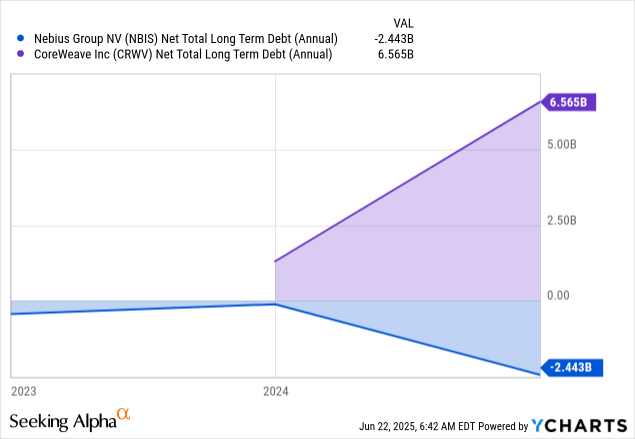
Core Insights - Nebius (NBIS.US) has seen a stock price increase of approximately 125% since April, but this is significantly lower than CoreWeave's (CRWV.US) 369% rise during the same period, raising questions about Nebius's market perception despite its strong fundamentals [1] - CoreWeave's revenue for Q1 2025 grew by 420% year-over-year to $982 million, while Nebius reported revenue of approximately $55 million, highlighting a stark contrast in scale and market recognition [1][2] - CoreWeave is perceived as a "purer" AI infrastructure player, focusing on large-scale AI computing tasks, while Nebius is seen as a more diversified technology company due to its Yandex background [2] Financial Performance - CoreWeave has a low float of shares, which can amplify price movements during demand surges, while Nebius's valuation remains relatively low despite its strong fundamentals [2] - CoreWeave's aggressive capital strategy has raised $2.6 billion through various funding rounds, while Nebius has a healthier balance sheet with $5.4 billion from the sale of Yandex assets and minimal debt [3] - As of Q1 2025, CoreWeave reported an adjusted EBITDA of $606 million with a 62% profit margin, whereas Nebius reported an adjusted EBITDA of -$62.6 million and a net loss of $113.6 million, indicating a significant execution gap [6] Customer Base and Market Position - CoreWeave's revenue is heavily reliant on a few large clients, with 77% of its income coming from two customers, including Microsoft, which contributes 62% [5] - Nebius has diversified its customer base across over 20 industries, reducing risk despite lacking high-profile contracts like those of CoreWeave [5] - Geographical factors also play a role, as CoreWeave's U.S. headquarters aligns it closely with American AI labs, while Nebius has only recently gained attention from U.S. investors after relocating its headquarters to the Netherlands [5] Future Catalysts - Nebius is approaching a potential breakeven point, with management expecting to achieve positive adjusted EBITDA in the second half of 2025, which could shift market sentiment [7] - The recent issuance of $1 billion in convertible bonds and a cash reserve of $1.45 billion provide Nebius with ample growth capital without resorting to dilutive financing [7] - Nebius plans to release industry-specific AI infrastructure products, which may help it stand out among general cloud providers and attract larger contracts [7] Summary - Nebius possesses unique advantages, including undervalued quality assets, ample cash reserves, and a promising execution strategy, positioning it as a potential "invisible winner" in the AI sector [7]


对谈斯坦福 Biomni 作者黄柯鑫:AI Scientist 领域将出现 Cursor 级别的机会|Best Minds
海外独角兽· 2025-06-20 11:18
Group 1 - The article discusses the rapid advancement of AI in the fields of science and biomedicine, particularly focusing on the emergence of AI scientist agents that can autonomously conduct research and drug discovery [3][4]. - AI scientist agents are defined as agentic systems that can autonomously propose hypotheses, design experiments, and iteratively refine their approaches, distinguishing them from general-purpose agents [4][19]. - The development of Biomni, a biomedical agent environment, aims to integrate various tools, databases, and software to facilitate autonomous research tasks across different biomedical subfields [4][34][38]. Group 2 - FutureHouse, an AI lab backed by former Google CEO Eric Schmidt, has developed AI scientist agents that have reportedly discovered new drugs, showcasing the potential of AI in drug development [3][22][25]. - The article emphasizes that while general-purpose agents like OpenAI's Deep Research can perform many research tasks, they lack the specialized environment and expert knowledge necessary to fully function as AI scientists [28][29]. - The Biomni project aims to create a flexible environment that allows AI agents to perform a wide range of biomedical research tasks, addressing the challenge of integrating numerous specialized tools and databases [34][38][42]. Group 3 - The article highlights the importance of designing benchmarks for AI in biology, as the field currently lacks standardized metrics similar to those in other domains like image recognition [70]. - AI scientist agents are expected to automate routine tasks and potentially exceed human capabilities in specific areas, such as rare disease diagnosis, by leveraging their ability to process large datasets [30][31]. - The integration of AI tools like AlphaFold into the workflows of AI scientists is seen as a way to enhance their capabilities in protein design and other biological tasks [53][54].

Nuvalent Appoints Christy Oliger to Board of Directors
Prnewswire· 2025-06-18 20:30
Core Insights - Nuvalent, Inc. has appointed Christy Oliger to its Board of Directors, enhancing its leadership as it transitions from a development-stage company to potential commercialization [1][2] - Oliger brings over 30 years of experience in the pharmaceutical and biotechnology industry, including her recent role as Senior Vice President at Genentech, where she oversaw U.S. commercial activities in oncology [2] - The company is preparing for a potential first approval of its novel kinase inhibitors in 2026, reflecting its commitment to delivering targeted therapies for cancer patients [2][3] Company Overview - Nuvalent, Inc. is a clinical-stage biopharmaceutical company focused on developing precisely targeted therapies for cancer, specifically targeting clinically proven kinase targets [3] - The company utilizes expertise in chemistry and structure-based drug design to create innovative small molecules aimed at overcoming resistance and minimizing adverse events [3] - Nuvalent's pipeline includes investigational candidates for ROS1-positive, ALK-positive, and HER2-altered non-small cell lung cancer, along with multiple discovery-stage research programs [3]


AbbVie Provides Update on VERONA Trial for Newly Diagnosed Higher-Risk Myelodysplastic Syndromes
Prnewswire· 2025-06-16 13:00
Core Insights - AbbVie announced that the global Phase 3 VERONA trial evaluating venetoclax in combination with azacitidine for newly diagnosed higher-risk myelodysplastic syndrome (HR-MDS) did not meet its primary endpoint of overall survival (OS) with a hazard ratio (HR) of 0.908 and a p-value of 0.3772 [1][3] - No new safety signals were observed in the trial, and results will be presented at a future medical congress or publication [1][2] Company Overview - AbbVie is committed to discovering and delivering innovative medicines that address serious health issues, focusing on therapeutic areas such as immunology, oncology, neuroscience, and eye care [21] - The company is advancing a dynamic pipeline of investigational therapies across various cancer types, including blood cancers and solid tumors, with a focus on targeted medicines [22][23] Product Information - VENCLEXTA (venetoclax) is a first-in-class medicine that selectively inhibits the B-cell lymphoma-2 (BCL-2) protein, which is involved in preventing cancer cells from undergoing apoptosis [5][6] - Venetoclax is approved in over 80 countries, including the U.S., and is developed by AbbVie and Roche, with joint commercialization in the U.S. by AbbVie and Genentech [6]


[Ad hoc announcement pursuant to Art. 53 LR] Roche provides safety update on Elevidys™ gene therapy for Duchenne muscular dystrophy in non-ambulatory patients
Globenewswire· 2025-06-15 05:00
Core Viewpoint - Roche has implemented new dosing restrictions for Elevidys™ (delandistrogene moxeparvovec) for non-ambulatory Duchenne muscular dystrophy (DMD) patients due to two cases of fatal acute liver failure, leading to a reassessment of the benefit-risk profile as unfavorable for this patient group [1][2][4][7]. Group 1: Dosing Restrictions - Effective immediately, non-ambulatory patients will no longer receive Elevidys in commercial settings, and dosing for these patients in clinical trials is paused until additional risk mitigation measures are established [1][7]. - The new restrictions do not affect ambulatory DMD patients, where the benefit-risk ratio remains positive [2][7]. Group 2: Clinical Context - The two fatal cases of acute liver failure occurred among approximately 140 non-ambulatory patients treated with Elevidys globally [4]. - European regulators have requested temporary clinical holds on several Elevidys studies following the incidents [4]. Group 3: Product Overview - Elevidys is the first approved gene therapy for DMD, designed to deliver new instructions to cells to produce dystrophin, aiming to slow disease progression [10][11]. - The treatment has been approved in eight territories, including Bahrain, Brazil, and Japan, and Roche collaborates with Sarepta Therapeutics for its commercialization [5][11]. Group 4: Disease Background - Duchenne muscular dystrophy is a rare genetic disease primarily affecting males, with a prevalence of 1 in 5,000 boys born worldwide, leading to progressive muscle weakness and loss of mobility [3][12]. - The average life expectancy for individuals with Duchenne is only 28 years, highlighting the critical need for effective treatments [12][16].

Scholar Rock(SRRK) - 2025 FY - Earnings Call Transcript
2025-06-11 14:20
Financial Data and Key Metrics Changes - The company is preparing for the PDUFA date of September 22 for apategromab in SMA, indicating a significant milestone in its financial outlook [11] - The management has emphasized a strong cash position, with a runway extending into early 2027, allowing for strategic investments without immediate equity issuance [42][44] Business Line Data and Key Metrics Changes - The company has seen robust clinical development for ipilimumab in SMA, with a Phase III SAFIRE trial enrolling 188 patients, demonstrating clinically meaningful benefits [12][13] - The obesity program is set to share Phase II data from the EMBRAZE trial, focusing on the preservation of lean mass in patients receiving tirzepatide [28][29] Market Data and Key Metrics Changes - The company is under review with the FDA and the European Medicines Agency, with plans for a substantial launch in the U.S. and thoughtful expansion into Europe and Asia Pacific [25][26] - There are approximately 35,000 patients worldwide who have received at least one SMN targeted therapy, highlighting a significant market opportunity for the company's products [26][40] Company Strategy and Development Direction - The company aims to scale its growth into global commercialization, focusing on the approval of ipilimumab in multiple countries [3][25] - The strategy includes leveraging existing assets while exploring new indications for ipilimumab and SRK-439 in rare neuromuscular disorders [9][38] Management's Comments on Operating Environment and Future Outlook - Management expressed confidence in the potential of ipilimumab to reverse the trend of motor function loss in SMA patients, positioning it as a new standard of care [15][19] - The company is committed to making a meaningful difference for patients and ensuring that no patient is left behind in accessing their therapies [27][44] Other Important Information - The company is considering the implications of pricing strategies based on the rarity and severity of diseases like SMA, as well as the clinical benefits demonstrated [39][40] - The management is cautious about the investment in cardiometabolic and obesity indications, focusing instead on rare severe neuromuscular disorders [33][44] Q&A Session Summary Question: What are the expectations for the label regarding apategromab in SMA? - Management expects a broad label based on the robust data from the Phase III SAFIRE trial and the consistency of results across patient subgroups [12][13] Question: How does the drug fit into the existing treatment paradigm for SMA? - The company believes ipilimumab can provide significant benefits beyond existing SMN targeted therapies, particularly for patients who have started to lose motor function again [14][15] Question: What is the company's strategy for the obesity program? - The company plans to present Phase II data from the EMBRAZE trial, focusing on the preservation of lean mass in patients receiving tirzepatide [28][29] Question: How does the company view the regulatory pathway for obesity treatments? - Management acknowledges the evolving view of the FDA and the need to demonstrate both weight loss and preservation of lean mass in future trials [32][33] Question: What is the current cash position and runway for the company? - The company has a strong cash position with a runway extending into early 2027, allowing for strategic investments without immediate equity issuance [42][44]

Zepzelca® (lurbinectedin) and Atezolizumab (Tecentriq®) Combination Granted U.S. FDA Priority Review for First-Line Maintenance Treatment of Extensive-Stage Small Cell Lung Cancer
Prnewswire· 2025-06-10 11:05
Core Insights - The FDA has accepted the supplemental New Drug Application (sNDA) for Zepzelca in combination with atezolizumab for first-line maintenance treatment of extensive-stage small cell lung cancer (ES-SCLC), with a PDUFA action date set for October 7, 2025 [1][2] - The sNDA submission is based on the Phase 3 IMforte trial results, which showed statistically significant improvements in progression-free survival (PFS) and overall survival (OS) for the combination therapy compared to atezolizumab alone [2][6] - Jazz Pharmaceuticals will host an investor webcast to discuss the Zepzelca data, featuring commentary from experts in the field [3] Company Overview - Jazz Pharmaceuticals is a global biopharma company focused on developing innovative medicines for serious diseases, including a growing portfolio of cancer treatments [25][26] - The company is headquartered in Dublin, Ireland, and is dedicated to transforming the lives of patients with limited therapeutic options [25][26] Industry Context - Small cell lung cancer (SCLC) accounts for approximately 13% of lung cancers in the U.S., with around 30,000 new cases reported annually [4] - SCLC is known for its aggressive nature and rapid spread, leading to a high unmet need for effective treatment options [4]


让科研人员不再做牛马!斯坦福大学华人团队打造首个通用生物医学AI智能体,从设计实验、数据分析到药物发现全自动搞定
生物世界· 2025-06-10 08:21AI Processing
编辑丨王多鱼 排版丨水成文 生物医学研究是增进人类对健康和疾病的理解、推动药物研发以及提升临床护理水平的基础。 然而,在生物医学实验室中,科研人员往往被复杂的实验方案、庞大的数据库、五花八门的分析工具以及不停更新的海量文献所淹没。生物医学研究日益受到这 些重复且分散的工作流程的制约,让科研人员疲于奔命, 严重减缓了科学发现的速度,限制了科学创新。这凸显了科学界对根本性新方法的迫切需求——一种能 够 有效扩展科学专业知识、简化研究工作流程,并充分释放生物医学研究潜力的全新路径。 2025 年 6 月 2 日, 斯坦福大学 黄柯鑫 、 Serena Zhang 、 王瀚宸 、 屈元昊 、 陆荧洲 等研究人员领衔的团队,联合 Genentech、Arc Institute、 加州大学 旧金山分校及 普林斯顿大学等 多个顶尖研究机构,发布了一款 通用生物医学 AI 智能体 —— Biomni ,该智能体能够自主完成横跨遗传学、基因组学、微生物 学、药理学和临床医学等多个生物医学分支领域的复杂研究任务 。 Biomni 的诞生标志着 AI 在生物医学研究中从"工具使用者"向"自主决策者"的跃迁 。通过将分散的科研资源整 ...