MacroGenics, Inc.

Search documents
Weekly Buzz: MGNX's LINNET Trial On Hold; ETON, ALUR Get FDA Nod; GILD Snaps Up ACLX
RTTNews· 2026-02-27 14:17
This week, the biotech space witnessed significant milestones, including FDA approvals, oncology drug acquisitions, and collaborations. Positive clinical trial results were reported across multiple therapeutic areas, including radiographic and non-radiographic axial spondyloarthritis, microcystic lymphatic malformations, pulmonary arterial hypertension, and obesity. Here's a closer look at the details. FDA Approvals & Rejections Armata Pharma Secures FDA QIDP Designation for AP-SA02 Armata Pharmaceuticals, ...





Enanta Pharmaceuticals, Inc. (NASDAQ:ENTA) Financial Performance and Peer Comparison
Financial Modeling Prep· 2026-02-22 17:00
Enanta Pharmaceuticals, Inc. (NASDAQ:ENTA) has a Return on Invested Capital (ROIC) of -22.45%, indicating it is not generating sufficient returns to cover its cost of capital.Xencor, Inc. (XNCR) also has a negative ROIC but performs slightly better than Enanta in terms of its ROIC to WACC ratio.PTC Therapeutics, Inc. (PTCT) stands out with a positive ROIC of 37.39%, showcasing efficient use of capital to generate returns above its cost of capital.Enanta Pharmaceuticals, Inc. (NASDAQ:ENTA) is a biotechnology ...

Sanofi's Teizeild Gets EU Approval for Treating Type 1 Diabetes
ZACKS· 2026-01-13 15:20
Core Insights - Sanofi's Teizeild (teplizumab) has received approval from the European Commission to delay the onset of stage 3 type 1 diabetes (T1D) in patients aged eight years and older with stage 2 disease, following a positive opinion from the European Medicines Agency [1][2] Group 1: Drug Approval and Market Impact - Teizeild is the first disease-modifying drug for T1D authorized in the European Union and is already approved in the United States and other countries for similar indications [2] - The approval is based on the TN-10 phase II study, which demonstrated significant delays in progression from stage 2 to stage 3 T1D, with a median time of 48.4 months for the Teizeild group compared to 24.4 months for the placebo group [5][6] - The study showed that 57% of patients treated with Teizeild remained in stage 2, while only 28% in the placebo group did, with fewer adverse events reported [6] Group 2: Financial and Strategic Context - Teizeild was added to Sanofi's portfolio in 2023 after the company acquired Provention Bio for $2.9 billion, which originally developed the drug [7] - In the first nine months of 2025, Tzield recorded global product sales of €47 million, reflecting a 33.3% increase at constant exchange rates, with €44 million from the United States [8] Group 3: Stock Performance and Comparisons - Over the past year, Sanofi's shares have declined by 1.7%, contrasting with a 21.9% rise in the industry [4] - Sanofi currently holds a Zacks Rank of 3 (Hold), while competitors like Amicus Therapeutics and Indivior have stronger rankings, with Indivior's stock increasing by 208.3% over the past year [9][10]


FDA Accepts SNY Filing for Expanded Use of T1D Drug in Young Children
ZACKS· 2026-01-05 16:26
Core Insights - Sanofi's Tzield (teplizumab) has received FDA acceptance for a regulatory filing to expand its use in type 1 diabetes (T1D) for individuals aged one year and older, with a priority review and a decision expected by April 29, 2026 [1][7] Group 1: Drug Approval and Impact - If approved, Tzield will be the first disease-modifying therapy to delay the onset of stage 3 T1D in children aged one year and older with stage 2 disease, currently approved for patients aged eight and older [2] - The regulatory filing is supported by positive interim data from the ongoing phase IV PETITE-T1D study, which evaluates Tzield in children under eight diagnosed with stage 2 T1D [3][7] Group 2: Company Performance and Acquisition - Sanofi's shares have declined by 2% over the past year, contrasting with the industry's growth of 19% [4] - Tzield was added to Sanofi's portfolio in 2023 following the acquisition of Provention Bio for $2.9 billion, with the drug originally developed by MacroGenics [6] Group 3: Market Strategy - A regulatory filing for Tzield is also under review in the European Union, seeking approval to delay the onset of stage 3 T1D in patients aged eight and older diagnosed with stage 2 of the disease, with marketing planned under the brand name Teizeild [6][8]

默沙东又踩了个雷
3 6 Ke· 2025-12-24 00:00
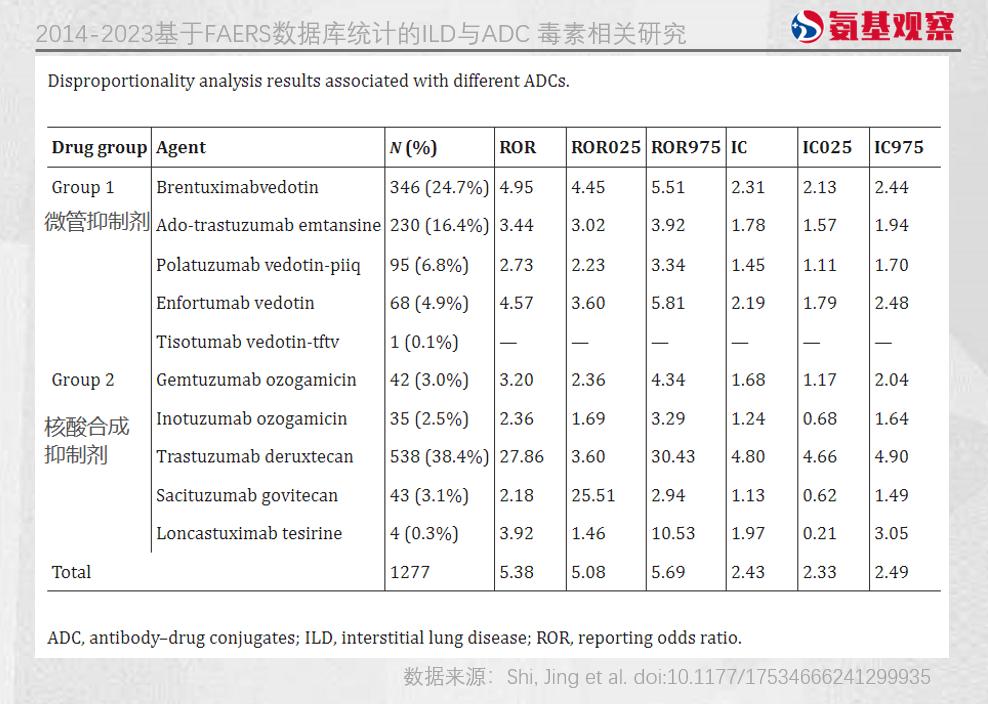
Core Viewpoint - The clinical trial for the B7-H3 ADC drug I-Dxd, developed by Merck and Daiichi Sankyo, has been globally suspended due to a higher-than-expected incidence of grade 5 interstitial lung disease (ILD), which corresponds to fatal outcomes in medical toxicity grading [1][2]. Group 1: Clinical Trial Outcomes - The suspension of the I-Dxd trial represents a significant setback for a $22 billion ADC collaboration project between Merck and Daiichi Sankyo, which had high expectations [2]. - Prior to this, another ADC, Patritumab deruxtecan, was withdrawn from the market due to poor overall survival data, with two patient deaths attributed to ILD during clinical trials [2][3]. - The increasing occurrence of severe ILD has led to a decrease in regulatory tolerance for ADCs, raising concerns about the safety of these therapies [3][7]. Group 2: ADC Safety Concerns - The FDA has begun to scrutinize ADC safety more closely, particularly in light of the recent clinical trial suspensions and the associated fatal adverse reactions [5][16]. - Previous studies indicated that I-Dxd had already shown ILD signals in earlier phases, with 36.5% of patients experiencing grade 3 or higher treatment-related adverse events (TRAEs) in the IDeate-Lung01 trial [5]. - The safety issues surrounding ILD are not isolated to a single drug or design but may be inherent risks associated with the Dxd toxin platform [10][11]. Group 3: Market Implications - Despite the safety concerns, ADCs remain a critical technology in oncology, capable of significantly improving efficacy in late-stage patients [14][15]. - The recent approval of Enhertu for a new indication demonstrates that regulatory bodies may allow for some flexibility in safety standards if the therapeutic benefits are substantial [15][16]. - The competitive landscape for ADCs is shifting, with a growing emphasis on balancing efficacy and safety, particularly in managing systemic exposure to minimize damage to normal cells [16].

Insights into Coherus Oncology's Financial Performance and Its Competitive Landscape
Financial Modeling Prep· 2025-12-08 02:00
Core Insights - Coherus Oncology, Inc. is a biopharmaceutical company focused on developing innovative cancer therapies, operating in a competitive landscape with peers like Atara Biotherapeutics, FibroGen, MacroGenics, CytomX Therapeutics, and Blueprint Medicines [1] Financial Performance - Coherus has a significantly negative Return on Invested Capital (ROIC) of -117.17%, indicating challenges in generating returns on its invested capital [2][6] - The Weighted Average Cost of Capital (WACC) for Coherus is 9.41%, highlighting inefficiency in capital utilization [2] - Atara Biotherapeutics demonstrates a strong financial position with a ROIC of 36.19% and a WACC of 6.36%, indicating efficient capital utilization [3][6] - FibroGen and MacroGenics face similar challenges to Coherus, with negative ROIC to WACC ratios of -16.73 and -5.71, respectively, suggesting struggles in generating sufficient returns [4][6] - CytomX Therapeutics has a positive ROIC of 18.76% and a WACC of 14.58%, resulting in a ROIC to WACC ratio of 1.29, indicating some efficiency in capital utilization [5] - Blueprint Medicines has a negative ROIC of -17.59% and a WACC of 8.26%, leading to a ROIC to WACC ratio of -2.13, suggesting challenges in generating returns above its cost of capital [5]

MiMedx Group, Inc. (NASDAQ:MDXG) Outperforms Peers in Capital Efficiency
Financial Modeling Prep· 2025-11-04 02:00
Core Insights - MiMedx Group, Inc. is a leader in the advanced wound care and therapeutic biologics sector, focusing on products derived from human placental tissue for medical applications [1] - The company demonstrates impressive financial performance, particularly in its Return on Invested Capital (ROIC) compared to its Weighted Average Cost of Capital (WACC) [1] Financial Performance - MiMedx's ROIC stands at 19.52%, significantly higher than its WACC of 11.70%, resulting in a ROIC to WACC ratio of 1.67, indicating efficient capital utilization [2] - Compared to peers, MiMedx's financial metrics are superior, with AxoGen, Inc. showing a ROIC of 2.07% and a WACC of 8.82%, leading to a ROIC to WACC ratio of 0.23 [3] - MacroGenics, Inc. has a negative ROIC of -37.98% and a WACC of 9.17%, resulting in a ROIC to WACC ratio of -4.14, indicating inefficiency in capital utilization [3] - Enanta Pharmaceuticals, Inc. has a ROIC of -32.77% and a WACC of 6.26%, leading to a ROIC to WACC ratio of -5.23, while Protagonist Therapeutics, Inc. has a ROIC of 3.39% and a WACC of 14.08%, with a ROIC to WACC ratio of 0.24 [4] - Omeros Corporation shows the most concerning figures with a ROIC of -100.12% and a WACC of 11.87%, resulting in a ROIC to WACC ratio of -8.44, highlighting significant inefficiency [5] - MiMedx's strong ROIC to WACC ratio of 1.67 underscores its effective use of invested capital, making it an attractive option for investors [5]

Stryker (SYK) Q3 Earnings and Revenues Beat Estimates
ZACKS· 2025-10-30 22:30
Core Insights - Stryker reported quarterly earnings of $3.19 per share, exceeding the Zacks Consensus Estimate of $3.14 per share, and showing an increase from $2.87 per share a year ago, representing an earnings surprise of +1.59% [1] - The company achieved revenues of $6.06 billion for the quarter ended September 2025, surpassing the Zacks Consensus Estimate by 0.24% and increasing from $5.49 billion year-over-year [2] - Stryker has consistently surpassed consensus EPS and revenue estimates over the last four quarters [2] Earnings Performance - The earnings surprise for the previous quarter was +2.29%, with actual earnings of $3.13 per share compared to an expected $3.06 per share [1] - The current consensus EPS estimate for the upcoming quarter is $4.39, with projected revenues of $7.07 billion, and for the current fiscal year, the EPS estimate is $13.50 on revenues of $25 billion [7] Market Position - Stryker shares have increased by approximately 2.7% since the beginning of the year, while the S&P 500 has gained 17.2%, indicating underperformance relative to the broader market [3] - The Zacks Rank for Stryker is currently 3 (Hold), suggesting that the stock is expected to perform in line with the market in the near future [6] Industry Outlook - The Medical - Products industry, to which Stryker belongs, is currently ranked in the bottom 41% of over 250 Zacks industries, which may impact stock performance [8] - Empirical research indicates a strong correlation between near-term stock movements and trends in earnings estimate revisions, which can be tracked by investors [5]


Comparative Analysis of Pharmaceutical Companies' Capital Utilization
Financial Modeling Prep· 2025-09-18 15:00
Financial Performance Comparison - Karyopharm Therapeutics Inc. has a Return on Invested Capital (ROIC) of -1634.05% and a Weighted Average Cost of Capital (WACC) of 16.41%, indicating extremely poor capital utilization [1][5] - MacroGenics, Inc. has a ROIC of -37.98% and a WACC of 9.15%, resulting in a ROIC to WACC ratio of -4.15, which is less inefficient compared to Karyopharm [2][5] - TG Therapeutics, Inc. shows a positive ROIC of 15.75% against a WACC of 12.34%, yielding a ROIC to WACC ratio of 1.28, indicating effective capital management [2][5] Industry Context - Heron Therapeutics, Inc. has a ROIC of 0.82% and a WACC of 6.57%, resulting in a ROIC to WACC ratio of 0.12, which is still better than Karyopharm's performance [3] - Intra-Cellular Therapies, Inc. has a ROIC of -10.08% and a WACC of 5.90%, leading to a ROIC to WACC ratio of -1.71, indicating inefficiencies but still better than Karyopharm [3] - Agios Pharmaceuticals, Inc. reports a ROIC of -30.47% and a WACC of 7.57%, resulting in a ROIC to WACC ratio of -4.02, showing inefficiencies but not as severe as Karyopharm's [4]


Atara Biotherapeutics, Inc. (NASDAQ:ATRA) Leads in Capital Efficiency Among Biotech Peers
Financial Modeling Prep· 2025-09-05 15:00
Core Insights - Atara Biotherapeutics, Inc. is a biotechnology company focused on immunotherapy for serious diseases, distinguishing itself with innovative approaches and strong financial metrics [1] Financial Performance - Atara's Return on Invested Capital (ROIC) is 36.19%, significantly higher than its Weighted Average Cost of Capital (WACC) of 6.53%, resulting in a ROIC to WACC ratio of 5.54, indicating effective capital utilization and strong potential for value creation [2][6] - In contrast, G1 Therapeutics, Inc. has a negative ROIC of -17.42% and a WACC of 12.24%, leading to a ROIC to WACC ratio of -1.42, highlighting inefficiencies in capital use [3] - Allogene Therapeutics, Inc. shows a ROIC of -57.03% against a WACC of 4.85%, resulting in a ROIC to WACC ratio of -11.77, further emphasizing capital inefficiency [3] - MacroGenics, Inc. and AnaptysBio, Inc. exhibit negative ROIC to WACC ratios of -3.98 and -2.27, respectively, indicating challenges in capital management [4] - CytomX Therapeutics, Inc. has a ROIC of 30.37% and a WACC of 13.35%, resulting in a ROIC to WACC ratio of 2.27, which, while positive, is less efficient than Atara [5][6] Competitive Landscape - Atara Biotherapeutics leads its peers in capital efficiency within the biotechnology sector, showcasing a strong position compared to competitors with negative or lower ROIC to WACC ratios [5][6]