Merck & Co.

Search documents
XPH's 29% Run Looks Tempting, But The 5y Chart Is A Warning
247Wallst· 2026-02-18 16:58
Core Insights - SPDR S&P Pharmaceuticals ETF (XPH) has returned 29.44% over the past year, significantly outperforming the S&P 500's 12% gain, but has only gained 10.49% over five years compared to the S&P 500's 74.77% [1] - The ETF's equal weighting structure amplifies the impact of clinical trial failures at smaller companies, leading to increased volatility [1] Performance Analysis - XPH's one-year performance reflects a strong rotation into pharmaceutical stocks driven by investor interest in drug development and pricing power narratives [1] - Over five years, XPH's return of 10.49% is dwarfed by the broader market's 74.77% gain, indicating that pharmaceutical stocks have not kept pace with technology and growth stocks [1] - The ten-year cumulative return for XPH is significantly lower than the S&P 500's 255.65% gain, highlighting that pharma-focused funds have historically acted as diversifiers rather than maximizing returns [1] Fund Structure and Strategy - XPH holds 57 positions with no single stock exceeding 2.12% of the portfolio, providing broad exposure to pharmaceutical companies without concentration risk [1] - The fund focuses 98.4% of its assets in healthcare, primarily in drug development and commercialization, avoiding exposure to device makers and insurers [1] - XPH has a lean cost structure with a 0.35% expense ratio and 45% annual turnover, but its 0.48% dividend yield makes it less attractive for income-focused investors [1] Market Context - Within the pharmaceutical ETF category, XPH's one-year return of 29.44% places it in the middle of the pack, with the iShares U.S. Pharmaceuticals ETF (IHE) achieving a 32.25% return [1] - The broader healthcare sector, which includes non-pharma exposure, returned only 10.59% over the past year, indicating that pure-play pharma funds benefited from sector rotation [1]


Wall Street Expects Big Things From Advanced Micro Devices' Earnings Today
247Wallst· 2026-02-03 16:10
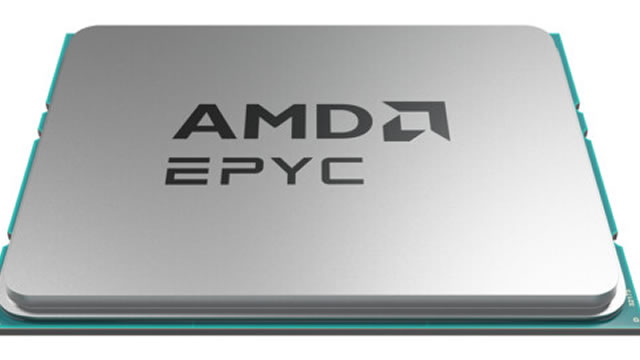
Core Insights - Advanced Micro Devices (AMD) is expected to report Q4 2025 earnings on February 3, 2026, with Wall Street anticipating an EPS of $1.32 and revenue of approximately $9.6 billion, reflecting 21% year-over-year growth in EPS and 25% in revenue [1] - AMD shares have increased by 115% over the past year, significantly outperforming the broader technology sector [1] Financial Expectations - Expected gross margin is 54.5% [1] - Data center revenue is projected to exceed $4 billion [1] - Consensus revenue is around $9.6 billion, with EPS consensus at $1.32 [1] - A meaningful earnings beat would require EPS of at least $1.40 and revenue exceeding $9.8 billion [1] Historical Performance - AMD has beaten or met earnings estimates in six of the past seven quarters, with an average surprise of approximately 8% [1] - In Q3 2025, AMD reported a 10.3% earnings surprise, with earnings of $0.75 compared to an estimate of $0.68 [1] - Q2 2025 saw an exceptional 1,180% earnings beat, with actual earnings of $0.54 against an expected loss [1] Recent Developments - Management guided Q4 revenue to approximately $9.6 billion with a gross margin of 54.5% [1] - The client and gaming segments generated $4 billion in combined revenue, up 73% year-over-year, driven by record Ryzen processor sales [1] - Data center revenue reached $4.3 billion, up 22% year-over-year, fueled by demand for EPYC processors and Instinct AI accelerators from major clients like OpenAI, Oracle, and IBM [1] Analyst Sentiment - HSBC raised its price target for AMD to $335 from $300, citing structural acceleration in server CPU demand driven by AI workloads [1] - Zacks Investment Research noted AMD's stock performance of 107.1% over the past year, compared to NVIDIA's 63.8%, indicating AMD's competitive position in AI accelerators [1] - The average analyst price target is $289.23, suggesting a 17% upside from current levels, with 41 out of 53 analysts rating it as Buy or Strong Buy [1] Potential Stock Movements - Bull case triggers include positive management commentary on MI500 series GPU ramp and data center revenue surpassing $4.5 billion [1] - Bear case triggers involve cautious 2026 guidance and revenue misses below $9.4 billion, particularly in the Data Center segment [1] - Wild cards include potential China export restrictions and broader concerns about AI infrastructure spending [1] Market Confidence - The options market indicates a 91.5% probability that AMD will beat consensus estimates, reflecting strong investor confidence [1] - Analysts are focused on sustaining data center revenue growth above $4.3 billion, which is critical for justifying AMD's premium valuation [1] Valuation Context - AMD trades at 37.31x forward earnings, a premium to the semiconductor sector average, justified by a 60.3% year-over-year earnings growth [1] - The company's PEG ratio of 0.51 suggests that the growth rate supports current multiples, although any guidance disappointment could lead to multiple compression [1]

1 ETF Could Turn $500 Monthly Into a $800,000 Portfolio That Pays $24,000 in Annual Dividend Income
The Motley Fool· 2026-01-25 00:30
Core Insights - The Schwab U.S. Dividend Equity ETF (SCHD) offers a pathway to potentially reach $800,000 through consistent investments over time, emphasizing the importance of patience in investing [1][5]. Investment Rationale - SCHD tracks the Dow Jones U.S. Dividend 100 Index, focusing on companies with financial stability and strong cash flow, which results in a portfolio of reliable, established businesses rather than high-growth, volatile firms [3]. - The ETF's top five holdings include Lockheed Martin (4.63%), Chevron (4.19%), Merck & Co. (4.11%), Home Depot (4.07%), and Bristol Myers Squibb (4.05%), showcasing a focus on sectors like energy and industrials [3]. Performance Metrics - Since its inception in October 2011, SCHD has averaged annual total returns of 12.6%, with projections indicating that a monthly investment of $500 could grow to over $800,000 in approximately 25 years, assuming a consistent 12% annual return [5][6]. - The ETF has maintained an average dividend yield of around 2.8% since inception and 3.2% over the past decade, suggesting that an $800,000 investment could yield $24,000 annually [6].

Sun Pharma Eyes Organon In What Could Be India Pharma's Biggest Cross-Border Deal: Report
Benzinga· 2026-01-20 15:31
Group 1: Acquisition Details - Sun Pharmaceutical Industries Ltd is evaluating a potential acquisition of Organon & Co, which could become the largest cross-border transaction by an Indian drugmaker, with a non-binding all-cash bid and $10–14 billion in acquisition financing arranged [1][2] - If completed, the transaction, valued at about $10 billion including debt, would be Sun Pharma's largest acquisition to date and significantly strengthen its presence in women's health biopharma and biosimilars [2][5] - Sun Pharma has engaged a European bank as an adviser to prepare a financial proposal for Organon's board, with talks still at a preliminary stage [3][4] Group 2: Organon's Financial Performance - Organon reported third-quarter adjusted earnings of $1.01 per share, exceeding the consensus of 94 cents, with sales up 1% to $1.60 billion, also beating the consensus of $1.58 billion [6] - The company lowered its fiscal 2025 sales guidance from $6.275 billion-$6.375 billion to $6.20 billion-$6.25 billion, which is below the consensus of $6.289 billion [6] Group 3: Organon's Debt and Recent Activities - Organon, spun off from Merck & Co. in 2021, has inherited debt of approximately $9.5 billion, which has been reduced to $8.9 billion as of the end of the second quarter of fiscal 2025 [3][4] - Recently, Organon acquired Dermavant for $1.2 billion and sold its JADA post-partum hemorrhage system for $465 million as part of its strategy to streamline its balance sheet [4] Group 4: Regulatory Approvals - The U.S. FDA approved a supplemental New Drug Application for Nexplanon, extending its duration of use from three years to five years, along with a new Risk Evaluation and Mitigation Strategy program [7][8]


Trump’s Market Maelstrom: Deals, Fusion, and the Perpetual Tariff Tango
Stock Market News· 2025-12-20 06:00
Group 1: Drug Price Cuts and Pharmaceutical Stocks - President Trump announced significant drug price cuts in collaboration with nine major pharmaceutical companies, aiming to align U.S. drug costs with those in other developed nations [2] - Despite the announcement of price cuts, shares of involved drugmakers like GSK, Merck, Amgen, Novartis, Sanofi, and Roche rose by approximately 1% to 3%, as the deals removed the immediate threat of punitive tariffs for three years [3] - Analysts noted that the deals serve more as a public relations strategy rather than a substantial change in company economics, with Medicaid already benefiting from significant discounts [4] Group 2: Market Reactions to Health Insurers - Major health insurers such as Cigna, CVS Health, Elevance Health, and UnitedHealth Group experienced an initial dip of about 1% following Trump's comments but quickly recovered, indicating a market accustomed to Trump's policy announcements [5] Group 3: Merger of Trump Media & Technology Group and TAE Technologies - Trump Media & Technology Group announced a merger with TAE Technologies, valuing the combined entity at $6 billion, which led to a 42% surge in DJT shares, closing at $14.86 [7] - The merger has drawn mixed reactions, with some analysts viewing it as a significant move towards creating a public nuclear fusion company, while others criticized it as a questionable venture [9] Group 4: Tariff Threats and Market Volatility - Throughout 2025, Trump's threats and impositions of tariffs, particularly against China, have caused significant market volatility, including a $5 trillion market wipeout following an April tariff announcement [11] - The S&P 500 and Nasdaq Composite experienced substantial declines during tariff threats, but the market has shown resilience, often recovering to new highs [12] Group 5: Overall Market Environment - As 2025 concludes, the financial markets continue to be influenced by Trump's unpredictable policies, creating a landscape where traditional analysis is often overshadowed by political developments [13]


Here Are Thursday’s Top Wall Street Analyst Research Calls: Digital Realty, GE Vernova, Micron Technology, Merck & Co., Rivian, United Airlines, and More
Yahoo Finance· 2025-12-18 13:50
Group 1: Market Overview - Futures are trading higher as the Christmas holiday approaches, but the AI/Data Center sector is facing challenges, with a nearly 30% rally since April [2] - Blue Owl Capital may not fund a $10 billion data center for OpenAI, negatively impacting Oracle Corporation, leading to significant losses in major indices, particularly a 1.81% drop in the Nasdaq [2] Group 2: Treasury Bonds - Treasury yields remained flat as traders awaited Consumer Price Index data, with a year-over-year inflation expectation of 3.1% for both headline and Core CPI, which is still above the Federal Reserve's 2% target [3] - The 30-year bond closed at 4.83%, while the benchmark 10-year note was at 4.15% [3] Group 3: Oil and Gas Sector - Oil prices increased due to President Trump's blockade on Venezuelan oil tankers, aimed at stopping oil sales to restricted countries and addressing drug trafficking [4] - Brent Crude rose 2.55% to $60.42, and West Texas Intermediate also increased by 2.55% to $56.68, while natural gas saw a 5.17% rise to $4.09 [4]
生物制药 - 2026 年展望:政策退居幕后,基本面主导行情-Biopharma-2026 Outlook Policy in the rearview, fundamentals in the driver's seat
2025-12-15 01:55
Summary of Biopharma Industry Conference Call Industry Overview - The focus for 2026 in the Biopharma sector is shifting back to fundamentals as policy overhangs diminish, particularly regarding drug pricing dynamics [1][2][23] - Key players in the industry include major biopharma companies such as Pfizer (PFE), AstraZeneca (AZN), Eli Lilly (LLY), and Novo Nordisk [2][24] Core Insights - **Policy Changes**: The most-favored nation (MFN) drug pricing agreements signed by five biopharma companies have significantly reduced policy overhangs, leading to an expansion in P/E multiples [2][23] - **Healthcare Sector Upgrade**: The US Equity Strategists upgraded the Healthcare sector to overweight, anticipating benefits from rate cuts, supportive earnings momentum, and M&A tailwinds [3] - **M&A Environment**: An estimated $150 billion in revenue from large-cap biopharma companies will go off patent by the end of the decade, creating favorable conditions for M&A activity [10] Key Products and Pipelines - **New Product Cycles**: Focus on new products such as LLY's Orforglipron for diabesity, GILD's Yeztugo for HIV PREP, and JNJ/PTGX's Ico for psoriasis [5] - **Pipeline Catalysts**: Significant upcoming data releases include LLY's obesity and T2D data, Novo's obesity data, and various trials across therapeutic areas such as Alzheimer's, oncology, immunology, and cardiology [6][12] Financial Metrics - **Valuation Context**: The relative valuation for the Healthcare sector remains in the bottom 6th percentile of historical levels over the last 30 years, indicating potential for growth [3] - **Earnings Projections**: Companies like LLY and GILD are projected to see significant earnings growth, with LLY's EPS expected to rise by 10% [13][19] Additional Considerations - **Legal Landscape**: The SCOTUS ruling on IEEPA tariffs and ongoing investigations could impact future policy and pricing strategies [2][25][30] - **FDA Uncertainty**: Changes in FDA leadership and potential delays in drug approvals due to workforce reductions are areas of concern as the industry moves into 2026 [33][34] - **CMS Pilot Programs**: Proposed drug pricing pilot programs by CMS could influence market dynamics, particularly for companies that have signed MFN deals [32] Conclusion - The Biopharma industry is poised for a shift towards fundamentals in 2026, with significant opportunities arising from new product launches, M&A activity, and favorable policy changes. However, ongoing legal and regulatory uncertainties remain critical factors to monitor.

Edgewise Therapeutics Appoints Commercial Biotech Executive Christopher Martin to its Board of Directors
Prnewswire· 2025-11-20 13:00
Core Insights - Edgewise Therapeutics, Inc. has appointed Christopher Martin, a biotechnology veteran, to its Board of Directors, enhancing its leadership team as it prepares for significant product launches [1][2][3] Company Overview - Edgewise Therapeutics is focused on developing novel therapeutics for muscular dystrophies and serious cardiac conditions, with a strong emphasis on muscle physiology [4] - The company is advancing its lead product, Sevasemten, which is in late-stage clinical trials for Becker and Duchenne muscular dystrophies, and is also developing EDG-7500 and EDG-15400 for cardiac conditions [4] Leadership Background - Christopher Martin previously served as Chief Commercial Officer for Verona Pharma, which was acquired by Merck & Co. for approximately $10 billion in October 2025, and has extensive experience in building commercial organizations and launch strategies [3] - His past roles include Executive Director of Marketing at SK Life Science and Head of Marketing at Cempra, where he led the development and launch strategies for multiple products [3]


Cidara Therapeutics (NasdaqCM:CDTX) M&A Announcement Transcript
2025-11-17 14:02
Summary of Merck & Co. Investor Call on Cidara Therapeutics Acquisition Company and Industry - **Company**: Merck & Co. (NasdaqCM:MRK) - **Acquisition Target**: Cidara Therapeutics (NasdaqCM:CDTX) - **Industry**: Pharmaceuticals, specifically focusing on antiviral treatments and infectious diseases Core Points and Arguments 1. **Acquisition Announcement**: Merck announced the acquisition of Cidara Therapeutics for $21.50 per share, totaling approximately $920 million, expected to close in Q1 2026, pending shareholder and regulatory approvals [17][18][19] 2. **Strategic Fit**: The acquisition aligns with Merck's strategy to enhance its portfolio in infectious diseases, particularly with the addition of CD388, a long-acting antiviral agent aimed at preventing influenza [4][5][6] 3. **CD388 Overview**: CD388 is a first-in-class investigational antiviral designed to provide season-long protection against influenza strains A and B, with a significant unmet medical need in high-risk populations [9][10][15] 4. **Market Opportunity**: The potential market for CD388 is estimated at over $5 billion, targeting approximately 110 million individuals in the U.S. at higher risk for influenza complications [5][15][16] 5. **Clinical Data**: CD388 demonstrated 76% efficacy in preventing influenza-like illness in a phase 2 study, with low immunogenicity and good tolerability [10][11] 6. **Regulatory Pathway**: The phase 3 trial is focused on high-risk individuals, with an interim analysis planned after the first flu season to assess the need for sample size adjustments [11][12] 7. **Financial Impact**: The acquisition will result in a charge of approximately $9 billion to R&D expenses, impacting EPS by about $0.30 in the first year [18][19] 8. **Manufacturing Plans**: Merck plans to transition manufacturing to U.S.-based facilities over time, moving away from reliance on WuXi-manufactured products [22][23] Additional Important Content 1. **Public Health Need**: Influenza poses a significant public health threat, with the CDC reporting up to 82 million infections, 1.3 million hospitalizations, and 130,000 deaths in the 2024-2025 season [7][8] 2. **Current Vaccine Limitations**: Existing flu vaccines have variable efficacy, particularly in high-risk populations, highlighting the need for innovative solutions like CD388 [8][9] 3. **Commercial Strategy**: Merck's existing infrastructure will facilitate the launch of CD388, targeting high-risk patients already within healthcare systems [56][73] 4. **Pricing Strategy**: Initial pricing research suggests a potential price point of up to $600 for CD388, aiming to provide significant protection to those inadequately covered by traditional vaccines [57][73] 5. **Future Opportunities**: Merck remains open to pursuing additional M&A opportunities in therapeutic areas such as oncology, immunology, and cardiometabolic diseases, maintaining a focus on significant unmet needs [41][42] This summary encapsulates the key points discussed during the investor call regarding Merck's acquisition of Cidara Therapeutics and the strategic implications for both companies in the context of the antiviral market.

INVESTOR DEADLINE TOMORROW: Robbins Geller Rudman & Dowd LLP Announces that Organon & Co. Investors with Substantial Losses Have Opportunity to Lead Class Action Lawsuit – OGN
GlobeNewswire News Room· 2025-07-21 09:40
Core Viewpoint - A class action lawsuit has been filed against Organon & Co. for alleged violations of the Securities Exchange Act of 1934, focusing on misleading statements regarding the company's financial health and projections during the Class Period from November 3, 2022, to April 30, 2025 [1][4]. Company Overview - Organon & Co. develops health solutions through prescription therapies and medical devices [3]. Allegations of the Lawsuit - The lawsuit claims that Organon misrepresented the risks associated with its product Nexplanon, suggesting that the company would achieve $1 billion in sales by the end of fiscal year 2025, which is now deemed unlikely [4]. - It is alleged that Organon would not maintain the required $1 billion in free cash flow to sustain its dividend, nor would it maintain a debt leverage ratio of 4.0x, potentially affecting its corporate debt ratings [4]. - Following the announcement of its first quarter 2025 financial results, Organon reduced its dividend by 90%, which led to a stock price drop of over 27% [5]. Legal Process - Investors who purchased Organon securities during the Class Period can seek to be appointed as lead plaintiff in the class action lawsuit, representing the interests of all class members [7].