Mitsubishi Heavy Industries

Search documents
China restricts exports to 40 Japanese entities with ties to military
ABC News· 2026-02-24 12:53
China restricts exports to 40 Japanese entities it says are contributing to Japan’s “remilitarization.”FILE - Paramilitary soldiers and a police officer with a sniffer dog march past the main entrance gate of China's Ministry of Commerce, in Beijing, on April 3, 2025. (AP Photo/Andy Wong, File)BANGKOK -- China restricted Tuesday exports to 40 Japanese entities it says are contributing to Japan's “remilitarization,” in the latest escalation of tensions with Tokyo. Beijing has shown continued displeasure with ...


Mitsubishi Heavy Industries: A Bull On Q3 Beat, Likely Full-Year Surprise
Seeking Alpha· 2026-02-09 18:58
The Value Pendulum is an Asian equity market specialist with over a decade of experience on both the buy and sell sides.He is the author of the investing group Asia Value & Moat Stocks, providing ideas for value investors seeking investment opportunities listed in Asia, with a particular focus on the Hong Kong market. He hunts for deep value balance sheet bargains and wide moat stocks and provides a range of watch lists with monthly updates within his investing group.Analyst’s Disclosure: I/we have no stock ...


美国AIDC电力基建:PacificoEnergy获批7.65GW排放许可意味着什么?
Haitong Securities International· 2026-02-02 05:14
Investment Rating - The report suggests a positive outlook for gas turbine manufacturers and related supply chain companies, recommending to pay attention to companies such as GE Vernova, Siemens Energy, Mitsubishi Heavy Industries, Caterpillar, and Howmet [5][12]. Core Insights - The approval of a 7.65 GW gas-fired power generation air permit for Pacifico Energy marks the largest power generation emission permit in U.S. history, indicating significant growth potential in the energy sector, particularly for data centers [1][7]. - U.S. electricity demand is projected to grow at an average rate of 5.7% annually over the next five years, with peak demand increasing by approximately 166 GW, largely driven by data centers [2][8]. - Texas has emerged as a hotspot for data centers, with ERCOT forecasting a compound annual growth rate (CAGR) of 10.1% for peak load over the next five years, significantly higher than the national average [3][9]. - The trend of data centers building their own off-grid power plants is solidifying, driven by the need for reliable baseload energy sources, with natural gas generation currently being the optimal choice [4][10]. - Policy support at both federal and state levels is encouraging the establishment of self-built power plants for data centers, which is expected to further boost the gas turbine equipment market [5][11]. Summary by Sections Section 1: Emission Permit Approval - Pacifico Energy's GW Ranch project in Texas has received a 7.65 GW gas-fired power generation air permit, the largest in U.S. history, with plans for additional energy sources including battery storage and solar PV [1][7]. Section 2: Electricity Demand Forecast - The demand for electricity in the U.S. is expected to increase by 32% by 2030, with data centers accounting for about 55% of the forecasted growth in utility load projections over the next five years [2][8]. Section 3: Data Center Growth in Texas - Texas is experiencing a surge in data center capacity, with interconnection queues totaling approximately 160-180 GW, reflecting a nearly 300% increase in just one year [3][9]. Section 4: Energy Source Trends - Data centers are increasingly requiring more baseload energy sources, leading to a trend of self-built off-grid power plants, with natural gas being the preferred energy source due to its abundance and low cost [4][10]. Section 5: Policy Support and Market Outlook - Recent policy changes are favoring the development of self-built power plants for data centers, which is expected to enhance the market for gas turbine equipment as demand for baseload generation grows [5][11].
应流股份-关键高端铸造供应商,有望受益于燃气轮机供应短缺;首次覆盖,评级:买入
2026-01-14 05:05
Summary of Yingliu (603308.SS) Conference Call Company Overview - **Company**: Yingliu, a leading domestic manufacturer of high-end precision cast components, primarily focused on gas turbine and aerospace components. The company has transitioned from traditional casting to high-end markets since 2015, with a current global market share below 1% [1][21][23]. Industry Context - **Industry**: Gas turbine supply chain, which is currently experiencing shortages, particularly in hot-section components like turbine blades. Major OEMs such as Siemens Energy, GE Vernova, and Mitsubishi Heavy Industries (MHI) report high capacity utilization and extended backlogs, indicating a supply-demand imbalance that is expected to last until at least 2028-2030 [2][28][39]. Key Insights and Projections - **Market Opportunity**: Yingliu is well-positioned to capitalize on the gas turbine supply shortages due to its available capacity, competitive average selling prices (ASPs), and ongoing R&D advancements. The company aims to increase its market share to approximately 4% with Siemens Energy and 8% with Baker Hughes by 2030 [3][58]. - **Revenue Growth**: Yingliu's revenue from gas turbine components is projected to grow from 29% of total revenue in 2025 to 48% in 2030, while aerospace components are expected to rise from 15% to 20% over the same period. Total revenue is forecasted to increase from Rmb2,943 million in 2025 to Rmb8,847 million by 2030, representing a CAGR of 25% [4][110]. - **Earnings Growth**: The company anticipates a 40% CAGR in earnings per share (EPS) from 2025 to 2030, driven by operating leverage and improved gross profit margins (GPM), which are expected to rise from 36% in 2025 to 43% in 2030 [4][110]. Customer Relationships and Contracts - **Key Customers**: Yingliu has secured long-term agreements with major clients including Siemens Energy, Baker Hughes, GE Aerospace, and Safran. The company expects significant revenue growth from these relationships, particularly with Siemens Energy, which is projected to become the largest customer by 2030, contributing around Rmb1 billion in revenue [61][98]. Competitive Positioning - **Price Advantage**: Yingliu's products may have a price advantage of approximately 20%-30% compared to global peers, which could enhance its competitiveness in securing contracts with overseas customers [10][83]. - **Employee Growth**: Yingliu's subsidiary, Yingliu Hangyuan, plans to increase its workforce by 40% from the end of 2024 to the end of 2025 to support anticipated order ramp-ups [16][78]. Financial Metrics - **Valuation**: The company is valued at a target price of Rmb52.7, implying an 18% upside from current levels. The valuation is based on a 30x P/E ratio for 2028E, discounted to 2026E using a 10% cost of equity [1][4]. - **R&D and Capex**: R&D expenses as a percentage of revenue are expected to decline from 9.2% in 2025 to 8.1% in 2030, reflecting increased production efficiency. Capex as a percentage of revenue is projected to decrease significantly as the company moves past its heavy investment phase [110][112]. Additional Considerations - **Nuclear and Aerospace Segments**: Yingliu is also expanding into nuclear applications and the commercial aerospace industry, with expected revenues from nuclear components reaching Rmb1 billion by 2030. The aerospace segment is anticipated to become a significant growth driver, contributing 20% of total revenue by 2030 [106][98]. - **Yield Rates**: Current yield rates for different blade types are 70-80% for equiaxed and directionally solidified crystals, but only 10-60% for single crystal blades, indicating room for improvement in production efficiency [85][90]. This comprehensive overview highlights Yingliu's strategic positioning within the gas turbine and aerospace markets, its growth potential, and the financial metrics that support its investment case.

Mitsubishi Heavy Industries Joins Automotive Edge Computing Consortium to Drive Distributed Data Processing and Optimize ICT Infrastructure
Businesswire· 2026-01-13 15:25
Core Insights - Mitsubishi Heavy Industries (MHI) has joined the Automotive Edge Computing Consortium (AECC) to collaborate on advancing the connected car ecosystem [1][2][4] - MHI aims to leverage its expertise in edge data centers and energy management to enhance distributed computing platforms and optimize the use of renewable energy in automotive big data processing [3][4] Company Contributions - As a member of AECC, MHI will focus on GPU resource optimization and visualization of power generation forecasts to promote proactive use of renewable energy [3][4] - MHI's engineering capabilities and edge data center solutions are expected to drive innovation in decarbonization and energy efficiency within the automotive sector [4][5] AECC Objectives - AECC is dedicated to developing best practices and proof-of-concept projects for connected vehicles, enhancing safety and efficiency in mobility [4][6] - The consortium aims to create a global ecosystem that effectively utilizes automotive big data through improved communication and computing infrastructure [6]

亚太2026 年一季度亚太十大核心观点-Top 10 Asia Pac Ideas Quarterly_ Introducing the Top 10 Asia Pac Ideas for Q1 2026
2026-01-13 11:56
Summary of Key Points from the Conference Call Industry Overview - The report presents the **Top 10 Asia Pac Ideas for Q1 2026**, focusing on stock recommendations for companies in the Asia Pacific region that are expected to have significant market and business-related catalysts in the upcoming quarter [1][2][10]. Company Recommendations - The **10 Buy-rated stocks** identified for Q1 2026 are: - **ASX Ltd**: Target Price (TP) of AUD 64.10, representing a 27% upside [3][5]. - **Chroma ATE**: TP of TWD 1,180, with a 38% upside [3][5]. - **Damai Entertainment**: TP of HKD 1.10, indicating a 22% upside [3][5]. - **H World Group**: TP of USD 62.00, with a 28% upside [3][5]. - **LG Electronics India**: TP of INR 1,840, representing a 23% upside [3][5]. - **Mitsubishi Heavy Industries**: TP of JPY 4,900, indicating a 15% upside [3][5]. - **Montage**: TP of CNY 155.00, with a 16% upside [3][5]. - **Ping An Insurance**: TP of HKD 74.00, representing a 3% upside [3][5]. - **Singtel**: TP of SGD 5.50, indicating a 21% upside [3][5]. - **Tencent Holdings**: TP of HKD 780.00, with a 23% upside [3][5]. Investment Rationale - The selection process involved consultations with BofA Fundamental Equity Research analysts and sector heads to ensure a diversified list of stocks with strong potential for outperforming or underperforming peers [2][11]. - The report emphasizes that the stocks are chosen based on their **Buy** or **Underperform** ratings, ensuring that only high-conviction ideas are included [2][14]. Performance and Updates - The list will be published at the beginning of each quarter and will remain unchanged unless there are significant developments affecting the stocks [4][15]. - Stocks may be re-evaluated for subsequent quarters based on ongoing catalysts and market conditions [16]. Additional Insights - **ASX Ltd**: The company has seen a share price decline of over 28% since mid-June, trading more than one standard deviation below historic levels, indicating potential for recovery [34]. - **Chroma ATE**: The company is positioned well in the semiconductor capital equipment industry, with expected growth driven by demand for AI server infrastructure and system-level testing [41][56]. - **Damai Entertainment**: As a subsidiary of Alibaba, it operates in various entertainment sectors, including live performance ticketing and content production, indicating a diversified revenue stream [64]. Risks and Considerations - Potential risks include regulatory interventions, market conditions affecting revenue growth, and competition within the semiconductor equipment sector [37][60]. - The report highlights the importance of monitoring macroeconomic factors and sector-specific developments that could impact the performance of the recommended stocks [7][60]. This summary encapsulates the key points from the conference call, focusing on the companies and industry dynamics relevant to the investment recommendations for Q1 2026.


Wall Street cheers the prospect of conflict in Venezuela and Greenland
Yahoo Finance· 2026-01-05 11:27
Core Viewpoint - The price of oil fell nearly 2% following the U.S. invasion of Venezuela and the capture of Nicolás Maduro, with traders believing this would not significantly impact oil prices in the short term [1] Group 1: Oil Market Dynamics - U.S. oil company stocks experienced significant increases, with Chevron up 7.82%, Halliburton up 8.45%, ConocoPhillips up 7.54%, and ExxonMobil up 3.95% in premarket trading [1] - Despite Venezuela's vast oil reserves, which account for about 17% of the world's total, its oil production has drastically declined by 75% from 2013 to 2020, now supplying less than 1% of daily global oil [3] - To fully exploit Venezuelan oil, U.S. companies would require strong guarantees against renationalization, the ability to commercialize discoveries, and freedom to explore the Orinoco oil belt, necessitating billions in investment and years of development [4] Group 2: Market Reactions and Trends - The overall market sentiment was positive, with S&P 500 futures up 0.29%, and significant gains in Asian and European markets, including a 2.97% rise in Japan's Nikkei 225 and a 3.43% increase in South Korea's KOSPI [5] - Following renewed threats from President Trump regarding Greenland, defense stocks saw a global uptick, with Rheinmetall up 7.4%, Saab AB up 5.75%, and Mitsubishi Heavy Industries up 8.39% [6] - The private sector is actively preparing for Venezuelan oil projects, with a former Chevron executive raising a $2 billion fund and plans for visits to Venezuela by industry leaders [7] Group 3: Currency and Investment Implications - The U.S. dollar experienced a modest increase, up 0.32% on the ICE U.S. Dollar Index, as the market reacted to the events in Venezuela, leading to a flight to quality assets like gold and the Swiss franc [8]


Global defense stocks soar as U.S. strike on Venezuela heralds new 'hard power' era
CNBC· 2026-01-05 09:18
Group 1 - European and Asian defense stocks experienced significant gains following the overthrow of Venezuelan leader Nicolas Maduro, indicating a potential long-term boost in the rearmament trade [1][2] - Rheinmetall, Germany's largest arms manufacturer, saw an increase of over 7% in early trading, while Hensoldt, a military technology and surveillance specialist, advanced nearly 7% [1] - Italian defense company Leonardo rose by 5.8%, and German counterpart Renk also added 5.8% [1] Group 2 - In Asia, IHI Corp led the gains among defense stocks with an increase of almost 10%, followed by Mitsubishi Heavy Industries at 9.2% and Kawasaki Heavy Industries at 6.9% [2] - South Korean defense company Hanwa Aerospace rose more than 6%, while Poongsan's shares increased by 2% [2] - Fawaz Chaudhry, chief investment officer at Fulcrum Asset Management, described Maduro's overthrow as a "signaling exercise" that will reshape geopolitics, suggesting a broader impact on the defense industry [2]

Asia-Pacific markets set to open higher after U.S. captures Venezuela’s Maduro, oil slips
CNBC· 2026-01-05 00:07
Geopolitical Impact on Oil Prices - The U.S. has attacked Venezuela and captured President Nicolas Maduro, leading to a decline in oil prices as markets assess the geopolitical implications [1][2] - Brent crude prices fell more than 1% initially but later adjusted to a 0.25% decrease, while West Texas Intermediate crude prices dropped by 0.4% [2] Venezuela's Oil Reserves - Venezuela, a founding member of OPEC, possesses the largest proven crude oil reserves globally, totaling 303 billion barrels, which accounts for approximately 17% of the world's total reserves [3] Market Reactions in Asia-Pacific - Japan's Nikkei 225 index increased by 2.26% in its first trading session of the year, with defense stocks like Kawasaki Heavy Industries and Mitsubishi Heavy Industries rising by 5.7% and 6.4%, respectively [4] - South Korea's Kospi index reached a record high of 4,420.92, climbing 2.19%, while shares of defense giant Hanwha Aerospace rose by 4% [4] - Australia's ASX/S&P 200 index remained flat, while Hong Kong's Hang Seng Index futures indicated a higher opening [5]

Fortifying the Front Line: Tokyo Fast-Tracks Record Defense Spending
Defense World· 2026-01-01 06:32
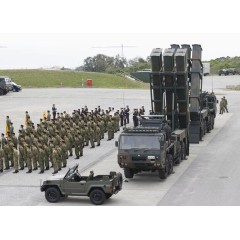
Core Insights - The Japanese Cabinet has approved a defense budget proposal exceeding 9 trillion yen ($58 billion) for the fiscal year starting April 2026, marking a 9.4% increase from the previous year and aiming to double military expenditure to 2% of GDP two years ahead of schedule [1][2] Defense Budget Overview - The budget reflects a significant shift in Japan's military strategy, moving from a strictly defensive posture to a more proactive military stance, with a focus on standoff capabilities [3][4] - A substantial allocation of over 970 billion yen is designated for advanced missile technologies, indicating a commitment to enhancing Japan's offensive capabilities [3][4] Military Enhancements - The initiative includes the acquisition and upgrade of Type-12 surface-to-ship missiles with a range of approximately 1,000 kilometers, with expedited deployment to the southwestern Kumamoto prefecture by March [5] - The budget also allocates 100 billion yen for the development of an unmanned defense network called SHIELD, set to launch in early 2028, utilizing aerial, surface, and underwater drones for surveillance and coastal defense [6][7] Regional Security Context - The budget coincides with escalating tensions between Japan and China, particularly regarding Taiwan, and increased military activities in the Pacific, including Chinese maneuvers near Iwo Jima [8][9] - In response to these tensions, Japan's Defense Ministry is establishing a dedicated office to counter China's naval expansion, while Beijing has criticized Japan's military budget as a departure from its peaceful development path [10] International Collaboration and Funding - Japan is enhancing its defense industrial base through partnerships with allies, including joint development of a next-generation fighter jet with the UK and Italy, expected to be operational by 2035 [11] - The ambitious defense spending plan faces domestic challenges, with funding reliant on unpopular tax increases, including corporate, tobacco, and income tax hikes starting in 2027, requiring parliamentary approval by March [12]