储能

Search documents
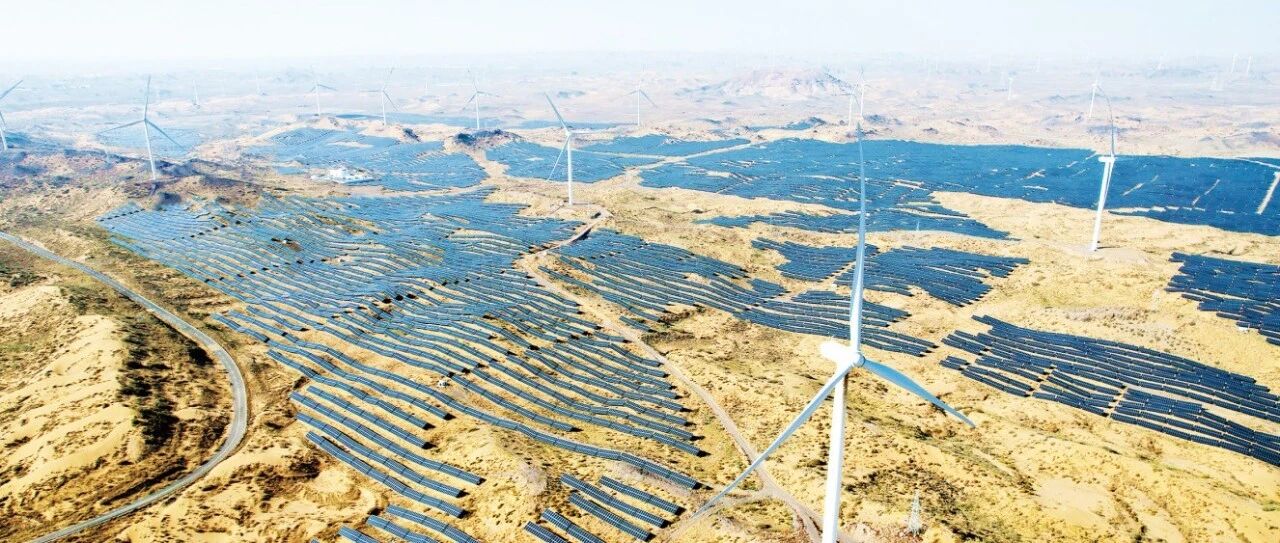
内蒙古能源局党组书记、局长曹思阳: 结合开展光伏治沙工程 谋划实施一批区内自用新能源项目
Zhong Guo Dian Li Bao· 2026-03-31 03:12
Core Viewpoint - The 20th Central Committee's Fourth Plenary Session emphasizes the construction of a new energy system and the development of an energy powerhouse, with specific targets set for 2030 and 2035, guiding the energy sector's development for the "14th Five-Year Plan" and beyond [1] Group 1: Energy Security and Development - Inner Mongolia has made significant progress in high-quality energy development since the "14th Five-Year Plan," focusing on traditional energy transformation and green energy development, ensuring energy supply tasks are met with over 12 billion tons of coal production [2] - The region's electricity generation capacity has doubled, with power delivery increasing by 72% compared to the end of the "13th Five-Year Plan," maintaining a leading position in national energy security [2] Group 2: New Energy Development - New energy capacity has reached 170 million kilowatts, achieving a 2.4 times increase in installed capacity and a 2.1 times increase in power generation compared to the end of the "13th Five-Year Plan," with over 70% of new electricity consumption coming from new energy sources [3] - The region has established 230 intelligent coal mines, accounting for 80% of coal mines in operation, with a production capacity of 1.14 billion tons, leading the nation [3] Group 3: Energy Reform and Cooperation - The approval process for new energy and grid projects has been streamlined, reducing processing time from six months to approximately three months, facilitating market entry for new energy [4] - Cooperation with central enterprises has expanded, with agreements totaling over 1.1 trillion yuan, and energy collaboration with Mongolia has strengthened, including the establishment of nine power transmission channels [4] Group 4: Future Energy Strategy - The "15th Five-Year Plan" aims to enhance traditional energy supply capabilities and promote the development of modern energy economies, transitioning Inner Mongolia from an energy region to an energy powerhouse [5][6] - The focus will be on improving the efficiency of new energy development, expanding renewable energy applications, and enhancing the construction of a new power system [6][7] - The region plans to develop green hydrogen and establish a comprehensive hydrogen transport network, positioning itself as a leader in the green hydrogen industry [7]
中国中车(601766):铁路装备与新产业双轮驱动,国际业务新签订单再创新高
Soochow Securities· 2026-03-30 07:59
Investment Rating - The investment rating for the company is "Buy" (maintained) [1] Core Views - The company achieved a total revenue of 273.06 billion yuan in 2025, representing a year-on-year increase of 10.79%. The net profit attributable to shareholders was 13.18 billion yuan, up 6.40% year-on-year. The growth in revenue was driven by the railway equipment sector, which saw an increase of 11.90%, and the new industries sector, which grew by 19.39% [2][4] - The company secured new orders worth approximately 346.1 billion yuan in 2025, a 7% increase year-on-year, with international business orders reaching about 65 billion yuan, up 38% year-on-year. This indicates a strong pipeline for future growth [4] Revenue and Profitability - The company's total revenue for 2025 is projected at 273,063 million yuan, with a year-on-year growth rate of 10.79%. The railway equipment business contributed 123,608 million yuan, accounting for 45.27% of total revenue, while the new industries segment generated 103,121 million yuan, making up 37.76% [2] - The gross profit margin for 2025 was 21.38%, remaining stable compared to the previous year. The net profit margin was 4.83%, a slight decrease of 0.20 percentage points year-on-year [3] Cost Management - The company managed to reduce its expense ratio, with the total period expense ratio decreasing by 0.56 percentage points to 14.47%. The management expenses saw a significant decline, indicating effective cost control [3] International Expansion - The company is actively pursuing international growth, with significant progress in overseas projects, particularly in the high-speed train and urban rail sectors. The successful bid for a GW-level offshore wind power project and strong performance in photovoltaic inverters further highlight its expansion into new industries [4]

高盛闭门会-对话-从历次重大能源冲击中汲取的经验教训
Goldman Sachs· 2026-03-30 05:15
Investment Rating - The report indicates that the energy sector is currently at a bottoming stage, with an expected absolute free cash flow yield outperforming the market by approximately 4% in 2026 [1]. Core Insights - The report argues against the "peak oil demand" theory, suggesting that consumption upgrades in Asia and strategic stockpiling will support oil price expectations for 2027 [1][7]. - The shale oil outlook is seen as overly pessimistic, with potential for production increases in the Permian Basin, despite challenges at the $70 per barrel price level [1][10]. - The report highlights a shift towards energy independence driven by de-globalization, with coal becoming a primary alternative to intermittent renewable energy sources [1][9]. - The energy sector's representation in the S&P 500 is currently low at 4%, but it is expected to rise to double digits in the future [1][12]. Summary by Sections Energy Market Dynamics - The closure of the Strait of Hormuz has led to a daily production loss of 12-13 million barrels, causing a "super volatility" market rather than a stable "super cycle" [1][2]. - Historical comparisons indicate that the current market turmoil resembles the 1970s oil crisis, but with significant differences, particularly in demand dynamics [2][3]. Supply and Demand Outlook - The report notes that the energy industry is at a bottoming phase, with previous overproduction concerns being overstated [3][4]. - If the Strait remains closed, correcting the daily demand gap of 10-12 million barrels will be challenging, and price adjustments will be critical [4][5]. Regional Trends and Strategic Moves - The report discusses the potential for regionalization in the oil market but concludes that the global oil market is unlikely to end, despite some countries possibly implementing temporary export bans [8][9]. - The report emphasizes the importance of strategic reserves and redundancy in energy supply chains, which may enhance energy intensity and economic growth [9][12]. Investment Strategies - Companies are advised to maintain liquidity and prioritize cash reserves during downturns, as the industry may be entering a super cycle of capital returns [11][12]. - The report suggests that the energy sector, including renewables and new technologies, should be a focal point for investors, especially in light of ongoing market changes [16].
在地缘预期波动中寻找中期确定性
Soochow Securities· 2026-03-29 00:55
Market Overview - Geopolitical conflicts have replaced AI industry logic as the core pricing factor in the market since the outbreak of the US-Iran war on February 28, leading to an upward trend in oil prices and increased volatility in global risk assets[1] - The A-share market has seen a high overall position at the beginning of March, with insufficient feedback on the risk of elevated oil price levels, leading to a delayed pricing response[2] Investment Strategy - The current market has entered a "bullish" zone, where the risk-reward ratio favors "adding positions" rather than "reducing positions," especially given the extreme pessimism reflected in the market[2] - Two main directions for "adding positions" are identified: focusing on "energy security" and "oil price transmission," with a preference for sectors like renewable energy and energy infrastructure[3] Economic Outlook - The long-term bull market for A-shares remains intact, with the index currently adjusted to the 3800-3950 range, suggesting that this level is more favorable for adding positions[3] - In the event of a geopolitical conflict escalating, oil prices could rise to a central level of $150-200 per barrel, which would structurally impact high-valuation and high-leverage assets[2] Sector Focus - Key sectors to watch include renewable energy, energy storage, and agricultural technology, as energy price increases can transmit through various channels to agricultural costs[3] - The chemical sector may benefit from alternative technology routes due to disruptions in oil and gas supply, leading to price increases in olefins and derivatives[4] Risk Considerations - Risks include slower-than-expected economic recovery, policy implementation delays, geopolitical uncertainties, and overseas policy unpredictability[4]
新天绿色能源(00956) - 海外监管公告-2025年年度报告摘要、年度报告及审计报告
2026-03-25 12:19
承董事會命 新天綠色能源股份有限公司 譚建鑫 (於中華人民共和國註冊成立的股份有限公司) (股份代號:00956) 海外監管公告 本公告乃由新天綠色能源股份有限公司(「本公司」)根據《香港聯合交易所有限公司證券上市規則》第 13.10B條作出。 茲載列本公司於上海證券交易所網站刊發之《新天綠色能源股份有限公司2025年年度報告摘要》《新 天綠色能源股份有限公司2025年年度報告》及《新天綠色能源股份有限公司2025年度已審財務報 表》,僅供參閱。 執行董事及總裁 香港交易及結算所有限公司及香港聯合交易所有限公司對本公告的內容概不負責,對其準確性或完 整性亦不發表任何聲明,並明確表示,概不對因本公告全部或任何部分內容而產生或因倚賴該等內 容而引致的任何損失承擔任何責任。 公司代码:600956 公司简称:新天绿能 新天绿色能源股份有限公司 2025 年年度报告摘要 新天绿色能源股份有限公司2025 年年度报告摘要 第一节 重要提示 1、 本年度报告摘要来自年度报告全文,为全面了解本公司的经营成果、财务状况及未来发展规 中國河北省石家莊市,2026年3月25日 於本公告日期,本公司非執行董事為曹欣博士、李連平博士 ...
中国电力2025年自由现金流大幅转正 派息率提升至70%
Zhi Tong Cai Jing· 2026-03-23 07:15
Group 1 - The company reported a revenue of approximately 49.03 billion yuan for 2025, with an annual profit of about 5.92 billion yuan and earnings per share of 0.24 yuan, alongside a final dividend of 0.168 yuan per share, reflecting a year-on-year increase of 3.7% and a payout ratio of 70% [3] - The net cash flow from operating activities reached 18.52 billion yuan, showing a significant year-on-year growth of 74.35%, contributing to a strong recovery in free cash flow [3] - As of December 31, 2025, the company had cash and cash equivalents of approximately 6.38 billion yuan [3] Group 2 - The revenue structure indicates that clean energy revenue increased from 59.48% to 64.51% of total revenue, with wind power revenue at 12.65 billion yuan (25.80%), solar power at 9.80 billion yuan (19.99%), and hydropower at 4.78 billion yuan (9.74%) [3] - Thermal power revenue was 17.40 billion yuan (35.49%), benefiting from declining coal prices and efficient procurement, leading to a year-on-year profit increase of 45.76% [3] - The installed capacity reached 54,753.7 megawatts, with clean energy accounting for 82.07% of the total, including solar power at 22,071.5 megawatts (40.31%) and wind power at 15,996.8 megawatts (29.22%) [3] Group 3 - The company completed a significant asset restructuring with Electric Power Investment Hydropower, holding a 55.13% stake, establishing a "red-chip controlling A-share" capital structure [4] - The company has been designated as a "comprehensive clean energy flagship listed company" and a "comprehensive clean energy industry platform" by State Power Investment, with strong support from the group [4] - The company is accelerating the development of an integrated listing platform for hydropower, thermal power, wind power, solar power, and energy storage [4]

未知机构:中银策略慢牛趋势不破新能源投资机会凸显美以伊冲突导致原油-20260323
未知机构· 2026-03-23 02:25
Summary of Key Points from the Conference Call Industry Overview - The conference call discusses the impact of the ongoing conflict in the Middle East, particularly between the US and Israel, on global oil prices and inflation in the US [1][2] - The conflict has led to elevated oil prices, contributing to increased inflationary pressures in the US [1][2] Core Insights and Arguments - The expectation for the Federal Reserve to delay interest rate cuts has been pushed back to 2027, with market predictions indicating no rate cuts in 2026 [1][2] - The ongoing conflict has caused noticeable adjustments in the A-share market since March, with significant uncertainty regarding the direction of the conflict [3] - The central bank has emphasized the importance of maintaining stability in financial markets, including stocks, bonds, and foreign exchange [3] Investment Opportunities - Despite geopolitical tensions, there are emerging investment opportunities in the renewable energy sector, particularly in solar and wind power, which are less affected by fossil fuel price fluctuations [4] - The increasing penetration of electric vehicles is expected to reduce reliance on oil, while energy storage systems can help mitigate the volatility of renewable energy sources [4] - The global shift in political and energy structures is likely to enhance the demand for energy security, benefiting various segments within the renewable energy sector [4] - Projections for 2026 indicate positive performance across all segments of the renewable energy sector, including solar, wind, batteries, and energy storage, suggesting a high cost-performance ratio for current investments [4]
欧洲重构系列一:能源安全下的新能源价值重塑
Changjiang Securities· 2026-03-23 01:47
Investment Rating - The report maintains a "Positive" investment rating for the renewable energy sector in Europe [3]. Core Viewpoints - The report emphasizes the importance of seizing opportunities in the European renewable energy market due to ongoing geopolitical tensions and the need for energy independence [12][28]. - The transition to renewable energy is deemed essential for achieving the EU's climate goals, particularly the Fit for 55 initiative, which aims for a significant reduction in greenhouse gas emissions and an increase in renewable energy consumption by 2030 [21][22]. Summary by Sections 1. Underlying Logic: Carbon Reduction Goals and Energy Security - The report highlights the need to accelerate the share of renewable energy consumption to meet the Fit for 55 targets by 2026-2030 [13]. - The energy security strategy has become critical due to geopolitical conflicts, particularly the reliance of EU countries on imported natural gas and oil [14]. - The economic competitiveness of renewable energy has improved as fossil fuel prices rise, making renewables more attractive [14]. 2. Current Status: Dominance of Fossil Fuels and Accelerating Decarbonization - The share of clean and renewable energy in Europe's total electricity generation is projected to increase from 59.03% in 2022 to 68.58% by 2024, indicating a significant shift towards non-fossil energy sources [15]. - The report notes that fossil fuels are experiencing a strategic decline, with their share dropping from 40.98% in 2022 to 31.42% in 2024 [15]. 3. Energy Transition: Challenges and Acceleration of Renewables - The EU aims to achieve a 55% reduction in greenhouse gas emissions by 2030 compared to 1990 levels, with renewable energy expected to account for at least 42.5% of total energy consumption by 2030 [21][22]. - The report outlines the significant gap that needs to be closed to meet these targets, particularly in the heating and transportation sectors [21]. 4. Energy Security: Strengthened Logic and Accelerated Renewables - The report discusses the increased importance of energy security in light of rising geopolitical risks and the need for stable energy supplies for industrial production and social stability [28]. - The reduction of Russian natural gas imports has highlighted the critical need for energy independence in Europe [28]. 5. Economic Competitiveness: Renewables' Advantages Amid Rising Energy Prices - The report indicates that the economic advantages of renewables are becoming more pronounced as energy prices rise, with renewables offering stable costs compared to volatile fossil fuel prices [31]. - The cost of solar and storage technologies has reached parity with fossil fuels, further enhancing their attractiveness [32]. 6. Beneficiary Directions: Comprehensive Benefits for Renewables - The report identifies that the renewable energy sector, particularly lithium storage and offshore wind, will benefit significantly from the ongoing energy transition [34]. 7. Storage: Trends and Future Outlook - Utility-scale storage is expected to see continued high growth, driven by the increasing share of renewable energy in the power mix [42]. - The report notes a decline in residential storage demand due to subsidy reductions, while utility-scale storage remains robust [42][55]. 8. Policy Framework: Building Decarbonization and Energy Efficiency - The report outlines various EU policies aimed at enhancing building energy efficiency and promoting renewable energy integration [45]. - The EU's commitment to zero-emission buildings by 2030 is a key driver for future energy storage and renewable energy deployment [56].
【申万宏源策略 | 一周回顾展望】眼下可能已经是压力最大阶段
申万宏源研究· 2026-03-23 01:06AI Processing
以下文章来源于申万宏源策略 ,作者申万宏源策略 申万宏源策略 . 我们强调体系性、实战性 一、美伊冲突僵局,风险偏好持续承压,关注支持"第一阶段上涨"的资金短期集中退坡(行业ETF规模收缩,年金减仓避免净值损失,"固收+"减 仓和赎回),这使得,眼前可能已经是压力最大阶段。行稳致远政策发力在情理之中,需注意行稳致远结构与绝对收益减仓结构可能存在差异, 构成尾部风险。 我们依然提示,中期变数被低估:1. 对中美而言,货币紧缩应对输入性通胀都是下策。提升通胀容忍度是大概率。2. 美国经济有韧性,中国经济 有腾挪空间,衰退不是基准假设。3. 地缘政治僵局,中国能源安全、供应链安全可能是全球Alpha。即便,美伊冲突中期仍有反复,对A股的冲 击逐步减弱是大概率。 美伊冲突陷入僵局,各界对中东新秩序的准备均不足。但新平衡的形成,仍需要长时间的博弈。这体现为,短期事件性扰动仍在反复,资本市场 风险偏好直接承压。短期市场推演美伊冲突影响,主要类比两次石油危机的经验:油价上涨,运费提升 → 通胀升温 → 货币紧缩 → 经济衰退, 确认滞胀周期 → 股市基本面和估值共振回落。这样的逻辑链条,短期无法证伪。同时,我们关注,支持" ...


以法固基,促能源绿色发展
中国能源报· 2026-03-22 23:33
Core Viewpoint - The promulgation of the "Ecological Environment Code of the People's Republic of China" marks a milestone in ecological civilization construction and serves as a legal foundation for high-quality energy development [2][3]. Group 1: Legal Framework and Energy Transition - The Code integrates over 30 existing ecological and environmental laws, emphasizing energy as a key area for ecological protection and improvement [3]. - It establishes a dedicated chapter on "Energy Conservation and Green Low-Carbon Transition," promoting the optimization of energy supply and consumption structures [3][5]. - The Code elevates green low-carbon development from policy guidance to legal obligation, providing a stable legal basis for energy transition and security [3][5]. Group 2: Global Context and Domestic Challenges - The Code responds to global climate change trends and sets a precedent for ecological environment codification worldwide [5]. - China's energy structure, heavily reliant on coal, faces challenges with high carbon emissions from energy-intensive industries, necessitating a shift in development and lifestyle [5][6]. - The Code aims to transition energy regulation from fragmented policies to systematic legislation, ensuring clear legal guidelines for energy activities [5][6]. Group 3: Opportunities for Energy Sector - The Code provides a solid legal guarantee for energy enterprises, supporting the development of renewable energy and establishing a legal framework for distributed photovoltaic and energy storage businesses [7][9]. - It redefines the roles of various energy sources, promoting clean and efficient use of fossil fuels while prioritizing renewable energy [8][9]. - The Code encourages technological innovation in green low-carbon development, integrating it into national planning for technological advancement [8][9]. Group 4: Market Dynamics and Competitive Landscape - The Code is expected to reshape the competitive logic and development pattern of the energy industry, emphasizing technology and market-driven approaches [10][11]. - It introduces strict penalties for non-compliance, increasing operational costs for companies and favoring those with advanced technologies and better environmental performance [10][11]. - The establishment of a legal framework for carbon trading enhances the value proposition for environmental enterprises, allowing them to gain additional carbon asset benefits [12][13]. Group 5: Implementation and Future Outlook - The Code establishes a collaborative system for carbon reduction, pollution control, and energy conservation, promoting efficiency and lowering carbon emissions across the energy sector [11][12]. - It aligns with national energy-saving and carbon reduction action plans, creating a legal basis for the implementation of these policies [11][12]. - The anticipated growth of the carbon market will incentivize the adoption of energy-saving and carbon-reducing technologies, enhancing market dynamics [13].