Pinduoduo

Search documents
The Top 3 Risks Alibaba Investors Should Not Ignore
The Motley Fool· 2025-12-09 02:30
Core Insights - Alibaba Group is undergoing a transformation, showing signs of progress but still facing significant challenges in profitability and competition [1][2][3] Financial Performance - Revenue for the September 2025 quarter increased by 5% year over year to RMB 247.8 billion ($34.8 billion) [1] - Cloud revenue surged by 34%, driven by strong demand for artificial intelligence [1] - Non-GAAP net income fell approximately 72%, and free cash flow turned negative due to heavy investments in data centers, logistics, and quick commerce [2] E-commerce Competition - Alibaba's e-commerce business stabilized, with core customer management revenue rising by 10% year over year [5] - The competitive landscape has intensified, with platforms like Pinduoduo and Douyin reshaping consumer behavior and expectations [6][7] - Sustaining growth and protecting margins is increasingly challenging, requiring continuous innovation and improved buyer retention strategies [7][8] Quick Commerce Impact - Alibaba's aggressive push into quick commerce is strategically aimed at maintaining user engagement and loyalty [10] - However, this segment has high financial costs, contributing to a 76% drop in adjusted EBITA for its Chinese e-commerce business [11] - Quick commerce faces structural challenges in achieving profitability due to small basket sizes and labor-intensive delivery networks [12] Investor Sentiment - Investor sentiment towards Chinese tech remains volatile, influenced by macroeconomic factors and regulatory concerns [13][14] - Despite solid operational results, Alibaba's stock performance can be negatively impacted by broader market psychology [14][15] - Long-term potential exists, particularly in cloud and AI revenue, but investors must navigate periods of volatility [15][16] Strategic Outlook - Alibaba is in a transitional phase, with its cloud and AI businesses gaining traction [16] - Monitoring execution closely is essential, particularly regarding cloud margins and cash flow trends [17] - Investors seeking stability may prefer to wait for clearer signs of profit stabilization before increasing exposure [17]


Will Alibaba's Rising CapEx Pressure Weigh on Free Cash Flow Ahead?
ZACKS· 2025-10-22 17:56
Core Insights - Alibaba's aggressive long-term growth strategy is negatively impacting its short-term financials, with free cash flow turning negative at RMB 18.8 billion in Q1 of fiscal 2026 due to increased capital expenditures of RMB 38.7 billion [1][9] Investment and Growth Strategy - The company is committed to a three-year investment plan of RMB 380 billion ($53 billion) focused on AI and cloud infrastructure, which is expected to maintain pressure on free cash flow in the near term [1][9] - At the Apsara 2025 Conference, Alibaba announced plans to increase AI spending beyond the initial $53 billion budget, emphasizing the belief that AI is a "generational opportunity" [2] - Alibaba Cloud is pursuing a global expansion strategy, including new data centers in Brazil, France, and the Netherlands, with additional locations planned in Mexico, Japan, South Korea, and Dubai [2] Competitive Landscape - Despite leading China's AI cloud market with a 35.8% share, Alibaba faces intense competition from Pinduoduo, ByteDance, and Huawei Cloud, necessitating continued high investment levels to defend its market position [3] - Amazon is projected to exceed $118 billion in capital expenditures in 2025, while Microsoft plans over $80 billion, indicating a highly competitive environment in AI and cloud infrastructure [5][6] Financial Performance and Valuation - Alibaba's stock has increased by 96.6% year-to-date, outperforming the Zacks Internet – Commerce industry and the Zacks Retail-Wholesale sector, which grew by 6.8% and 5.8%, respectively [7] - The stock is currently trading at a forward 12-month price/earnings ratio of 19.74X, lower than the industry's 24.51X, indicating a potential undervaluation [10] - The Zacks Consensus Estimate for fiscal 2026 earnings is $6.57 per share, reflecting a 14.9% decrease over the past 30 days and a year-over-year decline of 27.08% [13]
How China's retail market is evolving amid Alibaba and Meituan's instant commerce war
Yahoo Finance· 2025-09-13 09:30
Core Insights - JD.com and Meituan are intensifying their competition in the instant commerce sector by establishing thousands of central kitchens to enhance the efficiency of online food order fulfillment [1] - Instant commerce in China is rapidly evolving, catering to hundreds of millions of consumers who prefer on-demand delivery for a variety of products and services [2][4] - The competition among instant commerce providers is characterized by heavy reliance on subsidies and operational efficiency rather than traditional competitive strategies [3] Company Strategies - Meituan plans to build 1,200 "Raccoon Restaurants" over three years to streamline operations for multiple restaurant chains, aiming to reduce costs and improve efficiency [10] - JD.com is investing 1 billion yuan to establish 10,000 self-operated 7Fresh kitchens, promoting a diverse menu to a nationwide audience [11] - Alibaba has integrated its food delivery platform Ele.me and travel agency Fliggy into its core e-commerce business to enhance its ecosystem [14] Market Dynamics - The instant commerce market is experiencing significant promotional activities, with daily transactions reaching hundreds of millions and costs associated with discounts and promotions in the hundreds of millions of yuan [16] - Alibaba's daily orders reached an all-time high of 120 million in August, while Meituan peaked at 150 million in July, indicating a competitive landscape [17] - Daily active users for Taobao, Meituan, and JD.com grew by 16%, 21%, and 24% respectively from January to July [18] Financial Performance - Meituan's CFO indicated expectations of substantial losses in Q3 due to strategic investments in incentives and marketing [22] - Alibaba's cash and investments were reported at 585.7 billion yuan, significantly higher than Meituan's 171.1 billion yuan, providing Alibaba with a financial advantage [23] - S&P analysts predict that all three instant commerce providers will face margin pressures for the next 12 to 24 months, with an estimated expenditure of at least 160 billion yuan to maintain market share [22] Future Projections - Morgan Stanley forecasts that Meituan will maintain a 75% market share in China's food delivery market by 2030, while its share in instant commerce may decrease to 48%, closely competing with Alibaba's expected 47% share [31] - Instant commerce order growth is expected to slow down after promotional activities diminish, although overall volumes are projected to increase by 40% this year compared to 2024 [32]
Is the Worst Finally Over for Alibaba?
The Motley Fool· 2025-09-08 01:05
Core Viewpoint - Alibaba Group is showing signs of stabilization and potential turnaround after facing significant challenges over the past four years, including regulatory issues, competition, and sluggish consumer demand [2][3][12]. Group 1: Challenges Faced - Alibaba's decline was due to a combination of factors, including regulatory shocks, domestic economic slowdown, competitive encroachment, and geopolitical risks [5][7]. - The company faced a record $2.8 billion antitrust fine and a halted IPO for Ant Group, which fundamentally changed its operational landscape [7]. - Weak consumer confidence and high youth unemployment in China negatively impacted retail spending, crucial for Alibaba's e-commerce business [7]. - Competitors like Pinduoduo and Douyin have eroded Alibaba's market share through aggressive pricing and innovative formats [7]. - U.S.-China tensions have raised concerns about potential delisting and export restrictions affecting Alibaba's AI and cloud ambitions [7]. Group 2: Signs of Recovery - Alibaba's Q1 2026 results indicate a stabilization in revenue, with a 2% year-over-year increase, and actual growth closer to 10% after adjusting for business disposals [8]. - The e-commerce segment saw a 10% revenue increase, driven by customer management revenue and initiatives like Taobao Instant Delivery [9]. - The cloud computing segment experienced a significant 26% year-over-year revenue surge, fueled by demand for AI infrastructure and services [10]. - AI product revenue has shown triple-digit growth for eight consecutive quarters, marking the cloud as a legitimate growth engine [10]. - The company is restructuring its operations to improve focus and efficiency, consolidating various divisions and reducing reporting segments [11]. Group 3: Future Considerations - Despite signs of progress, challenges remain, including profitability issues in quick commerce and ongoing price wars in food and grocery delivery [13]. - Domestic consumption is still soft, which may limit the recovery speed of the retail business [13]. - Geopolitical risks, particularly U.S. chip restrictions, could hinder Alibaba's AI development [13]. - Competition from Pinduoduo and Douyin continues to pose a threat, necessitating ongoing innovation from Alibaba [14]. - Long-term investors should monitor Alibaba's performance in e-commerce and cloud growth sustainability to gauge future investment potential [16].
X @Cointelegraph
Cointelegraph· 2025-08-23 14:00
Market Position - XRP entered the top 100 assets by Market Cap [1] - XRP surpassed Pinduoduo, Deutsche Telekom, and CATL in Market Cap [1]
3 Reasons Why Investors Should Stay Away From Alibaba Stock Right Now
ZACKS· 2025-07-22 16:50
Core Insights - Alibaba Group (BABA) presents a concerning investment picture with revenue growth of 7% year over year to RMB236.5 billion and adjusted EBITA gains of 36% in the last quarter, but deeper financial analysis reveals troubling trends that suggest caution for potential investors in 2025 [1] Financial Performance - The Zacks Consensus Estimate for fiscal 2026 earnings has been revised downward by 18.1% over the past 30 days to $8.58 per share, indicating market pessimism regarding Alibaba's growth trajectory [2] - Free cash flow has dramatically deteriorated, plummeting 76% to RMB3.7 billion, raising questions about the quality of earnings and operational efficiency despite a 7% revenue growth [3][8] - Alibaba has spent $11.9 billion on share repurchases in fiscal 2025, reducing share count by 5.1%, which suggests poor capital allocation decisions as free cash flow evaporates [4] Growth Trends - The company is experiencing decelerating growth momentum, with overall revenue growth slowing to 7%, a significant decline from historical double-digit growth rates [5][8] - Despite investments in artificial intelligence and cloud infrastructure, the growth in critical revenue streams is slowing, with cloud revenue growth at 18% and customer management revenue growth at 12% [5][6] Competitive Landscape - The competitive environment in China's e-commerce and cloud markets has intensified, with rivals like ByteDance and Tencent eroding Alibaba's market share, particularly in its core platforms Taobao and Tmall [7][11] - International competition from cloud providers like Microsoft and Amazon is also increasing, further challenging Alibaba's market position [11] Valuation Concerns - Alibaba continues to trade at a premium valuation despite its challenges, with a Value Score of C indicating that the stock is not cheap relative to its fundamentals [10] - The stock has generated only 1.1% returns over the past three months, underperforming both the Zacks Internet-Commerce industry and the Zacks Retail-Wholesale sector [11] Geopolitical and Economic Factors - Geopolitical tensions between the United States and China create regulatory uncertainty for Chinese technology companies, leading to potential delisting risks and scrutiny of data practices [15] - Broader economic challenges in China, including slowing consumer spending and deflationary pressures, create a difficult operating environment for e-commerce companies [16]
BABA Down 8% in a Month: Will Partnership With Apple Aid Recovery?
ZACKS· 2025-06-17 17:00
Core Insights - Alibaba Group's shares have declined by 8.2% over the past month, underperforming both the Zacks Internet-Commerce industry and the Zacks Retail-Wholesale sector, indicating investor uncertainty despite advancements in its AI partnership with Apple [1][8]. Group 1: AI Partnership with Apple - Alibaba has released versions of its Qwen3 AI models compatible with Apple's MLX architecture, allowing integration with various Apple devices, which is a significant step towards introducing Apple Intelligence features in China [2][5]. - The partnership is strategically important as Apple's iPhone sales have surged, capturing the top position in China in May, with global sales increasing by 15% year-over-year in April and May [5]. - However, the collaboration faces scrutiny from U.S. officials, raising concerns about the integration of Alibaba's AI technology into iPhones sold in China, which could impact the partnership's timeline and implementation [6]. Group 2: Financial Performance - Alibaba's fourth-quarter fiscal 2025 results showed total revenues of RMB 236.5 billion, a 7% year-over-year growth, but this fell short of the Zacks Consensus Estimate by 1.49% [9]. - The adjusted EBITA grew by 36% year-over-year to RMB 32.6 billion, reflecting improvements in operational efficiency [9]. - The Taobao and Tmall Group reported a 12% year-over-year growth in customer management revenues, while the Cloud Intelligence Group saw an 18% year-over-year growth, with AI-related product revenues maintaining triple-digit growth for seven consecutive quarters [10]. Group 3: Regulatory Environment and Strategic Uncertainty - The regulatory landscape poses significant risks to Alibaba's growth, particularly concerning the Apple partnership, as U.S. resistance could limit potential revenue growth in the cloud segment [12]. - The Zacks Consensus Estimate for fiscal 2026 earnings has been revised downward by 1.5% over the past 60 days, indicating market pessimism regarding Alibaba's growth trajectory [11]. Group 4: Valuation and Competitive Landscape - Alibaba's stock trades at a forward P/E of 11.07X, significantly lower than the industry average of 22.29X, reflecting ongoing regulatory concerns and slower growth expectations [8][14]. - Despite recent declines, Alibaba's valuation metrics suggest it trades at a discount compared to global technology peers, which may present potential upside for patient investors [14]. - Competition in China's e-commerce and cloud markets is intensifying, with domestic rivals like JD.com and Pinduoduo, as well as international players like Microsoft and Amazon, posing challenges [17]. Group 5: Financial Position and Shareholder Value - Alibaba maintains a robust financial position with RMB 366.4 billion in net cash, providing flexibility for strategic investments and shareholder returns [18]. - During fiscal 2025, Alibaba repurchased $11.9 billion in shares and announced $4.6 billion in dividends, demonstrating a commitment to creating shareholder value [18].

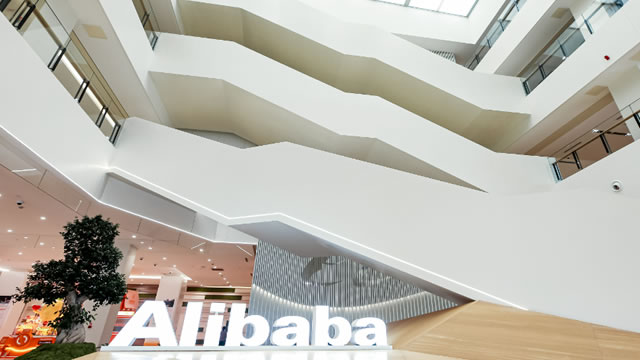
Alibaba has staged a quiet $100 billion rally — AI and Jack Ma's return are at the heart of it
CNBC· 2025-03-28 00:18
Core Insights - Jack Ma's internal memo in November 2023 called for Alibaba to "correct its course" during a challenging period for the company [1] - Alibaba's share price has risen nearly 60% in 2023, adding over $100 billion to its valuation, as the company sees growth in its core business and AI initiatives [3][22] - The Chinese government has shifted its stance, now appearing supportive of Alibaba, which has positively impacted investor sentiment [19][21] Company Challenges - Alibaba faced significant challenges, including a near-record low share price, stalled growth, rapid management changes, and intense regulatory scrutiny from Beijing [2][9] - The company's downfall began after Jack Ma's comments in October 2020, leading to increased regulatory scrutiny and the cancellation of Ant Group's IPO [5][7] - Competition from newer e-commerce players like Pinduoduo and Douyin added to Alibaba's struggles [9] Strategic Changes - In March 2023, Alibaba announced a split into six separate business groups to enhance agility and attract outside funding [10] - Leadership changes included Daniel Zhang stepping down as CEO, with Eddie Wu and Joe Tsai taking over key roles to refocus on core businesses [11][15] - The company is adopting a startup mentality to improve decision-making speed and streamline operations [14][15] AI and Cloud Computing Focus - Alibaba has positioned itself as a leader in AI, launching its first AI model, Tongyi Qianwen, in 2023 and making its models open source [24][25] - The company plans to invest over $50 billion in AI infrastructure over the next three years, indicating a strong commitment to AI development [22] - Alibaba's cloud computing business is expected to benefit from the growing demand for AI applications, as it provides the necessary infrastructure for running these models [30][31] Market Position and Future Outlook - The narrative around Alibaba is shifting from a struggling e-commerce company to a significant player in cloud and AI, presenting new growth opportunities [32] - The company's stock rally is partly driven by investor enthusiasm for AI technology and its potential impact on Alibaba's cloud business [23][29]

Up Over 50% in 2025, Is Alibaba Stock a Buy Now?
The Motley Fool· 2025-03-20 09:15
Core Viewpoint - Alibaba is experiencing a resurgence in investor interest due to improved financial performance and prospects in the AI sector, with its stock surging 68% as of now, reaching levels not seen since 2021 [1] E-commerce Business - Alibaba's e-commerce segment has faced challenges from competitors like Pinduoduo and Douying, resulting in stagnant growth over the past two years [2] - The company has made significant adjustments to its business model, focusing on consumer needs, reducing prices, and leveraging AI to enhance user experience, which has shown early positive results [3] - In the quarter ending December 31, 2024, Taobao and Tmall reported a 9% increase in customer management revenue, driven by growth in gross merchandise value (GMV) and take-rate, alongside a double-digit growth in 88VIP members to 49 million [4] - The international e-commerce business is expanding rapidly, with a 32% revenue increase in the same quarter, diversifying Alibaba's revenue base and positioning it for long-term growth beyond the Chinese market [5] Cloud Computing and AI Opportunities - The AI market is projected to grow from $244 billion in 2025 to $827 billion by 2030, presenting significant opportunities for companies prepared to capitalize on this trend [7] - Alibaba is well-positioned in the AI industry, with the largest cloud computing infrastructure in China, making it a preferred choice for companies seeking AI services [9] - The company has invested years in developing AI models and has integrated AI into its operations, giving it a competitive edge over newer startups [10] - Alibaba plans to invest over $50 billion in the next three years to enhance its infrastructure and increase R&D in AI foundation models and applications [11] Investment Considerations - Recent financial performance indicates that Alibaba has likely overcome its worst challenges, with e-commerce growth returning and strong prospects in cloud computing and AI [14] - Despite the recent stock rally, Alibaba's price-to-sales (P/S) ratio stands at 2.5, lower than Amazon's 3.3, suggesting an undemanding valuation [14] - Investors willing to accept China-related risks may find value in Alibaba's stock, given its potential in the e-commerce and AI sectors [15]

Alibaba Investors Could Finally Be Seeing Light at the End of the Tunnel
The Motley Fool· 2025-03-02 11:25
Core Viewpoint - Alibaba's turnaround efforts are gaining momentum, as evidenced by a significant increase in stock price and improved financial performance in recent quarters [1][2]. Financial Performance - For the quarter ended December 31, 2024, Alibaba reported an 8% increase in revenue and an 83% surge in income from operations [1]. - The e-commerce segment's customer management revenue grew by 9%, driven by increased gross merchandise value (GMV) and take-rate [8]. - International e-commerce revenue rose by 32% year over year, indicating successful diversification efforts [9]. - Alibaba Cloud's revenue grew by 13% year over year, marking a recovery in the cloud computing business [11]. Challenges Faced - Alibaba has faced significant challenges over the past few years, including the cancellation of Ant Group's IPO, regulatory crackdowns, and a tough post-COVID-19 operating environment [3][4]. - The company experienced muted growth in its e-commerce and cloud computing businesses, with revenue growth dropping to 5% and 3% respectively in fiscal 2024 [4][5]. Strategic Initiatives - Alibaba is shifting its focus from a merchant-centered approach to a consumer-centered strategy, enhancing price competitiveness and leveraging artificial intelligence (AI) to improve user experience [7]. - The company is investing heavily in AI infrastructure, with plans to exceed past decade investments in the next three years [13]. Leadership Changes - A significant restructuring of the senior leadership team has occurred, which has added uncertainty but is also seen as a necessary step for revitalization [5][12]. Future Outlook - The recent financial results suggest that Alibaba may have found a new direction, and if the e-commerce and cloud computing segments can maintain their growth trajectories, the company could be on a path to recovery [14].