Ricoh

Search documents
AI adoption isn’t an easy way to cut jobs—or easy at all, Wharton professor says: ‘The key thing … is just how much work is involved in doing it’
Yahoo Finance· 2026-01-10 13:30
Core Insights - The article discusses the challenges and realities of AI adoption in companies, particularly focusing on a case study of Ricoh, which initially faced high costs and complexities despite achieving significant productivity gains [1][6][9]. Group 1: AI Implementation Challenges - Ricoh's transition to AI involved substantial financial investment, including $500,000 in consultant fees, and took a year to implement with a dedicated team [1][6]. - Even after optimization, Ricoh continued to incur $200,000 monthly in AI fees, which exceeded previous payroll costs for the same tasks [7][9]. - The case study illustrates that AI does not necessarily lead to massive job cuts; Ricoh reduced its workforce from 44 to 39 while increasing productivity threefold [7][9]. Group 2: Broader Industry Perspectives - A significant MIT study indicated that 95% of generative AI pilots fail to deliver meaningful returns, highlighting skepticism around AI's practical benefits [2]. - Cappelli emphasizes the disconnect between what technology companies claim is possible and the practical challenges organizations face in implementing AI [3][12]. - The phenomenon of "AI shame" is noted, where companies feel pressured to adopt AI for optics rather than genuine business value, with 35% of AI initiatives reportedly being mere "AI washing" [11]. Group 3: Future Outlook and Organizational Change - Companies are expected to experience a slow learning curve regarding the costs and complexities of AI implementation, with management needing to engage in substantial organizational change [12][14]. - Successful AI integration will require traditional human resources practices, including workflow mapping and collaboration between employees and AI systems [13][14]. - The article suggests that many executives are not adequately addressing the organizational changes required for effective AI adoption, leading to increased stress without clear solutions [14].
科技领域-消费电子、工业电子:前瞻-Technology – Consumer Electronics_Industrial Electronics_Precisions
2025-12-16 03:26
Summary of Key Points from the Conference Call Industry Overview - The conference call focuses on the **Technology sector**, specifically within **Consumer Electronics**, **Industrial Electronics**, and **Precision Electronics** [1] Core Company Insights - **Hitachi (6501)**: - Rating: Overweight (OW) - Target Price: JPY 5,010 - Market Cap: JPY 22,935 million - P/E Ratio: 30.2x for FY1, 28.9x for FY2 - ROE: 14.8% for FY1, 14.2% for FY2 - Dividend Yield: 3.9% for FY1, 2.7% for FY2 [5][7] - **Mitsubishi Electric (6503)**: - Rating: Overweight (OW) - Target Price: JPY 4,793 - Market Cap: JPY 9,947 million - P/E Ratio: 29.4x for FY1, 24.6x for FY2 - ROE: 14.5% for FY1, 12.3% for FY2 - Dividend Yield: 1.9% for FY1, 4.3% for FY2 [5][7] - **NEC (6701)**: - Rating: Overweight (OW) - Target Price: JPY 5,526 - Market Cap: JPY 7,364 million - P/E Ratio: 31.6x for FY1, 26.6x for FY2 - ROE: 14.3% for FY1, 12.2% for FY2 - Dividend Yield: 3.7% for FY1, 4.1% for FY2 [5][7] - **Fujitsu (6702)**: - Rating: Overweight (OW) - Target Price: JPY 4,216 - Market Cap: JPY 7,493 million - P/E Ratio: 17.2x for FY1, 24.8x for FY2 - ROE: 23.1% for FY1, 14.4% for FY2 - Dividend Yield: 4.0% for FY1, 3.1% for FY2 [5][7] - **Sony Group (6758)**: - Rating: Overweight (OW) - Target Price: JPY 4,181 - Market Cap: JPY 25,191 million - P/E Ratio: 23.9x for FY1, 22.3x for FY2 - ROE: 11.9% for FY1, 11.3% for FY2 - Dividend Yield: 2.3% for FY1, 3.4% for FY2 [5][7] Performance Metrics - The average P/E ratio across the companies analyzed is 20.2x for FY1 and 18.7x for FY2 - The average dividend yield is 5.0% for FY1 and 5.3% for FY2 [5] Investment Themes - **AI and Electricity**: Companies like Hitachi and Mitsubishi Electric are heavily involved in AI and electricity-related technologies, with Hitachi focusing on T&D equipment and Mitsubishi on optical devices and submarine cables [10][11] - **Defense**: The Takaichi administration plans to lift restrictions on defense equipment exports, which could benefit companies like Fujitsu and NEC [46] - **Content IP**: Sony Group is increasing its stake in content IP, particularly in the anime market, which has shown significant growth [51][53] Recent Collaborations and Acquisitions - **Hitachi**: Partnered with NVIDIA for AI data center solutions and acquired Synvert to enhance its AI capabilities [55] - **Fujitsu**: Acquired BrainPad for JPY 56.6 billion to strengthen its data and AI business [55] - **NEC**: Acquired CSG Systems for $2.9 billion to enhance telecom offerings [55] - **Mitsubishi Electric**: Acquired Nozomi Networks for $830 million to improve operational technology security [55] Market Trends - The optical semiconductor market is expected to grow significantly, with Mitsubishi Electric holding a leading market share [32] - The submarine cable market is projected to reach JPY 500 billion annually by 2025, with NEC holding a 25% market share [32] Conclusion - The technology sector, particularly in consumer and industrial electronics, is poised for growth driven by advancements in AI, defense, and content IP. Companies are actively pursuing strategic partnerships and acquisitions to enhance their market positions and capitalize on emerging trends [1][55]
Ricoh perovskite solar cells Installed on Japan Aerospace Exploration Agency (JAXA) cargo transfer spacecraft1 HTV-X1
The Manila Times· 2025-10-30 23:37
Core Insights - Ricoh Company, Ltd. has installed its perovskite solar cells on the Space Solar Cell Demonstration System (SDX) aboard the HTV-X1 spacecraft, launched by JAXA on October 26, 2025, for an in-orbit demonstration [1][3] Group 1: Solar Cell Technology - The in-orbit demonstration will last approximately two months, during which the current-voltage characteristics, power generation performance, and durability of Ricoh's perovskite solar cells will be evaluated [3] - Perovskite solar cells are advantageous due to their high power generation under low illumination, strong resistance to cosmic radiation, and potential for lightweight and flexible designs, making them suitable for future space applications [3][4] Group 2: Research and Development - Since 2017, Ricoh has collaborated with JAXA's Space Exploration Innovation Hub Center to develop durable perovskite solar cells suitable for space environments [4] - The company aims to enhance energy conversion efficiency and durability while achieving high productivity and cost reductions through its core technologies, including organic photoconductors and inkjet printing [5] Group 3: Commercialization Efforts - Following the results of the space demonstration, Ricoh plans to continue improving the performance and durability of perovskite solar cells, accelerating their development towards early commercialization [6] - Ricoh's global operations reached approximately 2,527 billion yen (around 16.8 billion USD) in sales for the financial year ending March 2025, indicating a strong market presence [8]


Swiss Enterprises Lead AI-Driven Workplace Modernization
Businesswire· 2025-10-29 09:00
Core Insights - Swiss enterprises are leading the global shift towards an AI-driven workplace, adopting automation and hybrid work practices more rapidly than their European counterparts [1][20] - The transition from AI experimentation to large-scale implementation is evident, with a focus on enhancing productivity and employee well-being [2][3] AI Adoption and Implementation - AI adoption in Switzerland has progressed to large-scale implementation, with organizations automating processes and creating new working methods [2][3] - Enterprises are developing frameworks for responsible AI to build employee trust and ensure sustainable productivity [2][3] Workplace Strategies and Governance - Swiss enterprises are modernizing workplace strategies amid competitive pressures, emphasizing AI governance as a key criterion for selecting service providers [3][4] - Environmental, social, and governance (ESG) requirements are driving the adoption of sustainability practices, including carbon tracking and circular IT [3] Collaboration and User Experience - Collaboration in Swiss enterprises is evolving, shifting focus from traditional service-level indicators to user experience metrics [4][5] - Generative AI platforms are facilitating this transition, leading organizations to establish frameworks for AI readiness and governance [4] Digital Employee Experience - Digital employee experience (DEX) is a central priority, with providers offering AI analytics to proactively address operational issues [5] - Subscription-based device-as-a-service (DaaS) models are being embraced for lifecycle management and cost predictability [5] Market Evaluation and Leadership - The 2025 ISG Provider Lens Future of Work Services report evaluates 40 providers across six quadrants, identifying leaders such as Swisscom, TCS, and Wipro [9][10] - Microland is recognized as the global ISG CX Star Performer for 2025, achieving the highest customer satisfaction scores [12]


Sitma USA expands alliance with Ricoh
Yahoo Finance· 2025-10-22 09:24
Core Insights - Sitma USA has expanded its partnership with Ricoh USA to provide comprehensive solutions for packaging, mailing, and fulfillment operations [1][2] - The collaboration enhances Ricoh's ability to offer complete workflow solutions from print production to final packaging [2][3] - Sitma USA specializes in automated packaging systems for high-volume print, mail, and e-commerce industries, with a diverse portfolio [3][4] Company Overview - Sitma USA is a Tecnau company that focuses on paper handling, processing, and finishing systems for the digital printing market [1][3] - Ricoh operates in 200 countries and regions, enhancing its service capabilities through this partnership [5] Partnership Details - The expanded partnership builds on previous joint projects, including a significant enterprise installation where Ricoh played a central role [4] - Both companies emphasize their commitment to innovation and customer success, viewing this partnership as beneficial for the industry [4]
一个25美元的芯片,如何引发计算革命?
半导体行业观察· 2025-08-31 04:36
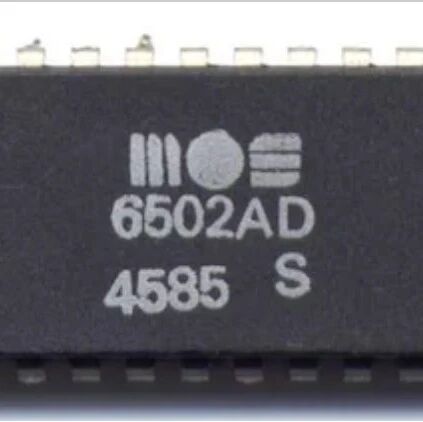
Core Insights - The introduction of the $25 MOS Technology 6502 processor in 1975 revolutionized the computing industry by making microprocessors affordable for hobbyists and startups, contrasting with the $175-200 price range of competitors like Intel's 8080 and Motorola's 6800 [1][3][6] Group 1: Historical Context - In the 1970s, microprocessors were expensive, limiting access to companies and laboratories, which prompted Chuck Peddle and his team to create a simpler, cheaper CPU [3][8] - The 6502 was first showcased at the WESCON exhibition in 1975, where it gained immediate attention, leading to a significant price reduction from competitors [6][11] Group 2: Design and Features - The 6502 utilized approximately 4,500 transistors, which was 25-40% fewer than its competitors, resulting in a smaller chip size and lower production costs [8][10] - It featured a minimalist architecture with essential components, including an 8-bit accumulator, two index registers, a stack pointer, and a 16-bit program counter, which contributed to its efficiency [8][10] - The instruction set was streamlined, retaining only 56 out of 72 instructions from the Motorola 6800, which improved execution speed despite requiring programmers to use simpler instructions for complex tasks [10][11] Group 3: Impact on the Industry - The 6502 became the preferred processor for early personal computers, being used in products like the Apple I, Apple II, Commodore PET, and Atari 2600, thus democratizing computing [10][11][13] - Its design philosophy foreshadowed the RISC movement, emphasizing simplicity and efficiency, which influenced the development of modern CPU architectures, including ARM [13][14] Group 4: Legacy - The 6502's design principles continue to resonate today, with Western Design Center still producing derivatives of the chip, highlighting its enduring relevance in retro computing and embedded systems [14]
Select Medical(SEM) - 2025 Q2 - Earnings Call Transcript
2025-08-13 14:00
Financial Data and Key Metrics Changes - EBITDA increased from €11.1 million in Q1 to €19.6 million in Q2, representing a 77% improvement [2] - Overall sales declined by 7%, leading to a 35% decrease in EBITDA and a margin drop from 13.7% to 9.6% year on year [3][4] - Earnings after taxes turned negative at €11.2 million, but the company maintains a solid financial footing with an equity ratio of 45.5% and cash reserves of approximately €113 million [4][12] Business Line Data and Key Metrics Changes - Semperit Industrial Applications saw a 4.7% decline in sales and a 19.2% decrease in EBITDA year on year, with margins at 18.1% [5] - Semperit Engineered Applications experienced a 9% drop in sales and a 46.9% decline in EBITDA compared to the previous year [7][8] - The hoses business showed signs of recovery with improved order intake, while the profiles segment continues to struggle due to a weak construction industry [6][9] Market Data and Key Metrics Changes - The overall order book and order intake for the first six months are higher than last year's comparable figures, indicating a recovery trend [3][24] - The construction industry is expected to turn around in 2026, but short-term benefits are not anticipated [25] Company Strategy and Development Direction - The company is focused on optimizing costs and expanding its profile business in the U.S. market [25][26] - There is an ongoing effort to explore inorganic growth opportunities through potential acquisitions that can leverage existing business [28] - The company aims to maintain a resilient balance sheet while investing in digitalization projects [12][13] Management's Comments on Operating Environment and Future Outlook - Management expressed confidence in a recovery in the second half of the year, driven by improved order intake and market dynamics [24][27] - The company confirmed its guidance for operating EBITDA in the range of €65 million to €85 million for 2025 [4][27] - Management acknowledged uncertainties but emphasized a positive momentum in customer restocking and order processing [24][27] Other Important Information - The company paid a dividend of $0.50 per share, totaling $10.3 million, signaling confidence in its business model [13][22] - Free cash flow was reported at €13.9 million, with capital expenditures halved to €18.5 million year on year [17][22] Q&A Session Summary Question: Order dynamics in Q2 and summer months - Management noted a gradual increase in order intake starting in April, continuing through July, with a stronger order book compared to the previous year [31][32] Question: Revenue generation expectations for Q3 - Management is hopeful for a good Q3 and Q4, but noted potential impacts from weather and shipping activities [33] Question: CapEx reduction from €60 million to €50 million - The reduction is primarily a period shift related to specific growth projects, particularly in the U.S. railway systems [34] Question: Pricing dynamics and revenue increase - Pricing management has been proactive, with approximately €3 million of revenue attributed to price increases, though some businesses experienced price decreases [40][41] Question: Working capital development and operating cash flow - Management is confident in maintaining tight working capital targets and believes operating cash flow will cover the €50 million CapEx [42][44] Question: Impairment in the LSI business - Management provided assurance that the impairment was based on a comprehensive review and that there is remaining headroom for the Ricoh business [51][52] Question: Impact of Continental's spin-off on business - No concrete evidence of impact was reported, but management suggested it could be positive [56] Question: Current situation in the hoses business - The company is building up capacity and hiring to meet increased demand [60][61] Question: Margin quality of belting orders - Margin quality remains volatile, with improvements noted in the second quarter, but still lower than two to three years ago [67][70] Question: Impact of U.S. tariffs on business - The uncertainty from tariffs had a significant impact, but the current situation allows for better planning and has led to an uptick in order activity [76][78]

2025年全球紫外光固化油墨市场专业调查研究报告-聚亿信息咨询
Sou Hu Cai Jing· 2025-04-04 00:05
Core Insights - The global UV curable ink market is projected to reach approximately $3,452 million in 2024, with a compound annual growth rate (CAGR) of 14.9%, expected to reach $8,951 million by 2031 [2][3] Group 1: Market Overview - The report provides in-depth analysis of product sales, revenue, pricing, growth rates, market share, and competitors, covering historical data from the past five years and future market trends [2][3] - The report aims to assist companies in making informed strategic decisions to reduce losses and increase revenue [2] Group 2: Key Players - Major companies studied in the report include DIC, Toyo Ink Group, Siegwerk, T&K Toka Corporation, Ricoh, Flint Group, Hewlett-Packard, Gans Ink & Supply, NUtec Digital Ink, Hanghua Ink, Letong Ink, Yangzi Ink, Kingswood Inks, and Tianjin Tiannv Chemical [3] Group 3: Product Types - The report categorizes UV curable inks into several types: sheet-fed UV curable inks, screen printing UV curable inks, flexographic UV curable inks, gravure UV curable inks, and digital printing UV curable inks [3] Group 4: Application Areas - Key application areas for UV curable inks include automotive products, consumer goods, medical applications, publishing and printing, among others [3] Group 5: Analytical Focus - The report includes forecasts for UV curable ink sales and revenue by region/country, performance analysis of companies, tracking of product categories, and insights into application areas [4]