Sumitomo Electric

Search documents
线缆行业:1 月光纤及光纤连接器贸易数据-Wire & Cable-January Optical Fiber & Optical Fiber Connector Trade Stats
2026-02-27 04:00
Wire & Cable | Japan M Update January Optical Fiber & Optical Fiber Connector Trade Stats February 26, 2026 11:04 AM GMT Export value of optical fiber/optical fiber cable connectors (HS code 85367000): Total export value of ¥4.3bn (+82% YoY; 3-mo avg. +61% YoY; -5% MoM), remaining very strong and marking the second highest recorded level after the all-time high achieved in Dec 2025. Total breaks down to Tokyo Customs ¥4.1bn and Nagoya Customs ¥0.14bn. We infer that shipments cleared through Tokyo Customs ar ...
线缆行业:12 月光纤及光纤连接器贸易数据-Wire & Cable-December Optical Fiber & Optical Fiber Connector Trade Stats
2026-01-30 03:14
Summary of Key Points from the Conference Call Industry Overview - The report focuses on the **optical fiber and cable industry** in **Japan** [3][4][6]. Core Insights - **Export Performance**: - In December, the export value of optical fiber/optical fiber cable connectors reached **¥4.5 billion**, marking a **64% year-over-year increase** and a **9% month-over-month increase**. The three-month average also showed a **41% year-over-year increase** [4]. - The total export value of optical fiber/cables was **¥9.0 billion**, with a **50% year-over-year increase** and an **8% month-over-month increase**. Optical cables accounted for **¥4.5 billion** and optical fiber for **¥3.7 billion** [5][9]. - **Demand Drivers**: - The strong demand is attributed to the **cross-connectivity of AI servers**, which require significantly more connectors than usual. Shipments to Asia also reached a record high [4]. - **Customs Breakdown**: - The export value breakdown shows **¥4.3 billion** from Tokyo Customs and **¥0.16 billion** from Nagoya Customs. It is inferred that shipments through Tokyo Customs are primarily from **Fujikura** and **Sumitomo Electric**, while those through Nagoya are from **Furukawa Electric** [4][10]. Implications for the Industry - The robust performance in December indicates strong demand from **data centers**, which is a positive sign for the wire and cable industry. However, price trends are difficult to analyze due to the variety of products involved, and single-month data should be monitored for fluctuations [6]. Additional Insights - **Splicer Exports**: The export value for splicers was **¥0.85 billion**, with **¥0.58 billion** from Kumamoto Customs and **¥0.27 billion** from Yokohama Customs. The performance varied significantly, with Yokohama showing a **36% decrease year-over-year** but a **147% increase month-over-month** [11]. - **Power Cable Exports**: The total export value for power cables (1kV+) was **¥1.3 billion** [12]. Key Manufacturing Sites - Major optical fiber/cable manufacturing sites in Japan include **SEI's Yokohama Works**, **Fujikura's Sakura Works**, **Furukawa Electric's Mie Works**, and **OCC** for submarine optical cables [13]. Analyst Ratings - The industry view is rated as **Attractive** by **Morgan Stanley** [7]. - Companies covered include: - **Fujikura (5803.T)**: Overweight rating - **Furukawa Electric (5801.T)**: Equal-weight rating - **Sumitomo Electric (5802.T)**: Equal-weight rating [77]. This summary encapsulates the key points from the conference call, highlighting the performance metrics, demand drivers, and implications for the optical fiber and cable industry in Japan.
把握全球增长机遇-AI 在亚洲供应链的更广泛深度渗透_ Seizing the Global Growth Opportunity_ A broader and deeper AI presence in the Asian supply chain
2026-01-13 02:11
Summary of Key Points from the Conference Call Industry Overview - Focus on the Asia technology (hardware) sector, particularly the AI supply chain, as a priority investment area for 1H26 due to its significant influence on earnings growth amid concerns over smartphone/PC demand and auto production recovery [2][12] Core Themes and Stock Recommendations 1. **AI Supply Chain Investment**: - Emphasis on investing in the AI supply chain, which is expected to drive earnings growth despite potential slowdowns in other sectors [2][12] - Anticipation of clearer benefits from AI for earnings in 2026, with no signs of slowdown heading into 2027 [12] 2. **Under-the-Radar AI Themes**: - Five notable themes identified: 1. **Power Consumption**: Opportunities in power supply, power rack products, capacitors, and power semiconductors. Companies to watch include Delta Electronics, Panasonic HD, Murata Mfg., Taiyo Yuden, and Renesas Electronics [6][25] 2. **Data Transmission**: Advancements in large-scale data transmission technologies, with companies like Fujikura and Mitsubishi Electric highlighted [6][25] 3. **Niche Components**: Price stabilization and increases in demand for components like MLCCs and substrates, with key players including Murata Mfg. and SEMCO [6][25] 4. **Physical AI Integration**: Companies like Hitachi and Mitsubishi Electric are leading in embedding AI into industrial applications [6][27] 5. **Software/Services Disruption**: Generative AI's potential to improve productivity in Japan's software industry, with Fujitsu and NEC as key players [6][27] 3. **High-Profile Sub-Sectors**: - Continued growth in foundry, memory, semiconductor production equipment, AI servers, and edge AI, with recommended stocks including TSMC, Samsung Electronics, and Hon Hai [30][31] Market Dynamics and Risks - **Top-Down Risks**: - Concerns regarding valuations, implementation risks, over-investment, monetization challenges, and funding sources, particularly with emerging players in the market [13] - **Bottom-Up Perspective**: - Fundamentals differ from the IT bubble of 2000, with a larger scale and longer timeline for AI infrastructure development, and sound supply chain management in Asian hardware [14][16] Technological Advancements - **Power Consumption Trends**: - Significant rise in power consumption for AI servers, with expectations for voltage increases to 800V and beyond, creating business opportunities for power-related products [33][38] - **Data Transmission Innovations**: - Transition to higher communication speeds (800-1.6Tbps) and co-packaged optics (CPO) expected to enhance industry value [58][59] Conclusion - The Asia technology sector, particularly the AI supply chain, presents substantial investment opportunities driven by technological advancements and evolving market dynamics. Key players and themes are positioned to benefit from these trends, while investors should remain cautious of potential risks associated with rapid market changes.
“一带一路”俄罗斯精密线缆连接组件市场消费结构分析及投资潜力评估预测报告(2026版)
Sou Hu Cai Jing· 2026-01-12 01:41
Core Insights - The report highlights the stable growth of the precision cable connection component market, driven by advancements in connector technology and increasing demand from downstream industries such as automotive and consumer electronics [3][5]. Group 1: Market Overview - The precision cable connection components are essential for electrical connections in various applications, including communication, automotive, consumer electronics, industrial equipment, and medical devices [2]. - The global connector market is projected to grow from $60.1 billion in 2017 to $86.5 billion by 2024, with a compound annual growth rate (CAGR) of 5.34% [3]. Group 2: Downstream Industry Trends - The consumer electronics sector is a significant application area for precision cable connection components, particularly in smartphones, computers, and smart devices. The global consumer electronics market reached $1,051.6 billion in 2023 and is expected to grow to $1,176.7 billion by 2028 [6][7]. - The automotive market is also experiencing growth, with global automotive sales projected to reach 95.31 million units in 2024, a 19.63% increase from 2020, and a CAGR of 4.58% from 2020 to 2024 [10]. Group 3: Emerging Opportunities - The rise of artificial intelligence (AI) is creating new demands for precision cable connection components, particularly in AI-enabled devices. The penetration rate of AI computers is expected to surge from 2% in 2024 to 64% by 2028 [8]. - The global market for smart wearable products is anticipated to grow from $9.6 billion in 2022 to $22 billion by 2028, with a CAGR of 14.82% [9]. Group 4: Automotive Sector Insights - The demand for cable connection components in the automotive sector is increasing, particularly for electric vehicles (EVs). The global EV sales are projected to reach 17.79 million units in 2024, a staggering 445.71% increase from 2020 [11][12]. - The value of cable connection components in traditional vehicles ranges from $2,500 to $3,500, while for EVs, it is approximately $5,000, indicating a significant market opportunity [12]. Group 5: Competitive Landscape - The domestic market for automotive cable connection components is dominated by foreign companies like Yazaki and Sumitomo Electric, but local manufacturers are gaining ground due to cost advantages and technological advancements [13][14].


Japan's Nikkei rises as US government shutdown ends, Topix posts record high
The Economic Times· 2025-11-13 07:26
Market Performance - The Nikkei rose 0.43% to close at 51,281.83, while the Topix increased by 0.67% to an all-time high of 3,381.72, marking a fourth consecutive session of gains [1][5] - The utility sector jumped 3.08%, and the brokerage sector rose 2.08% [4][5] Company Movements - Advantest, a chip-related company, rose 4.24%, becoming the largest contributor to the Nikkei's gain [5] - Fujikura, a fibre optic maker, advanced 3.16%, while Furukawa Electric and Sumitomo Electric saw significant increases of 12.23% and 7%, respectively [1][5] - SoftBank Group fell 3.38%, weighing the most on the Nikkei [5] - Bank shares experienced gains, with Mitsubishi UFJ Financial Group climbing 2%, and Sumitomo Mitsui Financial Group and Mizuho Financial Group gaining 1.19% and 2.55%, respectively [5] Investment Trends - Investors have started buying value stocks, reflecting a trend similar to that in the U.S. [4][5] - Money is flowing into broader stocks and sectors in Japan, indicating a shift in investment strategy [4][5] - Of the more than 1,600 stocks trading on the Tokyo Stock Exchange's prime market, 59% rose, 37% fell, and 3% traded flat [5]

PCD切割工具市场CR10达61%,头部阵营稳定
QYResearch· 2025-08-26 09:53
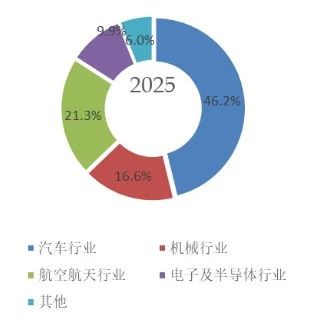
Core Viewpoint - The global PCD cutting tools market is projected to reach USD 1.39 billion by 2031, with a compound annual growth rate (CAGR) of 5.5% from 2025 to 2031, indicating a stable and healthy growth trajectory [4]. Market Size and Growth (Macro Outlook) - The market size is expected to reach USD 1.39 billion by 2031, with a CAGR of 5.5% from 2025 to 2031, reflecting a stable growth trend [4]. Competitive Landscape (Market Concentration) - The market is characterized by high concentration, with the top ten manufacturers, including Sandvik Group and Kyocera, holding approximately 61.0% of the market share [5][3]. Product Segmentation - The leading product type is PCD turning tools, which account for about 29.7% of the total market share, highlighting its fundamental and widespread application in machining [11]. Application Fields - The automotive industry is the largest downstream demand sector, representing approximately 46.7% of total demand, making it a critical pillar for the industry [12]. Key Driving Factors - PCD tools offer advantages such as longer tool life, higher workpiece quality, greater process reliability, and lower scrap rates, which help reduce processing costs [16]. - The development of downstream industries also drives demand for PCD tools, particularly in applications like cutting ultra-thin LTPS LCD panels [16]. Major Obstacles - Changes in supply chains within the automotive and other downstream industries pose challenges [17]. - Global economic weakness and significant currency fluctuations complicate business operations [17]. - The decline in internal combustion engine numbers due to the mobility revolution leads to weakened demand [17]. Industry Development Trends - Competition among suppliers is expected to intensify during the forecast period, with a focus on price, user-friendly interfaces, value-added services, and service combinations [18]. - Technological innovation plays a crucial role in market growth, necessitating suppliers to develop new ideas and technologies [18]. - Increased online shopping preferences due to busy lifestyles and the proliferation of digital devices are driving online sales, often at lower prices than physical stores [18].