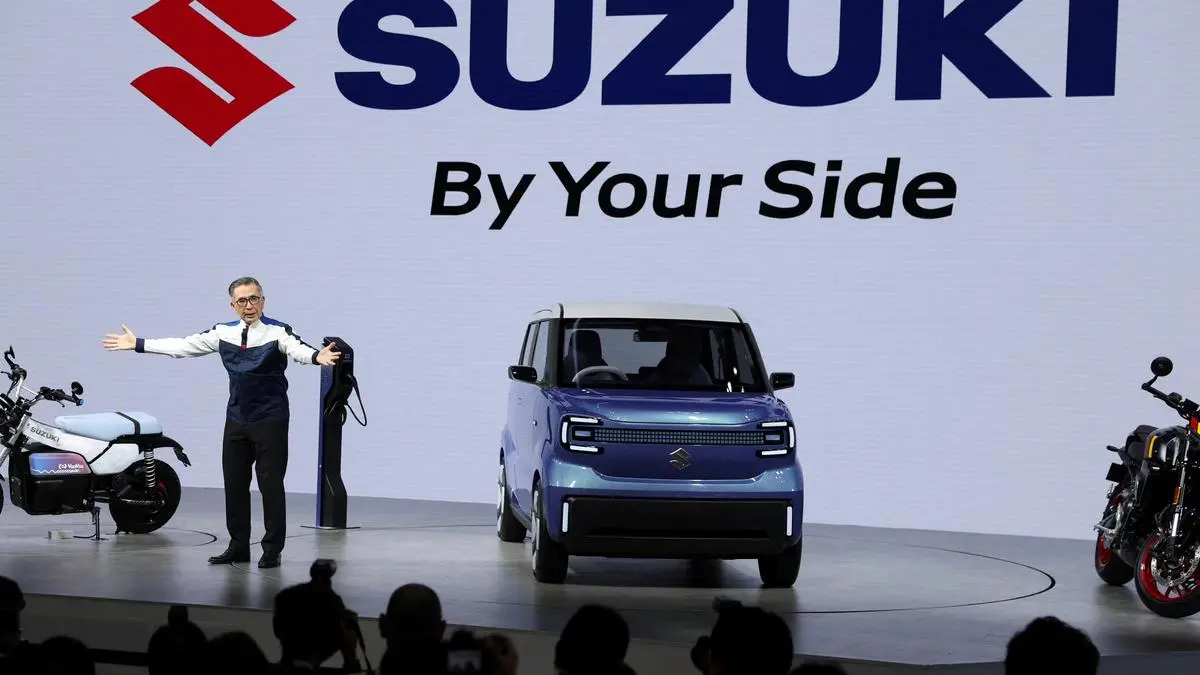
Suzuki Motor Corporation

Search documents
Maruti Suzuki January Sales Rise 12% Despite Stagnant Domestic Demand
Www.Ndtvprofit.Com· 2026-02-02 05:40
Core Insights - Maruti Suzuki India Ltd. achieved its highest ever monthly sales volume in January, with a 12% year-on-year increase, driven by a significant surge in exports despite stagnating domestic demand [1] Sales Performance - Total sales reached 236,963 units in January, with exports increasing by 88% to an all-time high of 51,020 units, showcasing the company's expanding global presence and manufacturing efficiency [1] - Domestic sales, including light commercial vehicles, saw a slight growth of 0.4% to 185,943 units, while passenger vehicle sales rose by 0.5% to 174,529 units, indicating weak demand following the initial boost from GST rate cuts [2] - Year-to-date (April-January) total sales increased nearly 8% to 1.98 million units, with domestic sales at 1.528 million units and exports contributing 360,000 units [3] Financial Performance - In the December quarter, Maruti Suzuki reported a 29% increase in revenue from operations to ₹49,892 crore and a 4% rise in net profit to ₹3,794 crore, although profit margins decreased to 11.2% from 13.1% due to adverse commodity prices and other factors [4] Stock Performance - Shares of Maruti Suzuki India traded 0.7% lower at ₹14,100, while the benchmark Sensex fell by 0.1%. The stock has increased by 7% over the past 12 months [5]


Maruti Suzuki Q3 Results: Net Profit At Rs 3,794 Crore, Margins Shrink On Labour Code Impact
Www.Ndtvprofit.Com· 2026-01-28 09:36
Core Insights - Maruti Suzuki India reported a net profit increase of 3.7% to Rs 3,794 crore for Q3FY26, missing Bloomberg estimates of Rs 4,212 crore [1][6] - Revenue from operations rose by 28.7% to Rs 49,892 crore, surpassing the previous year's Rs 38,752 crore and slightly exceeding Bloomberg's estimate of Rs 48,197 crore [2][6] - The company's EBITDA increased by 10% to Rs 5,572 crore, compared to Rs 5,065 crore in the same quarter last year, but fell short of the estimate of Rs 5,638 crore [4][6] Financial Performance - The profit for Q3FY26 was Rs 3,794 crore, up from Rs 3,659 crore in the same quarter last year [1][6] - Revenue for the quarter was Rs 49,892 crore, compared to Rs 38,752 crore in the previous year [2][6] - EBITDA for the quarter was Rs 5,572 crore, an increase from Rs 5,065 crore year-on-year [4][6] Margin Analysis - The operating margin decreased to 11.2% from 13.1% in the same quarter last year, which was also below the estimated margin of 11.7% [4][6] - The decline in margin was attributed to adverse commodity prices, unfavorable foreign exchange movements, rare earth supply issues, and a one-time provision related to new labor codes [4] Stock Performance - Following the Q3 results announcement, Maruti Suzuki's stock recovered over 5% from intraday losses [5] - The stock has experienced a 10% decline over the past month, but has rallied 21% over the last six months, and increased by 51% over two years and 97% over five years [5]

Maruti Suzuki board approves ₹4,960-crore proposal to acquire land for expanding capacity in Gujarat
MINT· 2026-01-12 08:29
Core Viewpoint - Maruti Suzuki India has approved a ₹4,960 crore proposal to acquire land and expand its manufacturing capacity in Gujarat, aiming to add up to 1 million units of production capacity [1][2][3]. Group 1: Expansion Details - The board approved the acquisition of land at Khoraj Industrial Estate from Gujarat Industrial Development Corporation for capacity expansion [2]. - The proposed capacity addition is up to 1 million (10 lakh) units, with the final investment details to be approved by the board during the capacity installation phases [2][3]. Group 2: Financial Aspects - The total cost for land acquisition, development, and preparatory activities is ₹4,960 crore, which will be financed through a combination of internal accruals and external borrowings [3]. - The existing manufacturing capacity of the company is approximately 2.4 million units per annum, with a capability to produce up to 2.6 million units per annum [3][4]. Group 3: Current Capacity Utilization - The existing capacity is fully utilized, indicating a strong demand for production [4]. - The current capacity includes units produced at the former Suzuki Motor Gujarat Pvt Ltd, which has been amalgamated with Maruti Suzuki India [4]. Group 4: Future Investments - In 2024, Suzuki Motor Corporation announced plans for Maruti Suzuki India to invest ₹35,000 crore to establish a second manufacturing facility in Gujarat, with an installed production capacity of 1 million units per annum [5].
Suzuki rolls out AI-based work analysis software ‘Ollo Factory’
Yahoo Finance· 2025-12-23 16:06
Core Insights - Suzuki Motor Corporation has initiated the deployment of "Ollo Factory," an AI work analysis platform, as part of its Suzuki Smart Factory program, starting with the Sagara Plant in July 2025 and expanding to the engine line in December 2025 [1][2]. Group 1: Digital Transformation and Production Efficiency - The rollout of "Ollo Factory" is a crucial step in Suzuki's efforts to digitalize production, enhance real-time monitoring, and improve training and quality control at its domestic facilities [2]. - The platform aims to make variations in work processes visible and to standardize the techniques of experienced operators, thereby increasing work efficiency and ensuring consistent quality [2][3]. - "Ollo Factory" features real-time anomaly detection to identify issues like missed screw tightening, which helps prevent defective products from leaving the plant [3]. Group 2: Strategic Goals and Future Plans - Ollo CEO Kento Kawai emphasized that the strengths of "Ollo Factory," including automatic work manual creation and efficient newcomer training, align well with Suzuki's manufacturing needs [4]. - Suzuki plans to gradually implement the software across all its production sites in Japan and assess its effectiveness before considering deployment at overseas locations to enhance global quality and productivity standards [5][6]. - The company views its Japanese factories as "mother production bases" that showcase technology and manufacturing expertise to the wider group [6]. Group 3: Continuous Improvement and Quality Management - Suzuki is committed to advancing digital tools and improving quality management through the Suzuki Smart Factory initiative [7]. - The company is addressing chronic defects that occur infrequently by exploring the effectiveness of real-time detection of critical work points within the takt time, with solutions proposed by Ollo [7].
'Not hatchbacks, not sedans, SUVs still king post-GST cut'
Rediff· 2025-11-12 07:17
Core Insights - The share of hatchbacks in the overall passenger vehicle (PV) industry sales has decreased from 22.4% in January-August to 20.4% in September-October, and further down to 20% in October, indicating a declining trend in this segment [1][5][6] - In contrast, the share of SUVs has increased from 54% in January-August to 56.9% in September-October, reaching 57% in October, highlighting a strong demand for SUVs [7][8] - The mid-SUV segment has also seen growth, with its share rising from 12.8% in January-August to 15% in October [8] Industry Trends - The GST reforms have positively impacted SUV sales while small cars, including hatchbacks and sedans, continue to lose market share [3][4] - The share of sedans has also declined from 8.5% in January-August to 7.9% in October [6] - The trend indicates that consumers are upgrading to larger vehicles rather than opting for smaller cars, driven by aspirations for bigger cars [9] Company Strategies - Hyundai plans to focus on the SUV segment for future launches, with expectations that the share of SUVs and MPVs in its PV sales will increase from 71% to 80% by 2030 [10] - Maruti Suzuki is open to adjusting its product launch strategy based on the recent surge in small car sales, which have risen to over 25% of its overall sales since the GST reduction [11][12] - The new GST regime has reduced the tax on small cars, but larger vehicles are still taxed at a lower rate compared to previous levels, influencing consumer purchasing behavior [13]

Will GST cut bring back hatchbacks to top of the line?
Rediff· 2025-11-12 06:33
Core Insights - The reduction of GST on small cars has significantly boosted Maruti Suzuki's small car sales, increasing their share in overall sales from 16.6% to over 25% in FY26 [1][3][10] - The company is considering adjusting its product launch strategy to capitalize on the renewed demand for small cars, which may also influence other automakers to reintroduce hatchbacks [2][4][5] Sales Performance - Maruti Suzuki reported a 7.9% year-on-year increase in consolidated net profit to Rs 3,349 crore in Q2 FY26, primarily driven by export growth [6] - Exports surged by 42.2% year-on-year to 110,487 units, while revenue increased by 13% to approximately Rs 42,100 crore, surpassing estimates due to festival-season purchases [7] Market Dynamics - The small car segment's revival is attributed to improved affordability and a shift in consumer sentiment, countering previous assumptions that demand had shifted to larger vehicles [8][10] - Retail sales during the festival period showed a 20% growth overall, with small cars growing by 30%, while larger cars only saw a 4-5% increase [9] Industry Outlook - The car industry is expected to see a growth of around 6% in the second half of the year, a significant turnaround from the 1.4% decline in domestic passenger vehicle sales in the first half [11][12] - The decline in small car sales in recent years was primarily due to affordability issues rather than a shift in consumer preferences [10]

NCLT clears merger of Suzuki Motor Gujarat with Maruti Suzuki India
ETAuto.com· 2025-11-10 02:28
Core Viewpoint - The National Company Law Tribunal (NCLT) has approved the merger of Suzuki Motor Gujarat Pvt Ltd (SMG) with Maruti Suzuki India Ltd (MSIL), which is expected to consolidate the operations of the Japanese carmaker in India and enhance manufacturing capabilities [1][5]. Group 1: Merger Approval - The NCLT sanctioned the scheme of amalgamation on October 31, with an appointed date set for April 1, 2025 [1][5]. - The tribunal noted that the merger is in the interest of both companies, their shareholders, creditors, and employees, with no objections from statutory authorities such as the Income Tax Department, RBI, Sebi, BSE, and NSE [1][5]. Group 2: Strategic Benefits - The merger aims to simplify the group structure, eliminate duplication of administrative functions, and enhance operational synergies [2][5]. - It is expected to improve manufacturing efficiency, reduce costs, and accelerate decision-making within Maruti Suzuki's operations [5]. Group 3: Employee Transition - All employees of SMG will transition to Maruti Suzuki India upon the merger's effective date [1][5]. Group 4: Ownership Structure - Suzuki Motor Corporation currently holds 58.28% of MSIL's paid-up share capital [5].
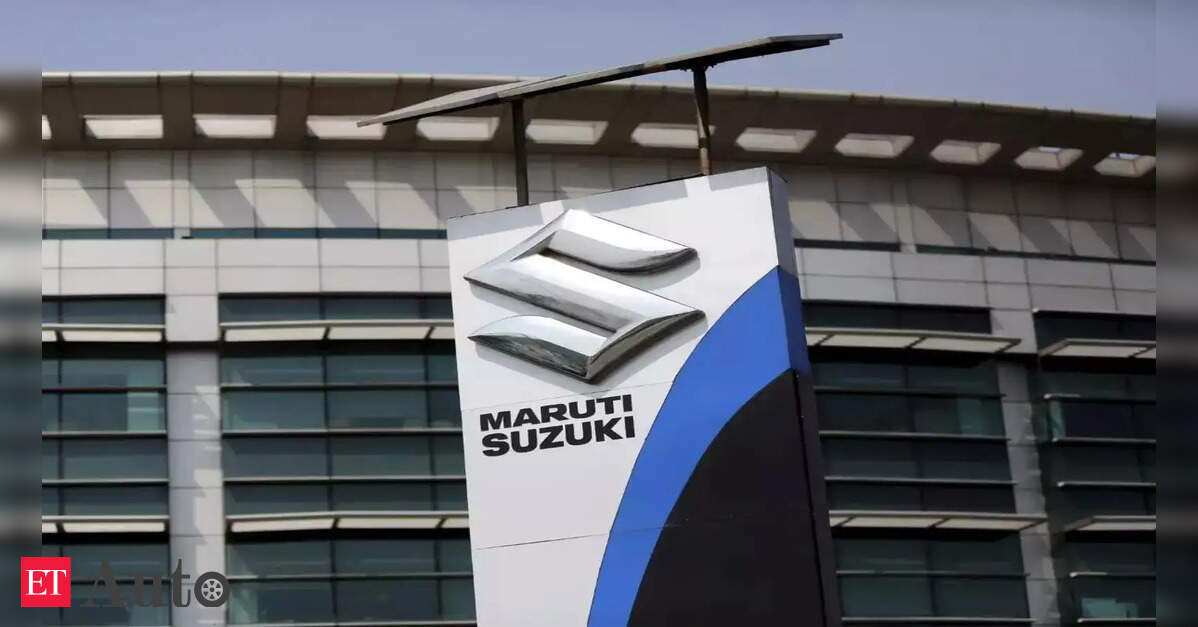
NCLT approves merger scheme of Suzuki Motor Gujarat with Maruti Suzuki India
BusinessLine· 2025-11-09 08:08
Core Viewpoint - The National Company Law Tribunal (NCLT) has approved the merger of Suzuki Motor Gujarat with its parent company, Maruti Suzuki India, effective from April 1, 2025, which aims to enhance operational efficiencies and business synergies [1][5]. Group 1: Approval and Regulatory Aspects - The NCLT found the merger scheme beneficial for both companies, their shareholders, creditors, and employees, with no objections raised by the Income Tax Department or other statutory authorities [2][3]. - The approval process included a joint petition from both companies, which was initially filed in Ahmedabad and later transferred to the Principal Bench in New Delhi [7]. Group 2: Benefits of the Merger - The merger is expected to lead to focused growth, operational efficiencies, and improved business synergies by consolidating their operations [7][8]. - It will simplify the group structure by eliminating multiple entities, thereby enhancing agility and decision-making within the transferee company [8]. - The amalgamation aims to reduce administrative costs, share best practices, and improve performance indicators in manufacturing, ultimately maximizing shareholder value [9]. Group 3: Employee Transition - All employees of Suzuki Motor Gujarat will transition to Maruti Suzuki India as of the effective date of the merger [10]. Group 4: Corporate Structure and Ownership - Suzuki Motor Corporation, Japan, holds a 58.28% stake in Maruti Suzuki India as of March 31, 2025, indicating strong parent company support for the merger [11].
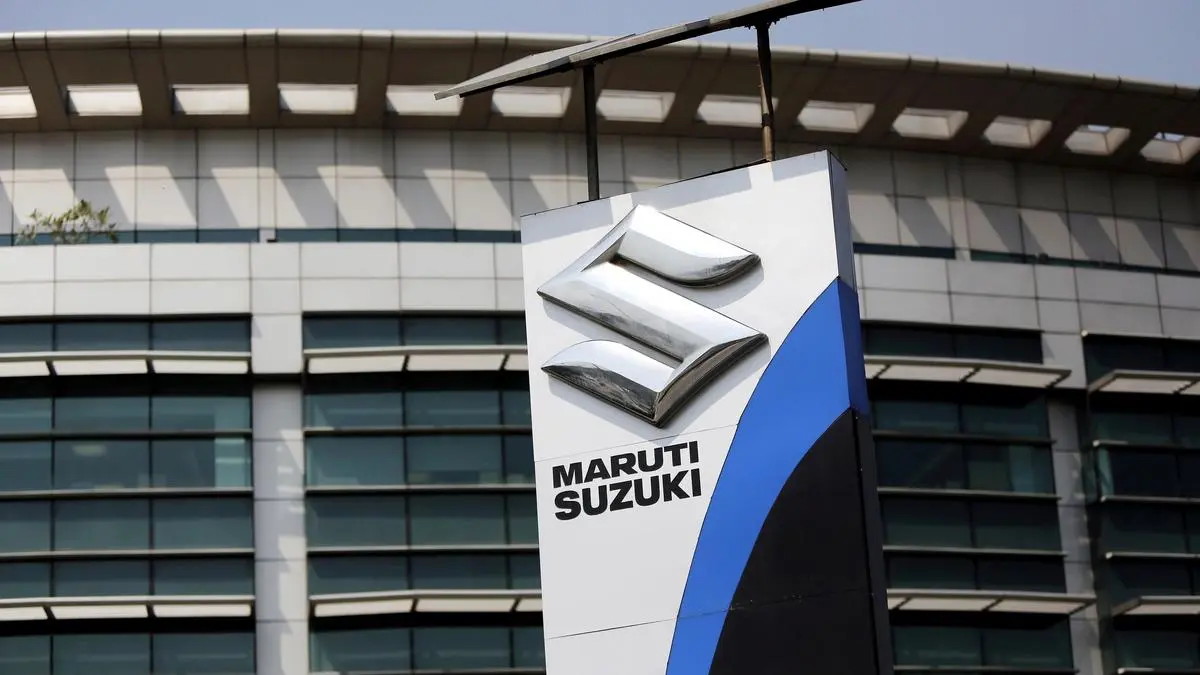
Two-wheeler sales in October record mixed trend
BusinessLine· 2025-11-03 15:29
Core Insights - Hero MotoCorp reported an 8% year-on-year decline in domestic wholesales, totaling 604,829 units in October, compared to 657,403 units in the same month last year, but achieved retail sales of 994,690 units during the festival period [1] - The company experienced positive performance due to sustained festive momentum, renewed customer confidence, and favorable market conditions, including GST benefits, while successfully entering European markets with Euro5+ compliant models [2] - Competitors such as Honda Motorcycle & Scooter India, Bajaj Auto, TVS Motor Company, and Royal Enfield reported varying growth rates in their domestic wholesales, with Royal Enfield achieving a notable 15% growth [3][4][5] Company Performance - Hero MotoCorp's domestic wholesales decreased by 8% year-on-year to 604,829 units in October, while retail sales reached 994,690 units [1] - Honda Motorcycle & Scooter India reported an 8.2% growth in wholesales to 598,952 units [3] - Bajaj Auto experienced a 4% year-on-year growth in wholesales, totaling 266,470 units [4] - TVS Motor Company reported an 8% growth in domestic two-wheeler dispatches, reaching 421,631 units [4] - Royal Enfield achieved a 15% year-on-year growth in domestic wholesales, totaling 116,844 units [4][5] - Suzuki Motorcycle India reported a decline of over 1.14% in domestic wholesales to 103,454 units [6] Market Trends - The festive period contributed to strong retail sales across the industry, with Royal Enfield noting its best-ever festive performance with over 249,000 motorcycles sold [5] - The entry into European markets by Hero MotoCorp with compliant models indicates a strategic expansion and adaptation to global standards [2] - The overall competitive landscape shows varied performance among major players, highlighting differing consumer demand and market strategies [3][4][5]
Suzuki Motor to launch 8 new SUVs in India in next 5-6 years: SMC President
BusinessLine· 2025-10-29 13:24
Core Insights - Suzuki Motor Corporation (SMC) plans to launch 8 new SUVs in India over the next five to six years, aiming for a total product line-up of 28 models by that time [1][5] - Maruti Suzuki India (MSIL) targets a market share of 50% by FY31, which is considered a challenging goal compared to its historical performance [2][4] - The company's market share in India has decreased from approximately 52% in 2021 to around 40% currently due to increased competition [3] Market Strategy - India is identified as a critical market for SMC, with a strategy involving an investment of ¥1.2 trillion (approximately ₹70,000 crore) to enhance capacity and achieve the targeted market share [4] - MSIL aims to diversify its product offerings, catering to both entry-level buyers and higher-income customers with a variety of vehicles [5] - The company plans to increase exports, expecting to reach an export volume of 400,000 units this fiscal year, up from 330,000 units in FY25 [5][6] Environmental Strategy - SMC is committed to carbon neutrality and is adopting a 'multi-pathway' strategy that includes various powertrains such as hybrids, flex-fuel, hydrogen, and compressed biogas (CBG) vehicles [7][8] - The company is focusing on CBG in India, planning to establish nine biogas plants in Gujarat by 2027 in collaboration with local dairy cooperatives [8][9] - SMC's technology strategy emphasizes safety, performance, fuel efficiency, and energy minimization through optimized body weight and lean weight batteries [9]