企业合并

Search documents
McCormick(MKC) - 2026 Q1 - Earnings Call Transcript
2026-03-31 13:02
Financial Data and Key Metrics Changes - The company reported strong growth in sales, adjusted operating income, and adjusted earnings per share for the first quarter of fiscal 2026, driven by the acquisition of McCormick de México and organic growth across both Consumer and Flavor Solutions [6][7] - The transaction with Unilever Foods is expected to create a combined company with annual net sales of $20 billion and best-in-class operating margins of 21% on a pro forma 2025 basis [27][31] Business Line Data and Key Metrics Changes - The combination of McCormick and Unilever Foods is anticipated to enhance growth across various product categories, including herbs, spices, seasonings, bouillon, condiments, and sauces, leveraging both companies' iconic brands [8][9] - The integration is expected to unlock incremental growth through expanded distribution and accelerated innovation, particularly in high-growth potential brands [15][16] Market Data and Key Metrics Changes - The combined company will have a balanced geographic and channel footprint, enhancing durability across economic cycles and market conditions, with significant growth opportunities in both emerging and developed markets [9][10] - The transaction is expected to strengthen McCormick's presence in structurally advantaged categories aligned with consumer trends focused on flavor, convenience, and health [9][10] Company Strategy and Development Direction - The strategic rationale for the transaction includes creating a global flavor powerhouse that is well-positioned to succeed in a dynamic environment, with a focus on flavor experiences [5][8] - The company aims to maximize reach by leveraging expanded distribution and integrating Flavor Solutions, enhancing its dual-engine model in foodservice [15][18] Management's Comments on Operating Environment and Future Outlook - Management expressed confidence in the combination's ability to drive sustainable growth, emphasizing the importance of flavor as a key purchase driver across various consumer demographics [14][33] - The integration planning is already underway, with a focus on maintaining business continuity and leveraging the strengths of both organizations to unlock growth potential [22][23] Other Important Information - The transaction is structured as a Reverse Morris Trust, with Unilever shareholders expected to own 65% of the combined company and McCormick shareholders 35%, along with a cash payment of $15.7 billion to Unilever [25][26] - The combined company anticipates $600 million in annual run-rate cost synergies, representing approximately 8% of McCormick's 2025 pro forma sales [29][30] Q&A Session Summary Question: What gives comfort in taking such a big swing on this integration? - Management highlighted the use of best-in-class external partners for integration, dedicated leadership from both companies, and a disciplined planning approach to ensure success [42][46] Question: Are Unilever Foods' EBIT margins sustainable? - Management confirmed that both companies have robust support for their brands and will continue to invest heavily in brand marketing, ensuring sustainable margins [47][49] Question: What is the scope and duration of the TSA agreements? - Management indicated that TSA agreements will cover various operational aspects, ensuring a smooth transition and minimal disruption during the integration process [55][56] Question: Where do you see the revenue synergies being most significant? - Management identified opportunities across multiple regions, including North America, Latin America, EMEA, and Asia Pacific, leveraging both companies' strengths in distribution and brand presence [74][76] Question: Will the transaction include India Foods? - Management clarified that the transaction does not include India Foods [82] Question: How will the integration maintain focus on operating plans? - Management emphasized the importance of leadership and planning, with dedicated teams in place to ensure business performance during the transition [92][94]

中国金茂(00817) - 公司债券发行人截至2025年12月31日止年度的主要财务数据
2026-03-24 12:12
香港交易及結算所有限公司及香港聯合交易所有限公司對本公告的內容概不負責,對其準確性 或完整性亦不發表任何聲明,並明確表示,概不對因本公告全部或任何部份內容而產生或因倚 賴該等內容而引致的任何損失承擔任何責任。 China Jinmao Holdings Group Limited 中國金茂控股集團有限公 司 (於香港註冊成立的有限公司) (股票代號:00817) 公司債券發行人截至2025年12月31日止年度的主要財務數據 茲提述中國金茂控股集團有限公司(「本公司」)日期為2022年7月8日、2022年9月 29日及2023年2月20日的公告,內容有關本公司全資附屬公司上海金茂投資管理 集團有限公司(「發行人」或「上海金茂」)向合資格投資者發行多期公司債券(「公 司債券」)。 根據中國相關法規以及中國證券監督管理委員會的規定,在公司債券存續期內, 發行人須於上海證券交易所網站(www.sse.com.cn)披露其財務數據。發行人截至 2025年12月31日止年度之年度報告已於2026年3月24日刊登於上海證券交易所網 站。以下載列發行人截至2025年12月31日止年度的主要經審核合併財務數據,該 等財務數據乃 ...
California And Other States Seek Emergency Order To Stop Nexstar-Tegna Merger
Deadline· 2026-03-20 19:29
Core Viewpoint - The merger between Nexstar and Tegna has been completed, but California and seven other states have filed an emergency motion to halt the integration, citing concerns over antitrust laws and potential consumer harm [1][3]. Regulatory Approval and Legal Actions - The FCC and the Justice Department approved the merger, allowing Nexstar to close the transaction shortly thereafter [2]. - The California Attorney General and other state AGs filed a lawsuit to block the merger, claiming it violates federal antitrust laws [3][4]. - The states' motion for a temporary restraining order (TRO) highlights concerns over the rapid regulatory approvals and the potential for the merger to lead to higher consumer prices [5][4]. Market Impact and Concerns - The combined company will operate 259 stations nationwide, with significant market share in 13 markets where both Nexstar and Tegna have top four stations, potentially exceeding 30% market share based on retransmission revenues [4][8]. - The merger is expected to increase leverage over cable and satellite distributors, leading to higher costs that will be passed on to consumers [4]. Regulatory Oversight and Controversy - The swift approval process by the FCC, including waiving compliance with ownership rules, has raised questions about the legal authority of the FCC and the potential for future legal challenges [5][6]. - The merger received support from political figures, including President Donald Trump, which adds a layer of complexity to the regulatory scrutiny [6].



Devon–Coterra Deal Signals Investors Still Rule the Shale Patch
Yahoo Finance· 2026-03-02 21:00
Core Viewpoint - The merger between Devon Energy and Coterra Energy, creating a $58 billion entity, reflects a trend of consolidation among smaller public companies in the U.S. shale industry, aiming for multi-basin and multi-year drilling opportunities [1]. Company Overview - The merged entity will retain the name Devon Energy and will be headquartered in Houston, with a significant presence in Oklahoma City [3]. Production Capacity - The combined company is projected to produce over 1.6 million barrels of oil equivalent per day (boepd) by the third quarter of 2025, which includes more than 550,000 barrels of oil per day and 4.3 billion cubic feet of gas per day [2]. Synergies and Cost Efficiency - Devon and Coterra anticipate realizing $1 billion in annual pre-tax synergies from the merger, which is expected to enhance free cash flows significantly [4]. - The combined company will have the largest inventory in the Delaware Basin, with a breakeven cost below $40 per barrel, indicating strong capital efficiency across various basins [5]. Market Context - The transaction, which has been unanimously approved by both companies' boards, is expected to close in the second quarter of 2026, pending regulatory approvals and shareholder consent [6]. - This merger is part of a broader trend in the U.S. upstream sector, which is moving into a multi-year consolidation phase as opportunities to strategically enhance core play exposure become limited [7].


金鹰重工拟合并参股子公司完善东北布局,股价近期上涨2.52%
Jing Ji Guan Cha Wang· 2026-02-28 04:16
Group 1 - The core viewpoint of the article is that Jinying Heavy Industry plans to gain substantial control over its associate company, Jinzhou Jinying Rail Transit Equipment Co., Ltd., by adding new board seats, aiming to enhance its market presence in Northeast China and improve its repair capacity while reducing costs and competition in the overhaul business [1] Group 2 - The initiative is intended to capitalize on growth opportunities in the overhaul business, thereby increasing the company's revenue scale and profitability [1] Group 3 - Recent stock performance shows that Jinying Heavy Industry's share price has been on a fluctuating upward trend, closing at 11.78 yuan on February 27, 2026, with a daily increase of 0.86% and a cumulative increase of 2.52% over the past five days [1] - The stock price fluctuated between a high of 11.79 yuan and a low of 11.38 yuan from February 24 to 27, with a price range change of 3.97% during this period [1] Group 4 - On February 27, 2026, there was a net outflow of 457,400 yuan from major investors, while retail investors showed a net inflow [1] - Technical indicators suggest that the stock price is approaching the middle band of the Bollinger Bands at 11.69 yuan, with a 20-day resistance level at 12.09 yuan and a support level at 11.29 yuan [1]
科赴公布2025年财报:净销售额下滑2.1%,拟全球裁员3.5%推进487亿美元金佰利合并交易
Jin Rong Jie· 2026-02-25 10:15
Group 1 - The core viewpoint of the news is that the global consumer goods giant, Kenvue, is undergoing a significant restructuring, including a global layoff plan and an ongoing merger process with Kimberly-Clark [1][2] - Kenvue's board has approved an optimization plan that will result in a net reduction of approximately 3.5% of its global workforce, with an expected expenditure of $250 million by 2026, primarily focused on IT and project-related areas [1] - The company aims to reduce operational complexity and enhance execution to accelerate profit growth and improve performance, while also providing necessary resources and support to affected employees [1] Group 2 - Kenvue is currently in a critical phase of being acquired by Kimberly-Clark, with a deal valued at $48.7 billion, which was approved by shareholders and is expected to close in the second half of 2026, pending regulatory approvals [2] - Both companies have faced growth pressures, with Kenvue's net sales declining by 2.1% to $15.124 billion in 2025, and Kimberly-Clark's net sales dropping by 18% to $16.4 billion [2] - Kenvue's CEO, Kirk Perry, emphasized the focus on performance improvement while advancing the merger with Kimberly-Clark [2]
全球最大海上钻井船东正式诞生
Sou Hu Cai Jing· 2026-02-22 21:21
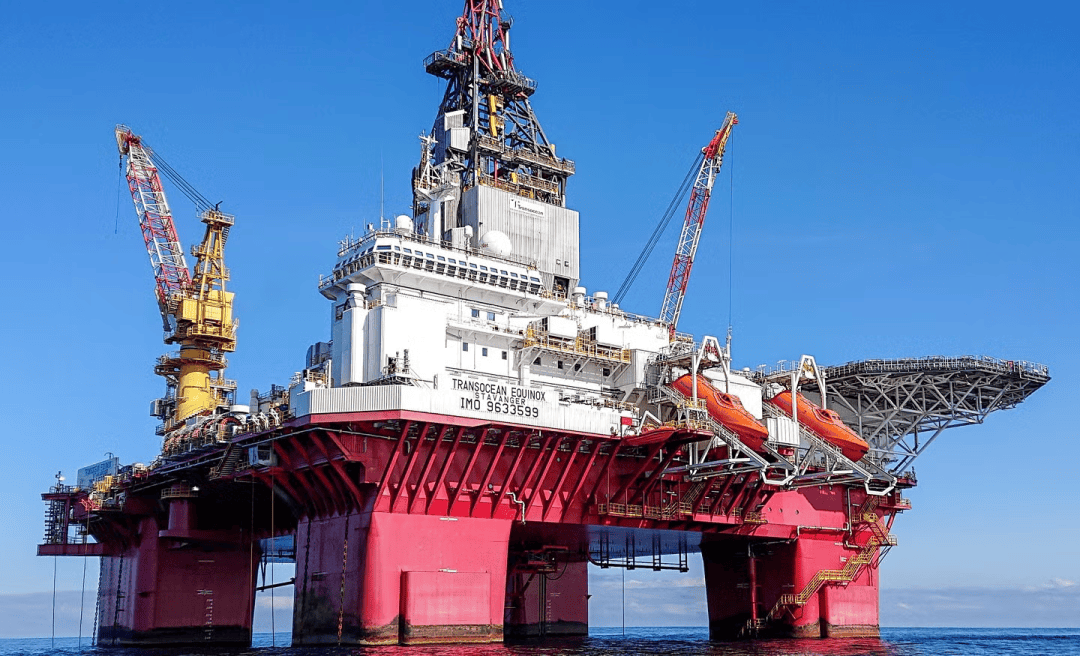
Group 1 - The core point of the article is the merger agreement between Transocean and Valaris, which will create the world's largest offshore drilling contractor with over 70 drilling platforms and a total value of nearly 120 billion RMB [1] - The acquisition is structured as an all-stock transaction valued at approximately 5.8 billion USD, equivalent to about 400.69 billion RMB, resulting in a combined company valuation of around 17 billion USD, or approximately 1,174.44 billion RMB [3] - Post-merger, Transocean shareholders will hold about 53% of the new company's equity, while Valaris shareholders will own the remaining 47% [3] Group 2 - The merger aims to achieve a high degree of asset complementarity between the two companies, creating a comprehensive service capability that covers all scenarios and water depths [3] - The new company will possess 73 drilling platforms, making it one of the largest fleets globally, with operations spanning ultra-deep water, harsh environments, and shallow water markets [3] - The fleet will include 33 ultra-deepwater drilling ships, 9 semi-submersible drilling platforms, and 31 modern jack-up drilling rigs, along with approximately 10 billion USD in contracts, ensuring stable operations for the next 1-2 years [3] Group 3 - Prior to the merger, Transocean was a leading offshore drilling platform operator with 27 mobile offshore drilling units, including 20 ultra-deepwater floating drilling platforms [4] - Valaris, on the other hand, was recognized for its diverse fleet and extensive operational experience across all major offshore basins, owning 49 offshore drilling units, including 13 ultra-deepwater drilling ships [4] - The merger is expected to accelerate the oligopolistic trend in the global offshore drilling industry, with the new company poised to dominate the high-end drilling market, particularly in the ultra-deepwater sector [5]


Rayonier(RYN) - 2025 Q4 - Earnings Call Transcript
2026-02-12 16:00
Financial Data and Key Metrics Changes - The company reported full-year Adjusted EBITDA of $248 million for 2025, an 8% increase over 2024, exceeding prior guidance [5][6] - Fourth-quarter Adjusted EBITDA was $62 million, down from $95 million in the prior year period [11][6] - Pro forma net income for the full year was $89 million, or $0.57 per share, with fourth-quarter pro forma net income of $32 million, or $0.20 per share [6][10] Business Segment Data and Key Metrics Changes - Southern Timber segment generated fourth-quarter Adjusted EBITDA of $32 million, down 8% from the prior year, due to lower net stumpage realizations [8][13] - Pacific Northwest Timber segment reported fourth-quarter Adjusted EBITDA of $5 million, a 24% decline from the prior year, primarily due to a 26% decrease in harvest volumes [18][17] - Real estate segment achieved full-year Adjusted EBITDA of $127 million, significantly above the original guidance range, with fourth-quarter Adjusted EBITDA of $33 million [19][20] Market Data and Key Metrics Changes - The company noted that rural HBU markets remained strong, contributing to the real estate segment's performance [6][20] - Pulpwood pricing in the Atlantic region was under pressure due to mill closures and increased supply, with average pricing down 27% compared to the prior year [14][16] - The company expects improved demand and pricing in local markets as sawmills ramp up production in response to higher lumber prices [15][19] Company Strategy and Development Direction - The merger with PotlatchDeltic is expected to create a premier land resources company with a diversified timberland portfolio and enhanced operational efficiencies [3][4] - The company plans to focus on disciplined capital allocation and creating long-term value through synergies from the merger [4][32] - The company is optimistic about the long-term value creation potential from land-based solutions, including solar and carbon capture projects [31][68] Management's Comments on Operating Environment and Future Outlook - Management expressed confidence in the merger's ability to deliver strategic and financial benefits, despite challenging market conditions [4][29] - The company anticipates a tightening of supply in the timber market due to the impact of Hurricane Helene, which should support improved market conditions over time [17][56] - Management remains optimistic about the long-term demand for timber, driven by an underbuilt housing stock and expected growth in housing starts [56][57] Other Important Information - The company repurchased approximately 110,000 shares at an average price of $26.31 per share prior to the merger announcement [12] - The company paid a special dividend of $1.40 per share due to taxable gains from the sale of its New Zealand joint venture [12] - The company finished the year with $843 million in cash and $1.1 billion in debt, maintaining a conservative leverage profile [13] Q&A Session Summary Question: Insights on real estate performance and drivers for 2026 - Management noted that real estate sales are lumpy and significantly impacted by larger transactions, with strong premiums to timberland value driving performance [37][39] Question: Share repurchase strategy and capital structure considerations - Management indicated that share repurchases are attractive given the stock price discount to net asset value, with $230 million remaining on the authorization [43][46] Question: Initial harvest guidance for the combined companies - Management explained that the guidance reflects a partial year contribution from PotlatchDeltic and is generally in line with historical sustainable yields [52][53] Question: Pulpwood market dynamics and pricing outlook - Management acknowledged challenges in the pulpwood market but expressed optimism for long-term improvements as supply pressures subside [56][79] Question: Opportunities in timberland M&A and wood products investments - Management stated that the timberland M&A market remains competitive, and while they will evaluate opportunities, share repurchases currently present the best value [64][66]

淮河能源(600575.SH):预计2025年净利润同比增加96.31%到107.97%
Ge Long Hui A P P· 2026-02-10 10:31
Core Viewpoint - Huaihe Energy (600575.SH) expects a significant increase in net profit for 2025, driven by the acquisition of a power group, which will enhance its financial performance [1] Financial Performance - The company anticipates a net profit attributable to shareholders of the parent company between 1.684 billion to 1.784 billion yuan for 2025, representing a year-on-year increase of 96.31% to 107.97% [1] - The expected net profit, excluding non-recurring gains and losses, is projected to be between 673 million to 773 million yuan, reflecting a year-on-year decrease of 14.59% to 1.91% [1] Acquisition Impact - The increase in net profit is attributed to the completion of the acquisition of the power group in December 2025, which will become a wholly-owned subsidiary of the company [1] - The acquisition is classified as a business combination under common control, leading to retrospective adjustments in the consolidated financial statements for the previous year [1] - Following the merger, the operational performance is expected to improve compared to the same period last year [1]

【环球财经】分析人士称力拓与嘉能可合并谈判破裂原因为估值分歧
Xin Hua Cai Jing· 2026-02-06 03:17
Core Viewpoint - The merger negotiations between major mining companies Rio Tinto and Glencore have collapsed due to valuation disagreements [1][2]. Group 1: Merger Negotiation Breakdown - Rio Tinto announced it would no longer consider a merger with Glencore, stating that it could not reach an agreement that would create value for its shareholders [1]. - Glencore's proposal included key terms that would allow Rio Tinto to retain the positions of Chairman and CEO, but Glencore felt this undervalued its contribution to the merged entity [1][2]. - Prior to the negotiations, the overall valuation split between Rio Tinto and Glencore was 69% to 31%, with Glencore seeking a more equitable 60% to 40% distribution [1][2]. Group 2: Valuation Perspectives - Glencore argued that the 69:31 ratio did not fairly reflect its long-term value creation potential through the merger, as it was based on a short-term market snapshot [2]. - The proposed 60:40 ratio was seen as a better representation of Glencore's asset portfolio, particularly its copper resource projects, which are expected to contribute significantly in the future [2]. - Analysts noted that Rio Tinto's withdrawal from negotiations could lead to challenges in diversifying its operations, particularly in copper, while being overly reliant on iron ore [2].