Fronx

Search documents
印度电动车政策濒死,铃木为何疯狂扩张
汽车商业评论· 2026-01-13 23:07
Core Viewpoint - Suzuki is strategically expanding its production capacity in India by investing approximately $550 million to increase annual production capacity by up to 1 million units, responding to rising domestic demand for vehicles [4][5][6]. Group 1: Production Expansion - Maruti Suzuki has announced plans to add a new plant in Gujarat, which will be its second passenger vehicle factory in the state, to address the current pressure on production capacity [8][12]. - The company currently has a total installed capacity of about 2.4 million vehicles, with peak capacity nearing 2.6 million, which is fully utilized [8][9]. - The new plant is part of a broader strategy where Suzuki aims to invest $8 billion in India over the next five to six years, positioning the country as a global production hub for electric vehicles [5][12]. Group 2: Market Demand and Sales Growth - Maruti Suzuki reported a record monthly sales figure of 178,646 units in December 2025, reflecting a year-on-year increase of 37% [4]. - The Indian automotive market is experiencing significant growth, with a 26.8% year-on-year increase in vehicle shipments to dealers in December 2025, marking the highest monthly growth for that year [8]. - The demand for entry-level models is strong, with an order backlog of approximately one and a half months, indicating robust consumer interest [4][8]. Group 3: Electric Vehicle Market Dynamics - Despite the growth in electric vehicle sales, which exceeded 270,000 units in 2025 (an 86% increase from 2024), the overall penetration rate of electric vehicles in the Indian passenger car market remains low at only 4% [15][16]. - The Indian government's electric vehicle manufacturing promotion plan has faced challenges, with no car manufacturers responding to the initiative, leading to its characterization as "nominally existent" [16][17]. - The uncertainty surrounding the government's electric vehicle policies has prompted Suzuki to focus on expanding production capacity and export capabilities to stabilize output and meet domestic and international demand [17].


日企海外产汽车返销日本数量将创30年来新高
日经中文网· 2025-12-05 02:51
Core Viewpoint - Honda and Suzuki are significantly increasing imports of vehicles from India to Japan, driven by lower labor costs and changing production strategies in the automotive industry [2][4]. Group 1: Import Trends - The sales of "reverse imports" (vehicles imported back to Japan) are projected to reach their highest level in 30 years by 2025, with a year-on-year increase of 19% in the first 11 months of 2025, totaling 102,332 units [2]. - Honda plans to import the Indian-made SUV "WR-V" starting in 2024, with reverse imports expected to reach 35,043 units in the same period [5]. - Suzuki will begin importing the Indian-made SUV "Fronx" in October 2024, with reverse imports increasing ninefold compared to the same period in 2023, reaching 39,009 units [7]. Group 2: Cost Competitiveness - Labor costs in India are significantly lower, with average monthly wages for factory workers in New Delhi at 37,583 rupees (approximately 2,958 RMB), compared to 295,849 yen (approximately 13,500 RMB) in Tokyo, making Indian production about one-fifth the cost of Japan [7]. - The depreciation of the yen has not deterred the increase in reverse imports, as the cost competitiveness of Indian manufacturing remains strong [4][8]. Group 3: Market Dynamics - India is projected to become the third-largest automotive market in the world by 2024, with sales expected to reach 5.22 million units, surpassing Japan's 4.42 million units [7]. - Japan's automotive sales are expected to decline for six consecutive years, falling below 5 million units by 2025 due to a decreasing population [8]. - The Japanese government is considering simplifying certification procedures for U.S. vehicles to increase imports from the U.S. following tariff negotiations [8].


Suzuki Motor to launch 8 new SUVs in India in next 5-6 years: SMC President
BusinessLine· 2025-10-29 13:24
Core Insights - Suzuki Motor Corporation (SMC) plans to launch 8 new SUVs in India over the next five to six years, aiming for a total product line-up of 28 models by that time [1][5] - Maruti Suzuki India (MSIL) targets a market share of 50% by FY31, which is considered a challenging goal compared to its historical performance [2][4] - The company's market share in India has decreased from approximately 52% in 2021 to around 40% currently due to increased competition [3] Market Strategy - India is identified as a critical market for SMC, with a strategy involving an investment of ¥1.2 trillion (approximately ₹70,000 crore) to enhance capacity and achieve the targeted market share [4] - MSIL aims to diversify its product offerings, catering to both entry-level buyers and higher-income customers with a variety of vehicles [5] - The company plans to increase exports, expecting to reach an export volume of 400,000 units this fiscal year, up from 330,000 units in FY25 [5][6] Environmental Strategy - SMC is committed to carbon neutrality and is adopting a 'multi-pathway' strategy that includes various powertrains such as hybrids, flex-fuel, hydrogen, and compressed biogas (CBG) vehicles [7][8] - The company is focusing on CBG in India, planning to establish nine biogas plants in Gujarat by 2027 in collaboration with local dairy cooperatives [8][9] - SMC's technology strategy emphasizes safety, performance, fuel efficiency, and energy minimization through optimized body weight and lean weight batteries [9]
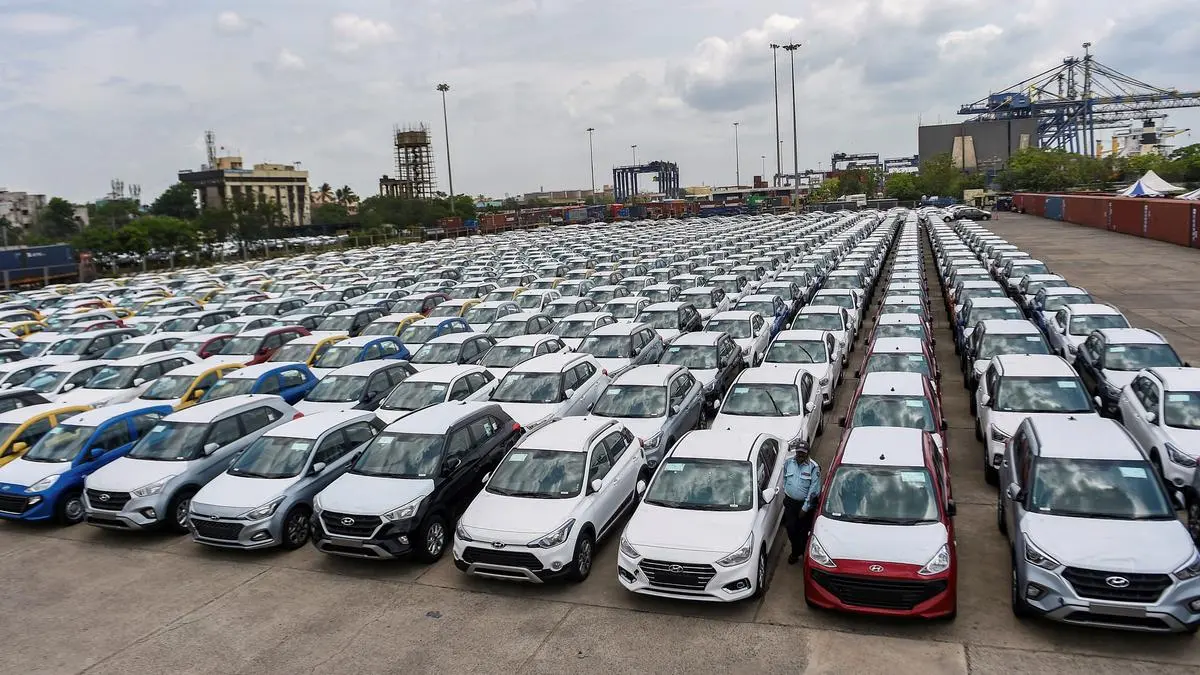
Auto exports firing on all cylinders in September, Q2 and H1 2025 with double digit growth
BusinessLine· 2025-10-16 07:45
Core Insights - Indian automobile exports have shown significant growth in September, Q2, and the first half of the financial year for both passenger vehicles (PVs) and two-wheelers (2Ws) [1][2][3] Passenger Vehicles (PVs) - Total PV exports in September increased by 30.3% year-on-year to 87,762 units compared to 67,379 units in September 2024 [1] - In Q2, total PV exports grew by 23% year-on-year to 241,554 units, up from 196,196 units in Q2 2024 [2] - For the first half of the financial year, total PV exports rose by 18.4% year-on-year to 445,884 units, compared to 376,679 units in April-September 2024 [3] Two-Wheelers (2Ws) - Total 2W exports in September grew by 15.3% year-on-year to 429,562 units, up from 372,481 units in September 2024 [2] - In Q2, total 2W exports increased by 25% year-on-year to 1,295,468 units, compared to 1,035,997 units in the same period last year [2] - For the first half of the financial year, total 2W exports grew by 24.2% year-on-year to 2,432,410 units, compared to 1,959,145 units in H1 2024 [7] Company Performance - Maruti Suzuki India (MSIL) achieved its highest-ever monthly exports of 42,204 units, growing by 52.2% year-on-year [5] - MSIL has already crossed 210,000 units in the first half of the year and aims to reach a target of 400,000 units for the fiscal year [6] - Hyundai Motor India has set a target of achieving 30% of its production as exports by 2030, focusing on markets in the Middle East and Latin America [6][7]
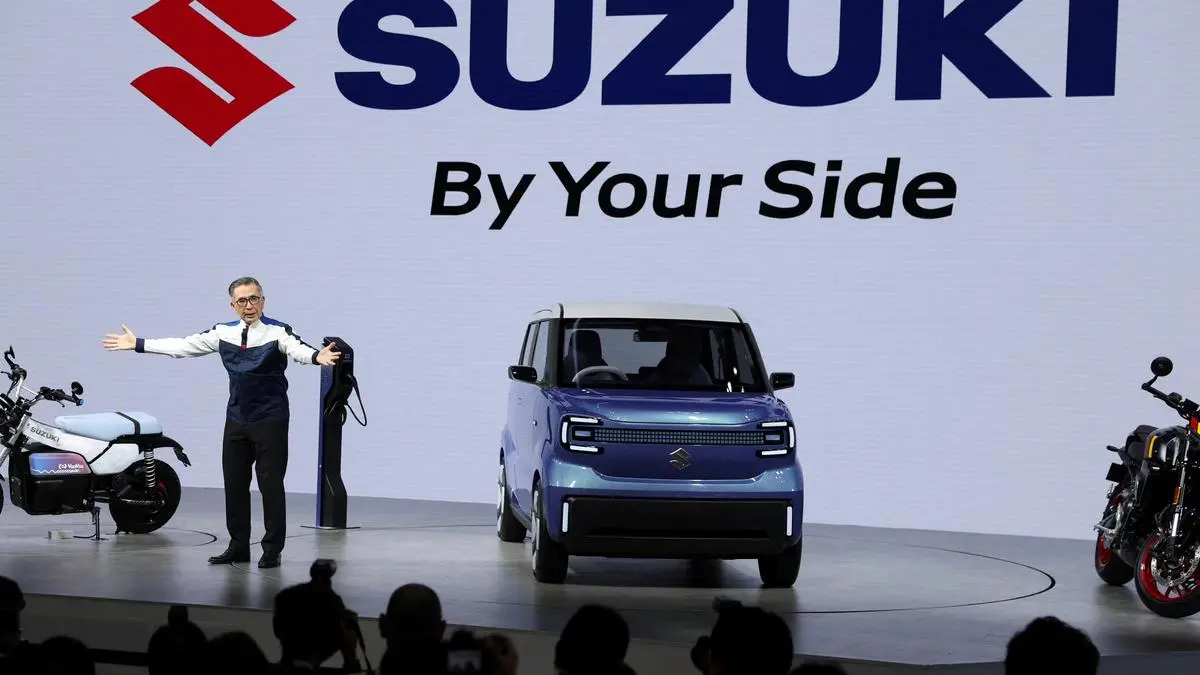
铃木首款纯电动车将上市,或成“最贵铃木”
日经中文网· 2025-09-11 08:00
Core Viewpoint - Suzuki's first electric vehicle (EV), the "e Vitara," is set to launch in January 2026, aiming to strengthen its position in the EV market as a latecomer [2][4]. Group 1: Product Details - The "e Vitara" is a small SUV available in two-wheel drive (2WD) and four-wheel drive (4WD) configurations [2]. - The starting price for the lowest 2WD model is approximately 3.9 million yen (around 188,000 RMB), with an expected range of over 400 kilometers under the WLTC mode [4]. - The "e Vitara" will become Suzuki's highest-priced model in its lineup [4]. Group 2: Market Context - The Japanese government offers subsidies for EV purchases, which will further reduce the effective price. The average subsidy for domestically produced EVs in Japan is about 810,000 yen (approximately 39,000 RMB) [4]. - In Suzuki's domestic sales for the fiscal year 2024, light vehicles (a unique category in Japan for vehicles with engine displacements under 660cc) account for 81% of total sales, although non-light vehicle sales are also increasing [4]. Group 3: Sales Performance - The small passenger car "SOLIO" and the SUV "Fronx" are expected to drive sales growth in the fiscal year 2025 [5]. - The "SWIFT" series of small passenger cars achieved a global cumulative sales milestone of over 10 million units, marking the first time a non-light vehicle from Suzuki has reached this significant figure [5].

“印度造”成为日本进口车的主角
日经中文网· 2025-06-05 07:58
Core Viewpoint - The Japanese import car market is undergoing significant changes, with Suzuki's Jimny Nomad leading sales, indicating a shift towards vehicles produced in India that match the quality of domestic cars [1][3]. Group 1: Suzuki's Performance - Suzuki's import car sales in Japan reached 3,990 units in April, an increase of 8,300% year-on-year, surpassing Mercedes-Benz and BMW [3]. - The Jimny Nomad, a five-door version of the popular Jimny, received overwhelming demand, with orders exceeding 50,000 within four days of its launch [3]. - Suzuki aims to develop India as an export base, planning to increase annual production capacity to 4 million units by 2031, with an investment of 1.2 trillion yen in the production system [3]. Group 2: Honda's Growth - Honda's import car sales in Japan from January to April reached 16,720 units, a 65% increase year-on-year, with the WR-V SUV contributing to this growth [4]. - The overall sales of Japanese cars imported from overseas increased by 33% in the same period, reaching 35,269 units, matching levels not seen since 1995 [4]. Group 3: Industry Implications - The rise in imported vehicles, particularly from India, poses a risk of hollowing out Japan's domestic automotive industry, as local production investments face challenges due to a shrinking market and increased tariff risks [5]. - Japanese automakers are at a crossroads, with companies like Toyota emphasizing the need to maintain domestic production targets amidst these changes [5].