
Zhipu AI

Search documents
Alibaba Group unveils Qwen3.5 as China's chatbot race shifts to AI agents
CNBC· 2026-02-17 03:11
Core Insights - Alibaba has launched its latest AI model series, Qwen3, which integrates traditional large language model capabilities with advanced dynamic reasoning to enhance its competitive edge in the Chinese AI market [1] Model Features - The Qwen3.5 AI model is available in an open-weight version for users to download, run, fine-tune, and deploy on their own infrastructure, alongside a hosted version on Alibaba's servers [2] - Qwen3.5 features improvements in performance and cost, with native multimodal capabilities that allow it to process text, images, and video simultaneously [3] - The model supports new coding and agentic capabilities, compatible with popular open-source AI agents like those from OpenClaw [3] Competitive Landscape - Local competitors such as ByteDance and Zhipu AI have also released upgraded models aimed at enhancing agent capabilities [5] - Qwen3.5 has 397 billion parameters, which is fewer than its predecessor, but it has shown significant performance improvements based on self-reported benchmarks [5] - Benchmark tests indicate that Qwen3.5's performance is comparable to leading models from OpenAI, Anthropic, and Google DeepMind, although these comparisons are self-reported [6] Language Support and Future Developments - The new Qwen3.5 models support 201 languages and dialects, an increase from the previous generation's 82 [7] - Alibaba is expected to release more open-weight models during the Chinese New Year, as indicated by the technical lead of Alibaba Cloud's Qwen team [7] Industry Trends - The release of Anthropic's Claude AI agent tools has prompted other American AI companies to accelerate the development of agentic capabilities [8] - Industry leaders, including OpenAI and Google DeepMind, acknowledge that Chinese AI models are rapidly advancing and are only months behind their Western counterparts [8]


It's been a big — but rocky — week for AI models from China. Here's what's happened
CNBC· 2026-02-14 06:47
Core Insights - Chinese tech giants, including Alibaba, ByteDance, and Kuaishou, have launched new AI models that demonstrate significant advancements in robotics and video generation, positioning them competitively against U.S. counterparts [2][4][12] Group 1: Alibaba's RynnBrain - Alibaba's DAMO Academy introduced RynnBrain, an AI model aimed at enhancing robots' ability to understand and interact with their environment, showcasing capabilities such as counting and picking up objects [4][6] - RynnBrain features built-in time and space awareness, allowing robots to track task progress and remember past events, making them more reliable in complex environments [6][7] - This innovation places Alibaba in direct competition with Nvidia and Google, who are also developing advanced AI models for robotics [6] Group 2: ByteDance's Seedance 2.0 - ByteDance's Seedance 2.0 is a video generation AI model that can create realistic videos from text prompts, including the ability to incorporate other videos and images [7][8] - Users have noted significant improvements in AI video generation technology over the past two years, with Seedance 2.0 being recognized for its controllability, speed, and production efficiency [10] - Despite its advancements, Seedance 2.0 faced challenges, including the suspension of a feature that generated voices based on uploaded images due to consent concerns [11] Group 3: Kuaishou's Kling 3.0 - Kuaishou launched Kling 3.0, a video generation model that boasts upgrades in consistency, photorealistic output, and extended video duration, with native audio generation capabilities [12] - The success of Kuaishou's Kling models has contributed to a more than 50% increase in its share price over the past year [13] Group 4: Other AI Model Releases - Zhipu AI released GLM-5, an open-source large-language model that reportedly approaches Anthropic's Claude Opus 4.5 in coding benchmarks [13][14] - MiniMax also launched its updated M2.5 open-source model, enhancing AI agent tools designed for task automation, leading to a surge in its shares [14]


A year on from DeepSeek shock, get set for flurry of low-cost Chinese AI models
Yahoo Finance· 2026-02-12 06:26
By Eduardo Baptista BEIJING, Feb 12 (Reuters) - One year after Chinese startup DeepSeek rattled the global tech industry with the release of a low-cost artificial intelligence model, its domestic rivals are better prepared, vying with it to launch new models, some designed with more consumer appeal. The Hangzhou-based firm's meteoric rise in early 2025, during China's Spring Festival holiday, upended China's AI industry, pushing low-cost, open-source models to the forefront of its AI ecosystem. This ...
American AI coding agents are impressive. But so are China’s
CNBC Television· 2026-01-26 21:03
Zhipu AI just went public and its new coding tool is so popular they’re already limiting access. The most surprising part? The demand isn't just coming from China… its coming from American developers. Baseten’s Tuhin Srivastava joins us to discuss the infrastructure shift and whether American moats are evaporating. ...
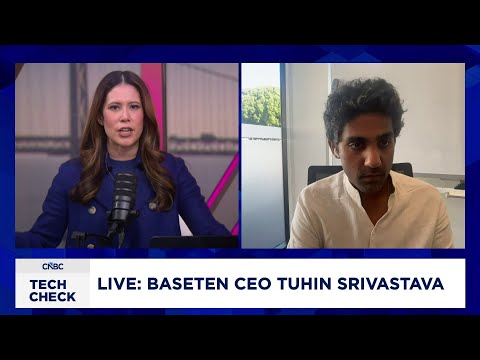
LIVE: Baseten's Tuhin Srivastava on China AI Coding breaking into the U.S. — 1/26/2026
CNBC Television· 2026-01-26 14:42
Zhipu AI just went public and its new coding tool is so popular they’re already limiting access. The most surprising part? The demand isn't just coming from China… its coming from American developers. On today’s livestream: The test: we build a China-market tracker using GLM 4.7 The shift: why US builders are quietly moving to Chinese open source models The expert: Baseten’s Tuhin Srivastava joins us to discuss the infrastructure shift and whether American moats are evaporating For access to live and exclus ...

Hugging Face回看“DeepSeek时刻”:过去一年,中国AI如何改变全球开源格局?
硬AI· 2026-01-21 09:19
Core Viewpoint - The article emphasizes that the release of DeepSeek R-1 marks a pivotal moment in the AI landscape, breaking down barriers in technology, application, and psychology, thus leading to a significant shift towards open-source AI in China and globally [3][12]. Group 1: DeepSeek Moment and Barrier Breakdown - The release of DeepSeek R-1 on January 20, 2025, is identified as a watershed moment that transformed the AI development landscape, lowering the barriers to technology and application [3][12]. - Prior to R-1, China's AI industry was predominantly focused on closed-source models, but R-1 changed this dynamic, making open-source a strategic choice for Chinese tech companies [6][12]. - R-1's significance lies not in being the strongest model but in its ability to reduce three critical barriers: 1. **Technical Barrier**: R-1 made advanced reasoning capabilities downloadable and adjustable, treating reasoning as a reusable module [8]. 2. **Adoption Barrier**: The MIT license allowed for rapid deployment in production environments, shifting discussions from model performance to deployment strategies [9]. 3. **Psychological Barrier**: The mindset shifted from "Can we do this?" to "How do we do this well?", leading to significant changes in decision-making among companies [10]. Group 2: Major Players and Strategic Restructuring - The article notes a substantial increase in open-source contributions from major players like Baidu, Alibaba, and Tencent, with Baidu's release volume on Hugging Face rising from zero to over 100 in 2025, and ByteDance and Tencent's contributions increasing by eight to nine times [15][13]. - The focus of competition has shifted from individual model performance to ecosystem development, with companies like Zhipu AI and Alibaba not only releasing model weights but also building engineering systems and ecosystem interfaces [13][14]. - The article highlights that the collective rise of Chinese AI players is driven by shared technological, economic, and regulatory pressures, leading to a competitive alignment among companies [17]. Group 3: Market Impact and Global Response - The article reveals that in the category of newly built models (less than one year old), Chinese models have surpassed those from any other country, including the U.S., in download volume [18]. - The global market's response to China's AI rise includes efforts from the U.S. and France to accelerate the release of open-source models to maintain competitiveness, although many startups and researchers globally are increasingly relying on Chinese-developed models [21][22]. - The article concludes that the world is reacting to this shift, sparking a new wave of open-source enthusiasm, with expectations for significant releases from both China and the U.S. in 2026, focusing on architectural trends and hardware choices [22].

Hugging Face回看“DeepSeek时刻”:过去一年,中国AI如何改变全球开源格局?
Hua Er Jie Jian Wen· 2026-01-21 02:41
Core Insights - The article discusses the significant impact of the release of DeepSeek R-1 on the global open-source AI ecosystem, marking a pivotal moment for China's AI development and its influence worldwide [1][3]. Group 1: Transformation of AI Landscape - The release of DeepSeek R-1 in January 2025 is identified as a watershed moment that lowered barriers to technology and application, leading to a shift from closed-source to open-source models in China [1][5]. - Major Chinese tech companies like Baidu, Alibaba, and Tencent, along with startups like Moonshot, have significantly increased their open-source investments, resulting in Chinese models surpassing U.S. models in download volume on Hugging Face [1][6]. Group 2: Breaking Down Barriers - DeepSeek R-1 effectively dismantled three critical barriers: technical, adoption, and psychological, transforming the perception of open-source from a tactical choice to a long-term strategy for Chinese tech companies [3][5]. - The article emphasizes that the focus of competition has shifted from individual model performance to ecosystem development, with companies now prioritizing engineering systems and application scenarios [6][10]. Group 3: Market Dynamics and Global Response - The article notes that the rise of Chinese AI models is not merely a result of collaboration but is driven by shared technological, economic, and regulatory pressures, leading to a competitive alignment among companies [8][11]. - Global reactions indicate a reliance on Chinese-developed models, with many startups and researchers defaulting to these models, highlighting the growing influence of Chinese AI in international markets [11].

Montage Technology plans up to $1 billion Hong Kong share sale in January, sources say
Yahoo Finance· 2026-01-08 12:00
Group 1 - Montage Technology plans a second listing in Hong Kong with a share offering between $800 million to $1 billion, potentially becoming the largest deal in the city since Zijin Gold International's $3.53 billion listing in September [1][2] - The listing is expected to take place on January 26, following the company's successful hearing at the Hong Kong stock exchange [2] - The surge in AI and chip IPOs in Hong Kong and mainland China is driven by Beijing's efforts to enhance domestic capabilities and reduce reliance on U.S. technology [2][3] Group 2 - Montage Technology, founded in 2004, specializes in designing fabless integrated circuits for data flow in servers and data centers, with a current market cap of approximately $22 billion [4] - The company reported a 59% revenue increase from 2023 to 2024, reaching 3.64 billion yuan ($521.27 million), with a net profit of 1.34 billion yuan and a gross margin exceeding 58% [5] - Montage Technology holds a 36.8% share of the global memory interconnect chip market in 2024, according to a draft prospectus [5] Group 3 - Proceeds from the upcoming listing will be allocated to enhance research and development in interconnect chips, invest in marketing, and pursue strategic investments [6]
Zhipu AI, other Chinese tech firms rise in Hong Kong debut as race with US heats up
Yahoo Finance· 2026-01-08 02:12
Core Insights - Three Chinese technology firms debuted successfully, raising a total of $1.19 billion, which supports Beijing's ambition to enhance its competitiveness in high-tech sectors against the U.S. [1][3] - All three companies experienced significant increases in their stock prices on debut, indicating strong market interest [1][2] Company Summaries - Zhipu AI, an artificial intelligence company, opened 3.3% higher than its offer price of HK$116.20, trading around HK$126.00. It raised HK$4.35 billion, valuing the company at approximately HK$51 billion, with plans to allocate most proceeds for research and development [1][4] - Shanghai Iluvatar CoreX, a semiconductor firm, started trading at 31.6% above its offer price of HK$144.60, reaching around HK$162.50 [2] - Shenzhen Edge Medical, a surgical robotics company, jumped 36.4% above its offer price of HK$43.24, trading at around HK$56.00 [2] Industry Context - The successful listings of these firms come as Chinese authorities expedite AI and semiconductor listings to create domestic alternatives to advanced U.S. technology [3] - Companies like Huawei's AI server spin-off xFusion and memory chipmaker ChangXin Memory Technologies are also preparing for IPOs, indicating a broader trend in the tech sector [3] - Zhipu AI has been recognized as a leading player in China's AI sector, with its CEO noting that the company's overseas expansion is part of normal business operations [5]
Chinese tech companies, led by Zhipu AI, climb in Hong Kong debut
Yahoo Finance· 2026-01-08 02:12
Core Insights - Three Chinese technology firms debuted successfully in Hong Kong, raising a total of HK$9.3 billion ($1.19 billion), indicating a positive outlook for new listings in the region [1][5] - All debuting companies traded above their offer prices, with Zhipu AI opening 3.3% higher, Shanghai Iluvatar CoreX rising 31.6%, and Shenzhen Edge Medical increasing by 36.4% [1][2] Company Summaries - Zhipu AI, an artificial intelligence company, raised HK$4.35 billion at an offer price of HK$116.20, achieving a valuation of approximately HK$51 billion. The majority of the proceeds will be allocated for research and development [3][4] - Shanghai Iluvatar CoreX, a semiconductor firm specializing in general-purpose GPUs, raised HK$3.48 billion with an offer price of HK$144.60, resulting in a market capitalization of around HK$36.8 billion. The funds will primarily support R&D in chips, accelerators, and software [4] - Shenzhen Edge Medical, a surgical robotics company, raised about HK$1.12 billion, which will be used for R&D, commercialization, manufacturing capacity, and strategic acquisitions. Key investors include Abu Dhabi Investment Authority and Tencent [5] Market Context - The recent debuts are part of a broader initiative by Chinese authorities to accelerate AI and chip listings, aiming to bolster domestic alternatives to advanced U.S. technology [2] - The performance of these companies will be crucial in determining if Hong Kong can maintain the momentum from last year's IPO resurgence, which saw $37.2 billion raised from 115 new listings, the highest since 2021 [5][6] Upcoming Listings - The IPO pipeline is expanding, with MiniMax Group and OmniVision Integrated Circuits set to begin trading soon, indicating continued interest in the tech sector [6]