
中美三个联合公报

Search documents
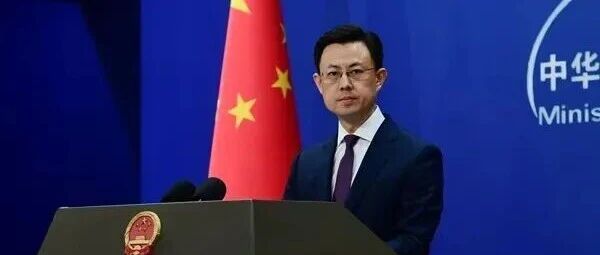
特朗普可能在访华后签署美对台军售?中方回应
第一财经· 2026-03-13 08:20
Group 1 - The article reports that a U.S. arms sale plan to Taiwan, including advanced interceptors, is awaiting President Trump's approval, potentially to be signed after his visit to China [2] - China's Ministry of Foreign Affairs has reiterated its strong opposition to U.S. arms sales to Taiwan, emphasizing the need for the U.S. to adhere to the One China principle and the three joint communiqués, particularly the August 17th communiqué [2]

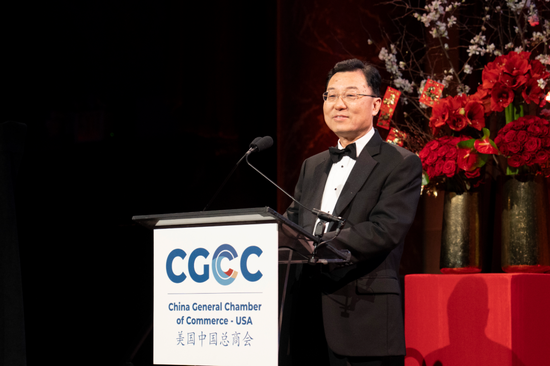
驻美大使谢锋最新主旨演讲
Xin Lang Cai Jing· 2026-01-16 08:54
Core Viewpoint - The speech by Chinese Ambassador Xie Feng emphasizes the importance of peace, development, and cooperation in the face of increasing uncertainties in international relations, highlighting three unchanging principles regarding China-U.S. relations [2][9]. Group 1: Key Messages from the Speech - Xie Feng outlines three unchanging principles: the enduring trend towards peace, development, and cooperation regardless of international changes [2][8] - The historical logic that mutual benefit arises from cooperation while conflict leads to mutual harm remains unchanged in the evolution of China-U.S. relations [9] - China's commitment to high-quality development and high-level openness is steadfast, irrespective of external circumstances [9] Group 2: Call for Cooperation - Xie Feng stresses the importance of mutual respect, peaceful coexistence, and win-win cooperation as fundamental principles for a correct relationship between China and the U.S. [9] - The Chinese side expresses sincerity in developing U.S.-China relations while emphasizing the need to uphold principles, particularly regarding sovereignty and security [9] - The ambassador encourages the U.S. to take concrete actions to implement the important consensus reached during the recent summit between the two countries' leaders [9] Group 3: Support for Business Community - Xie Feng commends the U.S.-China Business Council for overcoming challenges and actively serving Chinese enterprises in the U.S., fostering business exchanges between the two countries [3][9] - He quotes a line from Chairman Mao Zedong to inspire the business community to face challenges head-on and seize opportunities for mutual cooperation [3][9] - The event was attended by over 300 representatives from member companies of the U.S.-China Business Council, business leaders, experts, scholars, media, and friends [4]
中国驻美国大使谢锋:美方应与中方相向而行
Xin Lang Cai Jing· 2026-01-16 08:49
Core Viewpoint - The Chinese Ambassador to the U.S., Xie Feng, emphasizes the importance of mutual respect, peaceful coexistence, and win-win cooperation as fundamental principles for the development of Sino-U.S. relations [1] Group 1 - The Chinese side expresses sincerity in developing Sino-U.S. relations while adhering to principles, particularly regarding sovereignty and security issues [1] - The "One China" principle and the three joint communiqués between China and the U.S. are stated as the only guidelines for handling Taiwan-related matters [1] - The U.S. is urged to align with China and take concrete actions to implement the important consensus reached during the meeting between the two countries' leaders in Busan [1]
人民军队日益强大的军事实力是对台海和平稳定和台湾同胞安全福祉的坚定守护
Xin Lang Cai Jing· 2025-12-30 19:09
Core Viewpoint - The military exercise "Mission of Justice-2025" organized by the Eastern Theater Command of the People's Liberation Army (PLA) is a response to increasing military cooperation between the U.S. and Taiwan, emphasizing China's commitment to safeguarding its sovereignty and territorial integrity [2][6]. Group 1: Legitimacy and Justification of the Exercise - The exercise is deemed legitimate and justified as it occurs within China's territorial waters and airspace, countering U.S. arms sales to Taiwan, which violate the One China principle [2][3]. - Experts assert that the military drill serves as a warning to "Taiwan independence" forces and external interference, reinforcing the PLA's readiness to respond decisively to any provocations [2][4]. Group 2: Key Features of the Exercise - The exercise features three main characteristics: immediate engagement with live-fire drills, a strategic encirclement of Taiwan, and a tightening of operational control around the island [4][5]. - The PLA demonstrated its capability to conduct joint operations, showcasing its ability to cover critical energy facilities, ports, and military bases in Taiwan with its firepower [4][5]. Group 3: Regional Reactions and Implications - The exercise has garnered significant attention in Taiwan, with local voices interpreting it as a stern warning against the current administration's provocative actions and reliance on foreign support [6][7]. - There is a growing sentiment among Taiwanese citizens that peace and reconciliation with the mainland are essential for stability and prosperity, countering the divisive policies of the current government [6][7].
正义之师行正义使命——军事专家谈“正义使命-2025”演习
Xin Hua She· 2025-12-30 13:27
Core Viewpoint - The "Justice Mission-2025" military exercise conducted by the People's Liberation Army (PLA) is a necessary action to maintain peace and stability in the Taiwan Strait and to advance the process of national reunification, responding to increasing military cooperation between the U.S. and Taiwan [2][3]. Summary by Sections Legitimacy of the Exercise - The military exercise is justified and legitimate, as it is conducted within China's territory and airspace, countering recent U.S.-Taiwan military collaborations that violate the One China principle [3][4]. - Experts emphasize that the exercise serves as a warning to separatist forces and external interference, asserting that any attempts to cross red lines will be met with strong military responses [3][4]. Characteristics of the Exercise - The exercise features three main characteristics: 1. Immediate engagement with live-fire drills, indicating the PLA's readiness to integrate training and combat [4]. 2. A strategic encirclement of Taiwan, demonstrating the PLA's capability to cut off external support and emphasize the necessity of reunification with the mainland [5]. 3. A tightening of the encirclement around Taiwan, showcasing the PLA's ability to exert pressure on separatist forces and external influences through comprehensive military strategies [5]. Readiness of the PLA - The PLA is portrayed as being always ready for combat, with a commitment to maintaining peace and stability in the Taiwan Strait while being prepared to respond decisively if necessary [6][7]. - The military's advancements in technology and strategic capabilities are highlighted as essential for safeguarding peace and the well-being of Taiwan compatriots [6][7].
【双语】外交部例行记者会 / MFA Regular Press Conference (2025年12月19日)
Xin Lang Cai Jing· 2025-12-20 05:46
Group 1: U.S. Arms Sales to Taiwan - The U.S. has approved large-scale arms sales to Taiwan, which China views as a gross interference in its internal affairs and a serious threat to its sovereignty and territorial integrity [4][5][6] - China has expressed strong opposition to the arms sales, stating that it undermines peace and stability in the Taiwan Strait and sends a wrong message to "Taiwan independence" separatists [6][7] - China emphasizes that any actions to arm Taiwan will face serious consequences and that the real threat to peace in the Taiwan Strait comes from separatist activities and external interference [6][7] Group 2: China's Position on U.S. Legislation - The "National Defense Authorization Act for Fiscal Year 2026" has been signed into law in the U.S., which includes negative content regarding China, prompting strong discontent from China [14][15] - China urges the U.S. to adopt an objective view of China's development and to refrain from implementing negative provisions in the Act, warning of strong measures if the U.S. continues its current course [15][16] Group 3: Japan's Military Developments - Reports indicate that some Japanese officials are advocating for Japan to possess nuclear weapons, which China views as a serious issue and a dangerous attempt to breach international law [17][18] - China has criticized Japan's recent military policy adjustments and the potential revival of militarism, urging Japan to reflect on its historical actions and adhere to international norms [19][20] - The international community is called to recognize Japan's hypocritical stance on nuclear non-proliferation and disarmament, especially in light of Japan's historical aggressions [20][21] Group 4: Rare Earth Exports - China has reportedly resumed issuing licenses for rare earth exports, which is a significant topic in recent diplomatic discussions with India [24][25] - China's export control on rare earths is framed as a standard international practice, emphasizing its commitment to world peace and regional stability [25]

国防部回应美对台111亿美元军售
Xin Lang Cai Jing· 2025-12-19 11:15
Core Viewpoint - The Chinese Ministry of National Defense strongly opposes the recent approval by the U.S. for a military sale to Taiwan, which amounts to over $11.1 billion, marking the largest arms sale plan to Taiwan by the U.S. to date [1] Group 1: U.S. Arms Sale to Taiwan - The U.S. Department of Defense has approved a military sale to Taiwan totaling over $11.1 billion, which is described as the largest arms sale plan to Taiwan by the U.S. [1] - The Chinese government asserts that this arms sale violates the One China principle and the three joint communiqués between China and the U.S., damaging China's sovereignty and security interests [1] Group 2: China's Response - The Chinese Ministry of National Defense has expressed strong dissatisfaction and firm opposition to the U.S. arms sale, stating that it sends a serious wrong signal to "Taiwan independence" separatist forces [1] - The Ministry emphasizes that any attempts at "Taiwan independence" will ultimately lead to self-destruction and that the Chinese military will continue to strengthen its training and preparedness to safeguard national sovereignty and territorial integrity [1]
美方批准对台总额逾111亿美元军售 中国国防部强硬表态
Yang Shi Wang· 2025-12-19 09:53
Core Viewpoint - The article discusses the approval of a significant arms sale by the U.S. to Taiwan, amounting to over $11.1 billion, which is described as the largest weapon sales plan by the U.S. to Taiwan. The Chinese government expresses strong opposition to this action, citing violations of the One China principle and damaging effects on China’s sovereignty and security interests [1]. Group 1 - The U.S. Department of Defense approved an arms sale to Taiwan totaling over $11.1 billion, marking the largest military sales plan to Taiwan [1]. - The Chinese government views this arms sale as a serious violation of the One China principle and the three joint communiqués between China and the U.S., which undermines strategic mutual trust [1]. - The Chinese government has expressed strong dissatisfaction and firm opposition to the U.S. arms sale, stating that it has lodged serious representations to the U.S. [1]. Group 2 - The Chinese government asserts that the historical trend towards complete unification cannot be obstructed by any force, emphasizing that "Taiwan independence" forces are jeopardizing the safety and well-being of Taiwanese people [1]. - The article highlights that the U.S. is accused of supporting "Taiwan independence," which could lead to self-destructive consequences for those involved [1]. - The Chinese military is expected to continue strengthening its training and preparedness to safeguard national sovereignty and territorial integrity against "Taiwan independence" and external interference [1].
超111亿美元,美国宣布史上最大对台军售,都有些啥?
Guan Cha Zhe Wang· 2025-12-19 03:16
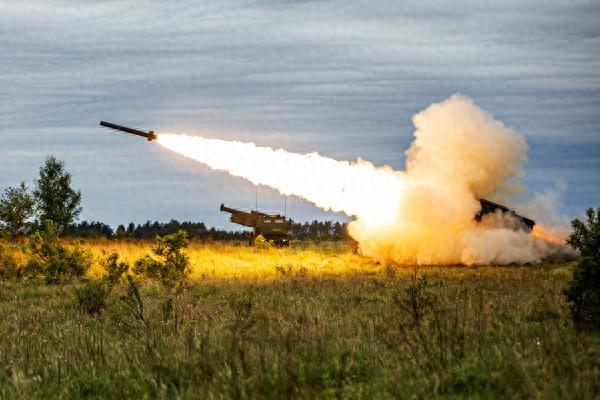
Core Viewpoint - The Trump administration announced a historic arms sale to Taiwan valued at over $11.1 billion, marking the largest U.S. arms sale to Taiwan to date, and this is the second arms sale plan during Trump's tenure [1] Group 1: Arms Sale Details - The proposed arms sale includes 82 sets of HIMARS long-range precision strike systems and 420 sets of Army Tactical Missile Systems, with a total transaction value exceeding $4 billion [1] - Additional items in the sale include 60 self-propelled howitzers and associated equipment valued at over $4 billion, as well as drone equipment worth over $1 billion [1] - Other components of the arms package consist of military software valued at over $1 billion, Javelin anti-tank missiles and TOW missiles totaling over $700 million, helicopter spare parts worth $96 million, and Harpoon missile refurbishment components valued at $91 million [1] Group 2: Taiwan's Defense Spending Plans - Taiwan plans to increase its defense budget to 3.3% of its GDP next year, aiming to reach 5% by 2030 [2] - A supplementary defense budget of $40 billion for 2026 to 2033 has been proposed, which includes funding for a high-level detection and interception air defense system named "Taiwan Dome" [2] Group 3: Reactions from China - The Chinese government strongly condemned the arms sale, stating that Taiwan is a core interest and that the U.S. is violating the One China principle and damaging China's sovereignty and security [5][6] - Chinese officials warned that the arms sale sends a serious wrong signal to pro-independence forces in Taiwan and emphasized that any attempts at "Taiwan independence" would be met with strong resistance [5][6]
国台办正告:如果“台独”敢突破红线,必将迎头痛击
Xin Lang Cai Jing· 2025-12-18 14:23
Group 1 - The U.S. Department of Defense announced a military sale to Taiwan valued at approximately $11 billion, which the Taiwanese government welcomed as a demonstration of its self-defense determination [1][3] - The spokesperson for the State Council Taiwan Affairs Office emphasized that the Taiwan issue is a core interest of China and a red line in U.S.-China relations, condemning the U.S. for interfering in China's internal affairs and violating the One China principle [1][3] - The spokesperson called for the U.S. to stop arming Taiwan and supporting separatist forces, urging adherence to the One China principle and the commitments made by U.S. leaders regarding Taiwan [1][3] Group 2 - The Taiwanese government, under the Democratic Progressive Party (DPP), is accused of relying on the U.S. for independence and promoting military solutions, which could turn Taiwan into a "powder keg" and endanger its citizens [2][4] - The DPP's actions are characterized as harmful to peace and stability, with a warning that any attempts to cross the red line of independence will be met with strong retaliation [2][4] - The statement highlights the DPP's perceived role as a "peace destroyer" and "crisis maker," urging the Taiwanese public to recognize the dangers of the DPP's policies [2][4]