乡村旅游发展

Search documents
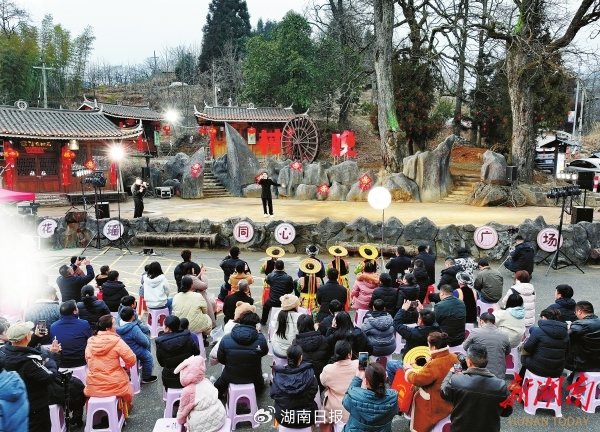
邵阳市崇木凼村——村晚慰乡愁| 古村年味⑦
Xin Lang Cai Jing· 2026-02-16 10:55
Core Viewpoint - The article highlights the cultural significance and community engagement of the village evening event in Chongmudang Village, showcasing the blend of traditional Yao customs with modern festivities, which has become a platform for local talent and tourism development [12][14][20]. Group 1: Cultural Significance - The village evening event, held on February 5, marks the beginning of spring and is a traditional celebration for the Yao community, featuring music, dance, and local customs that have been passed down for a thousand years [3][12]. - The event serves as a gathering point for the community, where villagers come together to celebrate, perform, and share their cultural heritage, creating a vibrant atmosphere filled with joy and nostalgia [5][14]. Group 2: Community Engagement - Local residents actively participate in the event, with performances from children and adults alike, showcasing their talents and stories, which fosters a sense of pride and belonging within the community [9][15]. - The village evening has evolved into a platform for local artists and educators, with individuals like Yuan Shuxiong and Tan Meizhen contributing to the cultural and educational development of the village [14][15]. Group 3: Economic Impact - The village evening has significantly boosted local tourism, with projections indicating that by 2025, the village will host over 210 million visitors, generating more than 5 billion yuan in tourism revenue [16][20]. - The rise in tourism has led to the establishment of over 500 homestays in the area, providing economic opportunities for residents and increasing their average annual income from less than 800 yuan in 2012 to 21,500 yuan by 2025 [20][21]. Group 4: Future Prospects - The event is set to continue evolving, with plans for more themed village evenings and increased community involvement, which will further enhance the cultural and economic landscape of Chongmudang Village [16][20]. - The integration of modern technology, such as live streaming, is also being utilized to promote local culture and products, expanding the reach of the village's offerings beyond geographical boundaries [20].

(新春见闻)“空心侨乡”蝶变“创客天堂”
Xin Lang Cai Jing· 2026-02-09 13:06
Group 1 - The historical site of Tangkou in Kaiping, Guangdong, has transformed from a declining area with only 9 permanent residents to a vibrant hub with over 2,000 entrepreneurs and 372 startups, attracting more than 1 million visitors annually [1] - The "Cangdong Plan" initiated by scholars from Wuyi University in 2009 has played a crucial role in revitalizing the area, turning it from an "empty overseas Chinese town" into a "maker paradise" [1] - The ongoing construction of the "Kaiping World Heritage 1905 International Art Village" project aims to further enhance the area's appeal, with significant improvements in infrastructure and aesthetics [1] Group 2 - The coffee shop owner Liang Yanfen has successfully created a unique "Chinese cheese" fermented bean curd coffee, achieving daily sales of over 100 cups, which can double during holidays, consuming 600 cans of fermented bean curd annually [2] - The "Xiangyu Homestay" has seen a surge in bookings, with the owner, a returning veteran, reporting an annual revenue exceeding 10 million RMB, and a 30% to 40% increase in orders compared to last year [2] - The core area of Tangkou, covering only 0.13 square kilometers, is projected to exceed 1.1 million visitors by 2025, with expectations for even higher traffic during the upcoming Spring Festival [2]
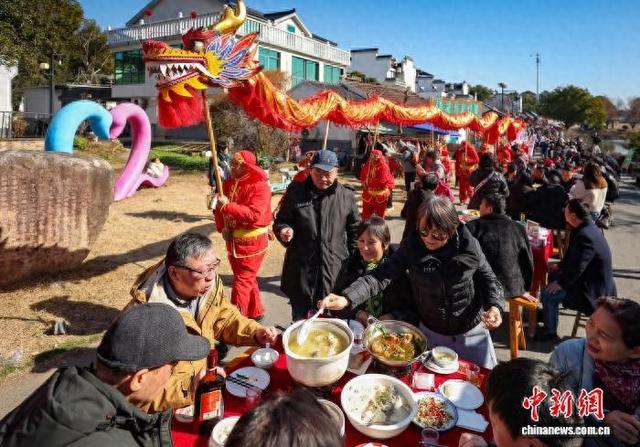
南京高淳桠溪千米长街宴热闹开席
Xin Lang Cai Jing· 2026-01-11 14:10
Core Viewpoint - The Yaxi International Slow City Long Street Feast in Nanjing's Gaochun district successfully showcases local farmhouse cuisine, homestay development, and cultural heritage, while effectively promoting rural tourism [2][5][19] Group 1: Event Details - The event took place on January 11, featuring over 450 tables set along a road stretching more than 1600 meters [2][4][18] - The atmosphere was festive, highlighted by local culinary specialties, authentic farmhouse flavors, and folk performance parades [2][5][16] Group 2: Impact on Local Economy - The Long Street Feast serves as a platform to display local agricultural products and cultural uniqueness, contributing to the growth of rural tourism [5][19] - The event not only attracts local residents but also engages visitors, including international students from Nanjing University of Science and Technology and Nanjing University of Posts and Telecommunications [11][13]
他们在昭化古城,让千年历史“活”在当下
Xin Hua Wang· 2025-12-19 20:26
Core Viewpoint - The article highlights the revitalization efforts of the ancient city of Zhaohua in Sichuan Province, focusing on cultural preservation and rural tourism development since 2012, aiming to restore the city's historical significance and improve residents' living conditions [1]. Group 1: Historical Significance - Zhaohua Ancient City, with over 2300 years of history, is recognized as a well-preserved ancient city from the Three Kingdoms period, located at the confluence of three rivers [1]. - The city is referred to as "the throat of the whole Shu" and "the lock of northern Sichuan," emphasizing its strategic importance [1]. Group 2: Revitalization Efforts - Since 2012, Zhaohua District has initiated a series of protective measures for traditional villages, aiming to enhance the village environment while promoting rural tourism [1]. - The revitalization efforts have transformed the chaotic living conditions of residents, allowing the ancient city to regain its vitality [1]. Group 3: Cultural Guardians - Four individuals closely connected to Zhaohua Ancient City are highlighted: - Zhai Zhigang, who runs a restaurant and is involved in cultural heritage protection [3][5]. - Gou Huan, a fifth-generation inheritor of the intangible cultural heritage of Sichuan's storytelling art, who performs in the city [7][9]. - Yang Mo, a post-95 tea house owner who connects the past and present through tea culture [10][11][13]. - Rao Bin, a collector of Han dynasty bricks, who has been gathering artifacts since his youth [14][15][16][17]. Group 4: Community Engagement - The article emphasizes the mutual nourishment between the city and its people, showcasing how the residents contribute to the cultural and historical narrative of Zhaohua [1]. - Various activities, such as local markets and craft-making, illustrate the community's engagement in preserving and promoting their heritage [20][21][25].
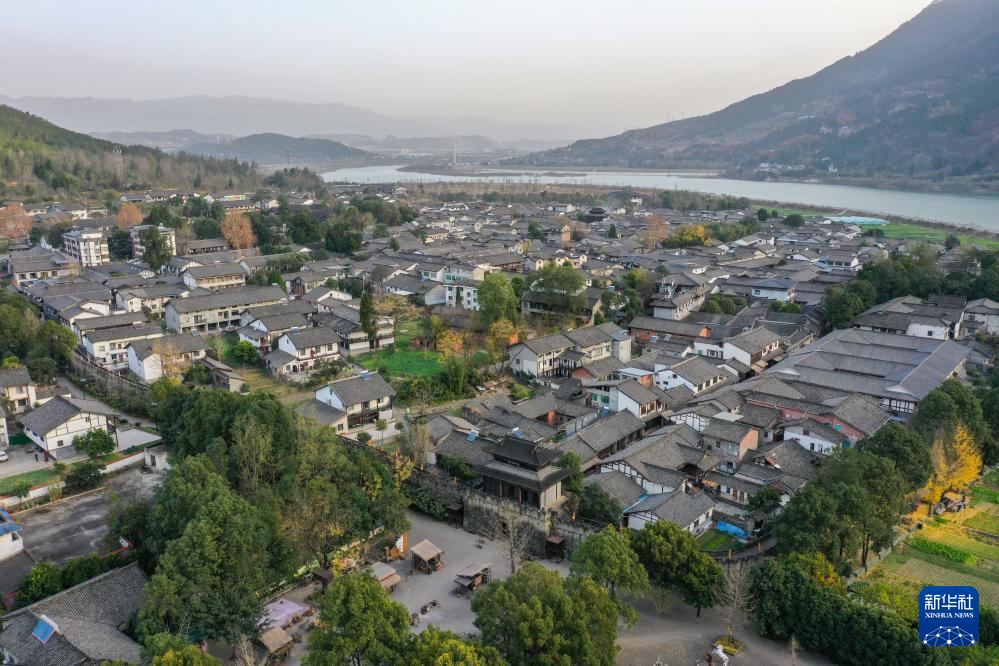
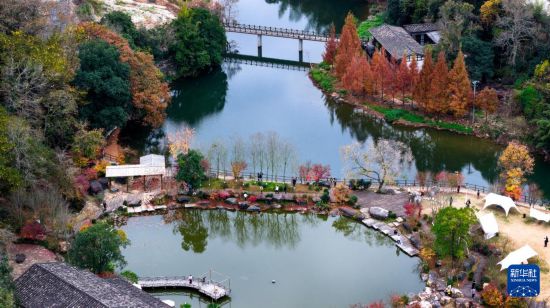
福州九峰村冬景迷人
Xin Hua She· 2025-12-10 01:01
Core Viewpoint - The article highlights the development of tourism in Jiufeng Village, Fuzhou, Fujian Province, driven by investments in infrastructure and heritage restoration, attracting numerous visitors during the winter season [1]. Group 1: Tourism Development - Jiufeng Village has seen a significant increase in tourism due to its picturesque winter scenery, characterized by vibrant maple leaves and ancient architecture [1]. - The local government has continuously invested funds into the restoration of historical sites and the improvement of public services, which has contributed to the growth of the rural tourism industry [1].
(走进中国乡村)广西河池仫佬族村落蜕变记:旧时天险地 今成“丰饶乡”
Zhong Guo Xin Wen Wang· 2025-11-16 05:28
Core Insights - The transformation of the Mulao ethnic village in Guangxi's Hechi has turned a previously isolated area into a thriving tourist destination, showcasing the integration of local culture into rural tourism [1][2] - The development of the Cotton Pit tourism resort has significantly improved local infrastructure and living conditions, leading to a resurgence in the local economy and a return of former migrant workers [2][3] Group 1: Tourism Development - The Cotton Pit tourism resort features immersive attractions such as bungee jumping, infinity pools, and glass slides, designed to blend with the natural landscape while preserving the unique geological features [1] - Since its opening in May, the cliffside bookstore has attracted over 100,000 visitors, highlighting the successful fusion of tourism and cultural experiences [1] Group 2: Economic Impact - The local government invested billions in the development of the Cotton Pit area, resulting in improved roads and utilities, which have transformed the livelihoods of local residents [2] - Many villagers, previously working in distant cities, have returned to establish businesses such as homestays and restaurants, benefiting from the tourism boom [2][3] Group 3: Cultural Integration - The tourism project emphasizes the preservation and promotion of Mulao culture through the establishment of cultural venues and events, enhancing the visitor experience [2] - Future plans include expanding the "Cotton Pit" model to incorporate various new tourism experiences, further increasing the region's appeal [3]
秦岭深处“村光”闪耀(在现场·“村字号”文体活动观察)
Ren Min Ri Bao· 2025-11-15 21:51
Core Viewpoint - The "Village Light Road" initiative in Ning'an County has successfully engaged local communities through cultural performances, significantly boosting tourism and local economy [2][3]. Group 1: Cultural Initiative - The "Village Light Road" features performances by local residents, showcasing rural life and traditions, which began in May and has been held across 11 towns in Ning'an [2]. - The initiative emphasizes local culture, with performances including traditional farming activities and non-professional rural dramas, creating a strong sense of community [2][3]. Group 2: Economic Impact - Since the launch of "Village Light Road," Ning'an County has received 1.8011 million tourists, a 73.13% increase, and generated tourism revenue of 984 million yuan, up 60.8% [2]. - During the recent National Day and Mid-Autumn Festival holidays, the county attracted 154,500 tourists, resulting in a revenue of 65 million yuan [2]. Group 3: Community Engagement - Local cultural teams have been formed, promoting intangible cultural heritage such as Ning'an clay sculpture and traditional snacks on the "Village Light Road" stage [3]. - The initiative has fostered neighborly harmony and enhanced community spirit, with residents actively participating as performers rather than just spectators [3]. Group 4: Future Development - Plans are in place to further explore cultural resources and integrate them with market value, aiming for a sustainable development of the "Village Light Road" initiative [3].
(走进中国乡村)游客变创客 新疆老村“圈粉”年轻人
Zhong Guo Xin Wen Wang· 2025-10-29 08:32
Core Insights - He Mu Village has transformed into a popular tourist destination in Xinjiang, attracting a growing number of young travelers who are becoming "new villagers" and contributing to the local economy [2][3] Tourism Development - The rapid development of tourism in Xinjiang has made He Mu Village a representative of rural tourism, drawing in visitors from various regions [2] - Young travelers are increasingly turning into entrepreneurs, creating new business opportunities in the village [2] Local Economy and Employment - The influx of young people has led to the emergence of new job roles such as homestay managers, baristas, travel photographers, and ski instructors [2] - Local residents, including young graduates, are leveraging tourism to improve their livelihoods, with some promoting the village through social media [3] Community Impact - The village committee highlights that the arrival of young individuals has injected new vitality and creativity into the community, fostering economic growth and modernization [3]

游客变创客 新疆老村“圈粉”年轻人
Zhong Guo Xin Wen Wang· 2025-10-29 06:10
Core Insights - The article highlights the transformation of He Mu Village in Xinjiang into a popular tourist destination, attracting young travelers who are becoming "new villagers" and entrepreneurs [1][3]. Tourism Development - He Mu Village, once obscure, has gained recognition as a key player in Xinjiang's rural tourism, drawing a significant influx of young visitors [3][4]. - The village's picturesque autumn scenery, characterized by vibrant colors and natural beauty, has become a major attraction for tourists [1][3]. New Business Opportunities - Young individuals are increasingly staying in He Mu Village to pursue various new business ventures, such as operating guesthouses, cafes, and offering services like photography and skiing lessons [3][4]. - The rise of new business models has been facilitated by the growing tourism industry, providing local youth with opportunities to innovate and contribute to the local economy [4]. Community Impact - The influx of young entrepreneurs has revitalized the village, injecting new energy and creativity into the local community, which in turn stimulates economic growth [4]. - Local residents, including those from the pastoral community, are participating in the tourism economy by renting out accommodations and offering services, leading to improved income levels [4].
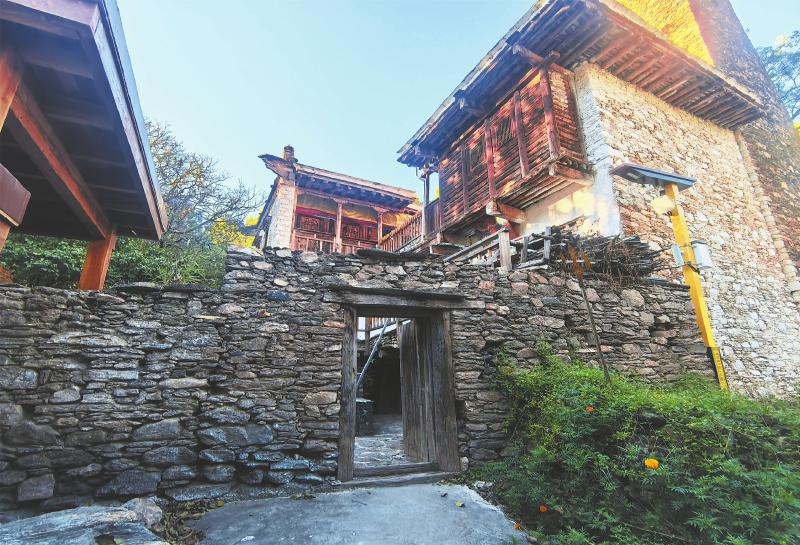
四川这座千年村落何以吸引世界目光?
Si Chuan Ri Bao· 2025-10-19 01:26
Core Viewpoint - The village of Jikayi in Danba County, Garze Tibetan Autonomous Prefecture, Sichuan, has been selected as one of the "Best Tourism Villages" by the United Nations World Tourism Organization for 2025, marking it as the first village in Garze and the second in Sichuan to receive this honor [3][4]. Cultural Heritage - Jikayi village is located in the core area of the cultural corridor of the Tibetan, Qiang, and Yi ethnic groups, rich in historical significance with human habitation dating back 5,000 years [3][5]. - The village features numerous ancient watchtowers, known as "Qiang towers," which are built using a unique construction technique that enhances their seismic resistance and thermal insulation [3][4]. Tourism Development - The ancient towers serve not only as cultural symbols but also as a significant attraction for tourists, with a growing number of visitors drawn to the village for its scenic beauty and cultural heritage [4][5]. - The local government has implemented measures to promote sustainable tourism, encouraging local residents to operate homestays rather than allowing external investors to build modern structures that could compromise the village's traditional architecture [6][7]. Local Entrepreneurship - Since the village's recognition, the number of homestays has increased from about 20 to over 60, with 95% of these businesses operated by local residents [6][7]. - Local initiatives include training programs for e-commerce, hospitality management, and culinary skills, as well as financial support for villagers looking to start their own businesses [6][7]. Preservation Efforts - The local government has established regulations to protect the traditional architecture and cultural heritage of the village, ensuring that any new constructions adhere to the traditional aesthetic [7].