
外交

Search documents
美国国务院要求美国公民立即离开伊朗!特朗普:对伊朗贸易伙伴征收25%关税
Mei Ri Jing Ji Xin Wen· 2026-01-13 00:32
Core Viewpoint - The article highlights the U.S. President Trump's announcement regarding a 25% tariff on any country conducting business with Iran, indicating a significant escalation in U.S. trade policy towards Iran and its allies [1] Group 1: U.S. Trade Policy - President Trump stated that any country engaging in commercial activities with Iran will face a 25% tariff on all business dealings with the U.S. [1] - This announcement reflects a broader strategy to isolate Iran economically and exert pressure on its government [1] Group 2: U.S. Citizens in Iran - The U.S. State Department has urged American citizens to leave Iran immediately, signaling heightened concerns for safety amid escalating tensions [1] - This directive indicates a shift in the U.S. government's stance towards Iran, prioritizing the safety of its citizens [1] Group 3: Diplomatic Approach - Despite the aggressive trade measures, White House Press Secretary Levitt mentioned that President Trump views diplomacy as the "preferred" option in addressing the current situation with Iran [1] - This suggests that while economic sanctions are being implemented, there remains an openness to diplomatic solutions [1]
全球瞭望|西班牙媒体:美国“开火易,外交难”
Xin Lang Cai Jing· 2026-01-04 17:59
Core Viewpoint - The article criticizes U.S. President Trump's military interventions in various countries, suggesting that these actions are driven by a desire to showcase power and pursue political calculations rather than genuine security concerns [1]. Summary by Relevant Categories Military Actions - Since Trump's return to the White House, the U.S. has conducted military strikes against countries like Venezuela and Iran, under the pretext of combating "terrorism" and "drug trafficking" [1]. - The true motives behind these military actions are portrayed as showcasing military strength, retaliating against adversaries, and coveting foreign resources [1]. Diplomatic Efforts - The article describes the U.S. approach to international conflicts, such as the Israeli-Palestinian conflict and the Ukraine crisis, as "chaotic and amateurish" [1]. - The claimed "peace achievements" by the U.S. lack credibility and fail to provide justice and stability to the international community [1].
朝鲜在分界线设置三重铁丝网、切断桥梁和道路、筑起防护墙,韩国总统:过去韩朝“似乎装作是敌人,但最近好像真的变成了仇敌”
Xin Lang Cai Jing· 2025-12-20 01:36
Core Viewpoint - The South Korean President Lee Jae-myung emphasizes the need for patience and proactive measures to ease tensions with North Korea, highlighting the importance of trust-building efforts [1] Group 1: Current Relations - President Lee notes that the relationship between South and North Korea has deteriorated from a facade of enmity to genuine hostility, with North Korea taking unprecedented actions such as erecting triple barbed wire fences and cutting off bridges and roads [1] - The North has adopted a narrative of "two hostile nations," effectively blocking communication, dialogue, and cooperation between the two Koreas [1] Group 2: Diplomatic Approach - Lee advocates for a patient approach to improve the situation, acknowledging that while it is a challenging task, it is essential not to give up [1] - He stresses that the current international order is undergoing significant changes, which underscores the growing importance of diplomacy in maintaining peace [1] - The President asserts that peace is the most practical security policy, with diplomacy playing a crucial role in achieving it [1]
X @外汇交易员
外汇交易员· 2025-11-18 06:38
Diplomatic Engagement - Japan's Ministry of Foreign Affairs Asia and Oceania Bureau Director General, Kanai Masaaki, visited China starting yesterday [1] - Kanai Masaaki met with Liu Jinsong, Director General of the Asian Department of the Chinese Ministry of Foreign Affairs [1] - The visit and meetings are confirmed by both Chinese and Japanese sources [1][2] Key Personnel - Kanai Masaaki is the Director General of the Asia and Oceania Bureau of Japan's Ministry of Foreign Affairs [1][2] - Liu Jinsong is the Director General of the Asian Department of the Chinese Ministry of Foreign Affairs [1][2]
X @外汇交易员
外汇交易员· 2025-10-24 05:29
Policy Priorities - Economic growth takes precedence over other policies, guiding the overall direction [1] - Direct cash handouts, as promised during the Liberal Democratic Party's Upper House election campaign, will not be implemented due to lack of public support [1] International Relations - The Japan-US alliance serves as the cornerstone of Japan's diplomacy and national security [1] - Aims to foster a relationship of trust with Trump to further strengthen Japan-US relations [1] - China is considered an important neighbor, and the goal is to establish a stable and constructive relationship [1]
不平等条约!马科斯去一趟美国,把菲律宾“卖了”个好价钱,自己人都看不下去了
Sou Hu Cai Jing· 2025-07-26 22:33
Group 1 - The core viewpoint of the article highlights the unfavorable trade agreement between the Philippines and the United States, which is perceived as a "unequal treaty" that undermines the Philippines' economic interests and sovereignty [1][3] - The trade agreement includes a minimal tariff reduction from 20% to 19%, which is seen as insincere compared to Japan's 15% tariff rate, and fails to meet the expectations of the Philippines for better terms than Vietnam [1][3] - The agreement mandates the Philippines to implement "zero tariffs" on U.S. goods while maintaining a high tariff of 19% on Philippine exports to the U.S., leading to a significant trade deficit of $4.9 billion in 2024 [3] Group 2 - The economic impact of the agreement is severe, particularly for local farmers and fishermen, as U.S. agricultural products will flood the market, threatening local industries [5][6] - Diplomatically, the Philippines faces isolation from ASEAN countries due to its aggressive stance against China, which has damaged its international image [5][6] - The strategic assurances from the U.S. regarding military support are viewed as empty promises, with the U.S. showing little commitment to the Philippines' security concerns [5][6] Group 3 - The article discusses President Marcos' miscalculations, including overestimating U.S. support, underestimating domestic backlash, and misjudging China's role as a key trading partner [6][7] - There is a growing dissent among the Philippine elite and the general public, with calls for a reassessment of the agreement and accusations of betrayal against the government [10][11] - The potential for economic collapse looms if the Philippines continues to align with U.S. provocations against China, risking retaliatory measures that could devastate its economy [12] Group 4 - The conclusion emphasizes the need for the Philippines to adopt a pragmatic foreign policy that balances relations with major powers and avoids becoming a pawn in geopolitical conflicts [13]

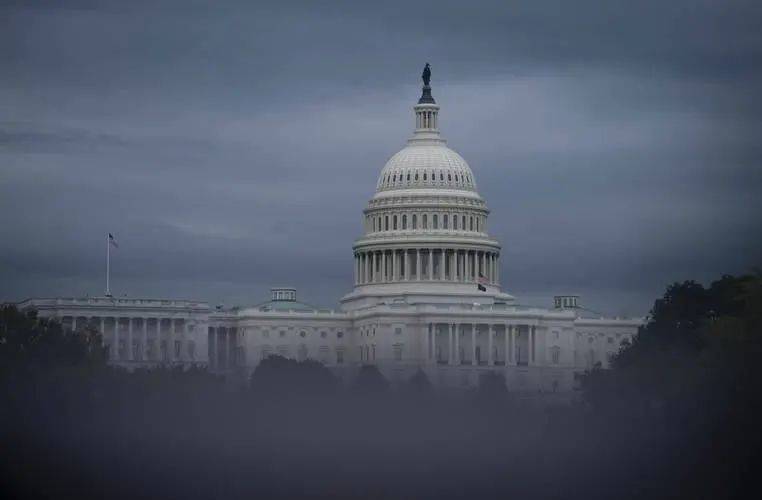
白宫新闻秘书Leavitt:特朗普总统更愿意与伊朗进行外交,但愿意在必要时使用武力。他不怕使用力量。
news flash· 2025-06-26 18:03
Core Viewpoint - The White House Press Secretary Leavitt stated that President Trump prefers diplomacy with Iran but is willing to use military force if necessary [1] Group 1 - President Trump is more inclined towards diplomatic engagement with Iran [1] - The administration does not shy away from the use of military force when deemed necessary [1] - There is a clear indication that the President is not afraid to utilize military power [1]