贸易协议

Search documents
U.S. envoy to EU: Trade deal approval a major step forward
Youtube· 2026-03-27 10:55
Core Points - The agreement between the EU and the US has progressed through various stages, with the council and parliament approving it, and it now moving to a trilog phase for finalization [1][2] - The US has expressed frustration over the lengthy process, noting that it has been in compliance since the framework agreement was released in August of the previous year, while the EU has not yet complied [2][8] - The deal includes safeguards that allow for suspension if the US threatens the territorial sovereignty of EU territories, such as Greenland [3] Tariffs and Trade Issues - There are currently 50% tariffs on certain EU exports to the US, particularly steel and aluminum, which are also reciprocated by the EU [9][10] - Discussions are anticipated regarding these tariffs, although the US administration appears to be focused on other priorities at the moment [12][13] - A separate investigation into unfair trade practices by the EU is ongoing, but it is not expected to violate the terms of the current deal [14][15]


瑞士第四季度GDP增长0.2%,制药业扩张1.9%
Xin Lang Cai Jing· 2026-02-27 20:09
Core Viewpoint - Switzerland's export engine is stabilizing, primarily driven by the pharmaceutical sector, with a reported 1.9% growth in the fourth quarter contributing to a 0.2% increase in GDP adjusted for major sporting events [1][2]. Economic Growth - The fourth quarter's GDP growth of 0.2% aligns with initial estimates, while the previous quarter's economic contraction was revised from 0.5% to 0.4%, indicating a milder economic downturn than previously anticipated [1][2]. - Excluding revenues related to major sporting events, the GDP growth would have been only 0.1%, suggesting that while growth has resumed, it remains modest and may depend on the sustainability of trade conditions [1][2]. Pharmaceutical Sector - The pharmaceutical and chemical manufacturing sectors were key contributors to the economic growth, achieving a 1.9% increase in the fourth quarter [1][2]. Trade Agreements and Legal Developments - The economic recovery coincided with a trade agreement between Switzerland and the United States, which may help stabilize the economy that heavily relies on cross-border demand [1][2]. - A recent Supreme Court ruling that overturned the legal basis for tariffs imposed by Donald Trump increases the likelihood of Swiss companies receiving refunds for previously paid taxes, which could be significant for investors assessing the profitability of export-driven industries [1][2].
印度在美国压力下俄罗斯石油进口放缓,转购沙特原油
Xin Lang Cai Jing· 2026-02-27 15:16
Core Insights - India's crude oil imports reached a historical high in February, driven by refiners purchasing Saudi oil to replace Russian oil affected by Western sanctions, indicating a shift in supply dynamics due to U.S. pressure [1][3] Group 1: Import Dynamics - The average daily crude oil import volume for India in February was 5.3 million barrels, surpassing the previous record of 5.26 million barrels set in March 2025 [1][3] - The total import figures for February are not final and may fluctuate based on the actual unloading of expected shipments by the end of the month [1][3] Group 2: Supply Sources - Russia's average daily crude oil supply to India in February was 1.12 million barrels, marking the lowest monthly inflow since the end of 2022, with Saudi Arabia compensating for this shortfall [2][4] - Saudi Arabia's supply to India is expected to exceed 1 million barrels per day by the end of February, significantly higher than the historical normal level of approximately 700,000 barrels per day [2][4] Group 3: Refinery Operations - Supported by the surge in Saudi oil supply, India's refinery crude processing volume is projected to remain near the historical high of 5.67 million barrels per day set in February of the previous year [2][4]
美国贸易代表通告全世界:部分国家加税15%,但中国免了
Sou Hu Cai Jing· 2026-02-27 04:21
Group 1 - The anticipated escalation of the US-China tariff war did not occur, as China successfully deterred Trump from further actions with a single statement and action [1] - The US Trade Representative, Lighthizer, announced that the new tariff policy would maintain existing tariffs, with only countries adhering to agreements with the US enjoying previous tariff benefits [3][5] - The EU faces significant losses due to the new 10% tariffs, with exports suffering a loss of €4.2 billion, highlighting the disparity in treatment between China and the EU [5][8] Group 2 - The US has temporarily refrained from increasing tariffs on China due to Trump's upcoming visit, while the EU lacks similar diplomatic leverage [10][12] - China has previously warned the US against military sales to Taiwan, which influenced Trump's decisions, demonstrating China's effective use of deterrence [12][13] - The differing strategies of the US towards China and the EU stem from China's strong countermeasures and the EU's initial compliance, making the EU a target for increased tariffs [15][18]
欧盟“期望”美国履行贸易协议
Shang Wu Bu Wang Zhan· 2026-02-26 16:44
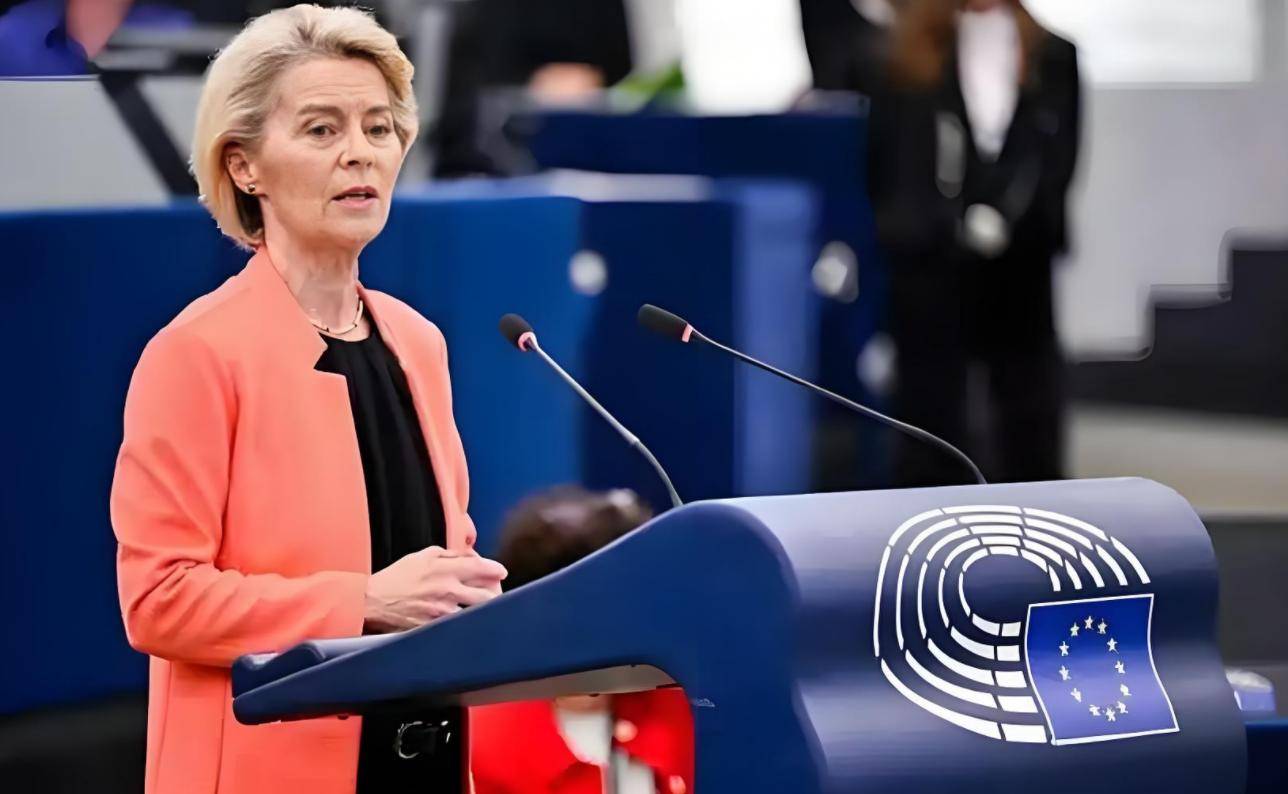
Core Viewpoint - The U.S. has temporarily raised global tariffs on imported goods to 15% following a Supreme Court ruling that deemed most of President Trump's international tariff policies illegal, creating new uncertainties globally [1] Group 1: U.S. Tariff Policy - The U.S. has increased tariffs on imported goods to 15% after a Supreme Court ruling on February 22 [1] - This decision introduces new uncertainties in international trade [1] Group 2: EU Response - The European Commission insists that "a deal is a deal," urging the U.S. to adhere to the trade agreement terms established with the EU last year, which set tariffs on most European goods at a maximum of 15% [1] - EU Trade Commissioner Valdis Dombrovskis engaged in discussions with U.S. Trade Representative Jamison Greer and Commerce Secretary Howard Lutnick following the Supreme Court ruling [1] Group 3: Trade Agreement Status - The European Parliament's Trade Committee was scheduled to approve the EU-U.S. trade agreement, but the Supreme Court's ruling has introduced uncertainty regarding this process [1]
最高法院裁决搅局!印度会否“偷摸”买俄油?
Jin Shi Shu Ju· 2026-02-26 09:14
Core Viewpoint - Indian refiners are reducing their procurement of Russian oil due to uncertainty following a recent U.S. Supreme Court ruling that impacts a trade agreement aimed at lowering tariffs in exchange for halting Russian oil imports [1] Group 1: Current Procurement Status - Indian refiners are currently expected to import about 1.2 million barrels of Russian crude oil per day, the lowest level since November 2022, with predictions of further declines to 800,000 to 1 million barrels per day in March [2] - The recent withdrawal of Indian refiners has resulted in millions of barrels of Russian oil being stored on tankers or being shipped further to Singapore [2] Group 2: Price Dynamics - The discount for Russian Urals crude has widened to $15 to $20 per barrel below Brent crude, compared to a discount of around $10 in early February [2] Group 3: Future Supply Preparations - Indian Oil Corp. and Bharat Petroleum Corp. have recently purchased crude from the Middle East and issued tenders for April and May deliveries, indicating preparations for reduced Russian supply [2] - The stored Russian oil on tankers could provide a quick and cost-effective solution for Indian refiners if they receive approval from New Delhi [2]
美国贸易代表办公室那边,突然隔空递过来一句话!特朗普当年和中国签的那个协议,我们认,它有效
Sou Hu Cai Jing· 2026-02-25 20:24
Core Viewpoint - The U.S. Supreme Court's ruling against the legality of tariffs imposed by the Trump administration has created significant uncertainty in trade policy, leading to potential refunds of previously collected tariffs and a new temporary import surcharge [3][5][7]. Group 1: Legal and Political Developments - The U.S. Supreme Court ruled 6-3 that the president cannot unilaterally impose tariffs under the International Emergency Economic Powers Act, affirming that tax authority lies with Congress [2]. - Following the ruling, Trump announced a temporary 10% import surcharge on all goods entering the U.S., effective for up to 150 days, as a response to the court's decision [3][4]. - The White House released a list of exemptions from the new tariff, indicating a cautious approach to avoid domestic backlash ahead of the 2026 midterm elections [4][8]. Group 2: Economic Implications - The estimated value of tariffs already collected ranges from $142 billion to $175 billion, with potential refunds complicating the financial landscape for U.S. importers and businesses [3]. - The imposition of tariffs has historically resulted in over 90% of the costs being passed on to U.S. consumers and importers, raising concerns about inflation and economic growth [7]. - The U.S. Treasury Department's internal assessment suggests that lowering tariffs could reduce the consumer price index by 0.5% to 0.8%, alleviating inflationary pressures [8]. Group 3: Trade Agreements and Future Outlook - The existing trade agreement with China, which includes provisions for tariff reductions and commitments from both sides, serves as a stabilizing factor amid the current policy chaos [6]. - The temporary nature of the new tariffs and the need for Congressional approval for extensions indicate a lack of long-term strategy, reflecting internal political divisions [7][8]. - The emphasis on maintaining existing agreements suggests a desire to prevent further escalation in trade tensions, particularly with China, as the U.S. navigates its domestic political landscape [6][8].

美国实施10%全球关税 特朗普暂未兑现上调至15%威胁
智通财经网· 2026-02-24 22:28
Group 1 - The U.S. government has quickly restructured its tariff system following a Supreme Court ruling that deemed some tariff measures illegal, implementing a 10% global uniform tariff rate, which is lower than the previously threatened 15% [1][2] - The Supreme Court ruled that approximately 60% of tariffs imposed by the Trump administration were not legally valid, significantly impacting Trump's economic agenda [1] - The temporary tariff under Section 122 of the Trade Act of 1974 can only last for 150 days, and the government is preparing to implement more permanent measures under Section 301 after completing investigations and public consultations [1][3] Group 2 - The U.S. Customs and Border Protection notified importers that the tariff rate remains at 10%, conflicting with Trump's earlier statement about raising it to 15%, and any increase would require a new executive order [2] - Experts believe that the threat of future tariff increases, rather than the current tariffs, is what will drive countries to negotiate, maintaining the overall strategic dynamics [2] - If the tariff remains at 10%, the annual tariff revenue for the U.S. is estimated to decrease by about $140 billion, while a rise to 15% would reduce revenue by approximately $700 billion [3] Group 3 - Market expectations indicate that the overall effective tariff rate is likely to decrease this year, potentially falling to a range of 10% to 15%, which could marginally improve household spending capacity and alleviate inflation concerns [4] - Prior to the Supreme Court ruling, the average effective tariff rate in the U.S. was estimated to be around 16% [4]
短期关税波动,但非科技出口复苏趋势未改
2026-02-24 14:16
Summary of Key Points from the Conference Call Industry Overview - **Industry**: Asia-Pacific Trade and Tariff Dynamics - **Key Focus**: Tariff changes and non-tech export recovery trends Core Insights - **Tariff Reduction**: Asian tariffs have decreased by 3 percentage points, with the weighted average tariff rate dropping from 20% to 17% following a Supreme Court decision in the U.S. [6][11] - **Tariff Levels**: The new tariff rate for imports from China has decreased from 32% to 24% [6][11] - **Temporary Nature of Changes**: The reduction in tariffs may be temporary, and there is potential for new tariffs to be implemented in the future [6][9] - **Trade Agreements**: Existing trade agreements are expected to remain effective, indicating stability in trade relations [10][13] Non-Tech Export Recovery - **Improvement in Non-Tech Exports**: Since October 2025, there has been a continuous improvement in non-tech exports, suggesting a fundamental recovery in demand [6][13] - **Industrial Cycle Recovery**: Signs of recovery in the industrial cycle have been observed, supported by investments in AI infrastructure and energy transition [13][15] Economic Impact - **China's Economic Outlook**: The impact of tariff changes on China is expected to be limited, with a potential GDP growth increase of 0.1-0.2 percentage points due to the tariff reduction [16][15] - **Other Asian Economies**: Tariff changes for other Asian economies are minimal, with reductions ranging from 1-3% [17][21] - **India's Trade Growth**: India is expected to benefit from tariff reductions, particularly in sectors facing punitive tariffs, and is actively pursuing trade agreements [21][22] Sector-Specific Insights - **Semiconductor Sector**: Strong demand in the semiconductor sector is anticipated to continue, particularly in storage chips, due to supply constraints and ongoing tariff exemptions [22] - **ASEAN Economies**: The overall impact of tariff changes on ASEAN economies is expected to be limited, but the likelihood of further tariff increases seems low, which may support trade cycles [22] Conclusion - **Positive Macro Outlook for Asia**: The overall macroeconomic outlook for Asia remains relatively positive, driven by the recovery in non-tech exports and industrial growth [13][10] - **Future Tariff Policies**: While there may be potential for new tariffs, the consensus is that the peak of tariff levels has likely been reached, providing a more stable environment for trade [10][13]

U.S. has breached trade deal and Europe is ready to retaliate, top trade lawmaker tells CNBC
CNBC· 2026-02-24 10:24
Core Viewpoint - The U.S. has violated the terms of its trade deal with the European Union, prompting the EU to prepare for potential retaliation if necessary [1][2]. Group 1: Trade Deal Breach - The European Parliament has paused ratification of the U.S.-EU trade deal due to concerns over the U.S. government's commitment to the agreement [4]. - Bernd Lange, chair of the European Parliament's international trade committee, stated that the U.S. has breached the deal multiple times, affecting small and medium-sized enterprises in Europe [7][6]. - The U.S. has implemented a universal 10% tariff on all imports, which President Trump plans to raise to 15%, raising concerns about the stability of the trade deal [3][12]. Group 2: EU's Response and Measures - European officials are seeking clarity from the U.S. regarding the validity of trade deals under the new tariff regime, with some suggesting the use of the Anti-Coercion Instrument (ACI) as a retaliatory measure [9][10]. - The ACI could restrict U.S. suppliers' access to the EU market and impose export and import restrictions, although several European countries are generally opposed to using such measures [11][10]. - Lange emphasized the need for certainty from the U.S. government regarding tariffs over the next three years to maintain the integrity of the trade deal [8][7].