
巴勒斯坦建国

Search documents
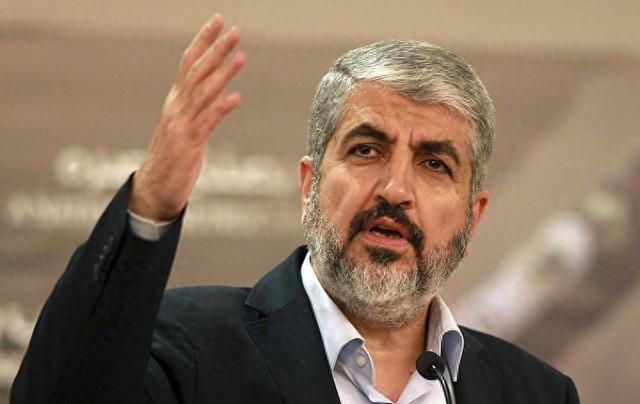
哈马斯高级官员:只要以方持续占领,巴方就不会停止抵抗
Xin Lang Cai Jing· 2026-02-08 09:16
Group 1 - The core viewpoint of the article emphasizes the ongoing suffering of the people in Gaza and the need for increased humanitarian aid and resettlement efforts following the opening of the Rafah crossing [1] - Khaled Meshaal highlighted that the ceasefire agreement in Gaza is entering a critical second phase, which includes disarmament, deployment of international forces, peace mechanisms, and the withdrawal of Israel [1] - Meshaal reiterated that the relationship between occupation and resistance remains constant, while the forms of resistance may change [1] Group 2 - Despite over 150 countries recognizing the state of Palestine, this recognition is insufficient to actualize statehood, presenting a significant challenge for Palestinians, Arab nations, the Islamic world, and the international community [1] - The article discusses the collective political efforts of Hamas and various Palestinian factions to seek pragmatic solutions within the framework of Palestinian national aspirations [1]

内塔尼亚胡:加沙非军事化前 不会允许重建
Xin Hua She· 2026-01-27 22:45
Group 1 - Israeli Prime Minister Netanyahu emphasized that Israel will focus on the demilitarization of Gaza and will not allow reconstruction before this process is completed [1] - Netanyahu stated that Israel is committed to dismantling Hamas's armed presence and clearing weapons and tunnels in Gaza [1] - He denied rumors about allowing Turkey and Qatar to participate in an international stabilization force in Gaza, asserting that this will not happen [1] Group 2 - U.S. Special Envoy Witte announced the initiation of the second phase of the "20-point plan" to end the Gaza conflict, transitioning from a ceasefire to demilitarization and reconstruction [2] - The second phase will establish a transitional Palestinian bureaucratic committee to manage Gaza and initiate comprehensive demilitarization and reconstruction efforts [2] - The focus will be on disarming all unauthorized personnel in Gaza [2]
哈马斯已同意解除武装,以换取其领导人自由离开加沙
Xin Lang Cai Jing· 2026-01-24 01:05
Group 1 - Hamas has agreed to disarm in exchange for the freedom of its leaders to leave Gaza and transition to a political entity [1] - The disarmament plan involves the immediate destruction of heavy weapons, tunnels, and military infrastructure, followed by a phased program to collect personal weapons from Hamas members [1] - The U.S. has assured that Hamas leaders will not face persecution from Israel after leaving Gaza, and negotiations have been ongoing for about two to three weeks [1] Group 2 - The U.S. announced a "New Gaza" reconstruction plan, which includes building residential buildings, data centers, and seaside resorts [2] - Jared Kushner stated that the demilitarization of Gaza has already begun and that a newly formed Palestinian technocratic committee will work with Hamas to advance this process [2] - The U.S. has issued threats to Hamas, indicating severe consequences if they do not disarm [2]
以色列要新建19个定居点
Xin Lang Cai Jing· 2025-12-21 15:31
Core Viewpoint - The Israeli security cabinet has approved the construction of 19 new settlements in the occupied West Bank, a move aimed at preventing the establishment of a Palestinian state [1] Summary by Relevant Categories Settlement Expansion - The approval of the new settlements brings the total number of settlements approved in the past three years to 69 [1] - The expansion of settlements in the West Bank has reached its highest level since 2017, as noted by the United Nations [1] Government Statements - The proposal to formally establish the 19 new settlements in the Judea-Samaria region was presented by Finance Minister Bezalel Smotrich and Defense Minister Israel Katz, and has received cabinet approval [1] - Bezalel Smotrich, a strong advocate for settlement expansion and a settler himself, stated that the actions taken are aimed at effectively preventing the establishment of a Palestinian state [1]
埃及、法国领导人重申支持巴勒斯坦建国
Xin Hua She· 2025-12-13 02:06
Core Viewpoint - The leaders of Egypt and France reaffirmed their support for the establishment of an independent Palestinian state during a phone call, emphasizing the need for a comprehensive political process based on the 1967 borders with East Jerusalem as its capital [1]. Group 1: Political Developments - Egyptian President Sisi and French President Macron discussed the latest situation in Gaza, agreeing on the importance of initiating a political process for Palestinian statehood [1]. - Sisi stressed the need for all parties to uphold the ceasefire agreement and ensure humanitarian aid reaches Gaza, while also calling for immediate regional reconstruction efforts [1]. Group 2: Humanitarian Concerns - The statement highlighted the urgency of facilitating humanitarian aid into Gaza, with Sisi urging the international community to increase pressure on Israel to halt its actions [1]. - Since the ceasefire agreement's first phase took effect in October, conflicts between Israel and Hamas have continued, with both sides accusing each other of violating the ceasefire [1]. Group 3: Border and Aid Access - Israel has indefinitely postponed the reopening of the Rafah crossing, crucial for humanitarian aid, located at the southern border of Gaza with Egypt [1]. - On December 3, Israel announced plans to reopen the Rafah crossing in a few days, but only for one-way traffic, allowing Palestinians to leave Gaza for Egypt [1].
内塔尼亚胡:加沙停火预计“很快”进入第二阶段
Xin Hua She· 2025-12-07 14:50
Group 1 - Israeli Prime Minister Netanyahu announced that the ceasefire in Gaza is expected to "quickly" enter its second phase [1] - Netanyahu will meet with US President Trump later this month to discuss ending Hamas's rule in the Gaza Strip [1] - German Chancellor Merkel reiterated Germany's support for Israel while expressing an open attitude towards Palestinian statehood and opposing Israeli annexation of the West Bank [1] Group 2 - Merkel's visit to Israel marks her first since taking office as German Chancellor in May [1]
白宫密谈曝光:特朗普施压沙特加入《亚伯拉罕协议》,王储当面“硬刚”
Jin Shi Shu Ju· 2025-11-27 09:13
Core Insights - The meeting between President Trump and Saudi Crown Prince Mohammed bin Salman revealed significant tensions regarding policy differences, particularly concerning the Abraham Accords and the Palestinian two-state solution [2][3] - Trump expressed frustration over bin Salman's refusal to formally join the Abraham Accords, emphasizing the need for Saudi Arabia's commitment to the Palestinian cause as a prerequisite for participation [2] - The discussions highlighted the impact of public sentiment in Saudi Arabia against Israel, especially following the recent Gaza conflict, which complicates the normalization of relations [2][3] Group 1 - The atmosphere during the private discussions between Trump and bin Salman was described as tense, with major disagreements on policy [2] - Bin Salman insisted that Saudi Arabia would only join the Abraham Accords if there was a credible and time-bound commitment to a two-state solution for Palestinians [2] - Trump reportedly exerted significant pressure on bin Salman to join the accords, leading to feelings of disappointment and frustration from the U.S. side [2] Group 2 - There are speculations that the October 7 attack by Hamas was motivated by fears that the Palestinian statehood issue would be sidelined as more Arab nations joined the Abraham Accords [3] - The attack has been interpreted as a strategic move to deepen divisions between the Arab world and Israel, potentially stalling the progress of the Abraham Accords [3] - The geopolitical landscape has shifted, with Iran and Hezbollah appearing weaker, while the Syrian government has been significantly impacted, affecting the dynamics of resistance against Israeli expansion [3]
沙特王储重申支持巴勒斯坦建国
Xin Hua Wang· 2025-11-19 00:49
Core Viewpoint - Saudi Arabia's Crown Prince Mohammed bin Salman emphasized that establishing diplomatic relations with Israel is contingent upon a "clear path" to Palestinian statehood [1] Group 1: Defense Cooperation - The U.S. and Saudi Arabia have reached an agreement on defense cooperation, with Saudi Arabia set to purchase F-35 stealth fighter jets similar to those used by Israel [1] Group 2: Investment and Technology - Saudi Arabia plans to increase its investment in the U.S. to $1 trillion, highlighting a significant demand for computing power and a desire to acquire advanced chips manufactured in the U.S. [1] - A high-profile investment summit between the U.S. and Saudi Arabia is scheduled to take place in Washington on the 19th [1]
无法保证“两国方案”,重要问题模糊不清,安理会通过加沙决议多方存疑
Huan Qiu Shi Bao· 2025-11-18 23:05
Core Points - The UN Security Council passed Resolution 2803, endorsing the US's "20-point plan" to end the Gaza conflict, which includes the establishment of a Peace Council as a transitional governing body for Gaza and the authorization of an international stabilization force [1][3] - The resolution received support from 13 out of 15 Security Council members, with Russia and China abstaining [3][9] - The resolution aims to ensure the demilitarization of Gaza, protect civilians, and facilitate humanitarian corridors, but lacks a clear timeline for Palestinian statehood [6][7] Group 1 - The resolution is seen as a key step in legitimizing the transitional governing body and alleviating concerns for countries considering troop deployment to Gaza [1][3] - The US President Trump described the vote as a historic moment that would bring more peace to the world [3] - The Palestinian Authority welcomed the resolution but emphasized the need for urgent implementation of its terms [3][6] Group 2 - Hamas opposed the resolution, claiming it imposes an international guardianship mechanism on Gaza and reiterating its stance against disarmament [3][8] - Israeli Prime Minister Netanyahu expressed support for the resolution but maintained opposition to the establishment of a Palestinian state [4][5] - The resolution's vague wording on Palestinian statehood has led to ongoing uncertainty regarding its implications [7][9] Group 3 - The resolution's approval followed nearly two weeks of negotiations, during which Arab nations and Palestinian representatives pressured the US to strengthen references to Palestinian self-determination [6][7] - The lack of specific details in the resolution raises concerns about its implementation and the sustainability of the current ceasefire [7][9] - The international stabilization force's role in disarming Hamas remains a significant challenge, with potential troop-contributing countries expressing varying levels of willingness to engage [7][9]
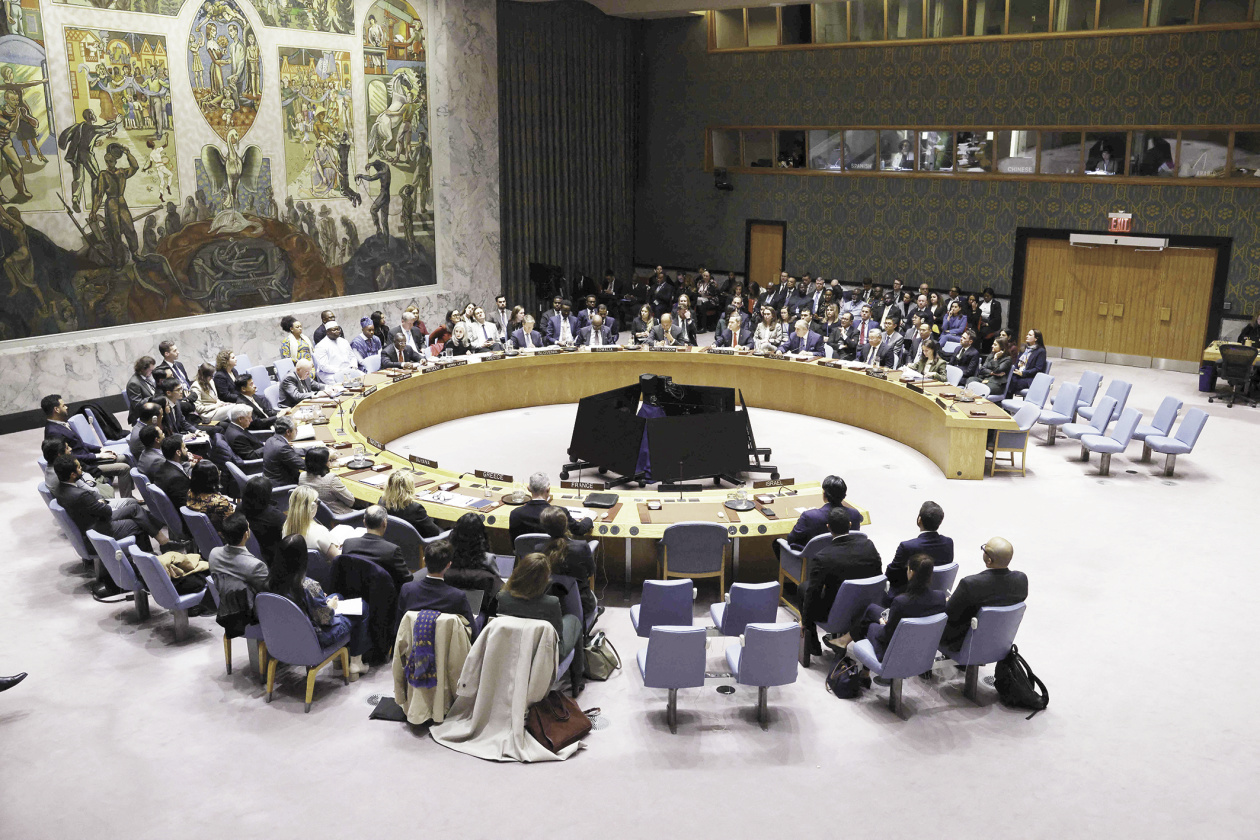
联合国通过涉加沙决议,巴勒斯坦国表示欢迎
Xin Jing Bao· 2025-11-18 02:09
Core Points - The UN Security Council approved a resolution related to Gaza proposed by the United States with 13 votes in favor, 0 against, and 2 abstentions, with China and Russia abstaining [1] - The resolution includes maintaining a ceasefire in Gaza, restoring humanitarian aid, and promoting reconstruction and economic recovery in the region [1] - An institution will be established to oversee the Palestinian Authority's reform plans, creating conditions for Palestinian self-determination and statehood [1] - The Palestinian government welcomed the resolution and confirmed its readiness for full implementation, while Hamas strongly criticized it [1]