
民族文化传承

Search documents
宗喀霓裳承古韵
Xin Lang Cai Jing· 2026-02-26 18:39
Core Viewpoint - A grand performance showcasing traditional Zongke ethnic costumes took place in Huangzhong District, Xining, where over 1,200 villagers from 52 teams participated, setting a new world record for this event [1] Group 1: Cultural Significance - Zongke costumes are an important intangible cultural heritage of the Huang-Tang region, reflecting the area's long history and ethnic wisdom [1] - The craftsmanship, patterns, and wearing customs of Zongke costumes carry significant historical memories and cultural narratives [1] Group 2: Event Highlights - The performance featured a diverse array of traditional Zongke costumes, highlighting their unique beauty and cultural diversity [1] - Details such as exquisite embroidery and ancient accessories were showcased, emphasizing the cultural transmission embedded in each element of the costumes [1]

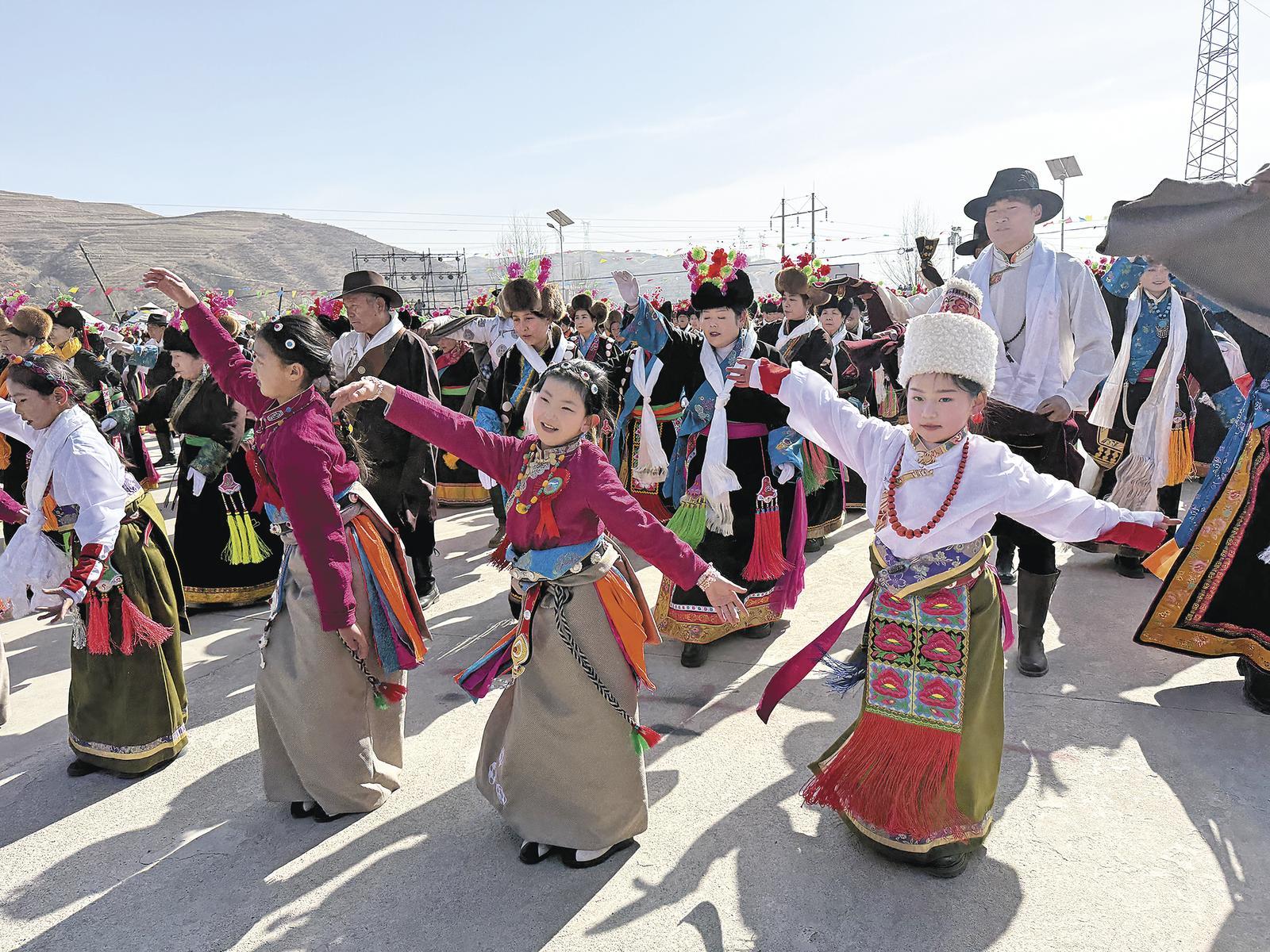
马场镇举行苗族跳花场活动
Xin Lang Cai Jing· 2026-02-23 22:46
Group 1 - The core event is the 2026 Miao Jumping Flower Festival held in Guian New Area, attracting local ethnic communities and tourists to celebrate cultural heritage and harmony [1][2] - The festival features vibrant performances including traditional dances and songs, showcasing the rich cultural traditions of the Miao ethnic group [1][2] - The event is recognized as an important traditional festival for the Miao people and has been included in the national intangible cultural heritage list [2] Group 2 - The festival serves as a platform for cultural expression and community bonding, with participants dressed in colorful traditional attire [1][2] - Future initiatives will focus on integrating modern elements with traditional customs to engage younger audiences and promote cultural heritage [2]
马年寻“贵马”丨探寻三都水族马尾绣,触摸一段有温度的文化传承
Xin Lang Cai Jing· 2026-02-17 02:49
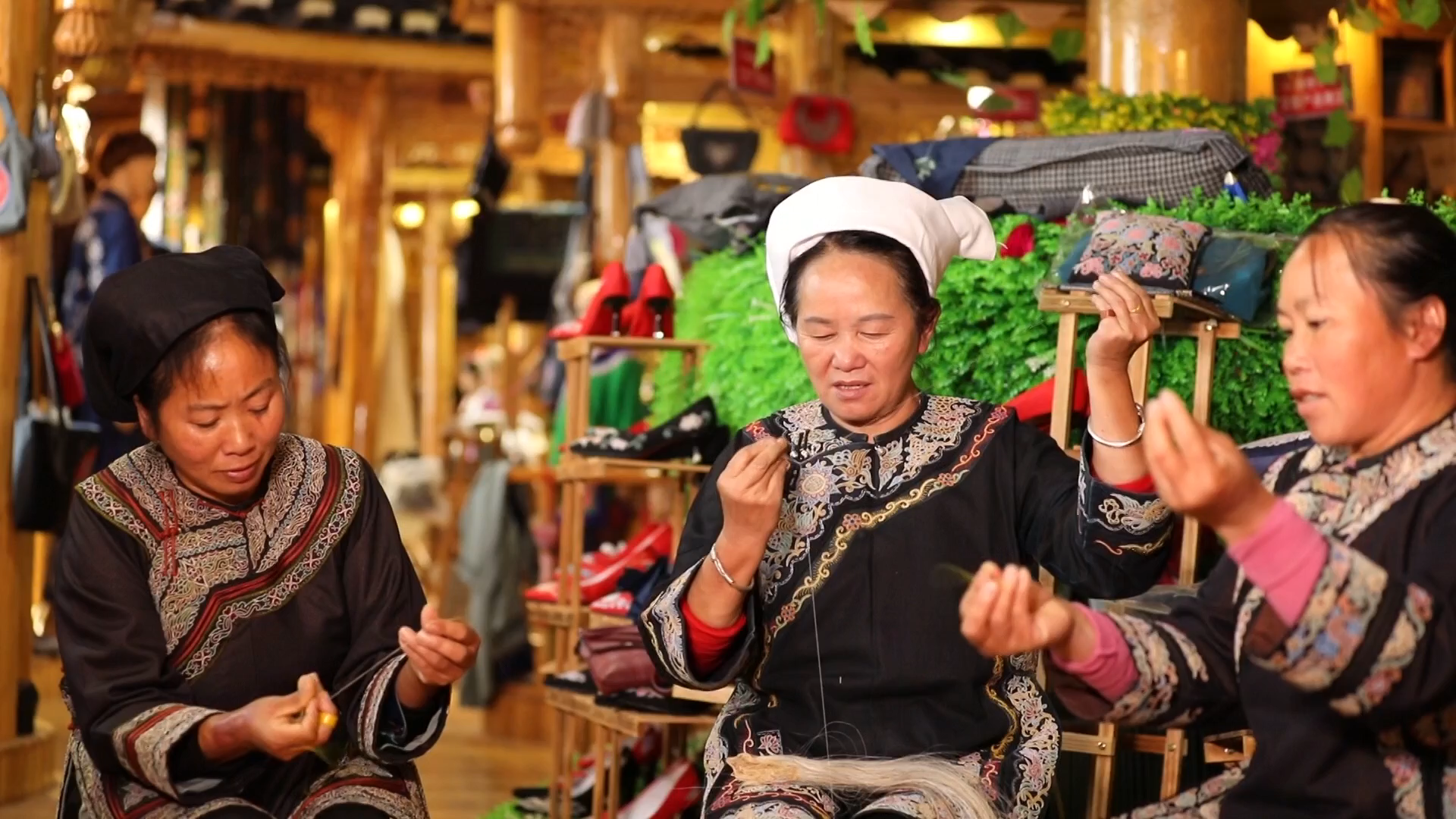
Core Viewpoint - The article highlights the unique embroidery technique of the Shui ethnic group known as "Maw Tail Embroidery," which utilizes horsehair as a key material and has been passed down through generations. This art form is recognized as a national intangible cultural heritage and is celebrated for its intricate craftsmanship and cultural significance [1][3]. Group 1: Art and Technique - Maw Tail Embroidery is characterized by its use of 3 to 4 strands of horsehair as the core, wrapped tightly with white silk thread to create a pre-embroidered line, resembling a bass string [3]. - The embroidery process involves intricate techniques such as flat embroidery,挑花 (tiao hua),乱针 (luan zhen), and跳针 (tiao zhen), resulting in a three-dimensional texture that captures the essence of the horsehair and the passage of time [4][3]. Group 2: Cultural Significance - A notable piece, measuring 5 meters by 1.3 meters, titled "Galloping Horses," was showcased at the 2026 Guizhou "Village Evening," symbolizing the unity of the 56 ethnic groups in China through the depiction of 56 galloping horses [6]. - The embroidery reflects the Shui people's aspirations for a better life and embodies the pulse of national unity and progress, inviting people to engage with this rich cultural heritage [8].
五指山市委书记朱宏凌:进一步擦亮民族文化“金字招牌”
Hai Nan Ri Bao· 2026-02-01 02:06
Core Viewpoint - Wuzhishan aims to enhance its ethnic culture brand while focusing on ecological protection, rural revitalization, and cultural heritage [1][2] Group 1: Key Initiatives - The city will prioritize three major tasks: ecological environment protection, comprehensive rural revitalization, and ethnic culture inheritance [2] - Emphasis will be placed on the "three greens" approach, focusing on the Tropical Rainforest National Park Natural Museum, rainforest city construction, and "five zero" green ecological agriculture [2] - The city plans to further promote its cultural brands such as Li brocade and the Rainforest Children's Choir [2] Group 2: Economic Development - Wuzhishan will leverage the free trade port policy to enhance service and goods trade scenarios [2] - The city aims to implement core policies of the free trade port effectively, focusing on foreign investment, trade, and communication [2] Group 3: Industry and Project Development - The city will enforce the "chain leader" responsibility system to boost the development of seven leading industries [2] - Key projects include the Tenyu Mountain Health and Tourism Complex and the Baishui Mountain Natural Mineral Water Production Base [2] - New consumption scenarios such as "Tongshi 1988," "Nantian Holy Water," "Mountain City Good Goods," and "Rainforest Secret Realm" will be promoted [2] Group 4: Quality of Life Improvement - Efforts will be made to enhance the quality of education in primary and secondary schools and expand quality medical resources [2] - The city will strengthen community construction to improve residents' living standards [2] Group 5: Risk Management - Wuzhishan will enhance its risk identification and management capabilities to safeguard national security and other critical areas [2]
康养业要形成支柱,建设雨林温泉度假综合体
Xin Lang Cai Jing· 2026-01-29 16:41
Core Viewpoint - The Baoting Li and Miao Autonomous County aims to establish itself as a model for green and low-carbon development by 2026, focusing on international standards, ecological civilization, cultural preservation, and community well-being [1][2]. Group 1: International Benchmark - The county will create "1" international benchmark, specifically a green low-carbon international benchmark, through the "China-Europe (Baoting) Green Digital Innovation Cooperation Zone" [1]. - The initiative will involve the establishment of family "carbon accounts," green industrial parks, and the promotion of a green low-carbon lifestyle [1]. - The goal is to tell China's carbon reduction story and set an international standard for county-level green and low-carbon development [1]. Group 2: Leading Demonstrations - The county plans to develop "3" leading demonstrations, including ecological civilization construction, which focuses on the green transformation of industries and integrated protection and restoration of natural resources [1]. - A demonstration for the protection and transmission of ethnic culture will be established, transforming static cultural preservation into dynamic transmission through immersive museums and enhancing non-heritage education in schools [1]. - A demonstration for community well-being will be created, upgrading the "Qin Jia Ben" program to 2.0, developing a community town, and digitizing rural governance to implement projects that satisfy the public [1]. Group 3: Important Pillars - The county will establish "4" important pillars, with the health and wellness industry as a key focus, including the construction of a rainforest hot spring resort and promoting high-end wellness services [2]. - The tourism industry will be developed as a pillar, featuring the construction of the "Seven Immortal Dream Night City," which integrates cultural performances, intangible heritage experiences, and night market consumption [2]. - The high-tech industry will be another pillar, leveraging "zero tariff" policies to attract high-end medical and health industries, and creating a tropical fruit and vegetable innovation platform [2]. - The tropical specialty high-efficiency agriculture sector will also be a pillar, continuing the development of unique crops and livestock to enhance the "Baoting Qixian" brand and improve agricultural efficiency and farmer income [2].
云南香格里拉一场藏式婚礼“破圈”:浪漫与传承交响
Xin Lang Cai Jing· 2026-01-26 11:45
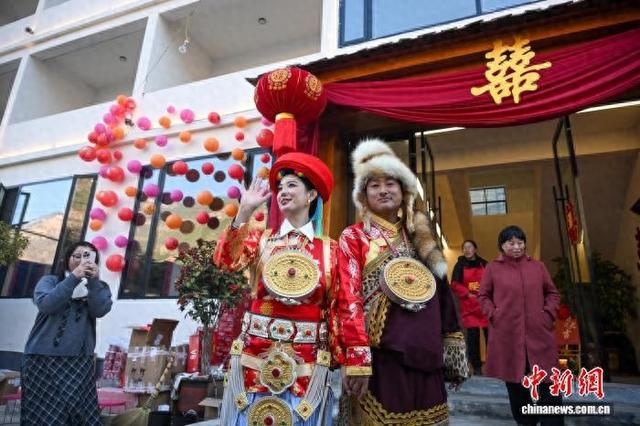
Core Viewpoint - A traditional Tibetan wedding in Shangri-La, Yunnan, has gained significant attention on social media, showcasing a blend of romance and cultural heritage, while promoting local tourism and cultural appreciation [1][9]. Group 1: Wedding Details - The wedding of Tibetan couple Zhashi Yongzong and Zhashi Peichu lasted four days, following local customs, and involved community participation in preparations [3][5]. - The wedding featured traditional Tibetan attire and accessories, with Yongzong wearing heirloom coral jewelry that symbolizes cultural heritage [5][6]. - The ceremony included traditional songs and dances, emphasizing the transmission of cultural values and blessings from elders to the newlyweds [5][6]. Group 2: Cultural Integration - The wedding incorporated modern elements, such as popular dance performances and a mix of traditional and contemporary cuisine, reflecting the evolving lifestyle of the local population [6][8]. - The event transformed into a cultural celebration, with various ethnic groups participating and showcasing their traditions, creating a vibrant atmosphere [8][9]. - The wedding served as a platform for promoting local tourism, with government and businesses collaborating to enhance visitor experiences and provide accommodations [9]. Group 3: Community and Economic Impact - The event highlighted the increasing living standards in Diqing, as the wedding banquet became more elaborate, showcasing local culinary diversity [6][9]. - Local authorities and businesses worked together to ensure the event's success, indicating a growing trend of community-driven tourism initiatives [9]. - The wedding's popularity on social media has the potential to attract more visitors to Diqing, enhancing the region's cultural tourism appeal [1][9].
中国大型民族杂技剧再现瓦氏夫人抗倭传奇
Xin Lang Cai Jing· 2026-01-25 14:09
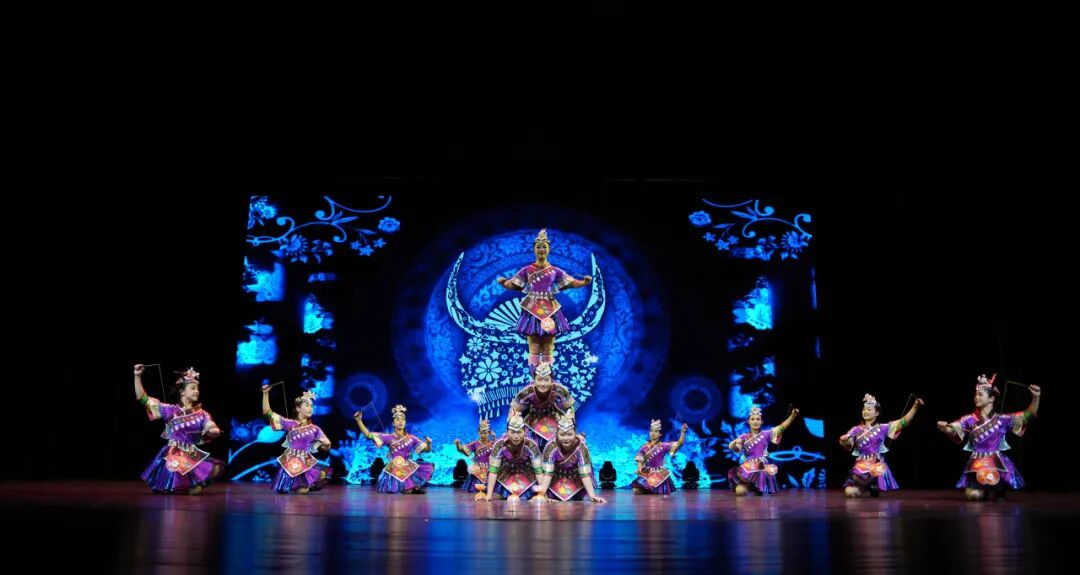
Core Viewpoint - The large-scale ethnic acrobatic drama "Hua Wa Lang Bing" showcases the story of the female general Wa Shi, highlighting the integration of traditional acrobatics with Guangxi ethnic art elements to present a heroic image from Chinese history [1][2] Group 1: Performance and Artistic Elements - The drama consists of eight acts, depicting the legendary journey of the 58-year-old Wa Shi leading troops to defend the homeland against invaders [1] - The creative team has innovatively combined traditional acrobatic skills such as pole juggling and contortion with ethnic elements like Zhuang boxing and lion dance, enhanced by modern technologies like smart projection [1] - The performance lasts nearly 100 minutes, capturing the excitement of battlefield raids and the emotional commitment to the nation [1] Group 2: Cultural Significance and Future Aspirations - The director Liu Chun emphasized the importance of merging Zhuang martial arts and intangible cultural heritage with modern acrobatics to narrate historical stories through stage language [1] - The story of Wa Shi reflects a shared historical memory and cultural identity of the Chinese nation, aiming to resonate with audiences from diverse cultural backgrounds [1] - Actor Xu Yiling expressed hopes for the drama to reach international stages, showcasing the unique charm of Chinese historical culture [2]
杂技剧《白云深处有人家》即将首演,编剧揭秘:这是写给故乡的“肢体长信”
Xin Lang Cai Jing· 2026-01-18 10:11
Core Perspective - The original acrobatic drama "In the Depths of the White Clouds," created by the Guizhou Acrobatic Troupe, will premiere at the Beijing Road Grand Theatre on January 19-20, showcasing the rich culture and natural beauty of Guizhou's Miao villages through a four-act structure that integrates traditional acrobatic skills [1][3]. Group 1: Cultural Significance - The drama serves as a heartfelt letter to the writer's hometown, exploring the profound connection between the land and its people, emphasizing that survival in this region is akin to a natural acrobatic performance [3][4]. - The incorporation of Miao cultural elements, such as silver ornaments and batik, is intended to resonate emotionally with the audience, transforming visual aesthetics into a representation of the ethnic group's history and identity [4][6]. Group 2: Thematic Elements - The central narrative revolves around a simple yet powerful love story between two young characters, Amu and Duomei, set against the backdrop of Guizhou's mountains, highlighting the purity and strength of their emotions [6][8]. - The theme of "watching over" is prevalent, symbolizing not only the characters' love for each other but also the deep-rooted connection between the people and their homeland, expressed through acrobatic movements that signify support and stability [6][8]. Group 3: Artistic Collaboration - The success of the drama is attributed to the collaborative efforts of the Guizhou Acrobatic Troupe and the director's vision, emphasizing that the performance is a collective tribute to the beauty of Guizhou's landscapes [8].
当壁画上的“神仙”跳起舞来
Xin Lang Cai Jing· 2026-01-17 07:28
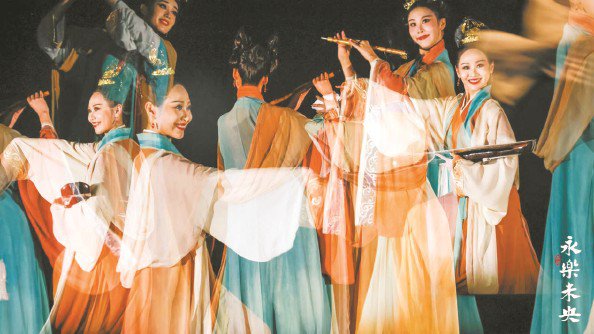
Core Insights - The dance drama "Eternal Joy" premiered at the Shanghai West Bank Grand Theatre, showcasing the historical significance of the relocation of the Yongle Palace in the 1950s, which involved over 1,000 builders and took 10 years to complete [2][3]. Group 1: Artistic and Cultural Significance - "Eternal Joy" draws inspiration from the Yongle Palace in Shanxi, a structure completed over 111 years, featuring 1,005.68 square meters of Yuan dynasty murals, including the 97-meter-long "Morning Assembly" mural depicting 290 deities, representing a pinnacle of ancient Chinese portrait painting [3]. - The dance drama is guided by the China Cultural Heritage Research Institute and produced in collaboration with the China Oriental Performing Arts Group and Shanxi Provincial Department of Culture and Tourism, with artistic directors from the creative team of "Only This Green" [3]. Group 2: Performance and Technical Aspects - Key dance segments exemplify "cultural relics coming to life," such as the "Coffered Ceiling Dance," where dancers replicate ancient architectural structures, and the "Blue Glaze Guardian" segment, which uses advanced lighting technology to revive the lost peacock blue glaze, showcasing the beauty of traditional craftsmanship [4]. - The upgraded version of the performance in Shanghai features optimized narrative pacing and visual presentation, focusing on the emotional resonance between historical figures and contemporary artists [5]. Group 3: Audience Engagement and Experience - The performance is complemented by the "Into the Picture Shanxi" themed mural exhibition, allowing dynamic dance movements to interact with static artworks, enhancing audience engagement [5]. - Attendees can exchange their ticket stubs for electronic promotional tickets to six national treasure scenic spots, creating a "performance + tour" experience [5].
全国政协副主席王光谦率队到我省调研
Xin Lang Cai Jing· 2026-01-11 22:25
Group 1 - The research team, led by Wang Guangqian, focused on the integration of culture and tourism to promote interaction among various ethnic groups in Guizhou Province [1][2] - The team visited multiple locations, including schools and traditional villages, to understand the role of local ethnic culture and human economic factors in driving social and economic development [2] - Wang emphasized the need to enhance cultural heritage protection and deepen related research to promote cultural prosperity [2][3] Group 2 - The popularity of cultural IPs such as "Village BA," "Village Super," and "Village T" showcases the vibrant energy and cultural confidence of Guizhou's mountain ethnicities [3] - The research team engaged with local officials and communities to discuss the empowerment of ethnic culture in rural revitalization efforts and provided constructive suggestions [3] - Wang also visited the local committees of the Democratic League to connect with member representatives [4]