Credit growth

Search documents
Mutual funds take a shine to bank stocks
BusinessLine· 2026-03-03 15:33
Core Insights - The banking sector is experiencing robust health characterized by healthy credit growth, improving asset quality, and stable profitability, prompting mutual funds to increase their investments in the sector [1][3] Group 1: Mutual Fund Activity - Mutual funds have increased their shareholding in several banks by more than 1% between December 2024 and December 2025, including AU Small Finance Bank, Axis Bank, Bandhan Bank, and others [2] - The stake of mutual funds in AU Small Finance Bank rose by 5.5 percentage points to 22.61% as of December 2025, while Equitas SFB and Ujjivan SFB saw increases of 7.7 percentage points to 45.20% and 19.99 percentage points to 23.82%, respectively [8] - RBL Bank experienced a 22 percentage point increase in mutual funds' stake to 34.44% following Emirates NBD Bank's acquisition of a controlling stake [9] Group 2: Banking Sector Performance - The overall banking system is performing well, with non-performing assets at multi-decade lows and a revival in credit demand, particularly in sectors like MSMEs and retail [3] - The Nifty Bank Index has appreciated by 24% over the past year, reflecting the strong fundamentals of the banking sector [6] - Tier-2 banks reported better Q3 results, and this trend is expected to continue, leading to impressive profit numbers [4] Group 3: Investment Trends - Mutual funds are redirecting investments from IT stocks to bank stocks, indicating a shift in market sentiment towards the banking sector [7] - Warburg Pincus and ADIA acquired significant stakes in IDFC First Bank, while Blackstone's fund invested in Federal Bank, highlighting continued interest from institutional investors [10] - Among public sector banks, mutual funds increased their stake in Bank of Maharashtra by 4.47 percentage points to 5.32% and in State Bank of India by 1.41 percentage points to 13.64% [11]


Credit growth at 12% beats 10% deposit rise in April-Jan
The Times Of India· 2026-02-16 02:14
Group 1 - Aggregate deposits in India grew by 10.2% in the financial year to January 31, with banks adding Rs 23 lakh crore, while credit expanded by 12.2% or Rs 22.3 lakh crore during the same period [2][4] - Year-on-year credit growth reached a 19-month high of 14.6% as of end-January 2026, compared to 11.4% a year earlier, while deposit growth improved to 12.5% from 10.3% [2][4] - The incremental credit-deposit (CD) ratio climbed to 96.9%, indicating that banks lent out nearly Rs 97 for every Rs 100 of fresh deposits raised during the year [4] Group 2 - Retail and MSME loans are driving growth, with Canara Bank's RAM book showing an 18.7% growth, led by retail loans growing 31.4% and MSME loans up 13.7% [3][4] - Canara Bank plans to capitalize on retail momentum with an advances growth guidance of more than 13.6% [3][4] - Savings bank deposits are growing at 8.5%, with individual savings accounts rising over 10% and current accounts growing nearly 15% [3][4] Group 3 - Non-food credit rose by Rs 25.7 lakh crore year-on-year to Rs 203.9 lakh crore, with lending primarily funded through household savings rather than surplus central bank liquidity [2][4] - State Bank of India (SBI) has revised its credit growth guidance to 13-15% for the year, supported by a Rs 7 lakh crore pipeline [4] - ICICI Bank reported a broad-based improvement in growth across retail and corporate segments, with momentum expected to sustain into the fourth quarter [4]

Run up to FY26-end: Credit and deposit growth see robust pick up
BusinessLine· 2026-02-13 15:31
Economic Overview - A robust increase in credit and deposits in the last fortnight of January indicates that the Indian economy is gaining momentum despite challenges from higher US tariffs, global trade fragmentation, and geopolitical tensions [1] - Total credit and deposits of all scheduled banks rose by ₹3,40,934 crore and ₹3,80,346 crore, respectively, in the fortnight ending January 31, 2026, reversing the previous fortnight's decline [1] Credit and Deposit Trends - In the preceding fortnight (January 15, 2026), credit and deposits declined by ₹3,55,765 crore and ₹1,88,383 crore, respectively [2] - The increase in credit is supported by a strong pipeline of corporate loan sanctions from public sector banks, with State Bank of India reporting ₹7.86 lakh crore, Punjab National Bank at ₹1.02 lakh crore, and Bank of Baroda at ₹75,000 crore [2] Sector-Specific Insights - The State Bank of India is experiencing a rise in corporate loans, particularly in the power (including renewables), metals, and infrastructure sectors [3] - The RBI's decision to allow commercial banks to finance Real Estate Investment Trusts (REITs) and acquisitions by Indian companies is expected to enhance SBI's corporate loan book and margins [4] Deposit Inflows - Experts suggest that the downturn in equity markets may have led to increased deposit inflows, particularly in bulk deposits [5] - Punjab National Bank's CEO noted that the bank has over 18 crore customers who maintain confidence in the banking system [5] Economic Indicators - Year-on-year credit growth stands at 14.40% as of January-end, surpassing deposit growth of 12.42% [7] - The recent credit increase is attributed to large corporates drawing down on sanctions, indicating buoyancy in the economy reflected by higher credit demand [7][8]
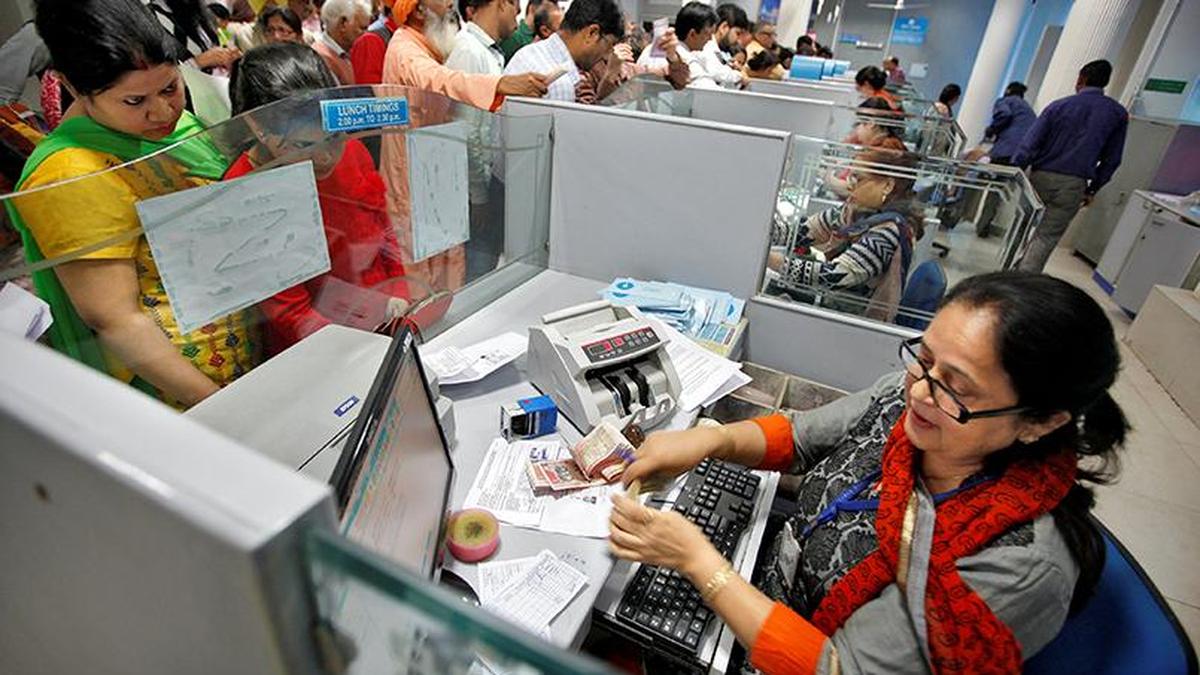
As sentiment improves, SBI raises credit growth target
The Times Of India· 2026-02-08 19:19
Core Insights - State Bank of India (SBI) has revised its credit growth target for the year from 12-14% to 13-15% based on current quarter trends, indicating a secular growth pattern with expectations of continued double-digit corporate credit growth into Q4 [4][6] - SBI reported a standalone net profit of Rs 21,028 crore for Q3FY26, marking a 24.5% year-on-year increase and the highest quarterly profit in its history, attributed to multiple factors including fee income and broad-based credit growth [4][6] - Net interest income increased by 9% year-on-year, driven by loan growth and lower funding costs, with a one-off special dividend of Rs 2,200 crore from SBI Mutual Fund contributing to profitability [4][6] Credit Growth and Segments - Growth has been broad-based across all components of RAM (Retail, Agriculture, and SME), with corporate credit rebounding and growing by 13.4% [5][6] - The higher credit growth guidance is supported by robust performance across all segments, including new-economy sectors such as data center financing and a strong focus on renewable energy [5][6] - SBI's green portfolio has reached Rs 1 lakh crore, reflecting its commitment to sustainable financing [5][6]
Why The Gold Stock Rally Isn't Over Yet
Forbes· 2026-01-15 19:06
Core Viewpoint - Gold prices experienced a significant increase in 2025, rising from $2,600 per ounce to over $4,300, marking a 65% return, while gold mining stocks outperformed with the VanEck Gold Miners ETF rising by 155% [1] Group 1: Market Dynamics - In 2024, gold lagged behind speculative assets like big tech stocks and Bitcoin, but this trend reversed in 2025 as gold and mining stocks surged while riskier assets cooled [2][3] - The shift in market dynamics indicates that gold performs better during periods of tightening credit, which is currently evidenced by the decline in speculative assets [3][4] Group 2: Economic Indicators - The Federal Reserve's rate cuts and the increase in 30-year Treasury bond yields suggest weaker credit growth, which typically leads to gold outperforming industrial commodities [4] - Historical data shows that during the 1970s, gold prices rose significantly faster than most industrial commodities, reinforcing the current outlook for gold [5] Group 3: Cost Dynamics for Gold Miners - Oliver argues that gold miners are not facing the usual cost pressures, and if gold prices continue to rise faster than input costs, profit margins should expand rather than contract [6][7] - The strong performance of gold mining stocks in 2025 is viewed as the beginning of a longer bull market rather than a peak [7]

Indian banks seen churning stronger Q3 profits after a weak first half. Brokers pick 10 stocks to buy
The Economic Times· 2026-01-07 05:17
Core Insights - The banking sector is experiencing robust loan growth, with RBI data indicating a nearly 12% year-on-year increase and a 4.5% quarter-on-quarter rise in banking system advances as of mid-December 2025 [1][21] - Key segments driving this growth include micro and small enterprises, services, and retail loans, with industrial credit also picking up significantly [2][21] - Despite steady loan growth, deposit growth is lagging, with system-level deposits increasing by 9.7% year-on-year, resulting in a credit-deposit ratio exceeding 81% [6][21] Loan Growth - Loan growth is expected to be around 11.6% year-on-year for the coverage universe in Q3, with banks like HDFC Bank, Axis Bank, and ICICI Bank anticipated to outperform the sector average [21] - Retail, MSME, and services loans are expected to lead the credit growth momentum, particularly among mid-sized and small finance banks [5][21] Deposit Trends - Deposit growth remains a pressure point for the sector, with banks increasingly relying on certificates of deposit and selective rate hikes to mobilize deposits [6][7] - Elara Capital notes that slower growth in low-cost deposits and higher credit-deposit ratios may limit the benefits of liability repricing in FY27 [7][21] Margin Stability - Net interest margins (NIMs) are projected to remain stable in Q3, aided by CRR cuts and deposit repricing, with most banks expected to see only marginal movements [9][10] - YES Securities anticipates a mild sequential decline in NIMs, clustering around a 5-basis-point drop, although loan spreads have improved due to sharper cuts in deposit rates [11][21] Fee Income and Operating Expenses - Fee income is expected to improve sequentially in Q3, driven by higher loan disbursements and stable business momentum, which should help offset weaker treasury income [12][21] - Operating expenses are likely to remain flat sequentially, as previous wage revisions and seasonal cost increases have been absorbed [12][21] Asset Quality - Asset quality is stabilizing, with a reduction in stress in unsecured lending, particularly in microfinance, and slippages expected to remain stable [13][21] - Provisions are expected to decline for several banks, reflecting better collections and lower incremental stress [14][21] Profitability Outlook - Q3 is anticipated to mark a turning point for earnings, with year-on-year profitability expected to improve for most banks, reversing the contraction seen in Q2 [15][21] - JM Financial estimates a net interest income growth of about 4.7% year-on-year, with large banks like HDFC Bank and ICICI Bank expected to deliver strong return ratios [16][21] Key Trends - Three clear themes for Q3 include sustained growth led by retail and MSME loans, stabilizing margins with repricing benefits, and improving asset quality reducing downside risks to earnings [18][21] - Investor focus is likely to remain on banks with strong balance sheets and diversified loan books as Q3 results are released [19][21]

Home loan book set to cross ₹10 lakh cr next fiscal year on strong demand: SBI chief
MINT· 2025-12-21 05:34
Core Insights - State Bank of India (SBI) is expected to achieve a home loan portfolio exceeding ₹10 lakh crore in the next fiscal year, driven by strong demand and a favorable low-interest-rate environment [1][2] - SBI's home loan portfolio recently surpassed ₹9 lakh crore, making it the largest mortgage loan provider in India [2] - The bank's home loan book grew by 14.4% year-on-year, closing FY25 at ₹8.31 lakh crore [2] Group 1: Home Loan Portfolio Growth - SBI's home loan portfolio has steadily increased from ₹1 lakh crore in March 2011 to ₹9 lakh crore in November 2025 [3] - The bank has maintained non-performing assets (NPAs) in the home loan segment at less than 1%, with a gross NPA of 0.72% at the end of FY25, one of the lowest in the banking sector [3] Group 2: Overall Credit Growth - SBI has revised its overall credit growth target from 12% to 14% for the current fiscal year, anticipating robust growth particularly from the Retail, Agriculture, and MSME (RAM) segments [4][5] - The RAM segment, which constitutes 67% of SBI's total loan portfolio, crossed the ₹25 lakh crore milestone in September [4] - The MSME sector is experiencing growth rates of 17-18%, while agriculture and retail are growing at around 14% [5]

SBI shares up 25% in 2025: Analysts see strong credit cycle ahead; will the stock continue to rally next year?
The Times Of India· 2025-12-01 06:33
Core Insights - State Bank of India (SBI) is on track for one of its strongest years, with shares rising nearly 25% in 2025, positioning it for a fifth consecutive year of positive returns and its most impressive run in two years [2][4] - The growth is driven by a favorable earnings outlook, improving asset quality, and expectations of steady credit growth, supported by a stable macroeconomic environment [2][4] - Analysts expect SBI to grow faster than the broader industry due to its strong balance sheet and low-cost deposit base, with a loan book accounting for nearly 23-24% of India's total [3][4] Financial Performance - In the September quarter, net interest margins expanded by 7 basis points due to better deposit repricing and liability management [3][4] - The Current Account and Savings Account (CASA) ratio stands at 36.9%, with SBI commanding over 22% market share in total deposits and around 23% in CASA deposits [3][4] - SBI's credit cost is maintained at just 50 basis points while growing at 12-14% [3] Earnings Estimates and Valuation - Parag Thakkar of Fort Capital estimates SBI's FY27 earnings per share at Rs 85 and book value at Rs 585, indicating the stock trades at about 1.1 times book value for a return on assets trending toward 1.3% [3][4] - CLSA raised its target price to Rs 1,170, implying nearly 20% upside, while Axis Securities maintains a Buy rating, citing no visible headwinds on growth or asset quality [3][4] - HSBC has upgraded its valuation outlook with a revised target price of Rs 1,110, and Nomura expects SBI to deliver return on assets and return on equity of 1.1% and 16%, respectively, through FY27-28 [3][4] Growth Outlook - Analysts believe SBI is entering the next phase of its growth cycle with multiple tailwinds improving margins, robust loan growth, and healthy asset quality [3][4] - Despite potential near-term consolidation, market experts view any correction as an attractive buying opportunity, maintaining a positive sentiment toward SBI going into 2026 [3][4]
Credit growth to rebound as IPO liquidity spent and working capital demand rises: SBI
MINT· 2025-12-01 05:54
Core Insights - The credit growth of banks in India is expected to rebound as companies increase their working capital utilization for day-to-day operations, following a temporary dip linked to IPO fundraising [1][2][5][7] Group 1: Credit Growth Trends - Recent credit offtake slowdown is seen as temporary, primarily due to the surge in IPO fundraising across various sectors [1][3] - Historical data indicates a modest negative correlation between IPO mobilization and overall bank credit growth, suggesting that higher IPO funds can lead to reduced immediate borrowing needs from banks [2][3] Group 2: Sectoral Analysis - Industries such as finance, automobiles, pharmaceuticals, telecom, consumer durables, and infrastructure have shown lower credit growth in years with higher IPO fundraising [3][4] - Companies typically utilize IPO funds for expansion, capital expenditure, or debt repayment, which reduces their immediate need for bank loans [4] Group 3: Economic Context - As business activity remains strong and production levels rise, firms are expected to seek more financing for operational expenses, leading to increased demand for bank loans [5] - The overall economic momentum in India, supported by strong GDP numbers, is anticipated to drive higher funding needs among companies [5] Group 4: Role of the Reserve Bank of India - The Reserve Bank of India is expected to play a crucial role in maintaining proactive liquidity management to support the anticipated rise in credit demand [6] - Adequate liquidity in the banking system is essential for stable borrowing conditions and recovery in loan growth [6] Group 5: Future Outlook - With rising working capital requirements, fading IPO-related effects, and robust economic activity, India's credit growth is projected to rebound in the coming quarters [7]

GST bazooka: Lenders raise credit growth guidance for FY26
BusinessLine· 2025-11-09 14:20
Core Insights - Banks have increased their credit growth guidance for the current financial year due to factors such as GST rate cuts, lower interest rates following a 100 basis points repo cut, and easing banking regulations by the Reserve Bank of India (RBI) [1][2] Group 1: Banking Sector - State Bank of India (SBI) has revised its credit growth guidance from 11% to 12-14% for FY26, citing robust growth across business segments and supportive measures from the RBI and fiscal policies [2] - SBI reported significant demand for car and personal loans following the GST rate cuts in September [3] - Axis Bank anticipates strong credit growth in H2FY26, driven by favorable conditions such as repo cuts, improved liquidity, and a favorable monsoon, despite facing headwinds in H1FY26 [3][4] Group 2: Non-Banking Financial Companies (NBFCs) - Shriram Finance has observed increased credit demand in the last week of September, particularly in the two-wheeler and car segments, and has guided for a loan growth of 15% in FY26, with potential for higher growth of 17-18% [5] - Piramal Finance expects an AUM growth of 25% for the fiscal year, noting that while used car prices have decreased due to GST reductions, the increase in units sold compensates for this [6]